
Video
The Curious Case of Curry Puffs
Topics
Food
5 August 2026
Before expensive imported butter became widely available, curry puffs were typically made with animal fat.

Curry puffs are a beloved snack in Singapore and back in the day, these pastries used animal fat for a rich flavour and superior flakiness – a technique that has largely disappeared with the rise of margarine. Award-winning cookbook author Christopher Tan tells us more about the history behind this savoury snack while recreating them using lamb fat and exploring both baked and deep-fried versions.
This episode is part of From Book to Cook, a cooking show on Singapore’s food history. Other episodes can be found here (opens in new tab).
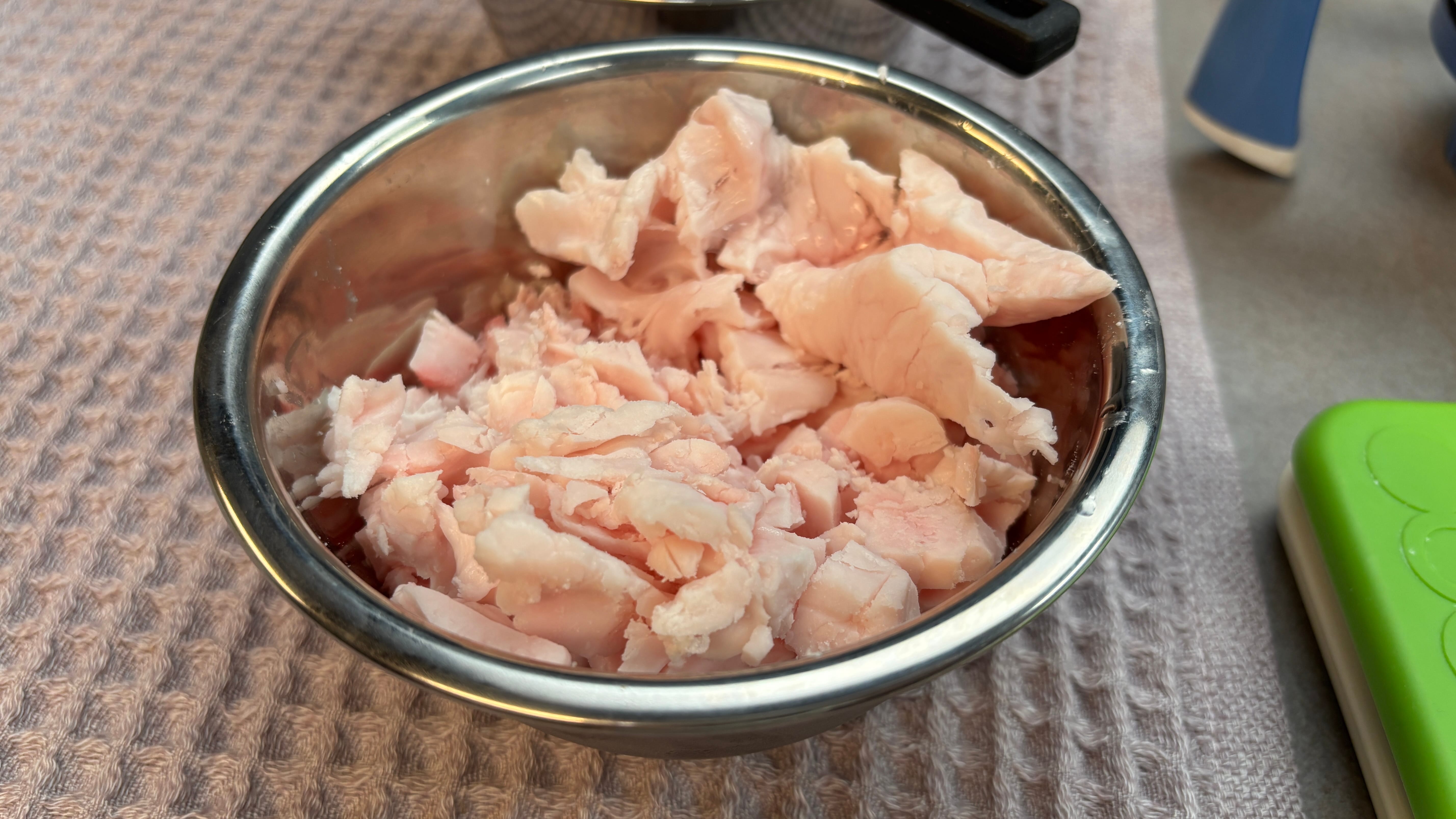
A bowl of lamb fat, used to make the fat dough for the curry puff.
Recipe
Christopher’s curry puff recipe draws on many vintage sources, including recipes published in local newspaper Berita Harian in the 1960s and 1970s, and Susie Hing’s 1956 cookbook In a Malayan Kitchen.
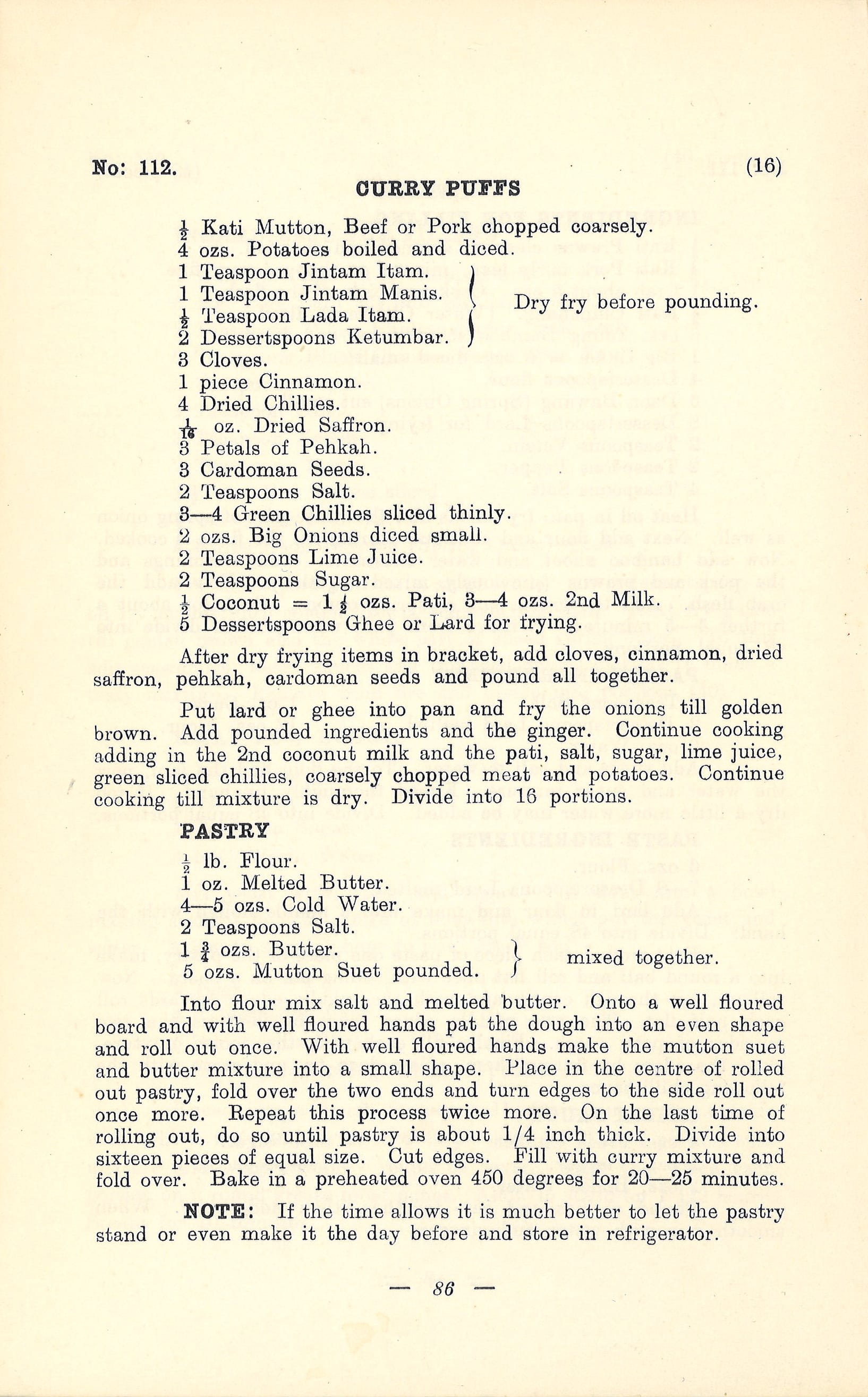
Recipe for curry puffs from Susie Hing’s 1956 cookbook “In a Malayan Kitchen”, showing mutton suet pounded and mixed with butter for the pastry.
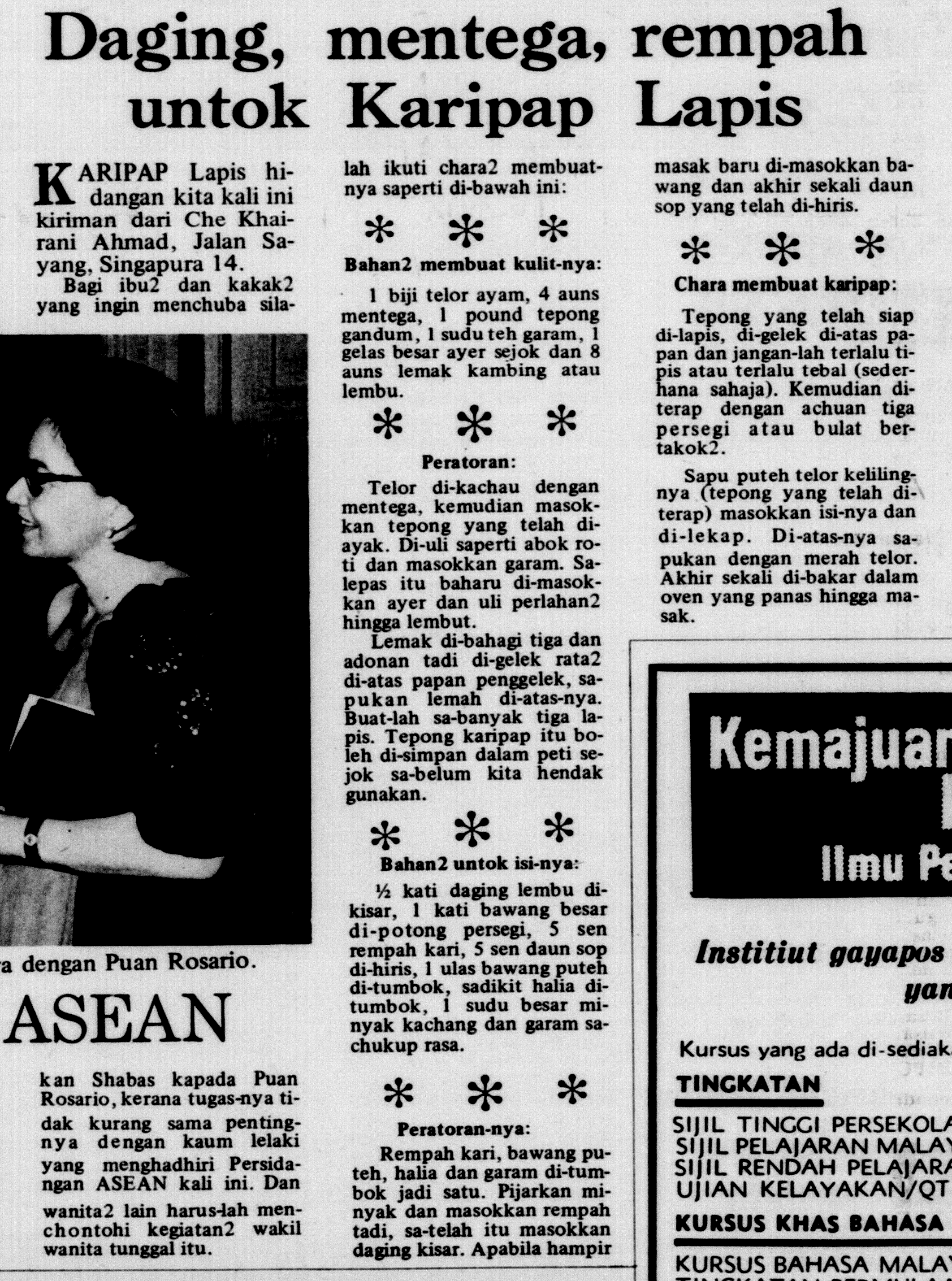
Recipe for curry puff (“karipap”) in local newspaper Berita Harian, published on 18 April 1972. It calls for mutton or beef fat (“lemak kambing atau lembu”, in the second column).
Christopher’s ingredients and instructions for making two types of curry puffs – the layered and baked version, and the spiral and fried version
Christopher’s notes:
The fat and water doughs for both baked and fried versions are made roughly the same way, although wheat flour is used for the fat dough and no eggs are used for the water dough for the fried version. The chilling times mentioned can be lengthened but not shortened for the doughs to stay cool at all times, otherwise they become soft and oily and difficult to handle.
Ingredients for the fat dough:
160 g lamb fat, very cold, finely chopped
40 g cold water
75 g rice flour (wheat flour for the fried version)
Ingredients for the water dough:
450 g plain flour
20 g icing sugar
8 g baking powder
6 g salt
1/2 tsp. turmeric powder
110 g cold unsalted butter
30 g egg yolks (omit this for the fried version)
130 g cold water
Ingredients for the curry puff filling:
50 g shallots, chopped
15 g garlic, chopped
10 g minced ginger
22 g curry powder
1 tbsp. oil
120 g onion, chopped
600 g potato, peeled and diced
½ tbsp. oil
240 g minced beef
70 g coconut cream
salt
sugar
lime juice
To make the fat dough:
1. In a blender, pulse-blend fat and water together until blended.
2. Add rice flour and pulse-blend until a soft dough comes together.
3. Wrap in plastic wrap and chill for 20 minutes.
To make the water dough:
1. Combine flour, sugar, baking powder, salt and turmeric in a blender and pulse-blend a few times to mix well.
2. Add the butter and pulse-blend until it is incorporated into the flour.
3. Pour this mixture into a mixing bowl.
4. In a small bowl, whisk egg yolks and water together to blend, then pour this into the flour mixture and stir until dough comes together.
5. Briefly knead dough to even it out, then wrap in plastic wrap and chill for 20 minutes.
To make the filling:
1. Grind shallots, garlic, ginger and curry powder together into a fine paste in a blender, adding some water as needed to help the grinding. Set spice paste aside.
2. Heat oil in a frying pan over medium heat. When hot, add onions and stir well, then add potatoes. Fry, stirring, until potatoes are 90% done. Scrape into a bowl and set aside.
3. Add oil to the same frying pan. Add spice paste and fry, stirring constantly, until thickened and glossy.
4. Increase heat slightly, add beef and fry briskly until beef’s colour changes.
5. Add coconut cream and precooked onions and potatoes. Cook, stirring, until everything is done and there are no juices left in the pan. Taste and adjust seasoning with salt, sugar and lime juice.
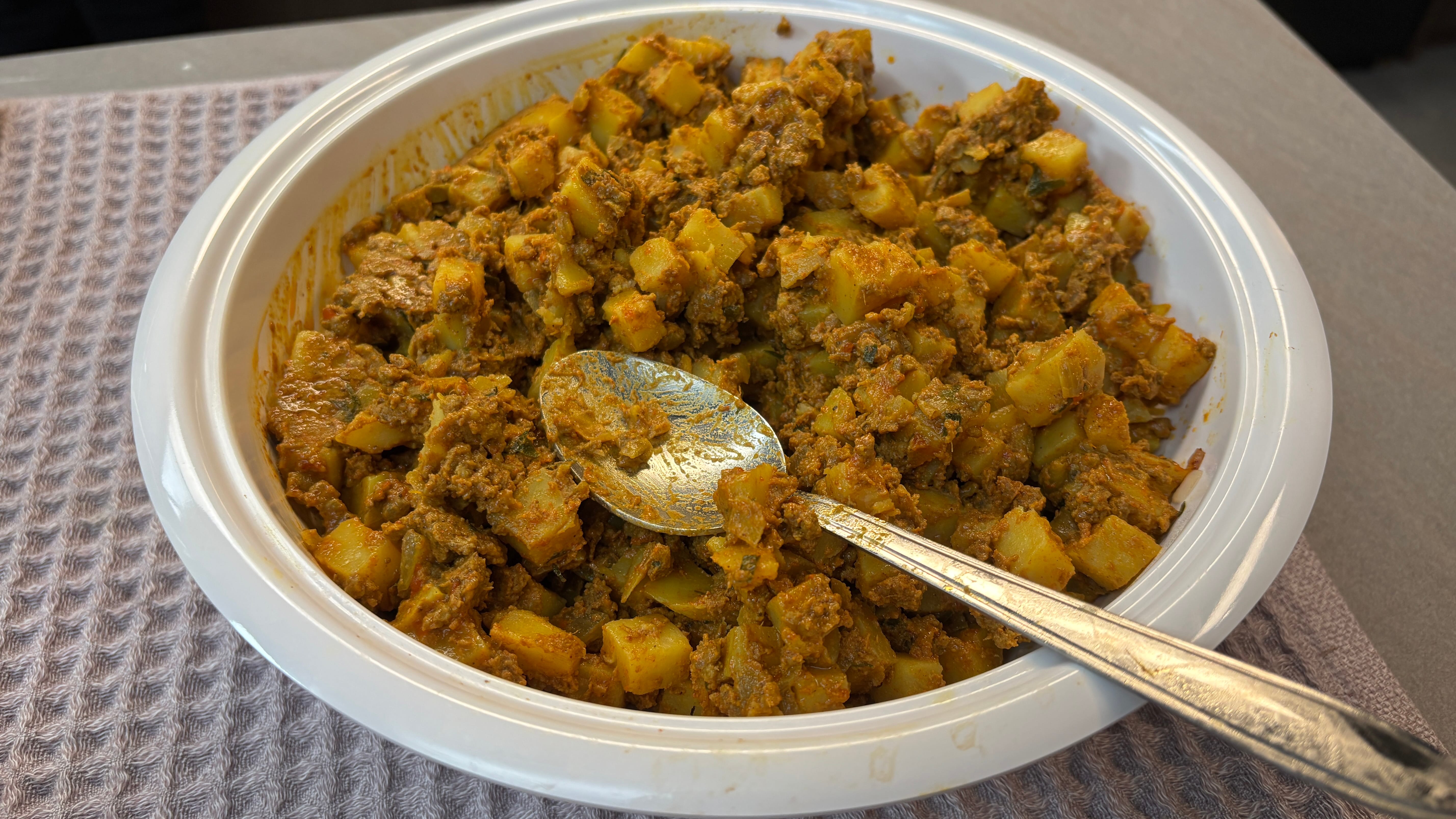
Beef curry filling for the curry puffs.
To assemble the baked layered curry puff:
1. Roll out fat dough into a rectangle roughly 12 cm wide and 16 cm long.
2. Roll out water dough into a rectangle roughly 25 cm wide and 16 cm long.
3. Wrap the fat dough in the water dough. Roll out the parcel into a 20 cm wide and 40 cm long strip, then fold it in three like a business letter. Wrap it in plastic wrap and chill for 20 to 30 minutes.
4. Roll out the dough parcel into a 20 cm wide and 50 cm long strip. Fold it in half, then in half again to make 4 layers. Wrap it in plastic wrap and chill for 30 to 40 minutes.
5. Roll out the dough in a large rectangle about 24 cm wide and 48 cm long. Chill for 10 minutes. Then cut it into 8 squares.
6. Place a mound of filling on a square, fold in half, press to seal, then trim edges. Brush with beaten egg.
7. Bake at 210 degrees Celsius with fan for 20 to 22 minutes, until risen and golden brown.
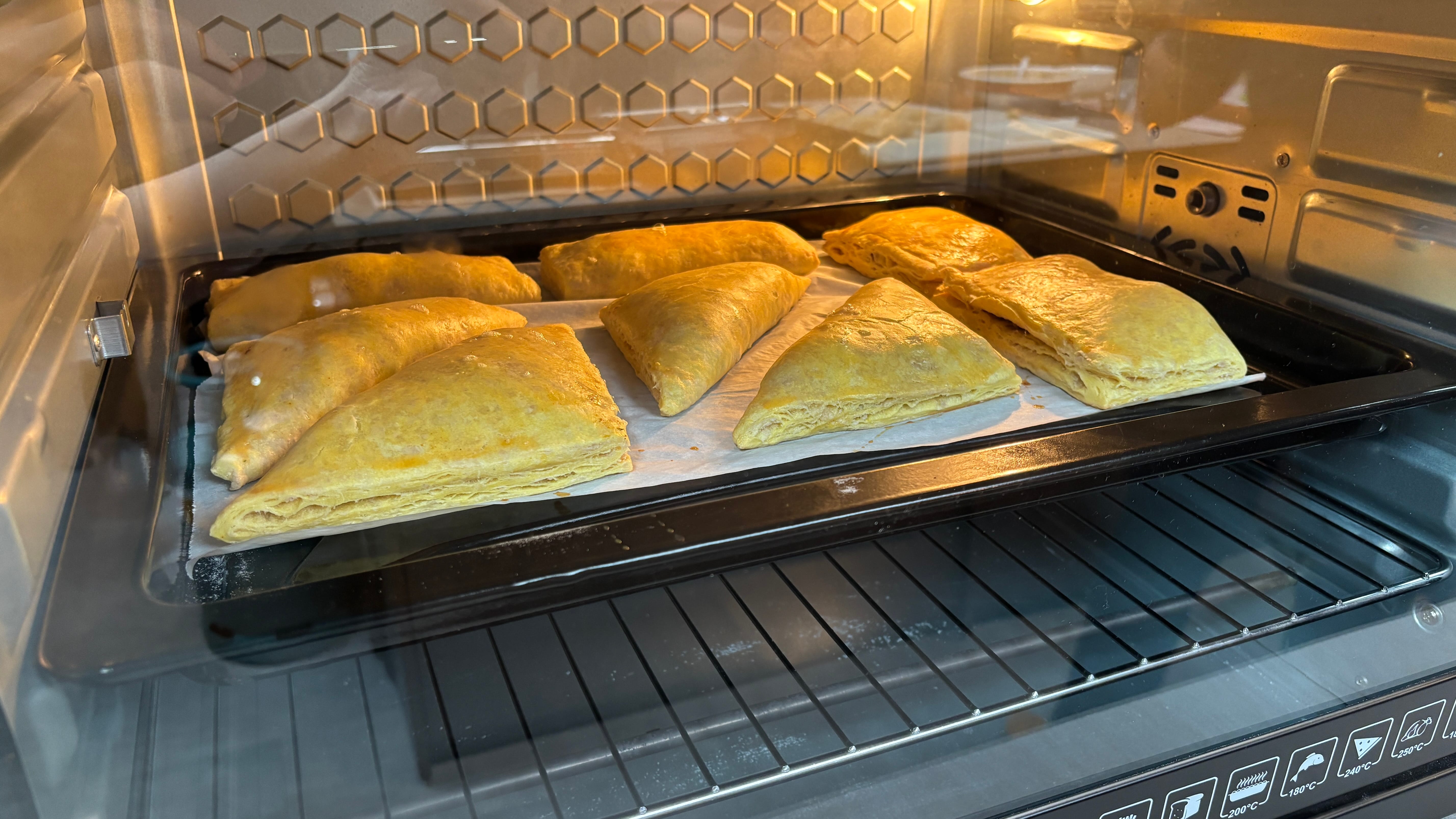
Layered curry puffs baking in the oven.
To assemble the fried spiral curry puff:
1. Roll out fat dough into a rectangle roughly 12 cm wide and 16 cm long.
2. Roll out water dough into a rectangle roughly 25 cm wide and 16 cm long.
3. Wrap the fat dough in the water dough. Roll out the parcel into a 20 cm wide and 50 cm long strip. Fold dough up four times to make a flat roll. Wrap it in plastic wrap and chill for 20 minutes.
4. Flatten and roll out the folded dough into a 24 cm wide and 45 cm long strip. Roll up tightly into a cylindrical log. Wrap it in plastic wrap and chill for 20 minutes.
5. Trim the log ends, then cut it into 12 slices.
6. Flatten a slice with the heel of your palm, then roll it into a thin round about 10 to 12 cm in diameter. Let rounds rest for 5 to 10 minutes.
7. Place a spoonful of filling on top, fold the round in half and pinch the curved edge to seal.
8. Crimp the edge, starting at one corner and ending at the other.
9. Deep-fry the spiral curry puffs at 150 to 160 degrees Celsius until golden brown. The spirals will open up as they cool.
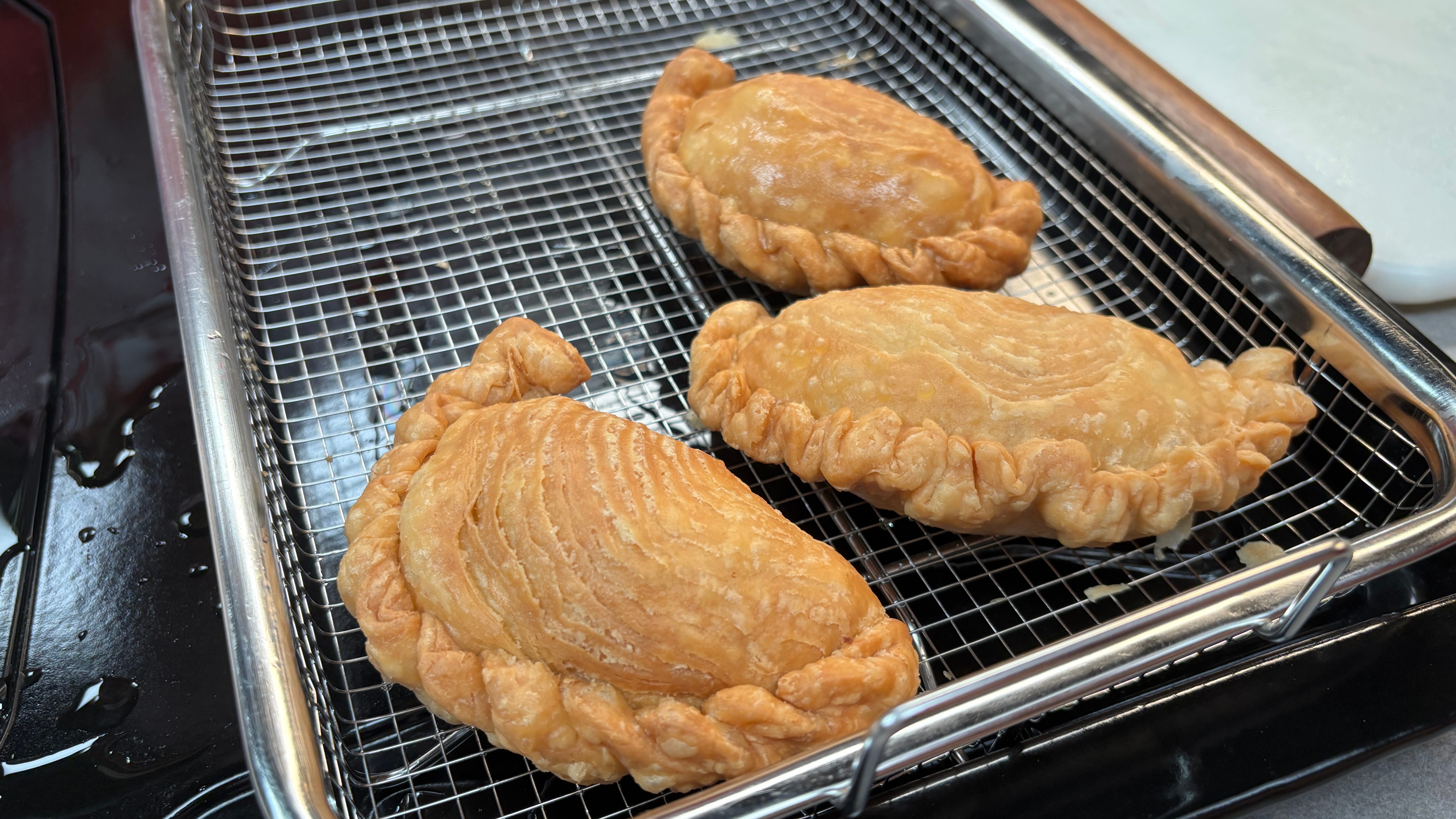
Deep-fried spiral curry puffs on a cooling rack. The spirals on the puffs become more distinct and “open up” as they cool.
Related Podcast
The Crisped, the Baked, the Spiralled: Curry Puffs and Their History (opens in new tab)
Award-winning writer Christopher Tan talks how the Indian samosa led to the curry puffs we know today, as well as the different types of curry puffs – baked, spiralled, made with mutton fat and fillings like otak-otak and taro.
Related Articles
Curry Puff (opens in new tab)
A curry puff is a deep-fried or baked, semi-circular pastry filled with curried fillings. The origins of this snack are uncertain and attributed variously to the influences of the British Cornish pasty, the Portuguese empanada and the Indian samosa. (Infopedia)
Old Chang Kee (opens in new tab)
Old Chang Kee is a food retail chain best known for its Hainanese-style curry puffs which were first sold in 1956. The business was bought over and revamped in 1986 and has since expanded to a chain of over 70 outlets in Singapore and also overseas. (Infopedia)
Polar Café (opens in new tab)
Polar Puffs & Cakes is a food manufacturer and operator of a confectionery chain best known for its curry puffs. Originally known as Polar Café, Chan Hinky began running the business from 1926. The first Polar Café, a landmark on High Street, opened in November 1925. (Infopedia)
Of Belacan and Curry Puffs: A Taste of Singapore’s Past
Bonny Tan pores through the rich archives of Malayan newspapers and shows how disparate communities have come together to create a food culture that is truly emblematic of Singapore's multicultural character. (BiblioAsia)
Travelling Hawkers (opens in new tab)
Travelling hawkers or itinerant hawkers were a common sight in Singapore during the 19th century to mid-20th century. They were frequently found along busy streets and intersections, peddling food, drinks, vegetables, poultry and sundries. Street hawking was a popular occupation for many new immigrants to Singapore as it gave the unemployed and the unskilled a way to make a living with little costs. (Infopedia)
Hawkers During the Colonial Period (opens in new tab)
During Singapore’s colonial period and the early years of independence, the idea of enjoying a meal in clean hawker centres was unheard of. People usually ate by the roadside, often using dirty utensils in unhygienic conditions. (Curocity)
Related Books
Susie Hing, In a Malayan Kitchen (opens in new tab) (Singapore: Mun Seong Press, 1956).
Christopher Tan, NerdBaker: Extraordinary Recipes, Stories & Baking Adventures from a True Oven Geek (opens in new tab) (Singapore: Epigram Books, 2019).
Resources from NewspaperSG
“Daging, Mentega, Rempah Untok Karipap Lapis (opens in new tab),” Berita Harian, 18 April 1972, 7. (From NewspaperSG)
“Resepi Karipap Lapis… (opens in new tab),” Berita Harian, 19 August 1978, 5. (From NewspaperSG)
“Secret Recipes Make for Sweet Success (opens in new tab),” New Nation, 24 June 1980, 25. (From NewspaperSG)
“Stroll down Kali Pup Lane (opens in new tab),” The Straits Times, 26 December 1982, 16. (From NewspaperSG)