
Video
Abacus Seeds: A Hakka Classic
29 July 2026
Topics
Food
Hakka dishes like thunder tea rice, yong tau foo and salt-baked chicken are familiar to most, but what about abacus seeds?

A savory dish made with taro and tapioca flour that’s often eaten during festivals like Chinese New Year, suan pan zi (算盘子) or “abacus seeds” originated from Dapu County (大埔县) in Guangdong Province, China. Join heritage researcher and chef Sarah Huang Benjamin as she prepares this unique Hakka dish while sharing how geography and agricultural labour have influenced Hakka cuisine.
This episode is part of From Book to Cook, a cooking show on Singapore’s food history. Other episodes can be found here (opens in new tab).
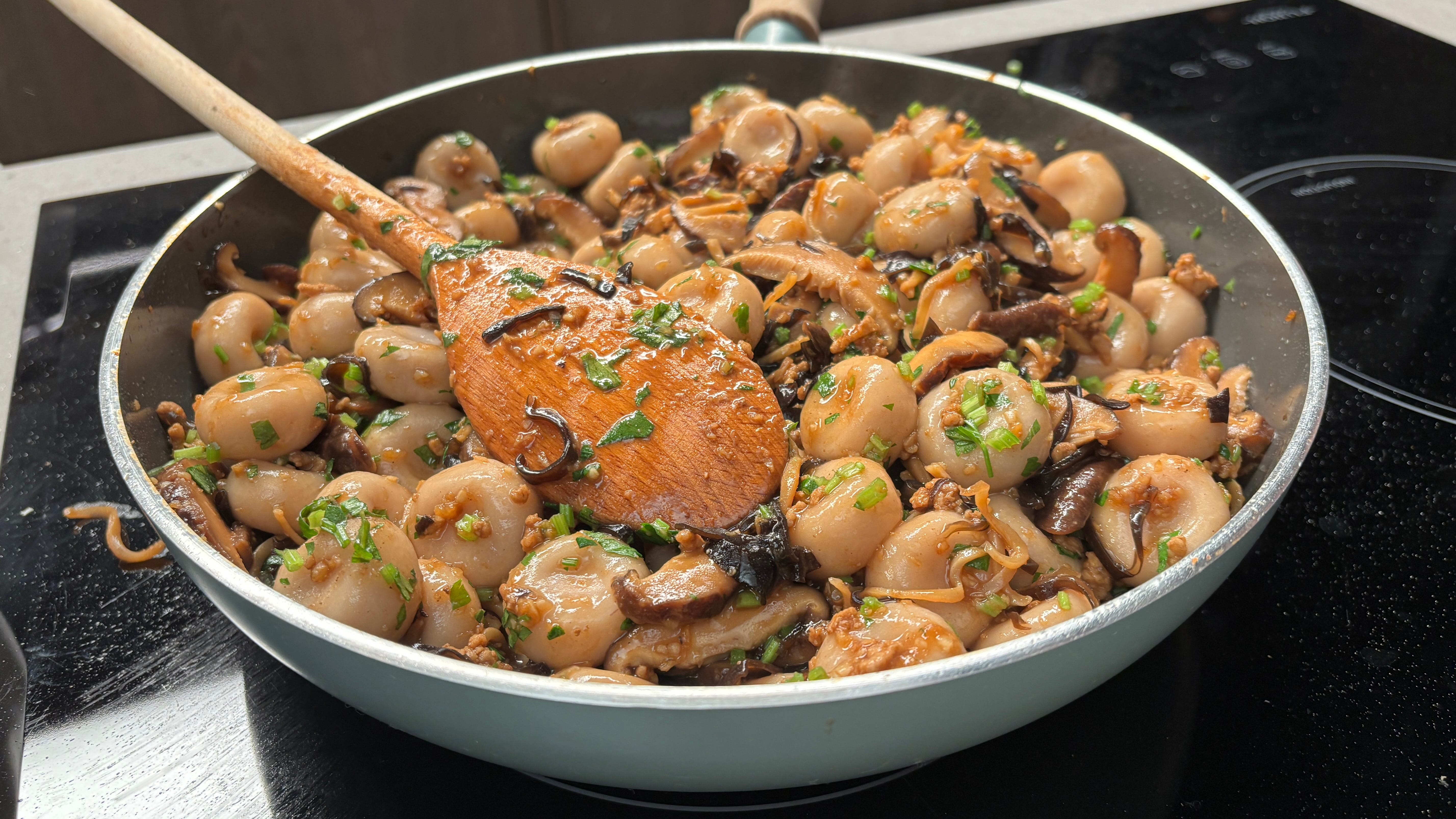
Hakka abacus seeds are usually eaten during Chinese New Year.
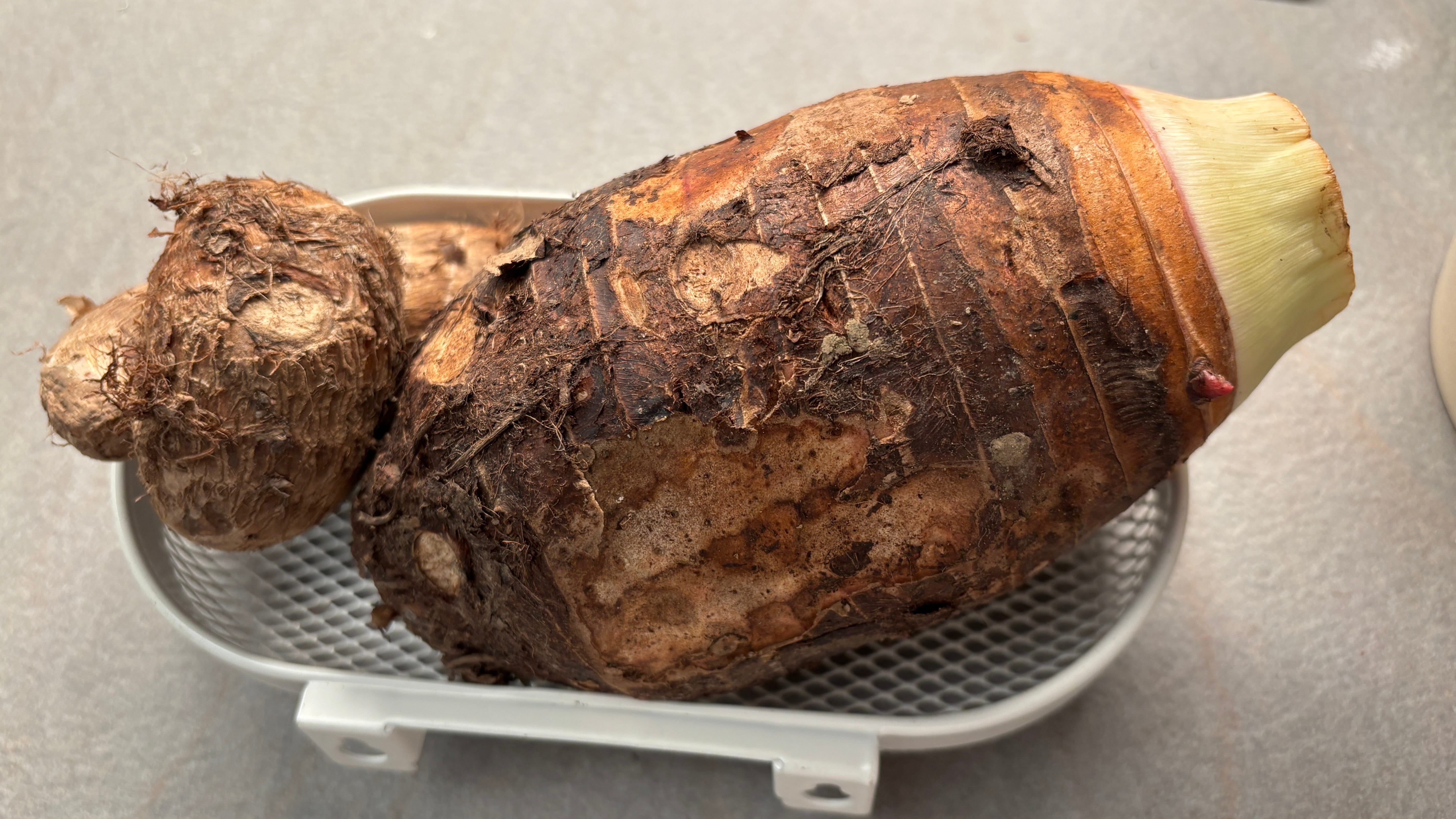
The star ingredient used to make the abacus seeds: taro. Taro is a root vegetable that is also commonly called yam in Singapore, although they are actually different plants.
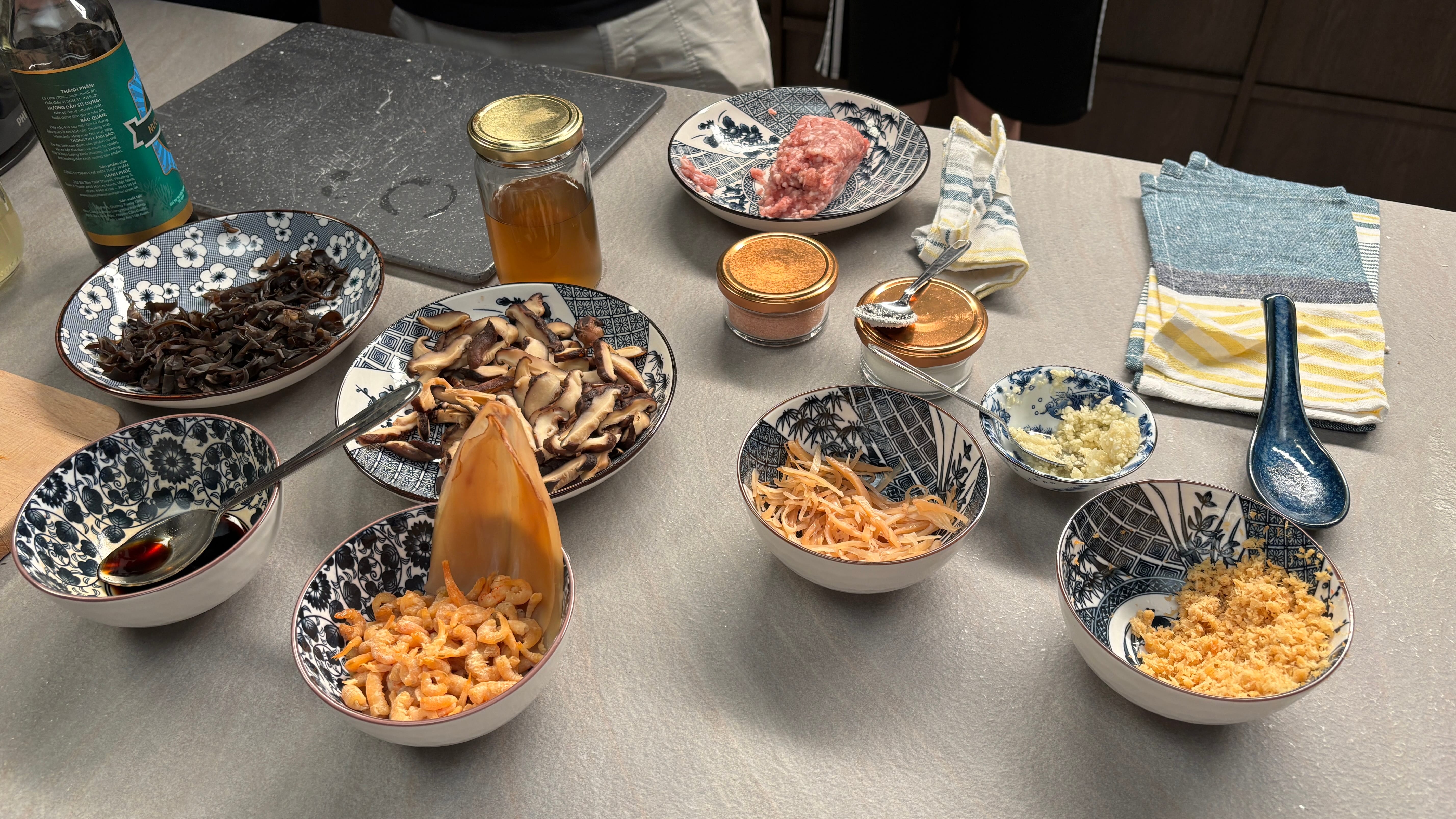
Some of the dried ingredients used in the dish. Dried or salted ingredients are commonly used in Hakka dishes because the Hakka community settled in mountainous regions and had limited access to the coast and fresh seafood.
Recipe
Sarah grew up eating Hakka abacus seeds every Chinese New Year and fondly remembers how in the days prior to the big day, she would return home from school to find her grandmother, grandaunt (whom she calls yi-po) and Filipino helper in the kitchen preparing the dish. Back then, she would join in and help to roll the abacus seeds. The recipe below is one put together by Sarah based on her memories of making the dish, tweaking recipes she found online, and feedback from her family. Unlike the version her grandaunt makes, Sarah prefers to use Vietnamese fish sauce instead of Chinese fish sauce.
Sarah’s ingredients and instructions
For the abacus seeds:
500 g peeled and cleaned taro (yam)
200 g tapioca starch
1 tsp. salt
1 tsp. sugar
hot water as needed
Other ingredients:
30 g dried squid, soaked overnight, cut into strips
30 g dried shrimp, soaked overnight, chopped finely
200 g chicken or minced pork
6 dried shiitake mushrooms, soaked overnight, sliced
10 g dried black fungus, soaked overnight, sliced
5 cloves garlic, finely chopped
1 bunch Chinese celery, washed, cut into 1 cm lengths
cooking oil
For the sauce:
2-3 tbsp. fish sauce (to taste)
1 tsp. dark soy sauce
2 tsp. light soy sauce
1 tbsp. oyster sauce
1 tsp. sugar
1/2 tsp. white pepper
300-400 ml water/broth
1. Wash, peel and slice the yam. Steam for 25 minutes, or until soft.
2. In a bowl, whisk the tapioca starch, salt and sugar together. Mash the steamed yam while hot and mix with the dry ingredients. Add hot water as necessary to bring together into a firm dough that’s not sticky.
3. Roll out small balls, then press down with your thumb and index finger to make the abacus shape. Cover with a damp cloth while making more.
4. Cook in boiling water in batches until they float for 30 seconds, then drain, rinse and immerse in cold water.
5. You can store the abacus seeds at this point by draining and tossing generously with oil, then storing in the fridge.
6. Mix the ingredients for the sauce, starting with less fish sauce and only adding more later if necessary.
7. To stir fry, prepare all the soaked dry ingredients. Heat up a few tablespoons of oil in a wok and sauté the minced pork until cooked. Add the dried ingredients and sauté for a minute, then add the minced garlic.
8. Pour in the broth or water, and the sauce. Braise for about 10 minutes, then add the abacus seeds and cook for another 5 to 6 minutes until the sauce is well absorbed (you can add more water if needed).
9. Adjust the seasoning as needed. Stir in white pepper and chopped Chinese celery and serve.
Related Podcast
Putting Together a Family Recipe of Abacus Seeds
When chef, filmmaker and writer Sarah Huang Benjamin wanted to make Hakka abacus seeds for Chinese New Year, her relatives were of little help. The exact recipe was something the older generation had not passed on. Armed with her childhood memories of helping to make the dish, Sarah spent hours doing research and conducting countless experiments before she came up with something she was happy with.
Related Articles
Hakka Community (opens in new tab)
The Hakka community is the fourth-largest Chinese dialect group in Singapore. According to the 2010 Singapore census, the Hakkas made up about 8 percent of the Chinese resident population. Originating from southern China, the Hakkas were already in Singapore by the early 19th century. (Infopedia)
Hakka Ban for Tea? (opens in new tab)
Librarian Rosxalynd Liu takes a tasty trip exploring the foods of her Hakka tradition. (National Library Blog)
Chinese Dialect Groups and Their Occupations in 19th- and Early 20th-Century Singapore
Librarian Jaclyn Teo draws on published English resources from the Lee Kong Chian Reference Library, and explores why certain Chinese dialect groups in Singapore, such as Hokkiens, Teochews, Cantonese, Hakkas and Hainanese, seemed to have specialised in specific trades and occupations, particularly during the early colonial period until the 1950s. (BiblioAsia)
We Are What We Eat: The Evolution of Chinese Food in Singapore
Chinese food in Singapore is a product of the country’s history and geography. (BiblioAsia)
Related Books
Linda Lau Anusasananan, The Hakka Cookbook: Chinese Soul Food from around the World (opens in new tab) (Berkeley, California: University of California Press, 2012).
新加坡客家文化与社群 (opens in new tab)[Hakka Culture and Communities in Singapore] (新加坡: 新加坡国立大学中文系, 2008).