
Video
Hokkien Mee Memories
26 August 2026
Topics
Food
Accounts of its origins vary, yet this style of Hokkien mee remains unique to Singapore.

What makes a good Hokkien mee? Is it the rich prawn broth? The slightly charred yellow noodles? The number of whole prawns on the noodles? Food blogger Dr Leslie Tay (of ieatishootipost fame) tells us more about the humble history of this hawker classic while whipping up a version you can make at home, even if you don't have a roaring fire for that wok hei goodness.
This episode is part of From Book to Cook, a cooking show on Singapore’s food history. Other episodes can be found here (opens in new tab).
Recipes
As a young boy, Leslie was often tasked with buying Hokkien mee, which he would share with his two brothers. While waiting in line, he carefully observed how the dish was prepared, gradually learning the techniques behind its distinctive flavour. Over time, Hokkien mee became one of his favourite hawker dishes, inspiring him to recreate it at home.
Drawing on years of observation, conversations with hawkers, and plenty of trial and error, Leslie developed his own recipe to document the important aspects of making the dish. His homemade version, adapted for a home kitchen without the need for a large wok or a large fire, delivers a plate of Hokkien mee comparable to the ones you can get from hawker centres.
Leslie’s ingredients and instructions
Ingredients:
400 g prawns
1 squid, sliced
700 ml water
1 tray pork belly, sliced into bite-sized chunks
250 g yellow noodles
120 g rice noodles
3 eggs
1 tsp. salt
1/2 cup oil
For the stock:
prawn heads and shells
2 bulbs garlic, chopped
1 1/2 tbsp. dashi powder
(optional) dried shrimp for added umami
Garnish:
fish sauce (to taste)
red chilli, sliced
calamansi lime
1. Soak yellow noodles in some water for 10 minutes to remove the alkali smell.
2. Blanch prawns and squid for 2 to 3 minutes in 700 ml water. Deshell the prawns and remove their heads, but do not throw the heads away. Set aside the prawn stock. Slice the squid.
3. In a bowl, lightly salt the pork belly. Add oil to a pan and fry the pork belly to render the lard and crisp the meat. Strain and set aside. Keep the oil.
4. To make the stock, fry the prawn heads using the oil used to render the lard. Once the heads start to brown, add chopped garlic (and dried shrimp, if using) and fry until fragrant. Add the prawn stock. Blend with a hand blender and add dashi powder. Simmer for 10 minutes and transfer the stock to a pot using a sieve.
5. Add oil to the pan and fry the beaten eggs.
6. Add yellow noodles and rice noodles. Add 1/4 of the stock and fry the noodles until they are slightly charred. Be gentle with the noodles and avoid breaking them.
7. Add the remaining stock to the noodles, cover and braise until the stock is absorbed. Drizzle with fish sauce to taste. Simmer for another 1 to 2 minutes.
8. Top with prawns, squid and pork belly. Serve with calamansi lime and sliced chilli.
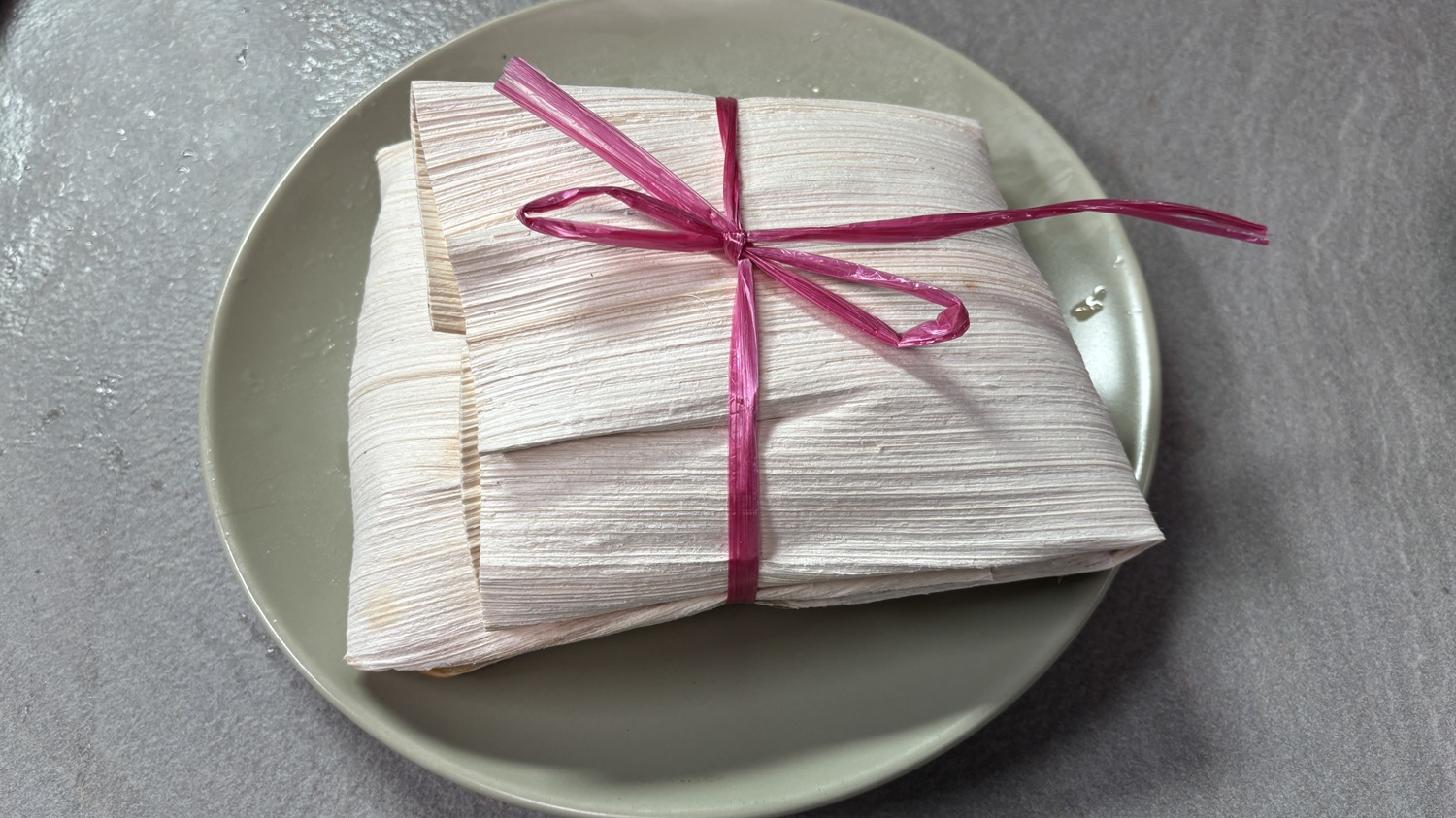
In the past, Hokkien mee was wrapped in opeh leaves and secured with string.
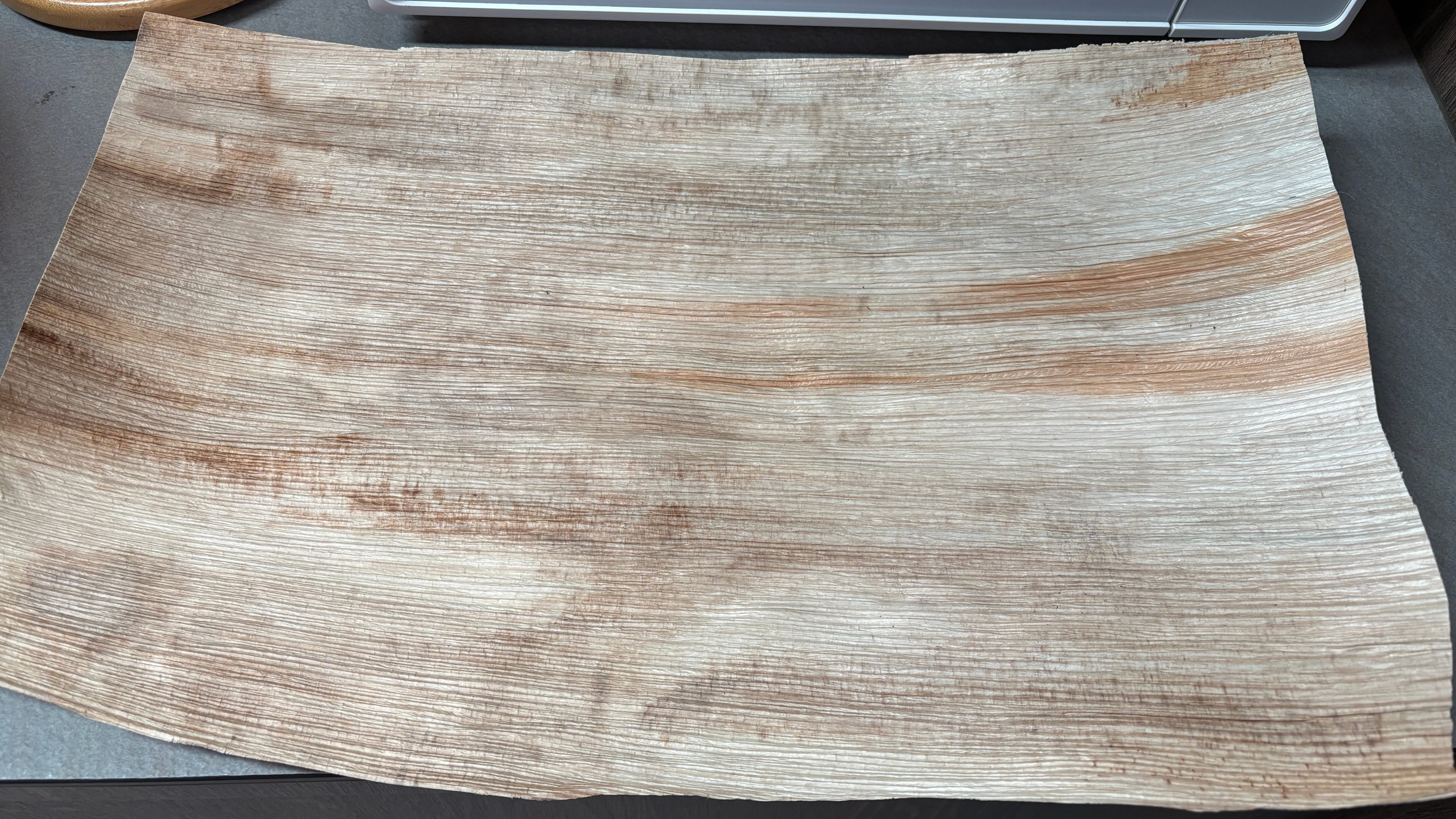
Although commonly referred to as a leaf, the opeh leaf (or daun upih) is the inner sheath of the betel nut palm tree that attaches the leaf to the trunk.
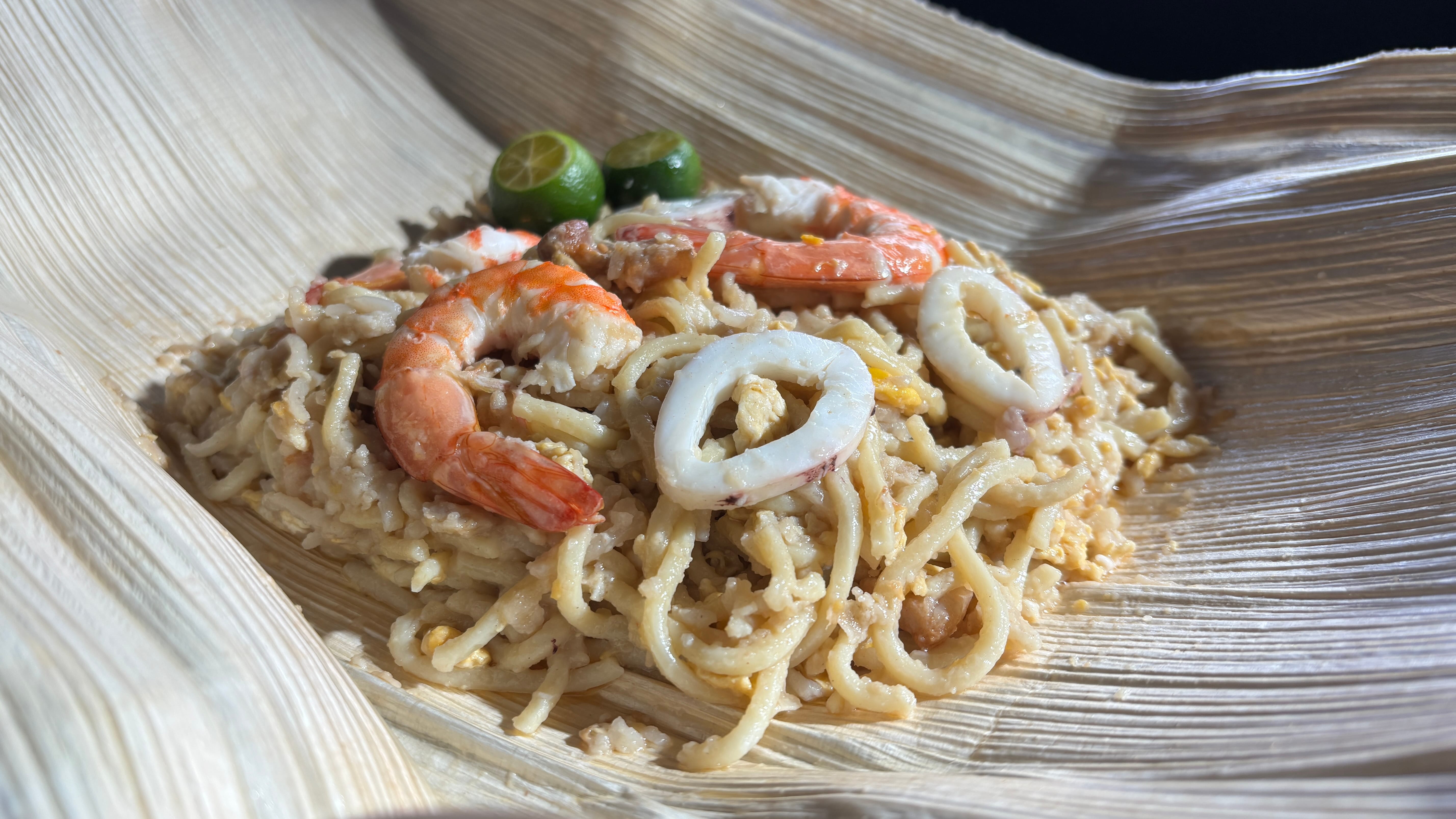
When unwrapped, the Hokkien mee would retain the “square” shape of the packaging.
Related Podcast
Long Live Hokkien Mee (opens in new tab)
A hawker centre favourite, Hokkien mee is making a comeback in Singapore, according to Dr Leslie Tay, author of the blog ieatishootipost. He also talks about the original guys who first made the dish in Singapore, what it takes to make a good plate of Hokkien mee and what is needed to ensure that hawker food continues to thrive in Singapore.
Related Articles
Fried Hokkien Prawn Noodles (opens in new tab)
Fried Hokkien prawn noodles, known locally as Hokkien mee, is a dish comprising thick yellow noodles fried in a rich prawn and pork stock and served with chilli (opens in new tab) and lime on the side. It is a popular local dish that has various accounts of its origins. (Infopedia)
We Are What We Eat: The Evolution of Chinese Food in Singapore
Chinese food in Singapore is a product of the country’s history and geography. (BiblioAsia)
Travelling Hawkers (opens in new tab)
Travelling hawkers or itinerant hawkers were a common sight in Singapore during the 19th century to mid-20th century. They were frequently found along busy streets and intersections, peddling food, drinks, vegetables, poultry and sundries. Street hawking was a popular occupation for many new immigrants to Singapore as it gave the unemployed and the unskilled a way to make a living with little costs. (Infopedia)
Hawkers During the Colonial Period (opens in new tab)
During Singapore’s colonial period and the early years of independence, the idea of enjoying a meal in clean hawker centres was unheard of. People usually ate by the roadside, often using dirty utensils in unhygienic conditions. (Curocity)
Hawkers: From Public Nuisance to National Icons
From bane of the government to boon of tourism, hawkers in Singapore have come a long way from the time they were viewed by government officials as progenitors of Hawkers disorder and disease. (BiblioAsia)
Life in Singapore’s Great Depression: Through a Hawker’s Eyes (opens in new tab)
In the early 1930s, the Great Depression brought hardship to many people in Singapore. Hawkers who sold food and goods on the streets faced significant challenges, yet they showed resilience. Senior Librarian Darren Seow looks at the daily lives of many ordinary hawkers during this difficult period. (National Library Blog)
Count the Memories, Not the Calories: Remembering Those Who Cook (opens in new tab)
How do we remember those who feed us? Librarian Kevin Seet delves into the visual documentation of Singapore’s hawkers and finds out how it enriches our understanding of this vital part of our shared history. (National Library Blog)
Singapore Food, Illustrated (opens in new tab)
Whether exploring new cafes or queuing for the latest food fads, eating is an experience that many of us in Singapore love to savour. Food also finds its way into our creative and literary lives, as can be seen in these remarkable local publications featured by our senior librarian Sharon Teng. (National Library Blog)
Related Books
Leslie Tay, Only the Best! The ieatishootipost Guide to Singapore’s Shiokest Hawker Food (opens in new tab) (Singapore: Epigram Books, 2012).
Christopher Leong, Singapore Hawker Food: What’s in the Dish? (opens in new tab) (Singapore: Marshall Cavendish Editions, 2021).
Lai Chee Kien, Hawker Centre Food: Ambrosia for the People (opens in new tab) (Singapore: Achates 360 Pte Ltd, 2021).