
Video
Sweet Talk: Traditional Chinese Candy
9 September 2026
Topics
Food
Traditional Chinese candy was once made fresh and sold by street vendors. Today, some of them have all but vanished.

Once a common sight at weddings, festivals and even street opera performances, traditional Chinese candy is increasingly difficult to find in Singapore. With the help of her mentor Chef Pang Nyuk Yoon, pastry chef and cookbook author Yeo Min takes on the challenge of making three types of Chinese candy, including one she has never seen, from recipes in a 1940 book, Chemical Analyses of the Foods of Singapore.
This episode is part of From Book to Cook, a cooking show on Singapore’s food history. Other episodes can be found here (opens in new tab).
Recipe
Yeo Min came across Chemical Analyses of the Foods of Singapore while researching for her cookbook, Chinese Pastry School. Intrigued by the recipes, she quickly realised they could be divided into three categories: those familiar to her, those she had vaguely heard of but never tried, and those that were completely unfamiliar. She decided to challenge herself by recreating three recipes from the book: bee pung (puffed rice candy), a treat she still enjoys today as it’s easily imported; ting ting tong (maltose candy), which she remembers from her childhood but is now rarely seen; and pee peh (stuffed plums), a dessert she has neither heard of nor seen before.
Bee pung (puffed rice candy)

Bee pung recipe from the 1940 book, “Chemical Analyses of the Foods of Singapore”. Besides the ingredients and steps, the book also mentions the dialect group that usually makes the dish, how it’s served, the average number of customers a day, what time of the day it is sold, and the price of the dish.
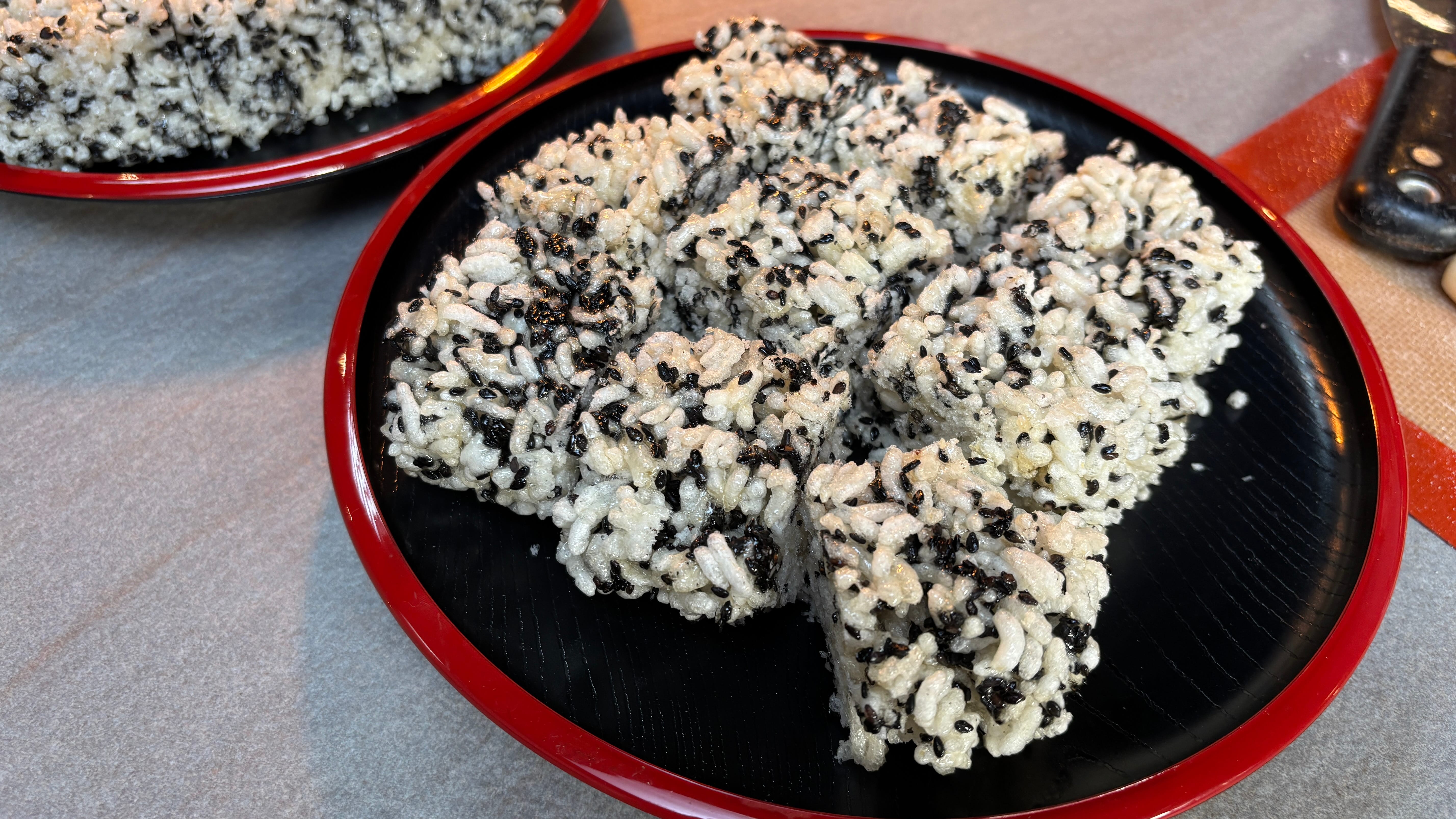
Yeo Min’s recreation of bee pung, made using puffed rice, maltose and black sesame seeds. Other ingredients, such as peanuts, may be added. These treats are often served at weddings, although white sesame seeds are used then, instead of black.
Ting ting tong

Ting ting tong recipe from the 1940 book, “Chemical Analyses of the Foods of Singapore”.
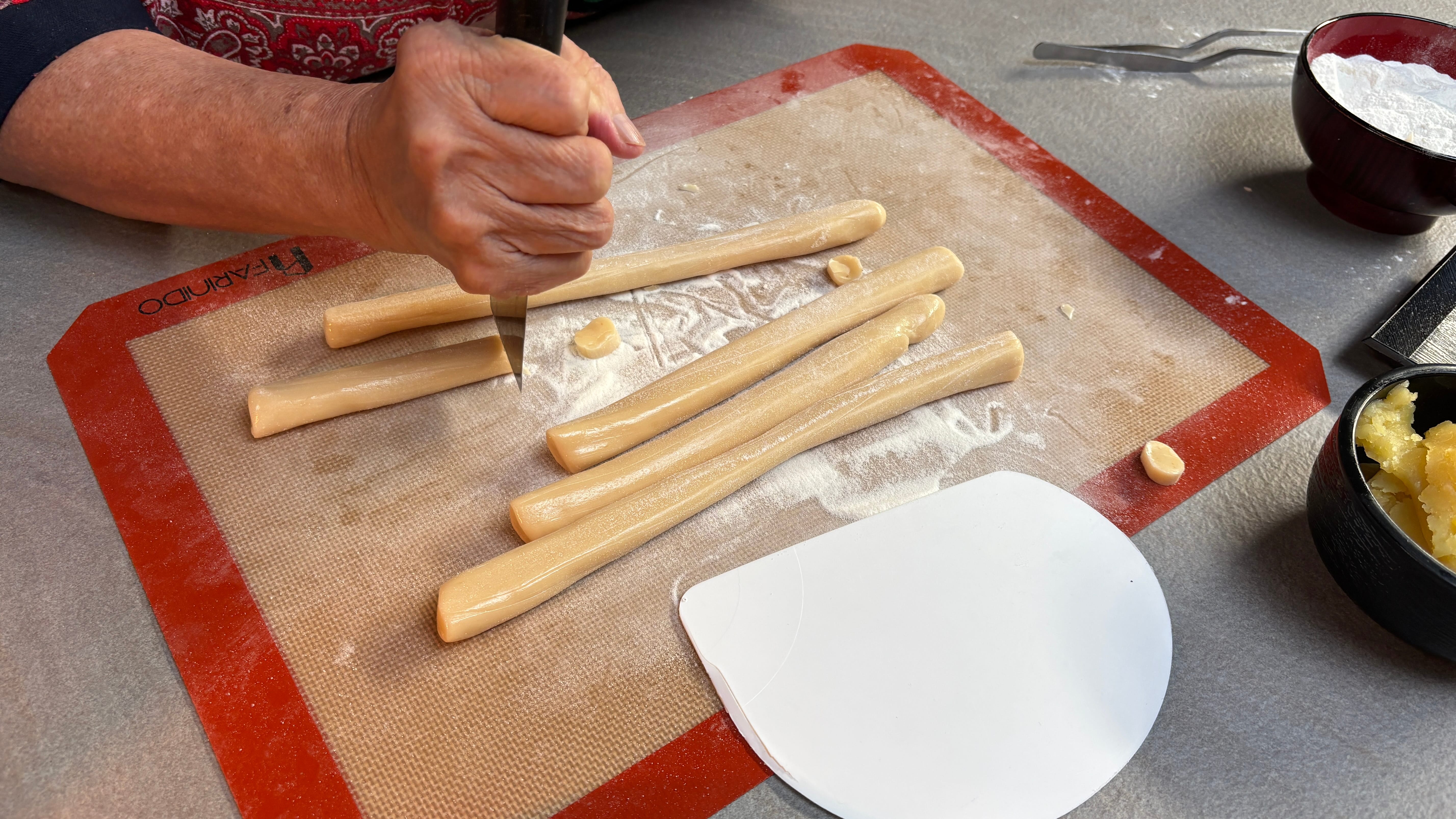
Yeo Min’s recreation of ting ting tong, which gets its name from the distinctive sound it makes when a hammer and chisel are used to break it into smaller, bite-sized pieces.
Pee peh (stuffed plums)

Pee peh recipe from the 1940 book, “Chemical Analyses of the Foods of Singapore”. Recreating it proved challenging, as Yeo Min had never encountered or even heard of the dish. She also had difficulty sourcing the tinned plums originally imported from Japan, and was puzzled by the reference to “bug leaves”.
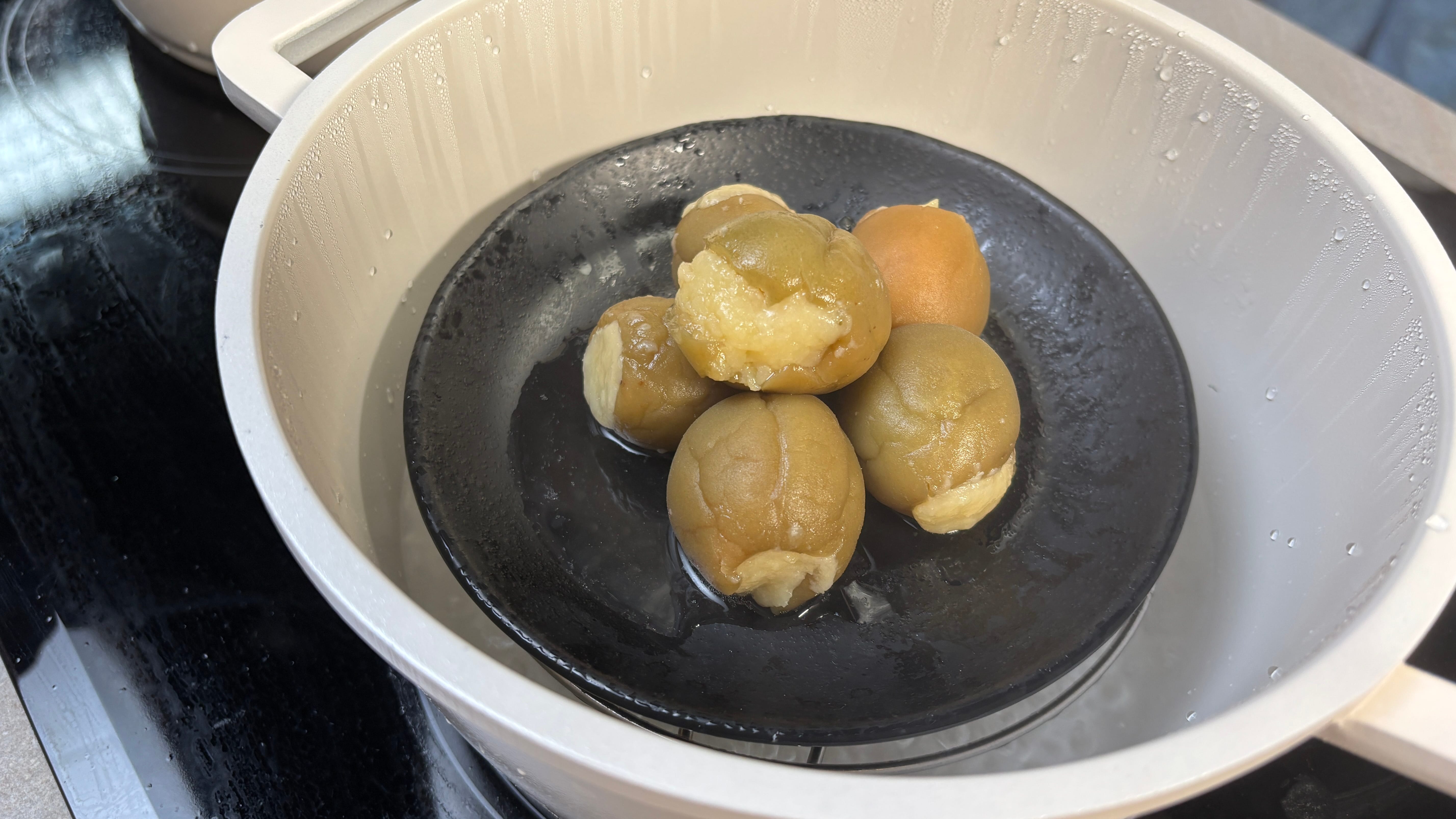
Yeo Min’s recreation of pee peh, or plums stuffed with mung bean paste. After many failed attempts using different types of plums, Yeo Min believes this is how it might have looked based on the description in the book, sans “stem of bug leaves”.
Related Podcast
A Woman's Mission to Revive Traditional Chinese Candy (opens in new tab)
After quitting her civil service job to become a pastry chef, Yeo Min decided to focus on preserving traditional Chinese candy when she realised the tradition was dying, even in the syllabus of local pastry schools. In this episode, she talks about her journey to making traditional Chinese candy, writing the book Chinese Pastry School and founding the Museum of Food.
Related Articles
We Are What We Eat: The Evolution of Chinese Food in Singapore
Chinese food in Singapore is a product of the country’s history and geography. (BiblioAsia)
Related Books
N. A. Canton, Chemical Analyses of the Foods of Singapore (opens in new tab) (Singapore: Government Printer, 1940).
Yeo Min, Chinese Pastry School (opens in new tab) (Singapore: Marshall Cavendish Cuisine, 2024).
彭玉芸 [Pang Nyuk Yoon], 回味籍贯菜 (opens in new tab) [Reviving Local Dialect Cuisines] (新加坡: 诺文文化事业, 2006).