
Article
Desperate Housewives: The Lure of Chap Ji Kee
Topics
Culture
10 October 2015
Chap ji kee has been famously called the “housewives’ opium”. Janice Loo traces its rise and subsequent decline.
![The 12 chap ji kee tiles and the corresponding soo sik (四色 or “four colours”) playing cards. Image reproduced from Dobree, C.T. (1955). Gambling Games of Malaya. Kuala Lumpur: Caxton Press with permission of the Government of the Federation of Malaya. (Call no.: RCLOS 795 DOB -[HWE]).](https://isomer-user-content.by.gov.sg/339/52e98e94-ab15-4b4f-946f-7cd3f8f6fd8b/12 chap ji kee tiles.jpg)
The 12 chap ji kee tiles and the corresponding soo sik (四色 or “four colours”) playing cards. Image reproduced from Dobree, C.T. (1955). Gambling Games of Malaya. Kuala Lumpur: Caxton Press with permission of the Government of the Federation of Malaya. (Call no.: RCLOS 795 DOB -[HWE]).
In 1977, Prime Minister Lee Kuan Yew, explaining the need for state-run lotteries such as Big Sweep and Toto, said:
“If you do not run [the lotteries], the chap-ji-kee man who has always swindled the people of their money is still there. It is the history of Singapore [author’s emphasis]. The Chinese who travelled overseas are the biggest gamblers you can find in the world. Because to leave China was to gamble. In Manchu China if you returned you were beheaded. Because you were bringing in dangerous foreign ideas. So to leave China for Nanyang was a gamble.”1
Lee’s words point to the perennial thorny question on the control of a vice that is intertwined with the early beginnings and social history of the Chinese community in Singapore. While the allure of chap ji kee has faded, it had, for more than half a century, been the most entrenched and widespread form of illegal public gambling in Singapore.
The Root of All Evil
In 1823, following his return from a four-year administrative stint in Java, Stamford Raffles issued orders for the suppression of gambling in the colony. Severe penalties were introduced such that “whoever games for money or goods shall receive 80 blows with a cudgel on the breech, and all money or property staked shall be forfeited to Government”. This was a move to remedy what Raffles perceived as the moral laxity of the administration under the first Resident, William Farquhar, who had set up gambling, opium and spirit farms2 against Raffles’ wishes, where revenue from the sale of gambling licences was used for public works.
According to the memoirs of Abdullah bin Abdul Kadir, a teacher of the Malay language, the Chinese – for whom gambling was a major pastime – “sighed and drew deep breaths [with] a grim look on their faces as they grumbled and abused Mr Raffles for preventing them from gambling”. Abdullah, who not only worked for Raffles as a scribe and interpreter but was also an admirer of the man, castigated the naysayers for failing to recognise that the measures were for their own good. The temptation of quick money often led to debt and crime. In his defence of Raffles, Abdullah declared: “[It] is obvious that gambling ruins people, deceives them and puts wicked ideas into their minds. Gambling is the mother of vice, and of her three children the eldest is named Mr Liar, the second Mr Thief and the third Mr Thug... it is these three persons who ruin the world.”
The new regulation did not spell the end of gambling in Singapore. The new Resident, John Crawfurd, who shared the views of his predecessor, saw gambling as a necessary evil and an invaluable source of income to cover the administrative costs of running the settlement. In 1820, when the gambling farms first began operating under Farquhar, the amount collected was 5,275 Straits dollars. The figure rose three-fold to $15,076 in 1823 after Crawfurd reinstated the gambling farms; and it further doubled to $30,390 in 1826, reaching $71,283 a year later. In its time, the revenue yielded from the gambling farms exceeded all other forms of excise revenue. It was not until 1829 that gambling was outlawed for good in the Straits Settlements and the gambling farms in Singapore were closed down. Despite the threat of prosecution, the enthusiasm for what was regarded as “one of the curses of the Colony” continued unabated. The prohibition of gambling only served to drive it underground where it thrived due to the weakness and ineffective enforcement of the law.
“The love of gambling is inherent in the Chinese. Men, women and children are addicted to the vice,” wrote J. D. Vaughan in The Manners and Customs of the Chinese in the Straits Settlements (1879). Around the time of his writing, there were reportedly no fewer than 10 types of gambling games available in Singapore, including lotteries, cards, dice and dominoes. Colonial administrators often held the view that gambling was an inborn trait of the Chinese. However, the observations of G. T. Hare, former Assistant Protector of the Chinese in the Straits Settlements, suggest how the Chinese penchant for gambling could be better understood:
“One’s length of days here, is to [the Chinese] mind, but a long game where the cards are always changing. Gambling seems to clear his mind and brace his nerves. It is training ground to him for the real gamble of life.”3
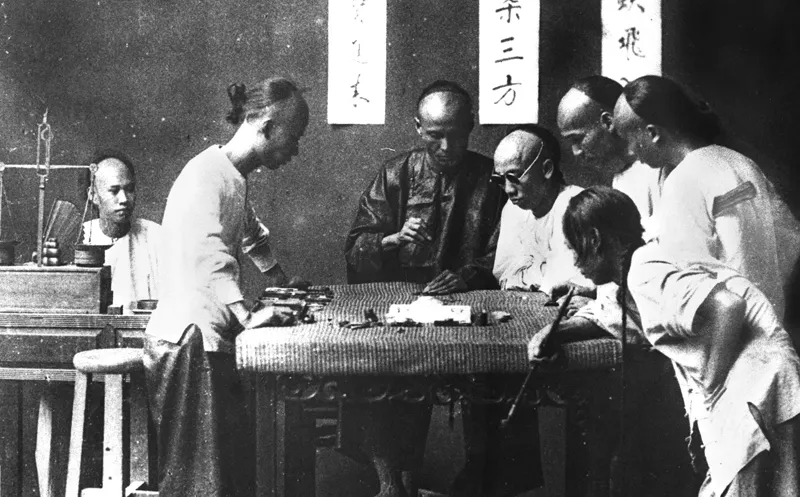
A group of Chinese men gambling in the 1880s. Gambling was a principal vice of the migrant Chinese community in the Straits Settlements. Courtesy of National Archives of Singapore.
The socio-economic circumstances of immigrant life inadvertently conditioned the propensity of the Chinese to gamble. Fleeing poverty and unrest in their homeland in the 19th century, Chinese immigrants arrived by the boatloads, swelling the ranks of unskilled labourers in Singapore. In his study on Chinese rickshaw coolies, James Warren asserts that gambling “was an inevitable fact of life in a migrant community bereft of family life [and] comprised largely of restless adult men with time on their hands and money to burn”. With few options for wholesome recreational activities, gambling went hand-in-hand with drinking, opium smoking and prostitution – the “four evils” – as the main sources of entertainment and escape from the drudgery of everyday life for these men. Earning a pittance for back-breaking work with little rest, they nevertheless dreamt of returning to China with a fortune; the hope of winning a game or lottery was a psychological balm that made their grim existence more bearable.
It was only a matter of time before the gambling habit exacted its price. Having squandered their hard-earned money, the men borrowed heavily from their employers to feed their gambling addiction. Mired in debt, they invariably pledged to continue working for their creditors until the sum was paid up. Without personal savings, it was impossible for sons, brothers and husbands to fulfil their moral duty of providing for their dependants back home, and this failure became the cause of untold family strife and tragedy. It was no surprise that, when driven to desperation, many resorted to theft, violence and crime, and when all was lost, suicide.
The Brains Behind the Business
Writing at the end of the 19th century, Hare likened gambling in Singapore to epidemics that “break in waves from time to time over the surface of Chinese life, carrying trouble and distress with it . . .” He thought it expedient to document the latest fever among the immigrant and Straits Chinese over a new form of gambling called chap ji kee “before it passes away out of men’s minds and becomes one of the dead ghosts of a forgotten past...” Chap ji kee is Hokkien for 12 Cards (Shi er zi; 十二支) where chap ji means “12” and kee refers to the card. While its origins can be traced to the game of Chinese cards popular in the southern Chinese province of Fujian, the evolution of chap ji kee into a large-scale underground lottery in Singapore was an innovation that Hare attributes to Peranakan or Straits Chinese women (nonyas)4. According to him, chap ji kee was first played in Johor before catching on in Singapore in 1893; it was suppressed only three years later when the authorities began stamping it out.
The game operated in the manner outlined until 1894 when, as Hare claims, it became much altered by the nonyas who had emerged as its chief organisers and top patrons. As the popularity of the game grew, chap ji kee was modified in order to evade detection by the authorities and to make it difficult to prosecute the offenders. To circumvent the law, the promoter would engage a number of collectors who went from door to door taking bets from private homes, thus obviating the need for punters to gather in one place to stake their money in person. To avoid being caught with evidence of the lottery on their bodies, collectors rarely carried the chap ji kee cards with them and further devised their own cryptic notations to keep track of the various accounts. For example, the value of 10 cents was denoted by a circle, and a dollar by a cross inside a circle. These symbols were combined or doubled to represent higher values. Likewise, chap ji kee characters were represented in a variety of ways such as written and pictorial symbols, strings of beads, numerals – even the number of spots on a certain type of handkerchief carried by nonya ladies could surreptitiously function as a code.
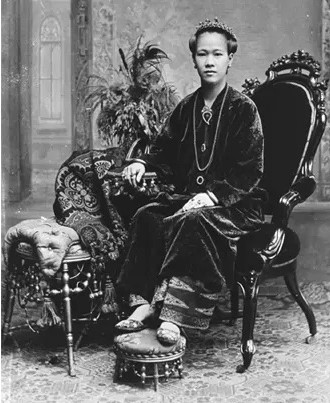
Straits Chinese ladies, known as nonyas, were avid chap ji kee players. Boden-Kloss Collection, courtesy of National Archives of Singapore.
The Modus Operandi
After gathering the bets, the collectors would assemble for the drawing of the lottery at a place and time decided in advance by the promoter. Houses that afforded some means of quick escape through a backdoor or over the roofs of neighbouring houses onto the streets were usually selected as the venue. With informants hired to keep a lookout for the police, the game would only commence after the front entrance had been secured and the whole party ensconced in a room upstairs or on the ground floor at the back of the house. The packets containing the stakes and betting memoranda would be laid on a table in front of the promoter, who would proceed to announce the winning character from the selected card. The group quickly dispersed once the winnings were paid out.
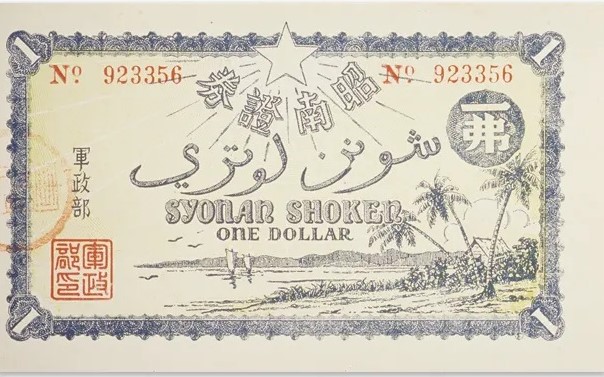
A $1 “Syonan Shoken” lottery ticket issued by the Japanese military government during the Japanese Occupation (1942–45). The Japanese encouraged gambling in Singapore, and gambling dens were often set up along the streets. Courtesy of the National Museum of Singapore, National Heritage Board.
The role of collector was greatly sought-after for the steady income it brought; collectors typically earned a 10 percent commission on every winning stake. Profit margins were high as some lotteries did not restrict the amounts staked. It helped of course that the clientele comprised mainly affluent Straits Chinese ladies with ample leisure time and money to spare. Their healthy appetite for gambling came to public attention in several notable police court cases: in 1909, for instance, when 11 nonyas were arrested in a house on Tank Road for playing chap ji kee, the magistrate – who felt that the maximum fine of $25 was grossly inadequate as punishment – sagely advised their husbands to let the women be imprisoned for two weeks instead of paying a fine. In another interesting case, the wife of a wealthy Chinese gentleman pawned her jewellery to settle a $50,000 chap ji kee debt – a sizable fortune even by today’s standards – and had them replaced with cheap imitations.
The success of the chap ji kee lottery spawned a franchise of sorts. Enticed by the lure of easy money, enterprising individuals opened sub-agencies or branch firms, declaring the same winning number announced by the main syndicate. Unlike the principal chap ji kee, the sub-agency was open to the general public and run by men as well as women. In time, an elaborate three-tier system of promoters, sub-promoters and collectors was established.
Over time, chap ji kee further evolved to attract a wider audience: the Chinese characters were replaced by the numbers 1 to 12, ensuring that even the illiterate could play, and instead of betting on a single character, punters would stake their money on a pair of numbers between 1 and 12. This meant that a punter had to correctly guess two winning numbers. At 1 to 144, the odds of striking seemed more remote than before, but to sweeten the deal, the dividend was increased to 100 times the size of the stake. To attract as many punters as possible, the minimum bet could be as low as one cent, which over time increased to 10 cents.
HOW CHAP JI KEE WAS TRADITIONALLY PLAYED
Chap ji kee involved betting on six red and six black playing pieces in a game of Chinese chess. The red pieces were engraved with the Chinese characters 帅 (field marshall), 仕 (prime minister), 相 (minister), 车 (chariot), 马 (horse) and 炮 (cannon), while the black pieces consisted of the characters 将 (general), 士 (scholar) , 象 (elephant), 车 (chariot), 马 (horse) and 炮 (cannon).
The lottery was initially played with a table or board on which the above 12 Chinese characters were inscribed. At the start of each round, the chap ji kee promoter would pick a card from a bag containing 12 cards – each marked with one of the Chinese characters – and place the chosen card into a small wooden box. The players were then invited to bet on a character of their choice. Once that was done, the promoter would open the box to reveal the winning character. The odds of striking were 1 to 12 and the lucky punter would walk away with a tenfold return on the wager. This mode of play was known as chap ji kee panjang.
The combination of small bets and high returns made chap ji kee irresistible to low-wage workers and housewives. Punters need not pay the full amount of their bets immediately as collectors generally extended some form of credit. It was easy to place bets as anyone could qualify as a collector – the stall-owner in the market, the hawker on the street corner, the bored housewife and even the washerwoman. The system worked because the arrangement was based on tacit trust: collectors never issued receipts, and most punters neither knew who drew the winning numbers nor where the draw took place. The winning numbers would be scribbled on walls or pillars in designated areas or conveyed by word-of-mouth in the streets. A collector who was the proprietor of a coffeeshop even used a wall-clock to display the results – the hour and minute hands would point respectively to the first and second winning numbers.
The odds were always rigged in favour of the syndicates as they would regularly choose the least-backed number as the winning one. This was achieved by having each sub-promoter draw up a schedule containing all the betting configurations and stakes that the collectors had gathered. These were then consolidated into a master schedule that enabled the promoter to easily determine the combination with the lowest stakes among the 144 possible permutations. Such a practice guaranteed consistent profits for the syndicate.
The Lure of Chap Ji Kee
Chap ji kee flourished in the post-war decade with estimated takings of a whopping half a million dollars daily. The scene was dominated by two syndicates – Lau Tiun, which controlled the Tiong Bahru and Upper Serangoon Road areas, and Shanghai Tai Tong that held sway over the rest of Singapore. In 1948, the authorities brought the latter to its knees with the arrest and deportation of its ringleaders. However, the breakup of this powerful syndicate managed to disrupt the chap ji kee business for only five days before others swiftly stepped in to fill the vacuum. The former associates of Shanghai Tai Tong split into two syndicates – Sio Poh, Hokkien for “Small Town”, and Tua Poh, Hokkien for “Big Town”, which operated in the areas north and south of the Singapore River respectively. By the 1970s, the Lau Tiun, Sio Poh and Tua Poh syndicates were raking in a combined annual turnover of $100 million. It is little wonder that chap ji kee has been called a “colossal swindle”. Aside from the enormous sums of money involved, the lottery was an outright scam since a win was determined by deliberate choice rather than random chance.
Yet, punters remained undeterred. In 1973, the New Nation tabloid interviewed 200 gamblers and found that 95 percent knew how the winning numbers were derived. Quite incredulously, when asked the reason for their continued participation, the respondents, most of whom were housewives, explained matter-of-factly:
“Chap-ji-kee is the only form of gambling that we can take part daily without too many objections from our husbands, unless we bet heavily. The stakes allowed are small. It is convenient and it happens daily. All we have to do is tell the collectors some of whom are people we meet every day on our market rounds – the vegetable sellers or fish mongers”.5
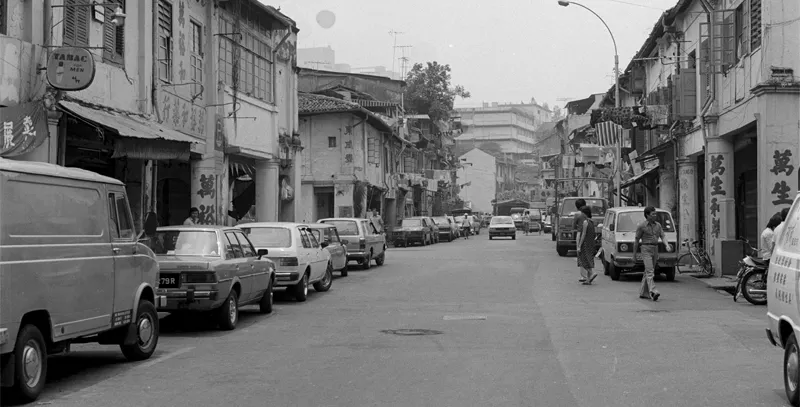
China Street in 1983. China Street was once known in Hokkien as Kiau keng cheng (赌间前), which means “front of the gambling houses”, and also as Kiau keng khau (赌间口), which means the “street on to which the gambling houses open”. To the Cantonese, China Street was Po tsz chheung kai (宝字场街) or “Gambling-hall street”. Lee Kip Lin Collection, PictureSG, National Library, Singapore.
Chap ji kee was called the “housewives’ opium” as it was an easy way of injecting some excitement into their lives, and to relieve the tedium of domestic chores and child-minding. Although the women played for low stakes and did not realistically expect a windfall from chap ji kee, the prospect of winning just that little extra cash was attractive enough for the average housewife with fairly modest wants – “that special meal, a new dress for baby or that much desired gold ring for herself”. The principles of an honest game did not concern the [wo]man in the street. In their minds, chap ji kee was still based on chance since the combination of numbers that was likely to attract the least stakes was anyone’s guess. The syndicates, which pocketed at least 80 percent of the annual turnover, were clearly the indisputable winners – so long as their luck held.
The Death of Chap Ji Kee
The authorities tried to stamp out chap ji kee for years but to no avail. The key to the game’s longevity lay in the well-organised syndicates and their covert operations as well as the intricate network of collectors who did the dirty work on behalf of the promoter. It would take two decades and the progressive tightening of the law and relentless police raids throughout the 1960s and 70s before the chap ji kee rackets were smashed. The syndicates gradually disintegrated as the kingpins and their close associates were arrested or went into hiding.
In addition, the creation of a legal lottery operator, the Singapore Pools, in 1968 and the introduction of state-run lotteries beginning with Toto that year, gradually chipped away at the syndicates’ customer base. Since history has shown that gambling cannot be completely eradicated, the government took a pragmatic approach and introduced legalised gambling options; at least this way, gambling could be regulated and the revenue channelled towards worthwhile and civic causes. The first project funded by Singapore Pools was the construction of the National Stadium. Today, the Tote Board (Singapore Totalisator Board), which was formed in 1988, channels the surpluses from these state-run lottery operations to support public, social or charitable causes, as well as the growth of culture, art and sport in Singapore.
![Chap ji kee sub-promoters drew up such schedules to tally the stakes collected on each of the 144 combinations. Image reproduced from Dobree, C.T. (1955). Gambling Games of Malaya. Kuala Lumpur: Caxton Press with permission of the Government of the Federation of Malaya. (Call no.: RCLOS 795 DOB -[HWE]).](https://isomer-user-content.by.gov.sg/339/bb5c4a8a-7fc3-4f14-b131-07bf0e0004c5/chap ji kee schedules.jpg)
Chap ji kee sub-promoters drew up such schedules to tally the stakes collected on each of the 144 combinations. Image reproduced from Dobree, C.T. (1955). Gambling Games of Malaya. Kuala Lumpur: Caxton Press with permission of the Government of the Federation of Malaya. (Call no.: RCLOS 795 DOB -[HWE]).
While it is entirely plausible that chap ji kee might still be played in some isolated circles today, there is little chance of the game ever regaining its former glory. To recall Hare’s words, chap ji kee has been cast “out of men’s minds and [has become] one of the dead ghosts of a forgotten past.”
About the Author
Janice Loo is an Associate Librarian with the National Library of Singapore. Her responsibilities include collection management, content development and research and reference assistance on topics relating to Singapore and Southeast Asia.
Endnotes
1 Singapore. Parliament. Parliamentary debates: Official report. (1977, February 23). Debate on President’s Address (Vol. 36, col. 433). Singapore: Govt. Printer. (Call no.: RSING 328.5957 SIN)
2 A tax-farming system introduced by William Farquhar in which monopoly rights were auctioned off to sell opium and spirits, and to run gambling dens. See Turnbull, C.M. (2009). A history of modern Singapore 1819–2005 (p. 35). Singapore: NUS Press. (Call no.: RCLOS 959.57 TUR)
3 Hare, G.T. (1898, July). The game of chap-ji-ki. Journal of the Straits Branch of the Royal Asiatic Society, 31, 63–71, p. 48. Retrieved from JSTOR via NLB’s eResources website.
4 The term Peranakan or Straits Chinese generally refers to people of mixed Chinese and Malay/Indonesian heritage. Peranakan males are known as babas while the females are known as nonyas (or nyonyas). See National Library Board. (2013, 26 August). Peranakan (Straits Chinese) community written by Koh, Jaime. Retrieved from Singapore Infopedia.
5 Multi-million dollar chap-ji-kee racket. (1973, February 27). New Nation, p. 7. Retrieved from NewspaperSG.
References
Abdullah bin Abdul Kadir. (2009). The Hikayat Abdullah. Kuala Lumpur: The Malaysian Branch of the Royal Asiatic Society. (Call no.: RSEA 959.5 ABD)
Blythe, W.L. (1951). Colony of Singapore Annual Report 1950. Singapore: Government Printing Office. (Call no.: RDLKL 959.57 SIN)
Braddell, T. (1854). Gambling and opium smoking in the Straits of Malacca. Journal of the Indian Archipelago and Eastern Asia, 8, 74–75. (Microfilm no.: NL25796)
Buckley, C.B. (1984). An anecdotal history of old times in Singapore: From the foundation of the settlement ... on February 6th, 1819 to the transfer to the Colonial Office ... on April 1st, 1867. Singapore: Oxford University Press. (Call no.: RSING 959.57 BUC)
Dobree, C.T. (1955). Gambling games of Malaya. Kuala Lumpur: Caxton Press with permission of the Government of the Federation of Malaya. (Call no.: RCLOS 759 DOB)
Hare, G.T. (1898, July). The game of chap-ji-ki. Journal of the Straits Branch of the Royal Asiatic Society, 31, 63–71, p. 48. Retrieved from JSTOR via NLB’s eResources website.
Makepeace, W., Brooke, G.E., & Braddell, R.St.J. (1991). One hundred years of Singapore. Singapore: Oxford University Press. (Call no.: RSING 959.57 ONE)
Multi-million dollar chap-ji-kee racket. (1973, February 27). New Nation, p. 7. Retrieved from NewspaperSG.
Regulation, No. IV of 1823. A regulation prohibiting gaming-houses and cockpits, and for suppressing the vice of gaming at Singapore. (1824). Singapore local laws and institutions, 1823. London: Printed by Cox and Baylis. (Call no.: RCLOS 348.595702 SIN)
Sharp, I. & Stephens, J. (1998). Just a little flutter: The Singapore pools story. Singapore: Singapore Pools. (Call no.: RSING 336.1095957 SHA)
Singapore. Parliament. Parliamentary debates: Official report. (1977, February 23). Debate on President’s Address (Vol. 36, col. 433). Singapore: Govt. Printer. (Call no.: RSING 328.5957 SIN)
Song, O.S. (1984). One hundred years' history of the Chinese in Singapore. Singapore: Oxford University Press. (Call no.: RSING 959.57 SON)
Turnbull, C.M. (1972). The Straits Settlements, 1826–67: Indian presidency to crown colony. London: Athlone Press. (Call no.: RSING 959.57 TUR)
Turnbull, C.M. (2009). A history of modern Singapore, 1819–2005. Singapore: NUS Press. (Call no.: RSING 959.57 TUR)
Vaughan, J.D. (1879). The manners and customs of the Chinese of the Straits Settlements. Singapore: Mission Press. Retrieved from BookSG.
Warren, J.F. (2003). Rickshaw coolie: A people's history of Singapore, 1880–1940. Singapore: Singapore University Press. (Call no.: RSING 338.341 WAR)
Yen, C.H. (1990, April). Gambling in the Chinese community in Singapore and Malaya, 1792–1911. Asian Culture, 14, 47–56.