
Article
Mr Song’s European Escapade
Topics
People
10 October 2017
Ong Eng Chuan pores through the faded colonial-era postcards of Peranakan luminary Song Ong Siang to piece together highlights of his 10-month European sojourn.
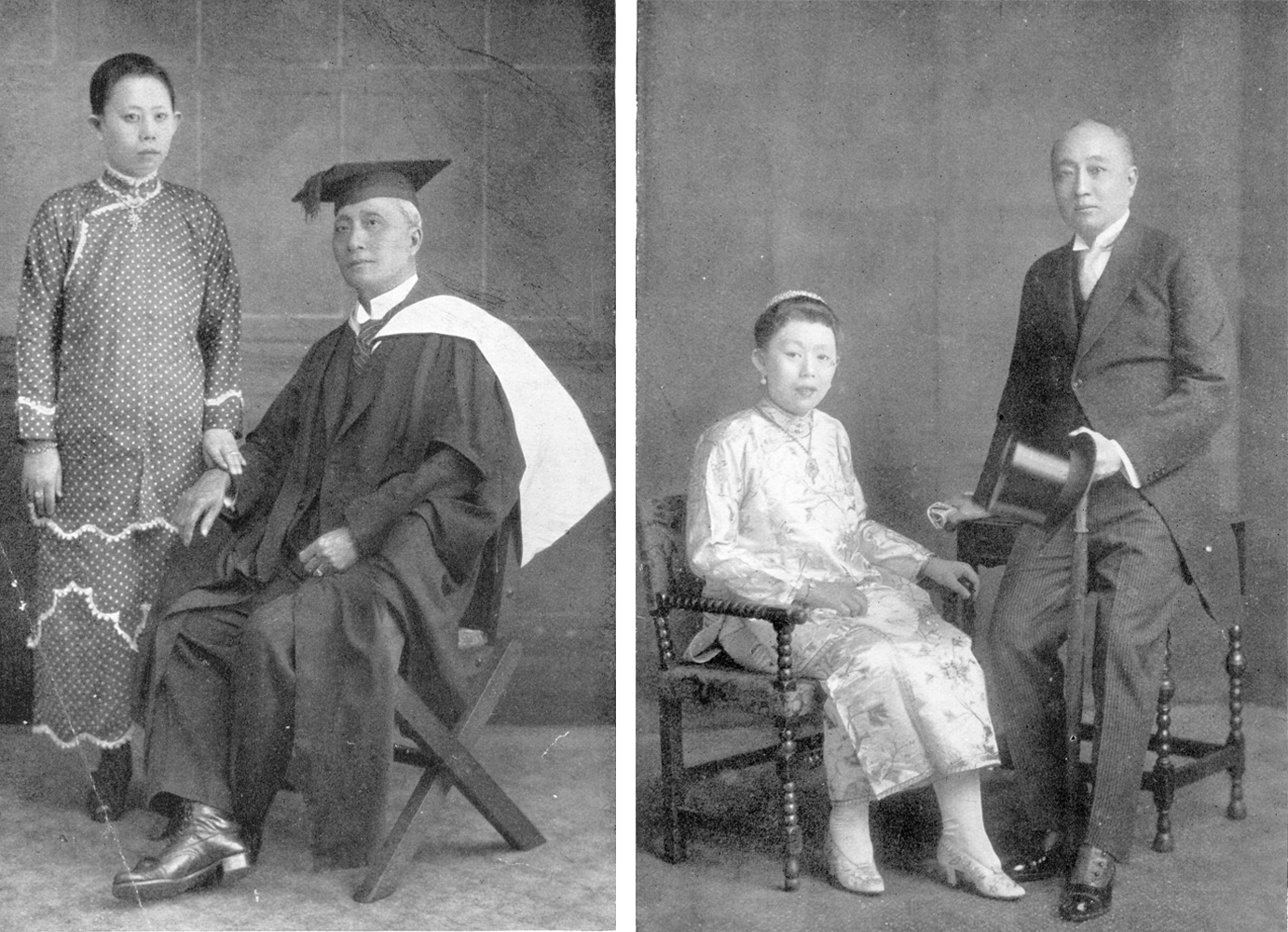
(Left) Portrait of Song Ong Siang, later Sir Ong Siang Song and his wife Lady Song (Helen Yeo Hee Neo), after he was conferred the Knight Commander of the Most Excellent Order of the British Empire (KBE) in 1936. Song, who came from a prominent Peranakan family, was the first Malayan Chinese to receive a knighthood. This photo was taken by photographic studio Hills; Saunders in Cambridge during their European vacation. Source: Song, O. S. (1923). One Hundred Years’ History of the Chinese in Singapore. London: John Murray. Collection of the National Library, Singapore. (Accession no.: B20048226B).(Right) Mr and Mrs Tan Soo Bin accompanied Mr and Mrs Song Ong Siang on their European vacation. Mrs Song and Mrs Tan were sisters. Soo Bin (who also came from a wealthy Peranakan family) and Song Ong Siang were good friends and founding members of the Singapore Volunteer Infantry’s Chinese Company. Source: Song, O. S. (1923). One Hundred Years’ History of the Chinese in Singapore (p. 368). London: John Murray. Collection of the National Library, Singapore. (Accession no.: B20048226B).
On the evening of 21 March 1922, members of the Chinese community in Singapore gathered to host a lavish dinner at the Garden Club1 in honour of Mr and Mrs Song Ong Siang, who were leaving shortly for Europe on a 10-month extended holiday. Close to one hundred of the who’s who of the local Chinese community turned up at the event, a testament to the high regard and esteem in which Song was held in the colony.
Guests at the dinner included Lo Chong, the Consul-General for China; Lim Nee Soon, President of the Chinese Chamber of Commerce; Lee Choon Guan, who was provisionally appointed as Unofficial Member of the Straits Settlements Legislative Council during the time Song would be away; the businessman and philanthropist Eu Tong Sen; and other prominent members of the Chinese community.
Song Ong Siang and His Accomplishments
Song Ong Siang (1871–1941) was the progeny of one of the oldest and most respected Peranakan (or Straits Chinese) families in Singapore. He was the third son of Song Hoot Kiam, founder of the Straits Chinese Church (present-day Prinsep Street Presbyterian Church), and after whom Hoot Kiam Road is named.
The younger Song, who studied at Raffles Institution and later pursued law at the University of Cambridge on a Queen’s Scholarship, was called to the English bar in 1893. On his return the following year, Song became the first Chinese barrister to be admitted to the Singapore bar. Song was not only a successful lawyer – his law firm Aitken and Ong Siang was one of the leading legal firms in Singapore – he was also a respected community leader who dedicated most of his adult life to public service. In his toast to Song during the dinner, Lim Nee Soon paid tribute to Song’s myriad contributions to society.
Even so, few people would have predicted that some 14 years later, Song would reach the pinnacle of society when he was conferred the title of Knight Commander of the Most Excellent Order of the British Empire (KBE) for his achievements.
Chief among Song’s contributions were the instrumental role he played in the formation of the Straits Chinese British Association (now known as The Peranakan Association) in 1900, which served as a voice for the Straits Chinese community; his appointment as a member of the Legislative Council from 1919 to 1927; and his enlistment in the Chinese Company of the Singapore Volunteer Infantry (later renamed Singapore Volunteer Corps) in 1901. The infantry unit helped to suppress lawlessness and maintain order during the Indian mutiny of 1915.
Another cause that Song was particularly passionate about was education. He championed educational opportunities for Straits Chinese girls by founding the Singapore Chinese Girls’ School with Dr Lim Boon Keng in 1899. He also started Bintang Timor, the first Romanised Malay-language newspaper, in 1894, and together with Lim, published the Straits Chinese Magazine (1897–1907), a landmark English-language publication that provided a platform for literary expression and discussions on important issues of the day.
Song was an eloquent speaker and gifted with a flair for writing. His literary prowess is most evident in his seminal work, One Hundred Years’ History of the Chinese in Singapore, which chronicles the lives of prominent Chinese in Singapore between 1819 and 1919. Song had been working on the hefty manuscript for three years prior to his European sojourn, and it was now finally completed.
Song’s European trip was also significant because he would hand-carry his manuscript and have it printed overseas. The 600-page tome was subsequently published by John Murray in London in 1923. The book has since been reprinted three times, the last in 1984 by Oxford University Press. More recently in 2017, an annotated ebook version of the publication was produced by National Library, Singapore, and the Singapore Heritage Society.2
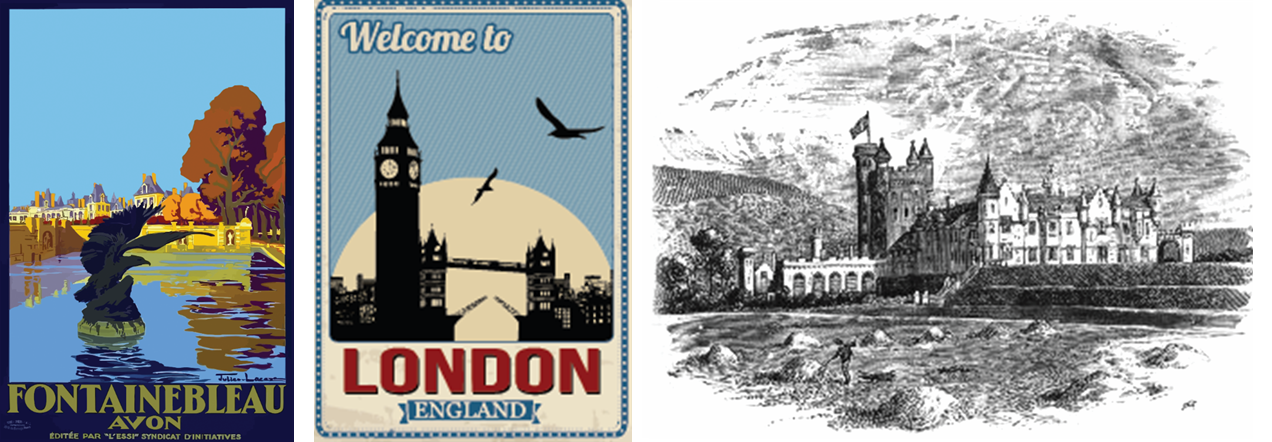
While it’s not possible to ascertain the exact itinerary of the Songs on their 10-month European sojourn, one can get a good sense of the places they travelled to by examining the postcards they sent home. For instance we know the Songs arrived in Paris in early May 1922, and travelled to Fontainebleau to see the palace where Napoleon Bonaparte lived. We also know that the Songs spent the larger part of their holiday in Britain. In London, the couple attended a dinner hosted by the Association of British Malaya on 30 May 1922, a society founded by former British residents in Malaya. In Scotland, they visited Balmoral Castle (above right) in Aberdeenshire, one of the residences of the British royal family. Image source: (from left) Wikimedia Commons, Shutterstock, Wikimedia Commons.
Ahoy Europe!
On 24 March 1922, Song and his wife Helen boarded the Dutch mail steamer, Prins der Nederlanden, bound for Europe. The Suez Canal, which had opened some five decades earlier in 1869, had vastly shortened travel time between Europe and Asia by sea, and taking long holidays for weeks or months at a time had become a fashionable pastime for the well-heeled.
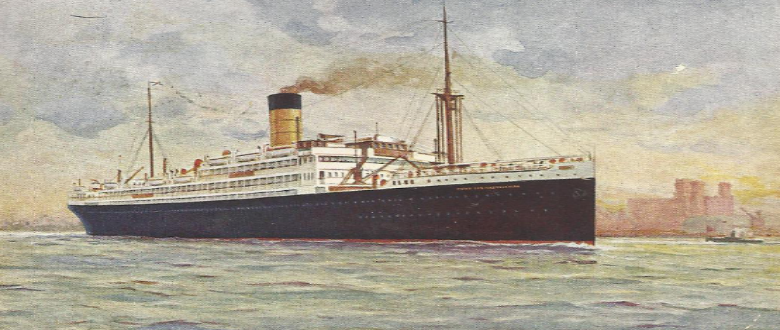
The Dutch steamer Prins der Nederlanden set sail on 24 March 1922 from Singapore for Europe via the Suez Canal with Mr and Mrs Song Ong Siang on board. The couple took the same steamer back to Singapore in January 1923. The steamer was owned by Dutch shipping line Stoomvaart Maatschappij Nederland (Netherlands Steamship Company). Source: Stoomvaart Maatschappij Nederland.
Accompanying the Songs were Mr and Mrs Tan Soo Bin; the latter was Mrs Song’s sister. Soo Bin (whom Song referred to as “S.B.” in the postcards) came from another prominent Straits Chinese family; he was the son of Tan Jiak Kim and great-grandson of Tan Kim Seng, a wealthy merchant and philanthropist who had contributed towards many social causes in Singapore.
While it’s not possible to ascertain the Songs’ precise travel itinerary and how long they stayed at each place, one can get a good sense of the places they travelled to by examining the collection of postcards written to family members in Singapore.
After a fortnight’s travel on the high seas, the steamer reached the Suez Canal in Egypt, where the Songs made a brief stopover in Ismailia before continuing to Europe. The couple arrived in Italy – their first destination – in early spring, on 14 April 1922. Over the next two weeks, they visited Nervi, a picturesque seaside village, and other scenic mountain towns in the northwest region of Italy, before heading for their next destination – France.
The Songs had arrived in Paris in early May, and spent much of their time driving around, seeing the wide Parisian streets and boulevards, “where people sit all day in [sic] the pavement, taking tea or drinks”.3 They also visited famous landmarks such as Longchamp Racecourse along the Seine River and the Palace of Fontainebleau, where the French Emperor Napoleon Bonaparte lived, and saw one of his characteristic bicornes, or “cocked hat”, preserved in a glass case.
At the end of May, with summer approaching, the Songs crossed the English Channel and made their way to Britain. Along with the Tans, the couple attended an important function in London on 30 May – the second annual dinner of the Association of British Malaya, a society founded by former British residents of Malaya. The dinner was attended by over 200 guests, including Sir Laurence Guillemard, then Governor of the Straits Settlements, and Lady Margaret Brooke, Ranee of Sarawak, who made a special mention of Song in her speech.
The Songs were clearly adventurous travellers. They journeyed long distances across Britain, covering places from the south coast of England to the highlands of Scotland. They visited Swanage, a lovely seaside town, and Lulworth, an area known for its castle and cove, both in the southwest coast of England. They also travelled to Tynemouth and Newcastle in northern England. Newcastle, however, did not leave a pleasant impression as the unemployed labourers, bare-foot children and “stuffy and dirty” air cast a gloomy pall on their visit. In Scotland, the couple visited Abbotsford, where Scottish novelist and poet Sir Walter Scott lived and wrote his historical novel Waverley, and travelled 100 miles by motor car to Braemar and Balmoral, where they caught a view of stately Balmoral Castle, one of the residences of the British royal family.
As the Songs were not used to temperate weather, there were occasional rumblings about the cold in the postcards: “Twa Kim [Mrs Song] has to wear sweater & woolen underwear” (Ismailia, Egypt, 8 April 1922); the “cold air in the bedroom is getting too much for my feet” (Newcastle, England, 14 July 1922); high prices: “Everything is awfully expensive. Fancy each lunch costs 19 francs or $3.50 and dinner $3.80 without any fruit often…” (Paris, 1 May 1922); as well as yearnings for the food from back home: “can you send me some itek sio & ikan goreng chili… so that I can take with cayenne pepper. I am quite tired with English food” (Melrose, Scotland, 19 July 1922). And while out fishing at Eastbourne one day, the Songs caught some 50 whiting, reminding them of the local “ikan kekek” from home (29 August 1922).
It was not all sightseeing, however. In October, the Songs caught the popular musical “Rockets” at the London Palladium, and attended a football match in a stadium packed with 60,000 spectators. The couple also made time to visit friends, one of whom was a Mrs Whyte, the sister-in-law of James Aitken. Aitken was Song’s former schoolmate and partner in their law firm, Aitken and Ong Siang. Aitken was born in Australia, but spent almost his entire life in Singapore, where he received his education at Raffles Institution, and was one of the first recipients of the Queen’s Scholarship in 1886. He went into partnership with Song in 1894, with whom he remained until his death in 1928.
After 10 months away in Europe, most of which was spent at leisure in Britain, the Songs and their travel companions, the Tans, boarded the Prins der Nederlanden, the same Dutch steamer that had brought them to Europe. The foursome arrived in Singapore on 25 January 1923, overladen with luggage but looking rested and “much benefited by their holiday in Europe”.4
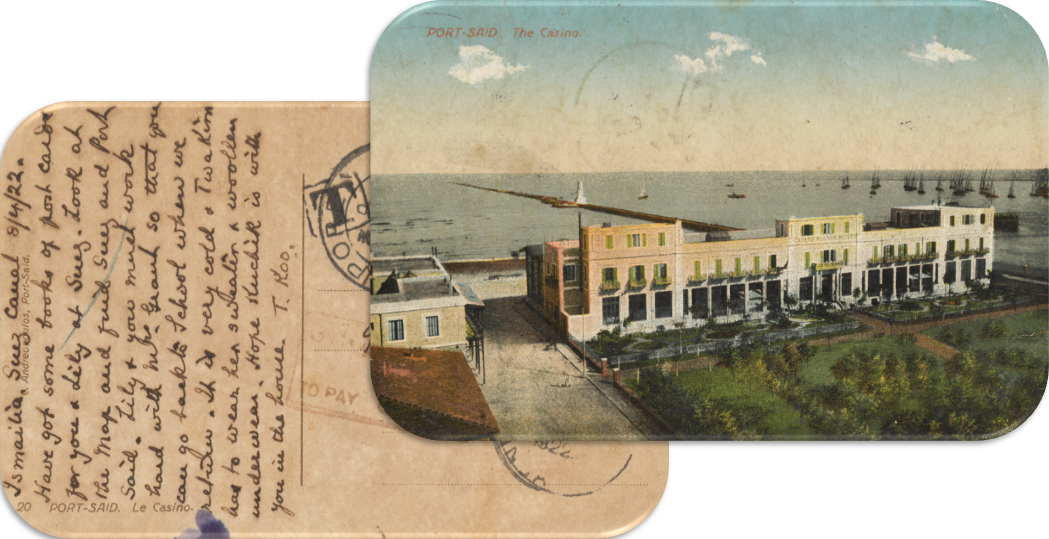
This postcard shows the city of Port Said along the coast of the Mediterranean Sea, north of the Suez Canal. From the city of Ismailia on the west bank of the Suez Canal, Song Ong Siang wrote this postcard to his niece and adopted daughter, Song Siew Lian, also known as Darling Song, on 8 April 1922. Miss Song was the daughter of one of Song’s sisters, as he had signed off as "T. Koo” (i.e. twa koo), which is a Hokkien term for addressing one’s maternal uncle. In the postcard, Song also referred to his wife as “twa kim”, the Hokkien term for the wife of one’s maternal uncle. Besides English, Song spoke Baba Malay, a patois containing a mix of Malay and Hokkien words adopted by the Straits Chinese. Where necessary, the Straits Chinese used Chinese words, such as when addressing members of the family and extended family. Collection of the National Library, Singapore. (Accession no.: B29259947C).
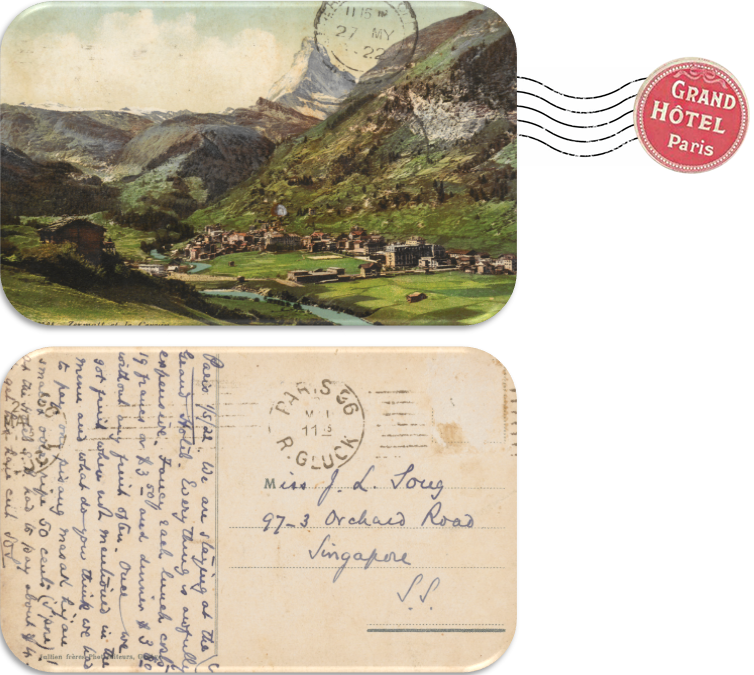
This postcard, dated 1 May 1922, was addressed to a Miss J. L. Song. It was written from Paris, where Mr and Mrs Song Ong Siang were staying at the Grand Hotel. Song found items at the hotel expensive, and wrote in a hilarious mix of Malay and English that “one pisang masak hijau small & over ripe 50 cents (S’pore)!”. The postcard shows the Swiss town of Zermatt, with Le Cervin mountain (The Matterhorn) in the background. Collection of the National Library, Singapore. (Accession no.: B29259932H).
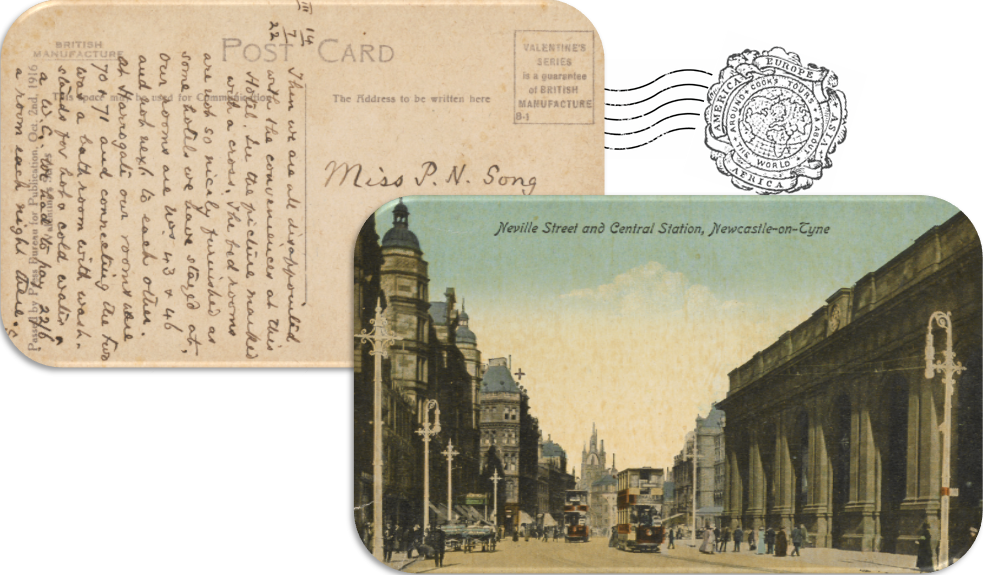
This postcard depicts Central Station on Neville Street in Newcastle upon Tyne in England. The cross on the picture marks the hotel where Mr and Mrs Song Ong Siang stayed for three nights. The postcard dated 14 July 1922 was addressed to Miss P. N. Song (Song Pian Neo), Song’s sister. In the postcard, Song expressed his disappointment at the standards of the (unnamed) hotel they stayed at. Collection of the National Library, Singapore. (Accession no.: B29259953K).
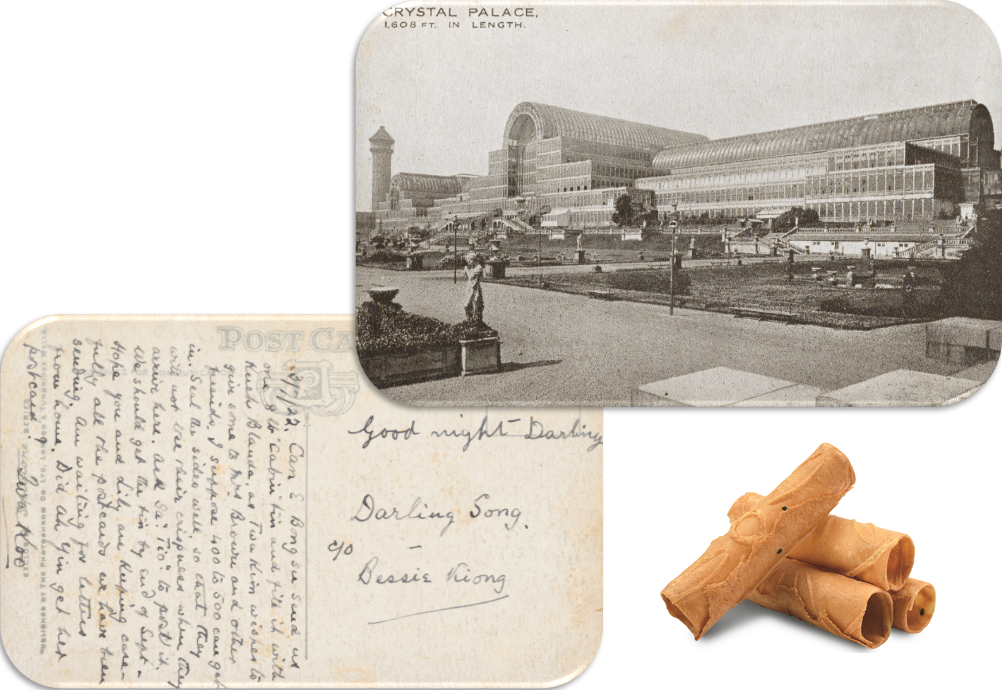
Besides sightseeing, Mr and Mrs Song Ong Siang also visited friends in Britain. Deciding that they should take along some popular Straits Chinese snacks as gifts on their visits, Song wrote to Darling Song on 3 July 1922, requesting for a tin of kueh blanda to be shipped to them. Kueh blanda, or kueh belanda, commonly referred to as “love letters”, is a crunchy wafer-thin roll offered to guests during Chinese New Year. The postcard shows Crystal Palace at Sydenham Hill. It was originally built in Hyde Park to house the Great Exhibition of 1851. In 1854, the structure was dismantled and rebuilt at Sydenham Hill in South London, where it stood until it was destroyed by a fire in 1936. Collection of the National Library, Singapore. (Accession no.: B29259933I).
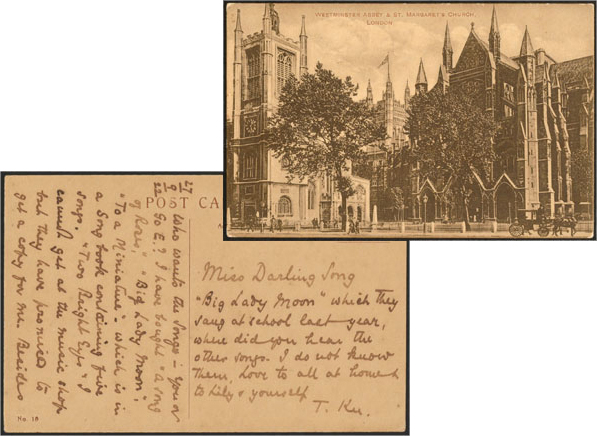
On this postcard showing St Margaret’s Church in Westminster Abbey, London, Song Ong Siang sent Darling Song news on 27 September 1922 that he had bought her the sheet music for the songs “A Song of Roses”, “Big Lady Moon” and “To a Miniature”, which she had wanted. Because of their regular contact with the European colonial community, many Straits Chinese acquired an appreciation for Western classical and popular music. It was the fashion among Straits Chinese families to sing popular Western songs – sometimes with the words translated into Malay – to the accompaniment of musical instruments such as the piano, violin, viola, banjo and mandolin. As a result, several Straits Chinese musical groups were formed in the first half of the 20th century, with names such as Wales Minstrels, Silver Star Minstrels, Merrilads, and Cornwall Minstrels. Collection of the National Library, Singapore. (Accession no.: B29259973B).
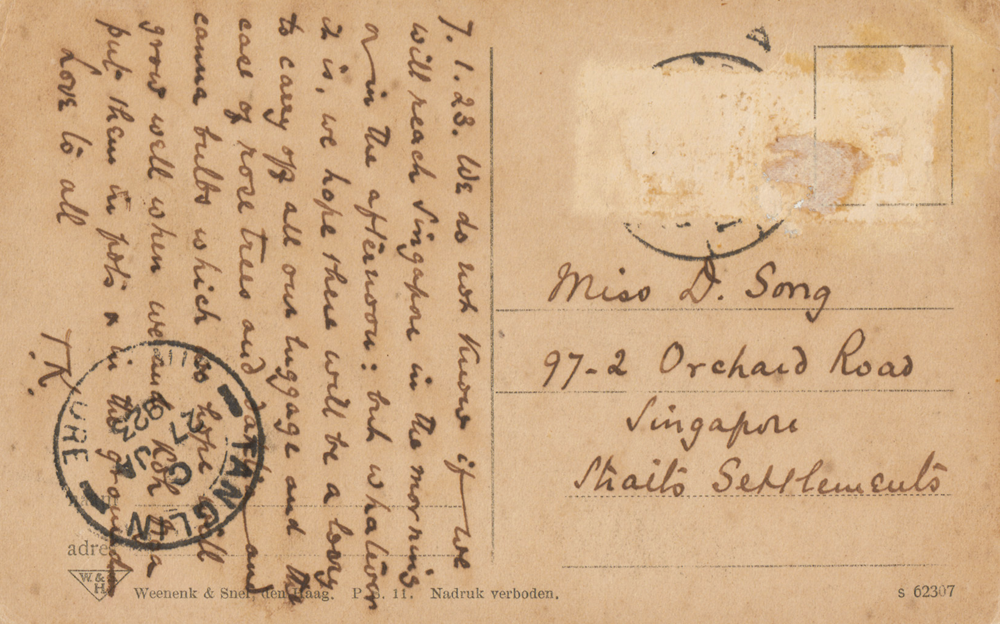
Dated 7 January 1923, this is the last postcard (with a view of Port Said’s Arabian Quarter) on the other (unshown) side sent by the Songs to Darling Song before their return to Singapore on 25 January 1923. After many months of travel in Europe and Britain, their luggage had increased significantly. During their stopover in Port Said in Egypt, they sent a reminder home to request for a lorry to pick up all their bags, many of which were likely bursting at the seams, when they disembarked in Singapore. Collection of the National Library, Singapore. (Accession no.: B29259940G).
The postcards featured in this essay are part of a collection of 43 postcards written by Song Ong Siang and his wife during their vacation in Europe from March 1922 to January 1923. These postcards serve as research material on the life of Song Ong Siang and offer a peek into the lifestyles of wealthy members of the Straits Chinese community in early 20th-century Singapore. The postcards were donated by Dorothy and Joyce Tan to the National Library Board in 2017, in memory of their father, Tan Kek Tiam. The latter was married to Song Siew Lian, alias Darling Song, who passed away in 1933. She was the niece and adopted daughter of Mr and Mrs Song Ong Siang.
About the Author
Ong Eng Chuan is a Senior Librarian with the National Library, Singapore. His responsibilities include managing the library’s Rare Materials Collection as well as the provision of reference and research services.
References
Acknowledgement. (1935, April 2). The Malaya Tribune, p. 10. Retrieved from NewspaperSG.
Chinese wedding in Singapore. (1934, April 30). The Malaya Tribune, p. 11. Retrieved from NewspaperSG.
Chia, F. (2015). The Babas. Singapore: Estate of Felix Chia Thian Hoe and Landmark Books. (Call no.: RSING 305.895105957 CHI)
Death of Mr. Soo Bin. (1939, August 12). The Malaya Tribune, p. 12. Retrieved from NewspaperSG.
First Chinese to command S.V.C. Chinese company. (1939, August 14). The Straits Times, p. 13. Retrieved from NewspaperSG.
Honouring Mr. Ong Siang. (1922, March 24). The Singapore Free Press and Mercantile Advertiser, p. 12. Retrieved from NewspaperSG.
Lee, P., & Chen, J. (2006). The Straits Chinese house: Domestic life and traditions. Singapore: Editions Didier Millet: National Museum of Singapore. (Call no.: RSING 305.895105957 LEE)
Letters to the editor. (1922, October 12). The Singapore Free Press and Mercantile Advertiser, p. 12. Retrieved from NewspaperSG.
Lost to Singapore bar. (1928, May 28). The Malaya Tribune, p. 7. Retrieved from NewspaperSG.
Malaya dinner. (1922, July 3). The Straits Times, p. 11. Retrieved from NewspaperSG.
Social and personal. (1923, January 27). The Straits Times, p. 8. Retrieved from NewspaperSG.
Song, O.S. (1984). One hundred years’ history of the Chinese in Singapore. Singapore: Oxford University Press, 1984. (Call no.: RSING 959.57 SON)
Untitled. (1922, March 24). The Malaya Tribune, p. 6. Retrieved from NewspaperSG.
The Malaya Tribune, 24 Mar 1922, p. 6.
Untitled. (1923, January 17). The Singapore Free Press and Mercantile Advertiser, p. 6. Retrieved from NewspaperSG.
Who’s who in Malaya, 1925. (1925). Singapore: [s.n.]. (Call no.; RRARE 920.9595 WHO; Microfilm no.: NL6705)
Endnotes
1 The Garden Club was established in 1916 by the Straits Chinese in Singapore, and membership was limited to Chinese only. The club was originally located at Cairnhill but a “town branch” later opened at Raffles Chambers. Song Ong Siang described the club as “the leading Chinese club in Singapore and plays a prominent part in the social affairs of the settlement”.
2 The annotated edition of Song Ong Siang’s One hundred years’ history of the Chinese in Singapore is available for public access on the National Library Board’s BookSG website.
3 Lötschbergbahn. Bahnhof Goppenstein und Eingang in den grossen Tunnel [Postcard], 1 May 1922. Collection of the National Library, Singapore. (Accession no.: B29259959E)
4 Social and personal. (1923, January 27). The Straits Times, p. 8. Retrieved from NewspaperSG.