
Article
Feeding the Hungry: Children in Post-War Singapore
Topics
People
4 April 2019
In the aftermath of the Japanese Occupation, the colonial government set up feeding centres to address malnutrition among children in Singapore. Cheryl-Ann Low has the details.
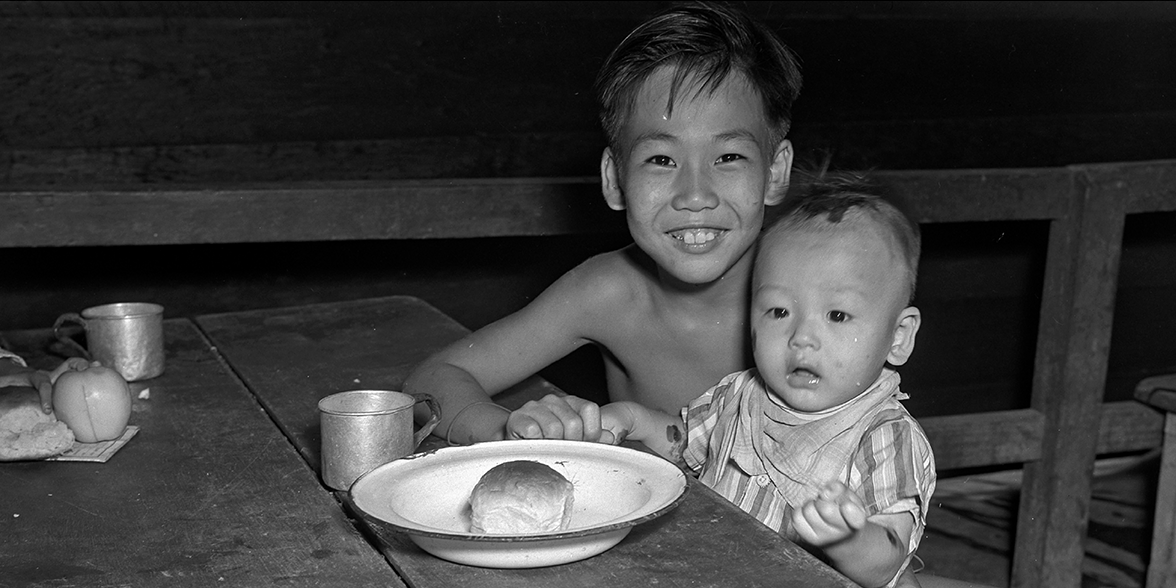
A committee appointed to review the child feeding scheme in 1950 assessed that it was no longer necessary to provide full meals for children at Children’s Social Centres. Hence, the meal was replaced with a snack consisting of a vitaminised bun, a milk drink and fresh fruit such as an apple, 1952. Ministry of Information and the Arts Collection, courtesy of National Archives of Singapore.
The Japanese Occupation of Singapore (1942–45) brought about acute shortages in basic necessities such as food as well as disruptions to health, educational and financial services.1 The interim British Military Administration in Singapore, set up in the wake of the Japanese surrender in September 1945, and the British civilian government that subsequently took over from 1 April 1946, had their work cut out for them: to rehabilitate Singapore’s economy, and figure out how to alleviate the pressing problems of overcrowding, poverty, disease and malnutrition.
One of the more pressing issues was the severe shortage of food. Rice production in Burma, Thailand and Indochina had declined drastically during the war and the export of rice to Singapore would remain significantly below pre-war figures until 1947.2 The colonial government tried to address the problem by implementing various feeding schemes in Singapore, including one for children, to provide people with at least one nutritious meal a day at an affordable price and also help counter the black market, where basic staples such as food items were being sold at grossly inflated prices.3
Poring through the old files of the Social Welfare Department (SWD), we find detailed accounts of how the children’s feeding scheme began and how it laid the foundations for the Children’s Social Centres, which went beyond feeding to eventually providing care and education for children.
Free Meals for Children
To meet food shortages, the British Military Administration started a feeding scheme in November 1945, providing free meals to children in three schools – Rangoon Road School, Telok Kurau Road School and Pearl’s Hill Road School – as well as to preschool-age children at Prinsep Street Clinic and Kreta Ayer Street Clinic.4 The scheme was implemented by the Education Department, which had extended the provision of meals to children under the care of the clinics upon the request of the Medical Department.5 The programme proved to be a success and was later expanded to include more schools and clinics, such as Outram Road School, Telok Kurau Malay School, New World School and Joo Chiat Clinic.6
When the British civilian government returned in 1946, the clinics run by the Singapore Municipal Commission continued to provide milk for babies until they turned one but, unfortunately, did not have the funds to feed older children of preschool age. The SWD, which had experience in running various feeding programmes, initially declined taking over the feeding scheme for preschool aged children.
T.P.F. McNeice, Secretary for Social Welfare, was concerned that managing the scheme might jeopardise the progress of its existing feeding programmes. However, seeing that there was no other solution, he tentatively committed to the task in a letter to the Child Feeding Committee in September 1946, writing “… should your Committee be able to show to the satisfaction of the Government that no one else can undertake this work, and should the Government wish me to do so, I am prepared to reconsider what my Department can do.”7
On 7 October 1946, the various powers-that-be agreed that the SWD would operate the feeding scheme for children aged two to six years old. The department also went one step further by offering to feed older children who were not attending school, although there was no scheme planned for this yet.8 The SWD went to work quickly, undertaking to supply a free meal a day to selected children at two existing crèches – one on Victoria Street and another on New Market Road – both of which were operated by the Child Welfare Society.9
The SWD’s child feeding programme was officially launched on 2 January 1947 at these two crèches even as it was preparing to open more feeding centres across the island. When a new centre on Havelock Road began operations on 7 January 1947, the feeding service at the nearby New Market Road crèche moved over. More child feeding centres soon opened in subsequent months – totalling 12 by the end of May 1947 – in areas such as Joo Chiat, Kampong Kapor, Arab Street, Prinsep Street and Beach Road.10
It should be noted that the child feeding scheme was not a mass-feeding programme for the poor, but targeted at addressing the effects of widespread malnutrition among children. As such, only undernourished children were eligible for the daily free meal at the child feeding centres. Singapore’s College of Medicine provided advice on nutrition and menu-planning. For example, in December 1946, Dr C.J. Oliveiro from the college sent the SWD the chemical analysis of a list of foods that were high in nutritional value and beneficial to children if included in the diet.
These food items included wild boar meat, lean beef, broad beans, kacang hijau (green beans), blue Prussian peas and Brazilian black beans. Oliveiro also gave tips on food preparation methods. The peas and beans, he advised, “must be ground to a fine meal before cooking otherwise they are indigestible. If there is difficulty in grinding… then they ought to be soaked for one night in clean water…”.11
Each eligible child was issued an authorisation card that also contained a record of when the child was measured, weighed or medically examined. Two volunteer doctors visited the feeding centres regularly to check on the children, and records were kept of such visits.12 The records were carefully studied to assess the impact of the meals on the health of the children. It was reported in May 1948 that although some 60 percent of the children had gained weight, 28 percent showed no improvement and 12 percent had actually lost weight.
Concerned that the meals were not having sufficient impact, Oliveiro made several recommendations to improve the effectiveness of the feeding scheme. He acknowledged that the menu was monotonous at times and proposed removing items like ikan bilis (anchovies) as they were hard and indigestible. Suspecting that the food was consumed by those it was not meant for, he cautioned against allowing children to take their meals away from the feeding centres. Similarly, he reminded the SWD that the centre supervisors should advise family members not to eat the meals provided for their children.13
Help from Volunteers
Voluntary workers were critical to the operations of the feeding scheme, which was run with a minimum number of paid staff.14 In January 1947, McNeice drafted a letter for Lady Gimson, wife of then Governor of Singapore Franklin Gimson, for her to invite volunteers to assist with the work at the feeding centres. The duties included supervising clerical, serving and cleaning staff; keeping simple records; taking the weight of children; and making suggestions on how to improve the centres and better meet the needs of the children.15 By late October 1947, there were more than 150 workers volunteering their services at the 20 children’s feeding centres. In reality, the commitment and contributions of the volunteers went beyond the duties listed by McNeice.
In June 1947, some of the volunteers organised a bridge and mahjong drive to raise funds to purchase materials for “handwork” (vocational lessons) at the centres. This effectively was the start of the Children’s Centre Fund. Other fundraisers included concerts and charity shows. In another project, 17 volunteers got together once a week to sew garments for the children at the centres. Fabrics were bought using the Children’s Centre Fund, and some volunteers even carted their own sewing machines from home.16
The dedicated volunteers committed themselves to the cause and tackled the challenges head on. May Wong, a volunteer who helped to set up and run the feeding centre at Pasir Panjang, recalled the problems that she and her fellow volunteers faced when the centre was first set up, with some people even using the facilities as a public toilet! However, the volunteers did not lose hope and soldiered on until the situation improved. Wong said:
“In the beginning, we had a terrible time. No matter what we did, we cleaned it up and had all the children and everything [sorted out]. The next morning we go, everything would be turned topsy turvy and sometimes they used them [the centre] as a bathroom even, as a toilet. Well, we cleaned it up, we persevered… well it was really quite difficult to get to educate them [the children] but finally we managed so that they would understand that it was for their own good, and not for ourselves, and they should not destroy things like that.”17
Besides feeding, the voluntary workers also engaged the children in activities. Lady McNeice, wife of the aforementioned Secretary for Social Welfare T.P.F. McNeice, was a volunteer in charge of the centre at Mount Erskine. She recalled:
“Because there was no education, they [the children] had nothing to do, nothing to occupy them… But a whole batch of volunteers taught the boys carpentry, and lessons in English and Chinese; and the girls would have also lessons in Chinese and English and learned to do knitting and sewing… I felt we were helping the children who were needy.”18
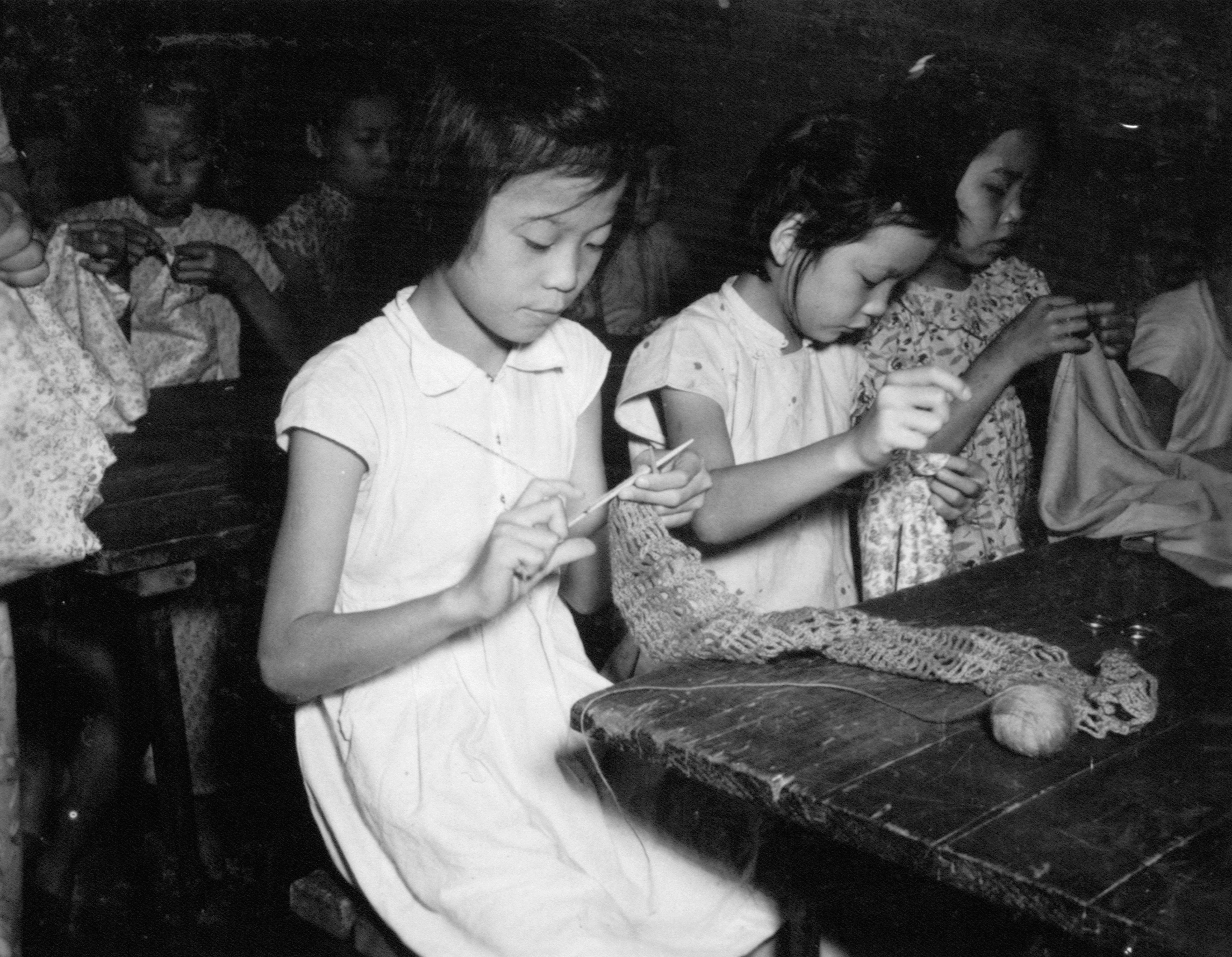
Girls learning how to knit at a Children’s Social Centre, 1951. Ministry of Information and the Arts Collection, courtesy of National Archives of Singapore.
Going Beyond Food
In the early days of the child feeding scheme, the SWD envisaged opening a series of centres that would go beyond feeding the children to keeping them engaged with various activities and facilities, such as hygiene classes, crèches and playgrounds. This vision was elucidated in a script dated 11 January 1946 for a radio talk given by T. Eames Hughes, Deputy Secretary for social welfare. The script further informed, with a touch of humour, that several centres were already being developed along these lines, with furniture and fittings that were custom-made according to the measurements of some “temporarily kidnapped” children!19
Other than plans to expand the functions of the centres, the SWD also widened the pool of children who were entitled to the free services. Within two months of the commencement of the child feeding scheme, it was observed that many of the eligible children were often accompanied by older siblings whose ages ranged from about eight to 14 and who were similarly undernourished.
Lady McNeice recalled that these older siblings would “look longingly at what was being done for the younger children”.20 Since older children were not entitled to free meals at the centres, volunteers collected money to buy them food from Family Restaurants (see text box below). The volunteers also organised meaningful activities for the older children, such as training in carpentry, sewing, handicraft and laundry work.21
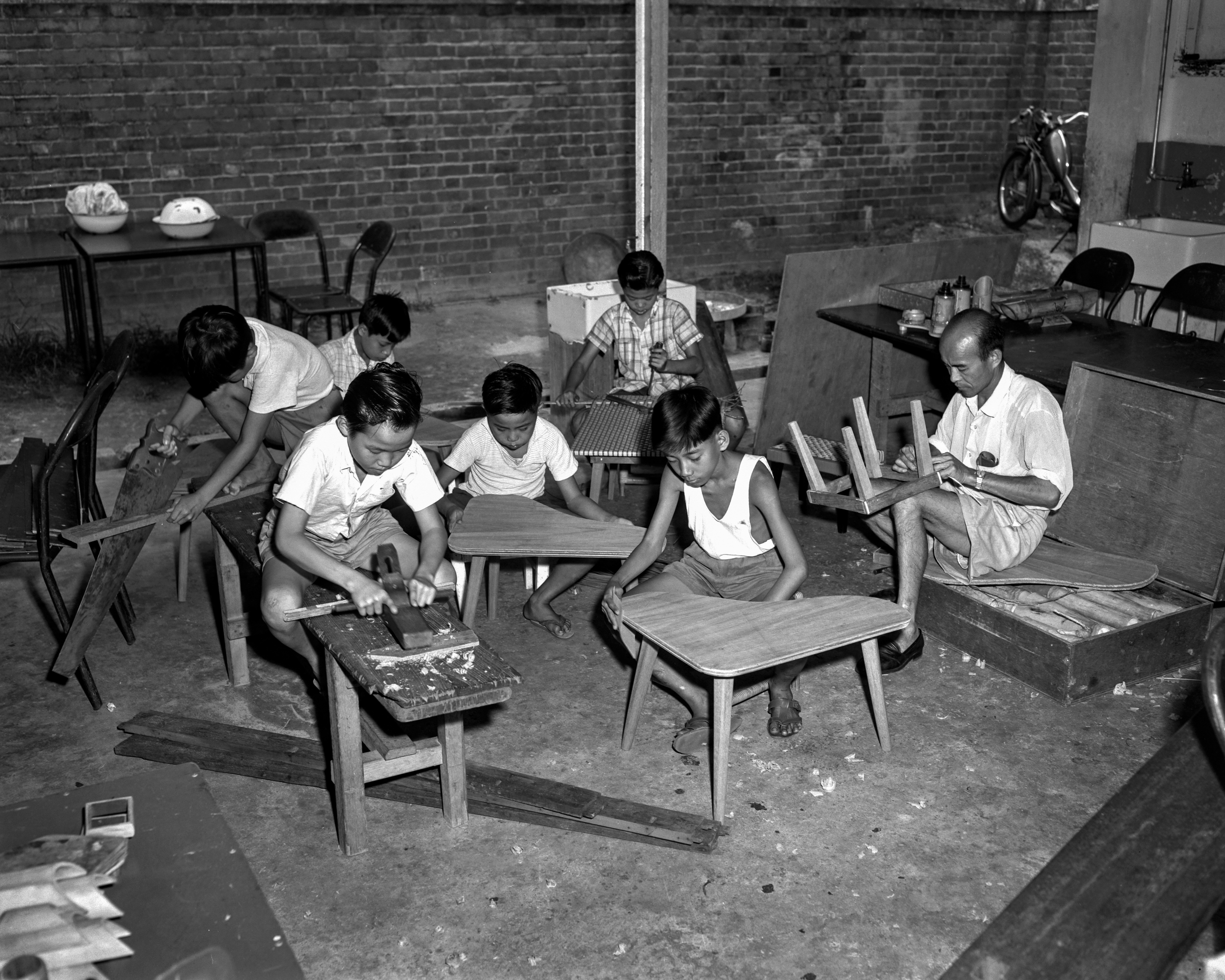
A carpentry lesson for older children in progress, 1962. Ministry of Information and the Arts Collection, courtesy of National Archives of Singapore.
In June 1947, the Finance Committee approved the SWD’s proposal to employ full-time paid staff at selected centres so that these could be kept open throughout the day as clubs for children as well as provide older children with daily free meals – with the proviso that the number of such children not exceed 25 percent of the number of children aged between two and six.22 Thus, over time, the services at these centres were expanded to meet the nutritional, social and educational needs of older children up to 14 years of age.
The SWD noted in 1949 that this expansion was initiated and largely carried out by the centres’ volunteers. This was not the only group of people who supported the child feeding scheme. Generous private donors and organisations also chipped in by providing space for the feeding centres to expand.23 A feeding centre at Geylang Serai, for instance, was located within one of the houses belonging to a Tungku Putra. When the possibility of expanding the feeding centre into a club for children was raised with Tungku Putra, he kindly agreed to have an extension built to accommodate additional activities and even provided the labour required to carry out the work.24
Children’s Social Centres
As the functions of the children’s feeding centres evolved over the years, most volunteers voted to rename the centres as Children’s Social Centres. So, from 29 October 1948, the feeding centres became officially known as Children’s Social Centres. In addition to the provision of free meals, the centres now provided educational and recreational activities, such as classes in English, Mandarin, arithmetic, knitting, sewing, wood modelling, basket-making, painting, hygiene, gardening, doll-making, book-binding, physical training and games.25
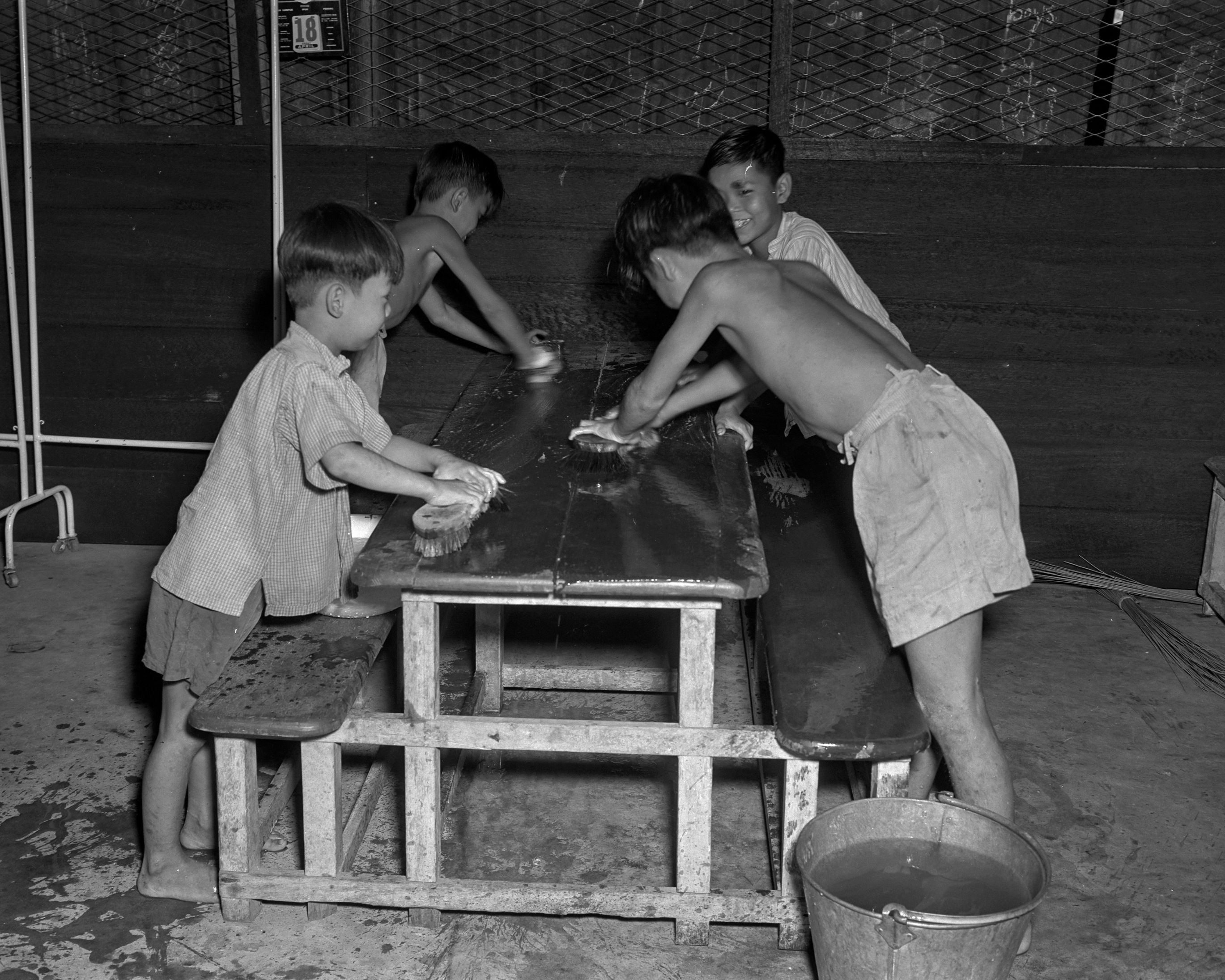
The Children’s Social Centres sought to teach children daily living skills and good habits such as cleaning up after themselves, 1952. Ministry of Information and the Arts Collection, courtesy of National Archives of Singapore.
Picnics, parties and cinema outings were also organised to keep the children entertained.26 Much care and thought went into organising Christmas parties at the centres. The organisers sought out sponsors for treats and gifts, taught the children to put up performances and also arranged for visits by Santa Claus.27 For the 1952 Christmas celebrations, C.E. MacCormack of the SWD wrote to the managing director of Rediffusion, requesting that his staff Jimmy Choo, who was known for his magic tricks, be given leave of absence on 11, 17 and 18 December to perform magic shows at Christmas parties held at the Children’s Social Centres. The request was granted.28
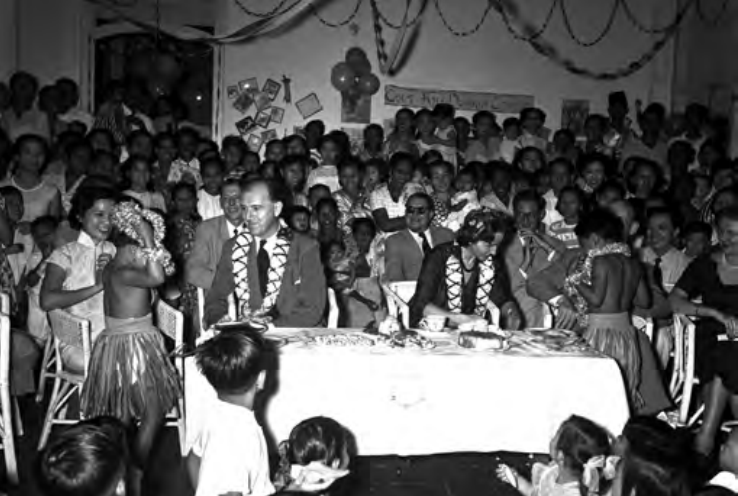
A Christmas party in full swing at a Children’s Social Centre, 1955. Ministry of Information and the Arts Collection, courtesy of National Archives of Singapore.
Instructors were also hired to provide training in vocational subjects such as tailoring, carpentry and rattan-work.29 Alongside these training programmes, the SWD organised events in the 1950s, such as the annual sale of handicrafts made by the children at the centres.30 The handicrafts included woodwork, basketry, toys, knitted items and needlework.
Some centres also set up food stalls at the events, and companies such as Fraser and Neave and Cold Storage sold drinks and ice cream, pledging part of the profits to charity. Cathay, Shaw, Rex and other cinemas also chipped in by screening publicity slides of the events in their theatres. Most of these fund-raising events would take place in the final months of the year when people did their annual Christmas shopping.
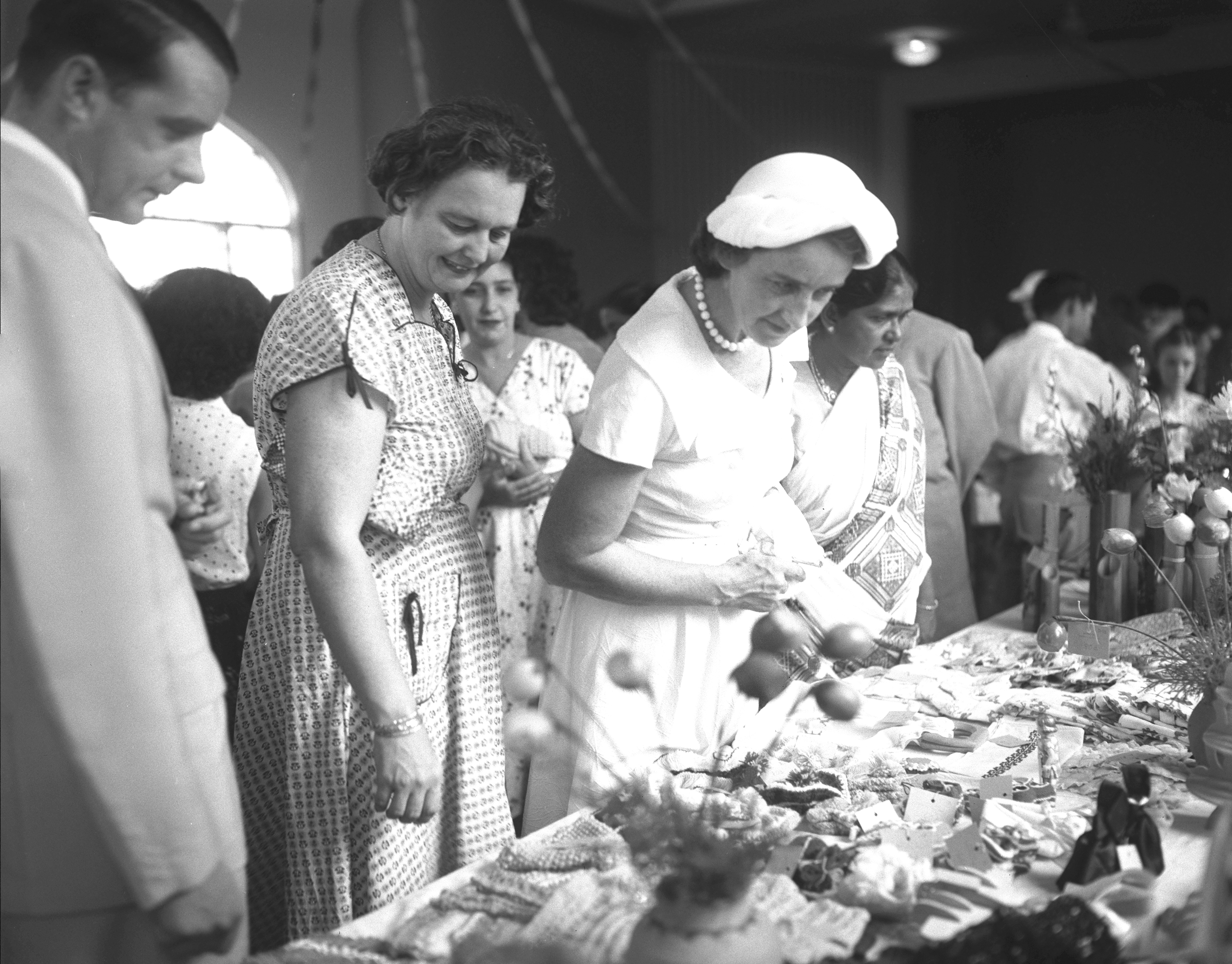
Lady Anne Black (wearing hat), wife of then Governor of Singapore Robert Black, at the annual sale of works organised by voluntary workers of the Children’s Social Centres, 1956. The items for sale were made by children at the centres. Ministry of Information and the Arts Collection, courtesy of National Archives of Singapore.
In time, feeding children became less of a concern than it had been in the immediate post-war period. A committee appointed to review the child feeding scheme in 1950 assessed that it was no longer necessary to provide full meals for the children. Instead, a snack consisting of a vitamin-fortified bun was now dispensed together with a milk drink and fresh fruit.31 Education now became the focus of the Children’s Social Centres, and the SWD organised classes to train staff so that they would be better equipped to nurture the children and help develop their fullest potential. The topics included lessons in teaching and learning, planning kindergarten activities, art and craft, music, dance, identifying common children’s diseases as well as child development.32
In the years to come, as the government opened up more primary school places for children, the Children’s Social Centres faced falling enrolments and started closing down in the 1960s. Conversely, with more women joining the workforce, the SWD began to build more crèches for preschool-age children.33 These crèches provided childcare services to families in the lower income groups. The National Trades Union Congress took over the running of these crèches in the late 1970s.34
A Village to Raise a Child
While the records of the SWD trace the history and development of child feeding centres and their subsequent incarnation as Children’s Social Centres, a story of humanity and generosity emerges, bringing to light different parties that contributed to the well-being of children in Singapore between the 1940s and 60s.
There were the staff of government departments as well as voluntary workers who collaborated in the running and funding of the centres and crèches, property owners who allowed children’s centres to be set up on their premises, businesses that supported the sale events, philanthropists like Lee Kong Chian who paid for items sold at the sale events,35 and various sponsors of gifts and treats.
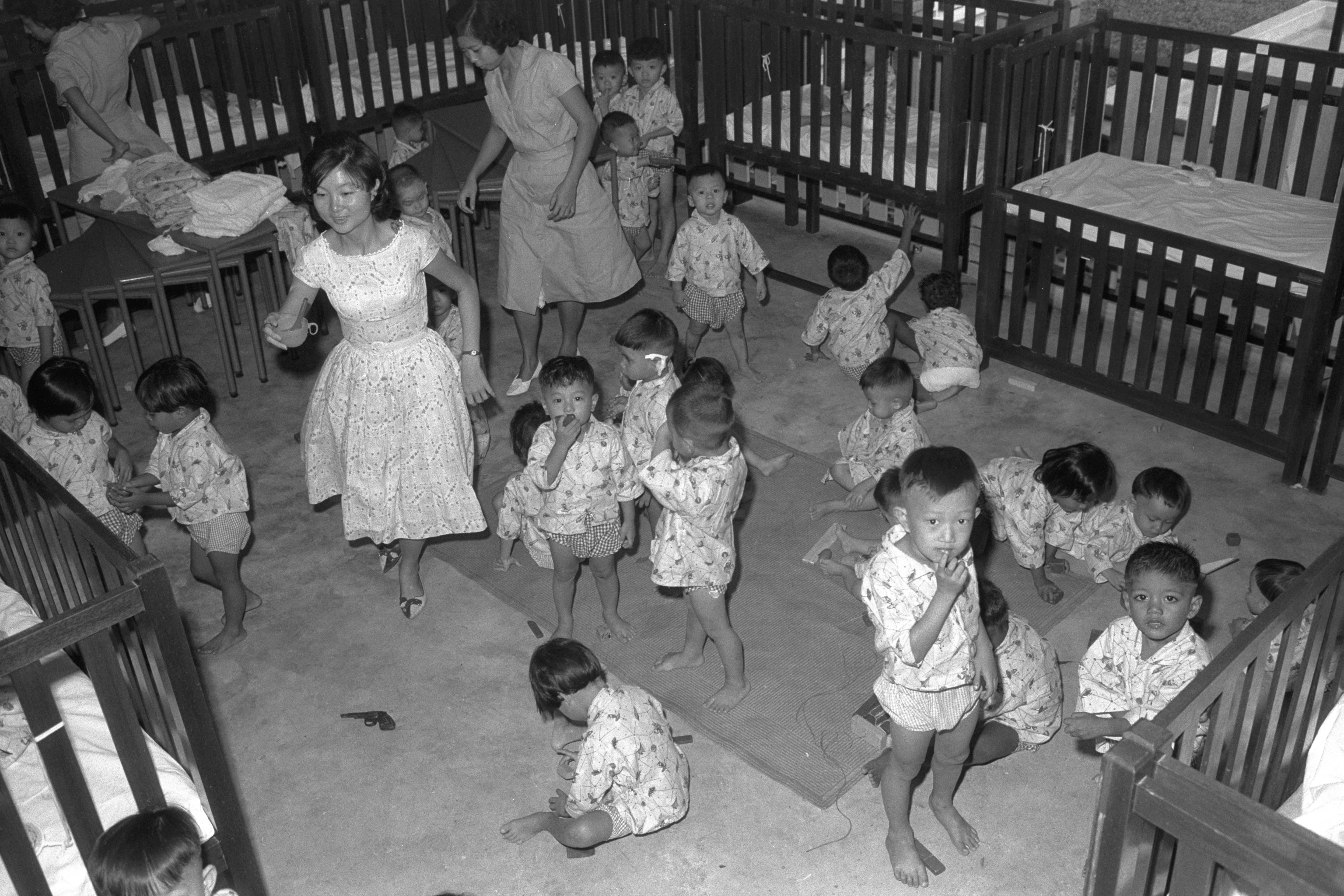
Baby cots and floor mats for naptime at a crèche, 1963. Ministry of Information and the Arts Collection, courtesy of National Archives of Singapore.
As the familiar proverb goes, “it takes a village to raise a child”, these files offer a first-hand look into the “village” that helped to feed and nurture the children of Singapore in the decades following the Japanese Occupation.
Family And People's Restaurants
Family Restaurants were one of the communal feeding schemes managed by the Social Welfare Department after the Japanese Occupation. The first Family Restaurant was opened on 18 December 1946 at Maxwell Market, serving eight-cent meals consisting of rice, potatoes, salmon, green peas, gravy and iced water or Chinese tea. By then, People’s Restaurants (another communal feeding scheme) had been in operation for half a year, charging 35 cents a meal.
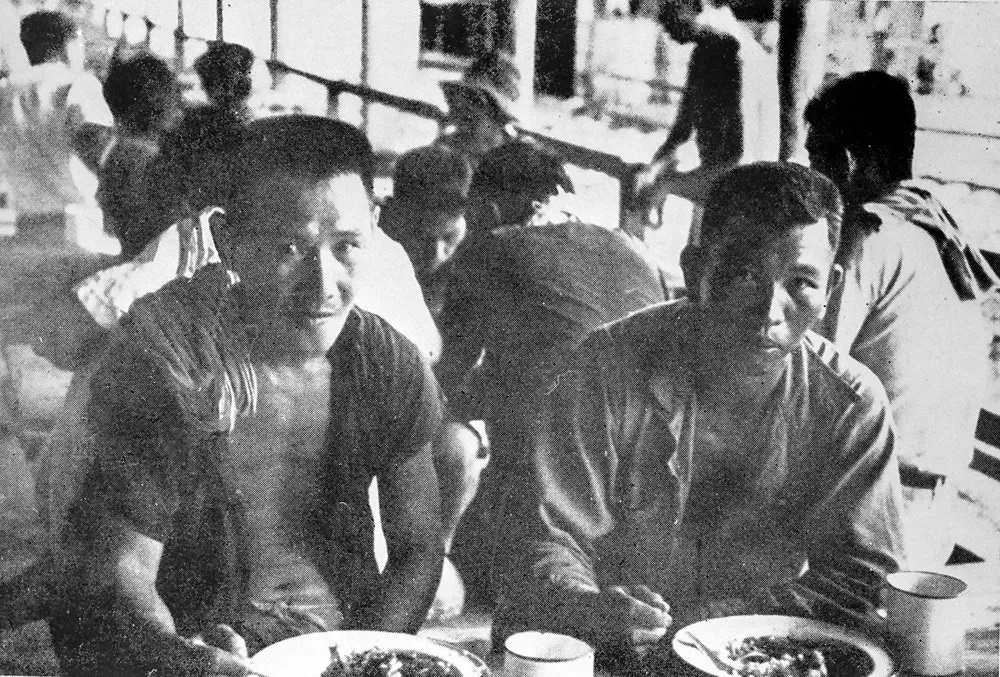
Having a square meal for 35 cents at a People’s Restaurant, c. 1946. The first of such restaurants opened on 29 June 1946 to provide lunch for workers at subsidised rates. Ministry of Culture Collection, courtesy of National Archives of Singapore.
People’s Restaurants catered primarily to wage earners wanting a mid-day meal at a reasonable price, while Family Restaurants sought to provide healthy meals at the cheapest possible price to those of lesser means. The Social Welfare Department discontinued feeding schemes from late 1948 onwards as demand had fallen due to improved economic conditions.
This article was inspired by a collection of government files available on the Singapore Policy History Project website (www.nas.gov.sg/archivesonline/policy_history). This is an ongoing project to present various policies introduced by government departments and agencies over the course of Singapore’s history. The feature on child care in Singapore in the early years (1946–1976) (www.nas.gov. sg/archivesonline/policyhistory/child-care) includes resources such as files from the Social Welfare Department, newspaper articles, speeches, audiovisual materials and photographs.
About the Author
Cheryl-Ann Low is an Archivist with the National Archives of Singapore. A history and archaeology major, Cheryl worked as a museum curator before pursuing a diploma in early childhood education and teaching in a preschool. This article brings together her interests in history and child development.
Endnotes
1 Cheng, S.H. (1991). Economic change and industrialization. In E.C.T. Chew & E. Lee (Eds.), A history of Singapore (p. 182). Singapore: Oxford University Press. (Call no.: RSING 959.57 HIS-[HIS])
2 Kratoska, P.H. (1988, March). The post-1945 food shortage in British Malaya. Journal of Southeast Asian Studies, 19 (1), 27–47, pp. 32–33. Retrieved from JSTOR via NLB’s eResources website.
3 Ho, C.T. (2013, October–December). Communal feeding in post-war Singapore. BiblioAsia, 9 (3), 2–7; Foo, K.L. (1981, December 4). Oral history interview with Thomas Percy Ferguson McNeice [Transcript of recording no. 000099/22/12]. Retrieved from National Archives of Singapore website.
4 Social Welfare Department (SWD). (1945, November 5–1947, April 2). Free meals for children [RBMA HQ S DIV 432–45, p. 100]. Retrieved from National Archives of Singapore website.
5 Social Welfare Department (SWD). (1945, November 5–1946, September 25). Singapore welfare child feeding scheme – free meals for children [SWD 44–46, pp. 73–74]. Retrieved from National Archives of Singapore website.
6 Social Welfare Department, 5 Nov 1945–2 Apr 1947, p. 58.
7 Social Welfare Department, 5 Nov 1945–25 Sep 1946, p. 16.
8 Social Welfare Department (SWD). (1946, September 13–1953, May 13). Feeding of children between ages 2 and 6 [SWD 44–B Vol 3, pp. 201–202]. Retrieved from National Archives of Singapore website.
9 Social Welfare Department, 13 Sep 1946–13 May 1953, p. 9. The SWD eventually took over these two crèches when the Child Welfare Society closed down.
10 Social Welfare Department. (1949, September 24–1954, January 26). Report on children’s social centre [SWD 371-E, pp. 25–34]. Retrieved from National Archives of Singapore website.
11 Social Welfare Department, 13 Sep 1946–13 May 1953, p. 183.
12 Social Welfare Department, 24 Sep 1949–26 Jan 1954, p. 13.
13 Social Welfare Department, 13 Sep 1946–13 May 1953, pp. 102–104.
14 Social Welfare Department, 24 Sep 1949–26 Jan 1954, p. 12.
15 Social Welfare Department (SWD). (1947, January 4–1949, February 23). Panel of volunteer workers child feeding scheme [SWD 44-E Vol 1, p. 3]. Retrieved from National Archives of Singapore website.
16 Social Welfare Department, 4 Jan 1947–23 Feb 1949, p. 64.
17 Tan, L. (1982, May 24). Oral history interview with Wong, May Nee Hing [Recording no. 000093/18/9]. Retrieved from National Archives of Singapore website.
18 Lee, P. (2008, January 8). Oral history interview with McNeice, Yuen-Peng [Transcript of recording no. 003259/3/2]. Retrieved from National Archives of Singapore website.
19 Social Welfare Department, 13 Sep 1946–13 May 1953, pp. 175–176.
20 Choo, H. (1982, August 4). Oral history interview with McNeice, Yuen-Peng [Transcript of recording no. 000190/4/4]. Retrieved from National Archives of Singapore website.
21 Social Welfare Department, 13 Sep 1946–13 May 1953, p. 154.
22 Social Welfare Department, 13 Sep 1946–13 May 1953, pp. 146, 155.
23 Singapore. Social Welfare Department. (1949). Five-year plan (p. 5). Singapore: Government Printing Office. (Call no.: RCLOS 362.95951 SIN)
24 Social Welfare Department, 13 Sep 1946–13 May 1953, pp. 40, 114.
25 Social Welfare Department, 13 Sep 1946–13 May 1953, pp. 20–34, 91.
26 Social Welfare Department, (SWD). (1952, January 18–1952, December 29). Liaison Committee Children’s Social Centres [SWD 31–52, p. 22]. Retrieved from National Archives of Singapore website.
27 Diemer, C. (1951, December 16). Best Christmas ever for social welfare children. The Sunday Standard, p. 4. Retrieved from NewspaperSG.
28 Social Welfare Department, 13 Sep 1946–13 May 1953, pp. 71–72.
29 Social Welfare Department (SWD). (1951, April 20–1951, July 23). Appointment of trade instructors children’s centres [SWD 189-51, pp. 3, 5]. Retrieved from National Archives of Singapore website.
30 Social Welfare Department (SWD). (1952, June 30–1957, September 30). Sale of work-children’s social centres [SWD 308–53]; Social Welfare Department (SWD). (1957, August 22–1961, June 27). Sale of work-children’s social centres [SWD 308–53 Vol. 2]. Retrieved from National Archives of Singapore website.
31 Social Welfare Department, 18 Jan 1952–29 Dec 1952, pp. 16–17.
32 Social Welfare Department (SWD). (1957, July 16–1964, June 1). Training in the Children’s Social Centres [SWD 316–56, pp. 45, 72, 87, 119, 123, 159, 197, 205]. Accessed at National Archives of Singapore.
33 Social Welfare Department (SWD). (1964, October 2–1975, April 23). Children’s centres and creches policy [SWD 12–64, pp. 378, 472]. Retrieved from National Archives of Singapore website.
34 Plan to take over govt creches. (1976, December 29). The Straits Times, p. 5. Retrieved from NewspaperSG.
35 Social Welfare Department, 22 Aug 1957–27 Jun 1961, pp. 20, 27, 257.