
Article
Forgotten Heroes of the Malaya Cup (1921–1941)
Topics
Culture
10 July 2023
We remember some legendary players of the interwar years who left an indelible mark on the local football scene.
By Dr Nick Aplin
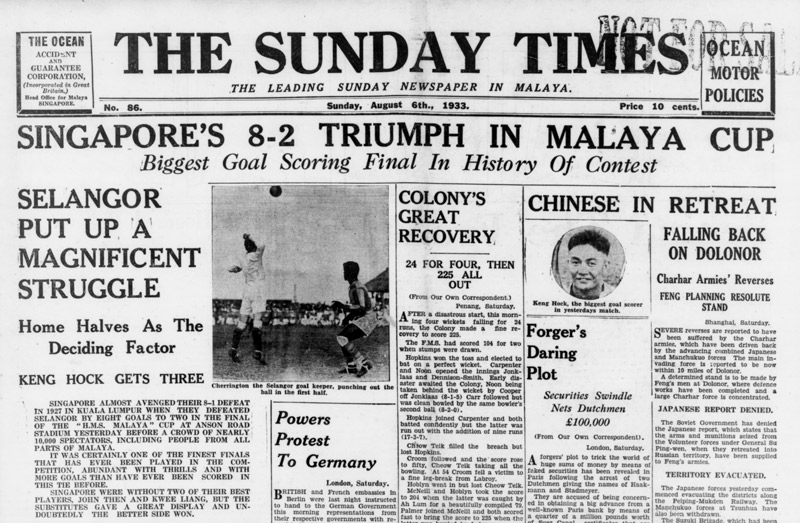
In the 1933 Malaya Cup final, Singapore defeated Selangor 8–2. Almost 10,000 spectators watched the match held at Anson Road Stadium in Singapore. The Straits Times described it as “one of the finest finals that has ever been played in the competition”. Source: The Sunday Times, 6 August 1933 © SPH Media Limited. Permission required for reproduction.
What does it take to become recognised as a hero in Singapore soccer? One answer is that you play for a successful team with talented teammates, and an extensive and supportive fan base. Maybe a player turned national coach. To be called a hero is very challenging indeed. Memories can fade. Names forgotten. Injuries intrude. And reputations suffer.
If you ask people today who their football heroes are, they are likely to cite people they have seen in action. Relying on this approach, however, means that we will miss out players from arguably the most important period in Singapore’s football history: the prewar period.
Singapore won the Malaya Cup (renamed Malaysia Cup in 1967) 12 times between 1921 (when the competition began) and 1941. A look at the results – focusing just on the home games played in the southern division of the Malaya Cup competition – shows that in 52 games, Singapore recorded an 82 percent win record, averaging four goals per game. Visiting teams managed less than one goal per game against the home side. Amazingly, throughout that span of 21 years, the Singapore team lost only two games at home. Singapore’s prewar record in the Malaya Cup definitely suggests that it was a major soccer powerhouse before the war.
Table caption
Opponent | Games | Results in Favour of Singapore | Goals For | Goals Against |
|---|---|---|---|---|
24 Sept 1921: 2–0 | 10 wins & 1 draw | 54 | 6 | |
Negri Sembilan (1922–40) | 10 | 10 wins | 46 | 7 |
Johore (1923–41) | 12 | 12 wins | 69 | 8 |
Malaya Command (1932–34) | 3 | 2 wins & 1 draw | 6 | 3 |
Combined Services (1935–39) | 6 | 4 wins & 2 draw | 12 | 6 |
Royal Air Force (1940–41) | 2 | 2 wins | 4 | 0 |
Army (1940–41) | 2 | 0 wins & 2 draws | 4 | 4 |
Selangor (1925–38) | 6 | 3 wins, 1 draw, & 2 losses | 15 | 7 |
52 | 43 wins, 7 draws & 2 losses | 210 | 41 |
The Beginnings of the HMS Malaya Cup
The game of association football (or football as it is better known today) was established in Singapore in 1889. Maritime or marine engineers, soldiers from the 58th Northamptonshire Regiment (known as the Steelbacks) and members of the Singapore Cricket Club (SCC) were the first devotees. By 1891, 30 years before the Malaya Cup began, interest in the sport had swelled considerably. There were 24 football teams recorded, including one each from the Straits Chinese Recreation Club (SCRC) and the Singapore Recreation Club (SRC). However, there was no official organising body for the game until the Singapore Football Association was established in 1892 (renamed Singapore Amateur Football Association in 1929 and then Football Association of Singapore in 1966).1
The Malaya Cup was formed after Captain H.T. Buller of the HMS Malaya donated two silver challenge trophies for football and rugby.2 The battleship was visiting the region to acknowledge the contributions of Malayans to the war effort.3 It arrived in Singapore on 29 January 1921 via Port Swettenham (now Port Klang), and the crew played friendly football matches against the five teams in the Singapore Football Association League: the Staffordshire Regiment (Army), Singapore Chinese Football Association (SCFA), the SCC, the SRC and Sea Defences (troops manning the coastal defences).
Initially, expatriate military personnel in Singapore were permitted to play in the Malaya Cup, but this would last for one season only as it was felt that their inclusion would dominate the competition and limit local participation. After the 1921 competition, there were no representatives from the army or navy until 1932. Members of the SCC were selected in the early competitions, but gradually players from the SCFA, the Malayan Football Association and the SRC formed the backbone of the teams. The Malaya Cup became the preserve of Malay and Chinese players during the interwar period, with rare appearances by Eurasian and European civilian representatives.
The Soccer Legends
Any list of Singapore’s best footballers will be a subjective one of course. One yardstick for judging the best players in the period 1921–41 could be the number of appearances in a Malaya Cup final. For this piece, I’ve included only local players as heroes. This does not mean that members of the SCC and military personnel did not contribute to Singapore’s successes in the Malaya Cup. Based on the criteria above, we have the following names:
Table caption
Name | Appearances in Final | Years in Final | Wins |
|---|---|---|---|
Abdul Fattah (Dolfattah) | 9 | 1927–35 | 6 |
Chua Boon Lay | 8 | 1926-35 | 6 |
Cheong Chee Lim | 7 | 1921-29 | 4 |
Foong Mun Fun | 7 | 1923-31 | 4 |
Mohamed Noor Kassim | 7 | 1928-35 | 6 |
Abdul Rahman | 7 | 1933-41 | 5 |
Roy Fairley Smith | 6 | 1922-27 | 3 |
Lancelot Pennefather | 6 | 1922-28 | 4 |
Lim Yong Liang | 6 | 1922-28 | 3 |
Choy Khun Onn | 5 | 1930-36 | 1 |
Chia Keng Hock | 5 | 1931-36 | 2 |
Yeo Ah Kow | 4 | 1929-34 | 4 |
Chee Ah Hui | 2 | 1930-33 | 2 |
Choo Seng Quee | 2 | 1937-38 | 1 |
Tay Kwee Liang | 0 | NIL | NIL |
(Note: Because of space constraints in the print magazine, we can only feature some of these men. The online version of the essay has biographical profiles of other legends on this list.)
Abdul Fattah (Dolfattah)
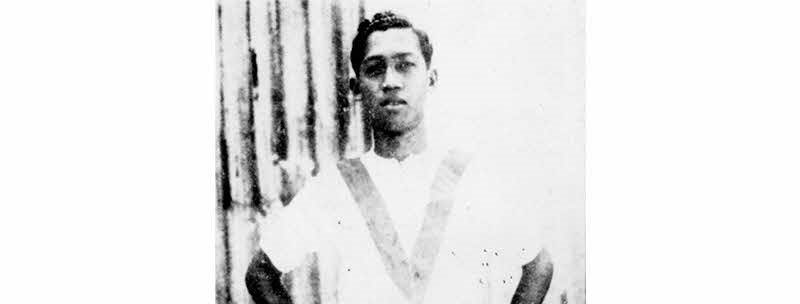
Abdul Fattah (Dolfattah). Image reproduced from “Singapore’s Football Test Team,” Malayan Saturday Post, 30 July 1927. (From NewspaperSG).
6 appearances in the Malaya Cup final (4 wins)
Malaya Cup (1927–35)
Kota Raja Football Club (1926)
Topping our list is Abdul Fattah, usually referred to as Dolfattah. He played for Kota Raja Football Club and was known as Singapore’s Dixie Dean, the English footballer regarded by some as the greatest centre-forward of all time.4 Playing as the attacking inside-left in the replayed Malaya Cup final at Anson Road Stadium in 1930, Dolfattah helped Singapore win 3–0. (That year, the final in Kuala Lumpur had to be aborted because of torrential rain and the game was replayed in Singapore.) Dolfattah was also on the winning side in 1931 (in Kuala Lumpur) and 1932 (in Singapore). On all three occasions, Singapore defeated traditional rival Selangor.5
Dolfattah holds the record for the most appearances in the Malaya Cup final (nine in total). But for a suspension in 1934 for accepting payment for participating in a tour to Java, it would have been a perfect 10. This was the year that no Malay players participated in the Malaya Cup. He was reinstated in August 1935.6
One of his most memorable game moments was in August 1929 when he scored all five goals against a hapless Melaka team.7 In total, Dolfattah scored 35 goals in 23 Malaya Cup games between 1927 and 1933 – a strike rate of approximately 1.5 goals per game.
Abdul Rahman Haji Ali
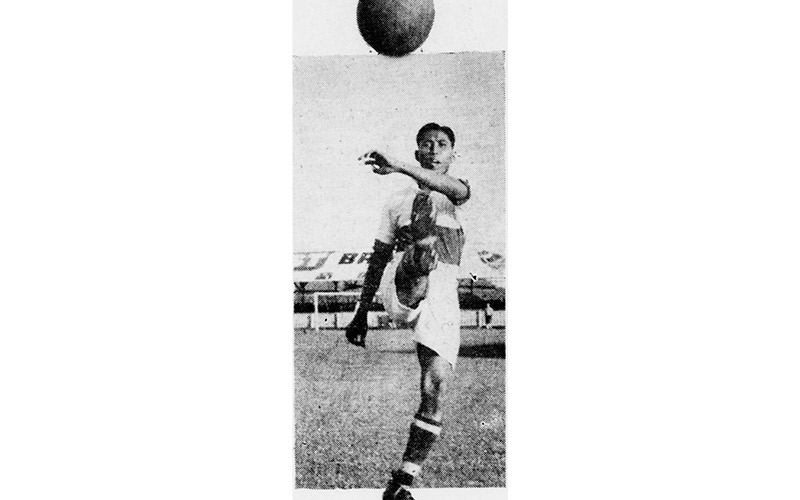
Abdul Rahman delivering one of his powerful clearance shots at a training session. Image reproduced from “He’s a Certainty,” Malaya Tribune, 21 June 1940, 6. (From NewspaperSG).
7 appearances in the Malaya Cup final (5 wins)
Malaya Cup (1933- 41)
Playing at full back (a full back does not always receive the credit he deserves), Abdul Rahman Haji Ali was one of the most reliable and steadfast of defenders. He grew up in the same neighbourhood in Kampong Glam as Dolfattah, and the latter was one of his first coaches. Abdul Rahman began his football career at age 15 as captain of the Victoria Bridge School football team, and led the team from 1927 to 1929.8
After leaving school, he played for the Malay Football Association second team in 1929 and 1930, and was promoted to the first eleven in 1931. He received his lucky break in 1933 when he was selected to represent Singapore in the Malaya Cup final against Selangor (Singapore won 8–2).9
In 1934, along with Dolfattah and Mohamed Noor Kassim (Mat Noor), Abdul Rahman was suspended for receiving payment for participating in a tour to Java. He continued playing in the 1935 Malaya Cup final, but could not play a single game in 1936 due to ill health. One of his career highlights was the visit to Singapore in January 1938 by the Islington Corinthians, an amateur English team based in London that was on a world tour. Abdul Raman was in the team that played against the visitors.10
Like Chua Boon Lay, Abdul Rahman was a champion athlete at school and won the individual championship in the All-Muslim Jubilee sports in 1935. He was also an excellent rugby player, representing the Singapore Asiatic team from 1935. After 1938, Abdul Rahman was appointed captain of the Malay Football Association team.11
Chee Ah Hui
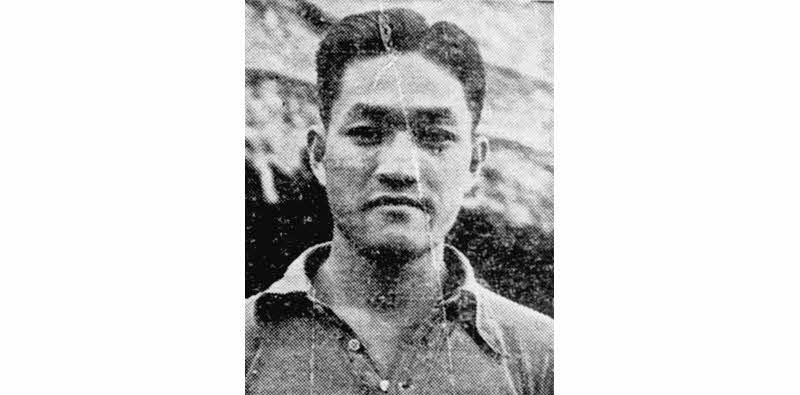
Chee Ah Hui. Source: The Straits Times, 2 August 1936 © SPH Media Limited. Permission required for reproduction.
2 appearances in the Malaya Cup final (2 wins)
Malaya Cup (1930 and 1933)
Amicable Athletic Association (1928)
Bendemeer Athletic Club (1928–31)
Siong Boo Athletic Association (1929–33)
Singapore Chinese Football Association (1927–33)
Shanghai Chinese (1934)
Born in Amoy (present-day Xiamen) in China, Chee Ah Hui came to Singapore in 1924 as a 16-year-old. He represented the Singapore Chinese Football Association in 1928, and one year later, he was in the Malayan Chinese Football Association team lineup. Known for his energetic and aggressive style as a half back, Chee played in the 1930 Malaya Cup final in Kuala Lumpur, which was aborted due to heavy rain, and was then surprisingly omitted for the replay in Singapore three weeks later.12
Chee returned to China in either 1933 or 1934 to attend Chi-nan University in Shanghai, and joined the Canton Air Force in 1934.13 His greatest achievement was representing China at the 1936 Olympic Games in Berlin, playing against Great Britain. Enroute to Berlin, the Chinese team transited in Singapore where they played a match against the Singapore Amateur Football Association team, winning 4–0. Playing at centre-half, he apparently caught everyone’s attention.14
Cheong Chee Lim
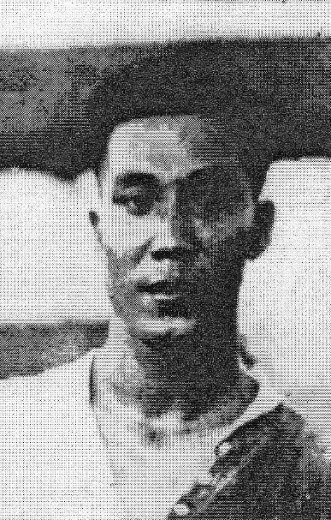
Cheong Chee Lim. Image reproduced from “Last Week’s Football Match Between Hong Kong Chinese and Malayan Chinese,” Malayan Saturday Post, 25 May 1929, 7. (From NewspaperSG).
7 appearances in the Malaya Cup final (3 wins)
Malaya Cup (1921–29)
Singapore Chinese Football Association (1917–33)
Cheong Chee Lim was the only Chinese player to represent Singapore in the 1921 Malaya Cup matches.15 (Players from the Middlesex Regiment, who were all Europeans, dominated team selection.) He would go on to play in seven of the next nine finals.
Cheong missed the 1924 Malay Cup as the Singapore Chinese Football Association (SCFA) withdrew its team from the Singapore League to protest against a ruling by the Singapore Football Association that excluded SCFA players for selection.16 He was a reserve in the 1928 match, but played in the 1929 final that ended in a 2–2 draw with Selangor.17
Chia Keng Hock
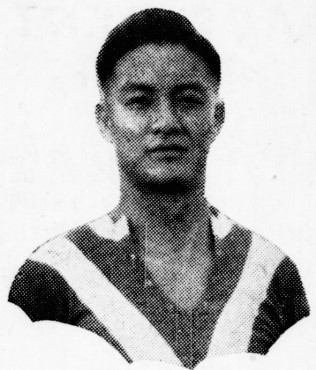
Chia Keng Hock. Image reproduced from Nimrod, “Fate of Keng Hock Still Undecided,” Singapore Free Press and Mercantile Advertiser, 31 July 1936, 9. (From NewspaperSG).
5 appearances in the Malaya Cup Final (2 wins)
Malaya Cup (1931–36)
St Joseph’s Old Boys Association
Straits Chinese Recreation Club
Not only did Chia Keng Hock acquire a reputation in football as a much-feared centre forward, he was also a talented batsman for the cricket team of the Singapore Chinese Recreation Club.18 But it was football that would bring him close to the world stage.
Favourably compared with Lee Wai Tong, Hong Kong’s greatest prewar player, Chia was given the nicknames “Cannonball Chia” and “The Bull” because of his burly frame, and his fearless and robust play. His rasping shots and bruising physicality made him a force to be reckoned with. Apparently, “his cannon-like shots sent defenders running for cover”.19
In the build up to the 1936 Olympic Games, trials were held in Hong Kong for aspiring Chinese players. Chia was one of a number of candidates from Singapore.20
Choo Seng Quee
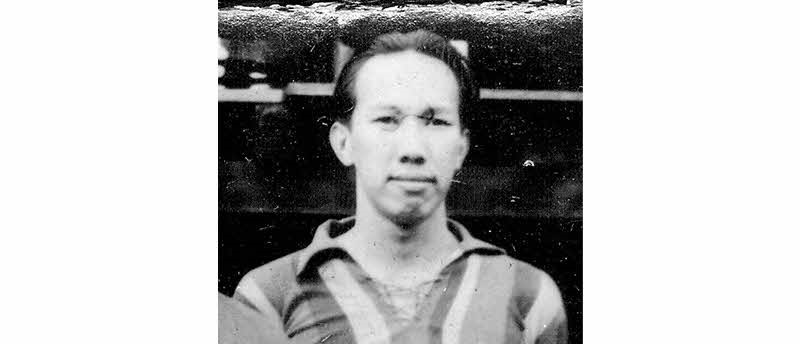
Choo Seng Quee, 1939. Courtesy of Singapore Sports Council.
2 appearances in the Malaya Cup final (1 win)
Malaya Cup (1937–38)
Singapore Chinese Football Association (1933–39)
Singapore Chinese Athletic Association (1939–40 and 1945–49)
Choo Seng Quee, best remembered as one of Singapore’s most respected coaches, retired in 1981. He represented Singapore before the war, and was part of the team that defeated Selangor 2–1 in the 1937 Malaya Cup final.
Choo retired from playing in 1948 and became a coach at the Singapore Chinese Athletic Association.21 He promoted the idea of including this association in the Singapore Amateur Football Association League at a time when only Singapore Chinese Football Association players were considered. He later coached the national teams of Indonesia (1951–53) and Malaya/Malaysia (1958–65) before being appointed Singapore’s national coach in 1976.22
One of Choo’s greatest achievements was guiding Singapore to win the Malaysia Cup in 1977, in a thrilling 3–2 defeat against Penang.23 Popularly known as Uncle Choo, he nurtured a generation of Singaporean footballers.
Choy Khun Onn (also spelled Choy Khoon Onn)
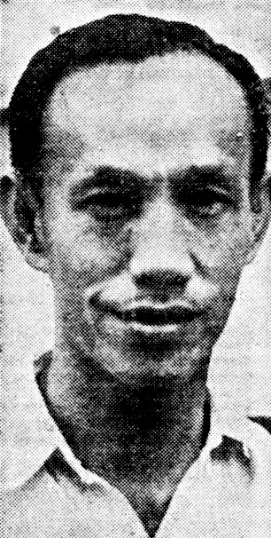
Choy Khun Onn. The Straits Times, 24 August 1947 © SPH Media Limited. Permission required for reproduction.
4 appearances in the Malaya Cup Final (1 win)
Malaya Cup (1930–36)
St Joseph’s Institution
Aston Athletic Club
Chinese Companion Athletic Association
Born in Hong Kong, Khun Onn was known as KO to his friends, but more popularly known among the Chinese soccer community as “Fo Chia Tou” (meaning fire locomotive in Hokkien) because of his speed.24 His most memorable Malaya Cup final was the replay of the 1930 match during which Singapore beat Selangor 3–0 at the Anson Road Stadium. Choy had already scored when the first game was abandoned because of heavy rain in Selangor. According to the New Nation, “In the replay, curiously Khun Onn drew first blood again. His goal sent the crowds into a frenzy; when he saw the Selangor’s goalkeeper losing control of a ball, he made a flying leap which propelled both him and the ball into the net”.25
In 1930, the Singapore Chinese Football Association (SCFA) team became the Singapore Amateur Football Association League champion by defeating the strong Singapore Cricket Club 2–1. Both goals were scored by Choy. He credited players such as Roy Fairley Smith, Lim Yong Liang and John Then for developing his game.26
After his retirement in around 1936, Choy served in the committee of the SCFA and later turned to coaching. In May 1956, he was appointed coach of the Singapore team, which lost to Selangor 2–1 in the Malaya Cup final that year.27
Chua Boon Lay
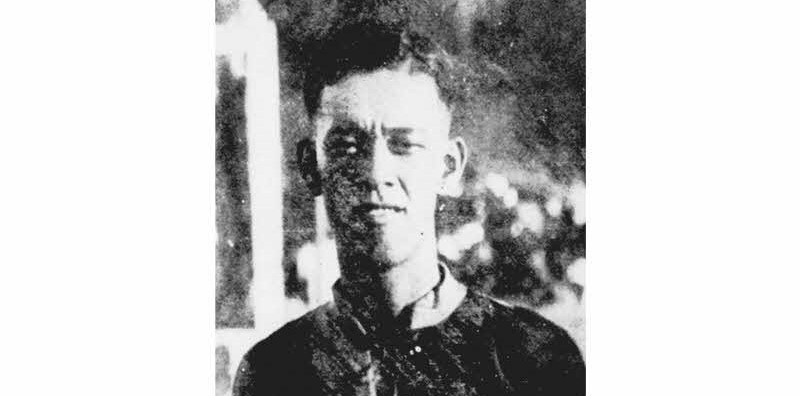
Chua Boon Lay. Image reproduced from “Singapore’s Football Test Team,” Malayan Saturday Post, 30 July 1927. (From NewspaperSG).
8 appearances in the Malaya Cup final (6 wins)
Malaya Cup (1926–37)
Siong Boo Athletic Association
Bendemeer Athletic Club
Amateur Sporting Association
Singapore Chinese Football Association (1923–37 and 1945–49)
Chua Boon Lay was known as “Towkay Ayam” (“chicken boss”) because of his association with the poultry business at Lau Pa Sat (Telok Ayer Market).28 Standing at 1.82 m – one of the tallest players in the Singapore team – the Straits Times described him as “a brilliant header and very speedy” and “one of the few full-backs who could out-head and out-pace little Mat Noor [Mohamed Noor Kassim] of the Malays”.29
Chua also played basketball for Siong Boo Athletic Association and was a top-class track athlete, clinching gold in the 100-, 400- and 800-metre races at the 1931 Singapore Chinese Sports meet.30 He represented Singapore in the Malayan Chinese Olympiads in athletics in 1937, and was also a talented billiard player.31
During the Japanese Occupation (1942–45), Chua became a committee member of the football section of the Syonan Sports Association established by the Japanese. In 1948, after the war ended, he joined the China football team as a coach for the London Olympic Games.
Foong Mun Fun
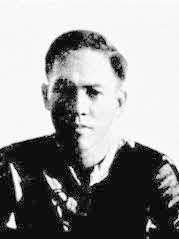
Foong Mun Fun. Image reproduced from “Singapore’s Football Test Team,” Malayan Saturday Post, 30 July 1927. (From NewspaperSG).
7 appearances in the Malaya Cup final (4 wins)
Malaya Cup (1923–30)
Singapore Chinese Football Association (1920–33)
Kicking a tennis ball near his home on Coleman Street marked the start of Foong Mun Fun’s football journey. In 1922, at age 17, Foong represented Anglo Chinese School. He was then spotted by Cheong Chee Lim and joined the Singapore Chinese Football Association (SCFA). The left-winger’s first Malaya Cup triumph came as an 18-year-old in 1923 when Singapore defeated Perak 2–1.32
Foong worked as the stadium clerk at Anson Road Stadium in 1924. As there was no office space in the stadium, John Sime, director of Sime Darby and also the president of the Singapore Football Association, allowed the stadium to make use of the premises at his Sime Darby office on Malacca Street.33 Foong’s final Malaya Cup success (his fourth win) was in 1931. Two years later he retired and subsequently joined the SCFA Selection Committee.34
Lim Yong Liang
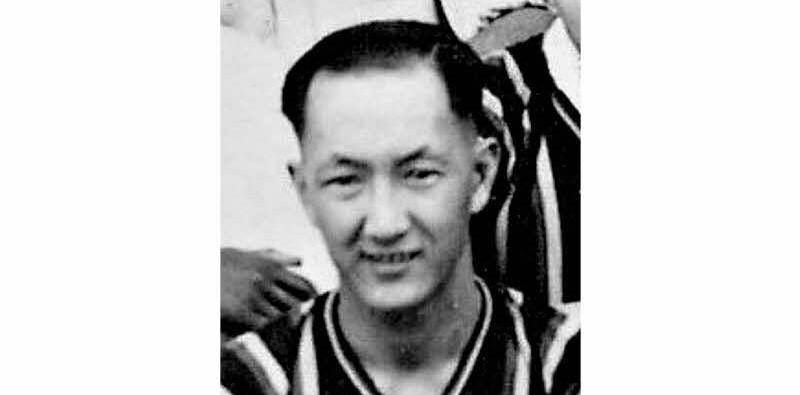
Lim Yong Liang, 1930. Courtesy of Alex Chua (grandson of Chua Boon Lay).
6 appearances in the Malaya Cup final (3 wins)
Malaya Cup (1922–30)
Singapore Chinese Football Association (1916–31)
Lim Yong Liang was a dominant centre forward fondly known as “Pop” and called the “Grand Old Man of Singapore soccer”. While a student at St Joseph’s Institution, he learned the game of football with the help of a tennis ball in the church compound.35
Lim represented Singapore in the Malaya Cup between 1922 and 1930, and he was on the winning side in 1923, 1924 and in 1925, when the final was played at the Anson Road Stadium in Singapore for the first time. Teaming up with Roy Fairley Smith and Foong Un Sun (the brother of Foong Mun Fun), Lim scored what proved to be the winning goal in a classic confrontation.36
Lim captained the Sino-Malay team that defeated a touring Australian team 4–2 in 1924. As a veteran, Lim returned to Malaya Cup duty in 1934, scoring two goals. He was the national coach from 1935 to 1941.37
After the war, Lim became a major advocate for football as an adviser and mentor. As the honorary secretary of the Football Association of Singapore in 1970, he was asked to provide inputs for the National Sports Promotion Bill.
Mohamed Noor Kassim (Mat Noor)
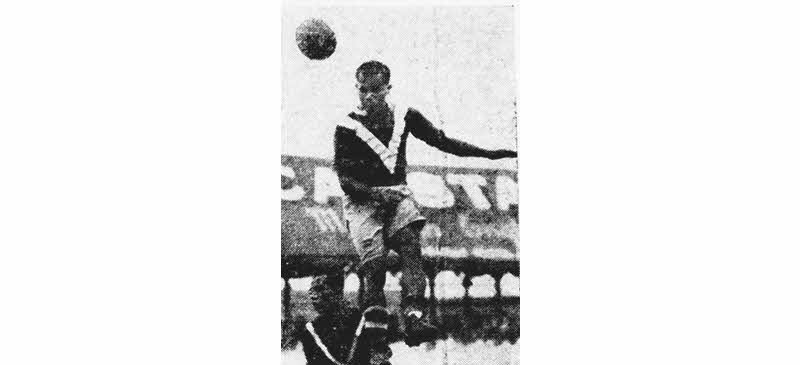
Mat Noor heading the ball at the Anson Road Stadium during a match against Johor in the southern section of the Malaya Cup competition. Image reproduced from “Johore Beaten by Eight Goals,” Malaya Tribune, 22 June 1935, 15. (From NewspaperSG).
7 appearances in the Malaya Cup final (4 wins)
Malaya Cup (1928–35)
Darul Bahar Football Club
Mohamed Noor Kassim, also known as Mat Noor, started playing for Darul Bahar Football Club in the Malay League at age 14 and later for the Post Office in the Commercial Cup.38 Renowned as a deadly striker (using both head and foot), Mat Noor claimed he learned his ability to head a ball so well by observing players in the Duke of Wellington’s regimental team.
Playing at inside right, Mat Noor was considered one of the most celebrated Malaya Cup players, and was given the nicknames “Botak” as he always shaved his head bald and “Wizard of Nod” because of his heading ability. Only 1.52 m tall, he learned to outjump taller players by training in the sea off Pulau Brani. “I was short, and I had to find a way to outjump my opponents. Hours of jumping up and down on the shore did the trick,” he said.39
Mat Noor played in the 1933 Malaya Cup final that recorded Singapore’s most one-sided victory (8–2) against Selangor. Like Dolfattah, he was suspended in 1934 for accepting payment for participating in a tour to Java, but was reinstated in 1935.40
Lancelot Maurice Pennefather
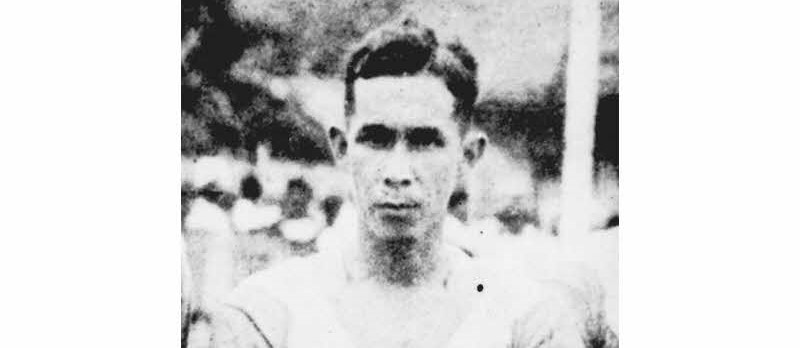
Lancelot Maurice Pennefather. Image reproduced from “Singapore’s Football Test Team,” Malayan Saturday Post, 30 July 1927. (From NewspaperSG).
6 appearances in the Malaya Cup final (4 wins)
Malaya Cup (1922–28)
Singapore Recreation Club (1912–30)
Lancelot Maurice Pennefather was known as “the Son of the Devil” because of his ferocious defence work as full back. Despite this nickname, he was a staunch advocate of sportsmanship above all else.41
He played in six Malaya Cup finals for Singapore, winning in 1923, 1924 and 1925. In 1928, the trophy was shared after a two-all draw against Selangor. He had speed and a long penetrative kick, and was a crowd favourite with his “end-to-end clearances, his fierce tackles against giant forwards and uncanny coverage of the goal area”.42
Pennefather was a certainty to play in the first Malaya Cup final in 1921 but chose to represent his club, the Singapore Recreation Club, in athletics instead. An all-round sportsman, he could also throw a cricket ball well over a distance of 100 yards. Together with his wife Alice and later granddaughter Annabel, the name of Pennefather became firmly embedded in Singapore’s sport story. (Alice excelled in badminton, tennis and hockey, and was inducted into the Singapore Women’s Hall of Fame posthumously in 2016 for her contributions to women’s sports in Singapore. Annabel was a national hockey player and captained the national women’s team from 1970 to 1980.)
Roy Fairley Smith
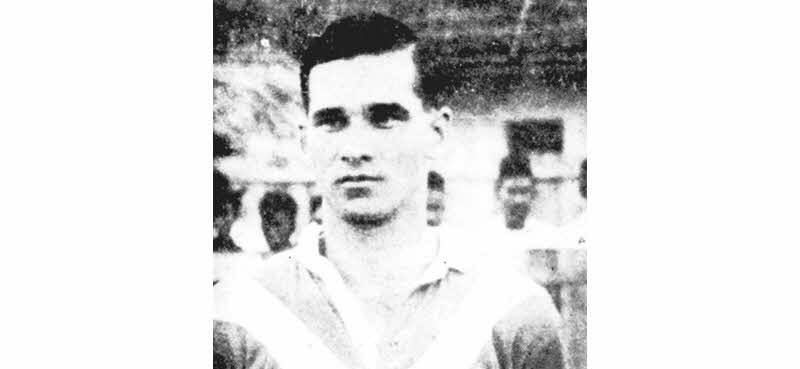
Roy Fairley Smith. Image reproduced from “Singapore’s Football Test Team,” Malayan Saturday Post, 30 July 1927. (From NewspaperSG).
6 appearances in the Malaya Cup final (3 wins)
Malaya Cup (1922–27)
Singapore Cricket Club (1917–28)
A Eurasian, Roy Fairley Smith, was given the nickname “Thunder Shooter”. Smith also held a record for high jump and was a tennis champion.43 He became a favourite with the sporting public during the 1920s and 1930s.
As a footballer, he become so highly sought after that the Singapore Cricket Club seized him from the Singapore Recreation Club and made him their centre forward. Smith would have been selected for the inaugural Malaya Cup tournament in 1921 if not for an injury sustained just two days before the first match.
Smith’s Malaya Cup performances over seven seasons (1921–27) were remarkable. He played in 19 games, including six consecutive finals. Out of 68 goals scored by Singapore players, Smith took credit for 28 of them, averaging two per game. He failed to score in only five of the 19 games.44
Tay Kwee Liang
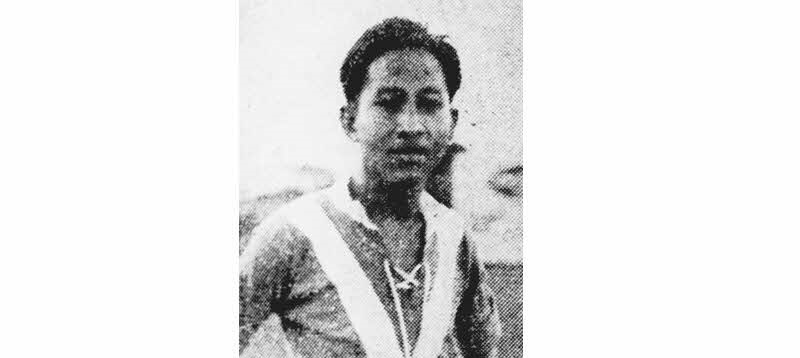
Tay Kwee Liang, 1933. Image reproduced from “Choosing Malaya’s Best Footballer,” Malaya Tribune, 11 November 1933. (From Newspaper SG).
Amicable Athletic Association
Bendemeer Athletic Club
Singapore Chinese Football Association
You might wonder why Tay Kwee Liang appears in this table since he did not play in any Malaya Cup final. He may not have been in the Malaya Cup, but he was involved in something even bigger – the Olympics.45 Born in Singapore in 1910 (his family was originally from Guangdong, China), Tay played for the Amicable Athletic Association, Bendemeer Athletic Club and Singapore Chinese Football Association.
In 1933, he joined the South China Athletic Association team in Hong Kong,46 and at the 1934 Far Eastern Games, he was a member of the Chinese team that won the championship. Two years later, Tay was selected to represent China at the 1936 Olympic Games in Berlin, along with Chua Boon Lay and Chee Ah Hui (although Tay is rarely mentioned alongside these two men). Besides football, Tay also excelled in table tennis, and was the national table tennis champion of Singapore in 1931.47
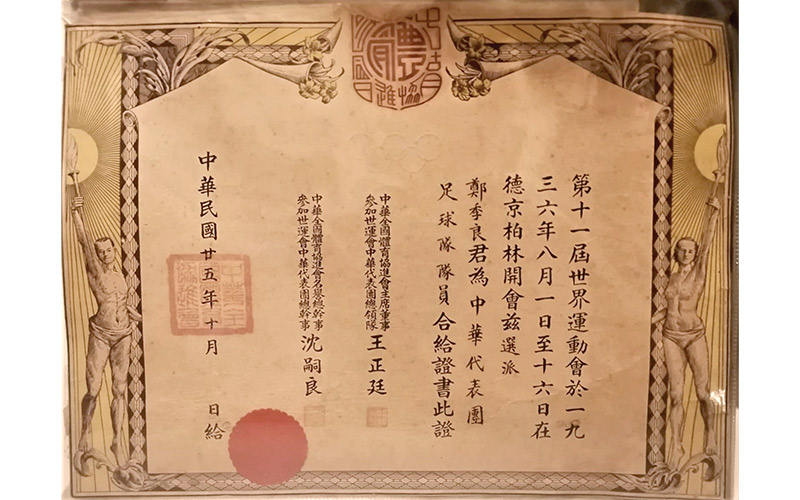
Tay Kwee Liang was selected to represent China at the 1936 Olympic Games in Berlin. Courtesy of Alex Tay (son of Tay Kwee Liang).
Yeo Ah Kow
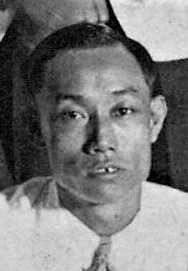
Yeo Ah Kow. Source Unknown
4 appearances in Malaya Cup Final (4 wins)
Malaya Cup (1929–34)
Amicable Athletic Association
Bendemeer Athletic Club
Siong Boo Athletic Association
Goalkeepers rarely make the headlines, but they can also be heroes. Yeo Ah Kow was a teammate of Chee Ah Hui and Tay Kwee Liang at Amicable Athletic Association founded in 1928. He played in charity matches, and in the annual competitions of Bendemeer Athletic Club.
Yeo made his home debut in the final match of the Southern section of the Malaya Cup competition in 1929, where Singapore beat Johor 4–2.48 He was also one of the first players to christen the new Jalan Besar Stadium in January 1930. The friendly was played between Malayan Chinese and Malayan Asiatics.49
Yeo was left out of the Malaya Cup final team from 1931 to 1933, but returned for Singapore’s 2–1 victory against Penang in 1934.50 He continued to play at a competitive level and represented Singapore at the Malayan Chinese Olympic Games held in Penang in August 1935.51
The Legends and Their Legacy
All of these men achieved something special in the world of football in the years between the two world wars. The crowds at many of these games exceeded 5,000 and sometimes reached 10,000, an impressive number that surpasses some local games today. The press coverage of each Malaya Cup games was extensive, so fans could relive the magic moments that they witnessed at the Anson Road Stadium. Many of these legends were also talented in other sports, and they brought their natural skills and abilities to the stage.
Today’s talk of the greatest players from Singapore rarely deviates from the players of recent memory, and even then, many are forgotten or marginalised. These names are presented here to remind people that there were great players who laid the foundation for a lasting football legacy in Singapore. They were indeed trailblazers who paved the way for the football heroes who came after them.
Malaya Cup Games Played in Singapore (1921– 41)
Table caption
Games | Opponent | Scores for Singapore |
|---|---|---|
24 Sep 1921: | Malacca | Roy Smith & C.M. Jamieson |
19 Aug 1922: | Negri Sembilan | Roy Smith, C.M. Jamieson & Chia Kwang Hung |
11 Aug 1923: | Johore | Roy Smith (3) & C.M. Jamieson |
18 Aug 1923: | Malacca | Roy Smith (2) & Lim Yong Liang |
2 Aug 1924: | Negri Sembilan | Roy Smith, Yahya Yatim (2) & R.C. Rogers (2) |
24 Aug 1925: | Malacca | Roy Smith (2), Lim Yong Liang (2), Foong Un Sun (2) & Cheong Chee Lim |
29 Aug 1925: | Selangor | Roy Smith & Lim Yong Liang |
21 Aug 1926: | Negri Sembilan | Roy Smith (3), Lim Yong Liang (3), Ee Chan Hee, Wan Puteh & 1 unknown |
16 Jul 1927: | Malacca | Dolfattah (2), K.H. Macfarlane & Yee Cheok Wah (2) |
18 Aug 1928: | Negri Sembilan | Dolfattah (4), Lim Yong Liang (3) & Mat Noor |
17 Aug 1929: | Malacca | Dolfattah (5) |
23 Aug 1929: | Johore | Dolfattah (2) & Norman Fyfe (2) |
31 Aug 1929: | Selangor | Mat Noor (2) |
18 Jul 1930: | Johore | Dolfattah (2), Dollah Zainol (2) & Syed Ahmad (2) |
26 Jul 1930: | Negri Sembilan | ShariffMadon & Yahya bin Yatim |
20 Sep 1930: | Selangor | Dolfattah, Dollah Zainol & Choy Khun Onn |
18 Jul 1931: | Malacca | Dolfattah (2) & Chia Keng Hock |
17 Jun 1932: | Johore | Dolfattah (4), Dollah Zainol (2) & John Then |
16 Jul 1932: | Negri Sembilan | Dolfattah (2) & Dollah Zainol |
29 Jul 1932: | Malaya Command | Mat Noor & Dollah Zainol |
23 Jun 1932: | Johore | Dolfattah (2), Chia Keng Hock (2), Mat Noor (2) & Mahmood |
8 Jul 1933: | Malacca | Dolfattah (3), Mat Noor (2) & Chia Keng Hock |
22 Jul 1933: | Malaya Command | Tay Kwee Leng & Mat Noor |
5 Aug 1933: | Selangor | Chia Keng Hock (3), Mat Noor (2), Shariff Madon (2) & Dolfattah |
29 Jun 1934: | Johore | Chia Keng Hock (4), Hoi San (2), Norman Fyfe (2) & A. Donald |
7 Jul 1934: | Negri Sembilan | Chia Keng Hock (4) |
21 Jul 1934: | Malaya Command | Chia Keng Hock (2) |
21 Jun 1935: | Johore | Chia Keng Hock, Mat Noor (3), A.G. Valberg (2) & Choy Khoon Onn (2) |
6 Jul 1935: | Malacca | Chia Keng Hock (2), Mat Noor (3) & Mahmood (2) |
20 Jul 1935: | Combined Services | Chia Keng Hock & Mahmood |
29 May 1936: | Johore | Chia Keng Hock (2), Taib bin Awang (3) & Dollah Zainol |
4 Jul 1936: | Selangor | No goals |
19 Jun 1937: | Malacca | George Day (3) & Soon Lye |
9 Jul 1937: | Johore | R.C. Oehlers (2), Bakri & Gan Kee Siang (2) |
24 Jul 1937: | Combined Services | Gan Kee Siang & James Goh |
18 Jun 1938: | Negri Sembilan | Shariff Madon, Tan Lai Chuan & Taib bin Awang |
8 Jul 1938: | Johore | George Day (2), Tan Lai Chuan (2) & Gan Kee Siang |
16 Jul 1938: | Combined Services | George Day & Gan Kee Siang |
23 Jul 1938: | Combined Services | Yuen Quan Chong |
6 Aug 1938: | Selangor (final) | No goals |
23 Jun 1939: | Johore | Yahya bin Yatim, Tan Lai Chuan & Yuen Quan Chong |
8 Jul 1939: | Malacca | Yuen Quan Chong (2), Mat Noor, Yahya bin Yatim & Ha Tee Siang |
22 Jul 1939: | Combined Services | Yahya bin Yatim |
6 Jul 1940: | Negri Sembilan | Taib bin Awang, Tan Lai Chuan (2) & Shariff Madon |
19 Jul 1940: | RAF (Royal Air Force) | Tan Lai Chuan & Shariff Madon (2) |
27 Jul 1940: | Army | Taib bin Awang, Tan Lai Chuan & Yahya bin Yatim |
13 Jun 1941: | Johore | Tan Lai Chuan (3), Ha Tee Siang (2) & J.C. Willoughby |
5 Jul 1941: | Malacca | Tan Lai Chuan (3), Ha Tee Siang (2) & Yueng Quan Chong |
18 Jul 1941: | RAF | Tan Lai Chuan |
26 Jul 1941: | Army | Not reported |
MALAYA CUP VENUES
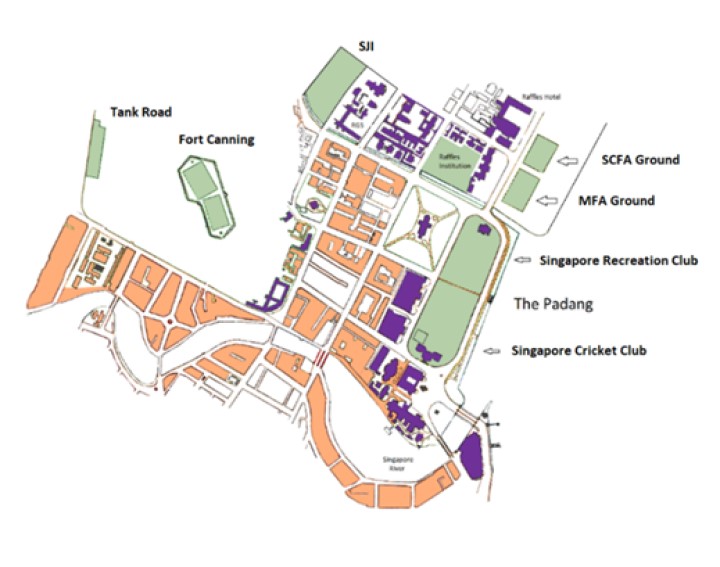
The earlier home matches in the Malaya Cup were played on the Padang. Matches between 1921 and 1923 were played in the field that is close to the Singapore Recreation Club. After Anson Road Stadium (also known as Singapore Stadium) opened in 1924, this became the main venue for Malaya Cup matches until 1941.
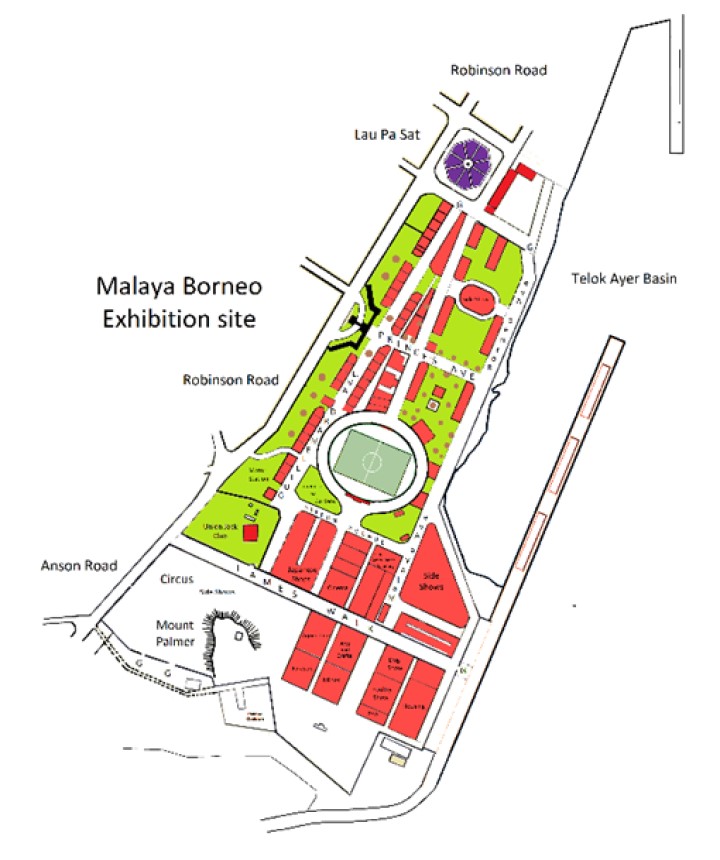
The pitch had originally been part of the Malaya Borneo Exhibition (MBE) in 1922. The grounds were realigned and enlarged, with small grandstands erected along the touchlines. For the remaining perimeter vantage points, there was an enclosure with a 12-foot-high grass bank. The stadium had an official capacity of 4,000 though some games would draw huge crowds.
Malaya Cup games at the Anson Road Stadium were not the most popular spectator events though. Senior League matches involving SCFA and contests against touring teams drew the biggest crowds to the stadium. For instance, Batavia Hercules from Java played against SCFA in a match that attracted 8,535 fans, while Singapore’s 5–0 victory over Malacca in a preliminary round of the Malaya Cup, also in 1927, was witnessed by 6,539 fans.
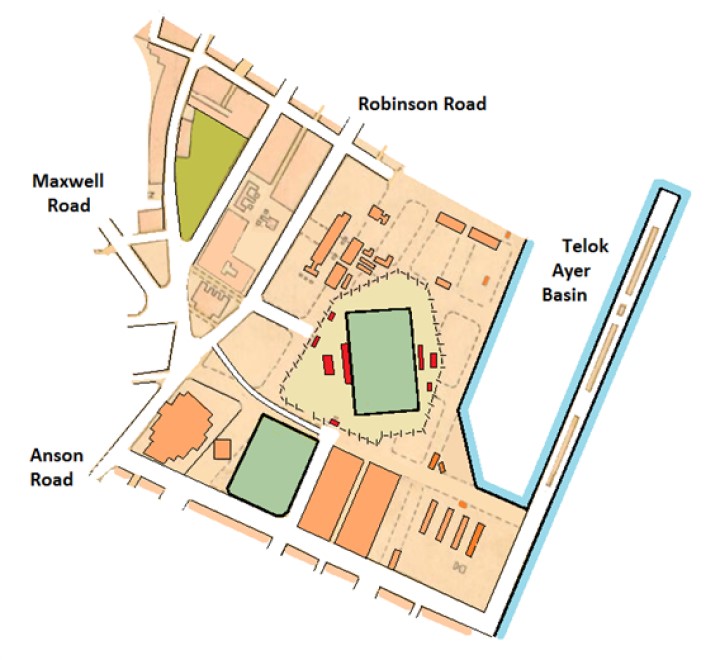
While the Anson Road Stadium was used for major matches, other locations in Singapore were used for playing competitive football. These included military camps and garrison facilities, private clubs, purpose-built stadiums, the Padang, open fields and even the site of the old convict jail at Bras Basah.
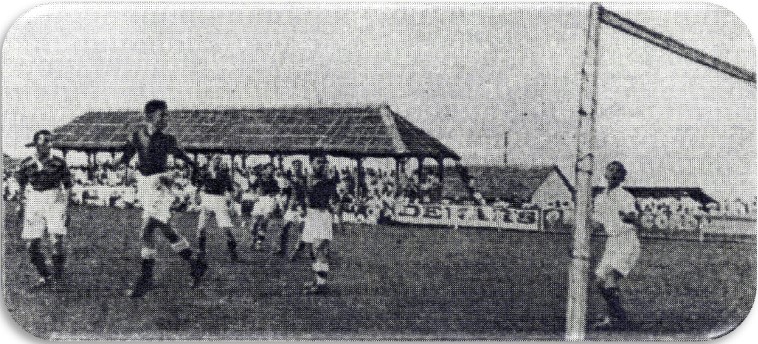
Anson Road Stadium. Courtesy of Singapore Sports Council.
Well-established schools such as Raffles Institution, Anglo-Chinese School and St Joseph’s Institution had easy access to pitches close to the centre of town. Raffles Institution was located at the junction of Bras Basah Road and Beach Road at the time (Raffles City shopping mall stands in its place today), and the reclaimed land opposite the school became the home territory of the Singapore Chinese Football Association (SCFA) and the Malay Football Association.
References
“Football: Batavia’s Narrow Win,”Singapore Free Press and Mercantile Advertiser, 7 July 1927, 16. (From NewspaperSG)
“Malaya-Borneo Exhibition,” Singapore Free Press and Mercantile Advertiser (1884–1942), 6 January 1922, 12. (From NewspaperSG)
“Malaya Cup,” Straits Times, 18 July 1927, 12. (From NewspaperSG)
“Malaya-Borneo Exhibition,” Singapore Free Press and Mercantile Advertiser (1884–1942), 6 January 1922, 12. (From NewspaperSG)
The Ethnic Breakdown of Singapore's Malaya Cup Players
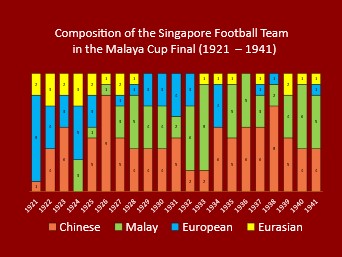
Traditionally, the Chinese dominated team selection in the interwar period. If we look at the 21 Malaya Cup finals played between 1921 and 1941, we can see that there were 100 capped players (some players played in multiple finals of course). Of these, 35 were Chinese players, 24 were Malays, 31 were Europeans and 10 were Eurasians.
The players with the most number of appearances in the finals were Dolfattah (nine times), Chua Boon Lay (eight times), Cheong Chee Lim (seven times), Mat Noor (seven times) and Abdul Rahman (seven times).
Capped Players in Malaya Cup Finals (1921–1941)
Table caption
Community | Number of Capped Players | Number of Caps Won | Caps Won Per player | Percentage of Caps Won |
Chinese | 35 | 97 | 2.77 | 41.99 % |
Malay | 24 | 66 | 2.75 | 28.57 % |
European | 31 | 44 | 1.41 | 19.04 % |
Eurasian | 10 | 24 | 2.40 | 10.40 % |
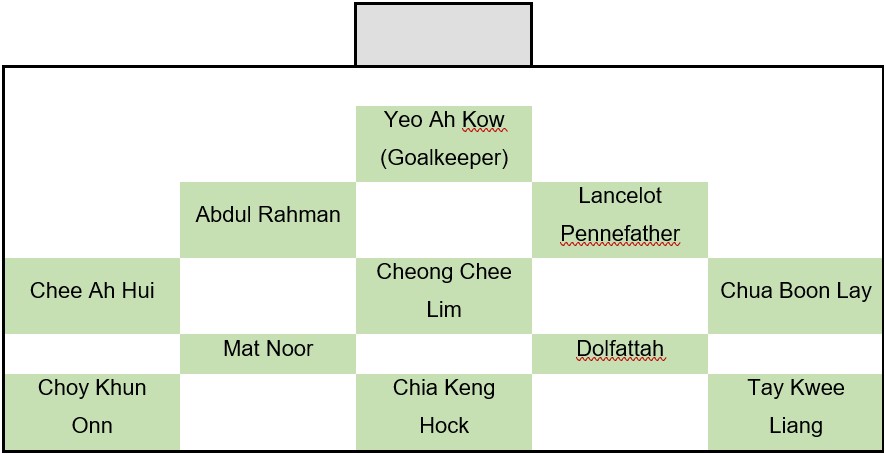
Nick Aplin's Fantasy 11
In my opinion, this is what a fantasy team made up of the players mentioned looks like. Some of you will feel differently and may also argue about the assigned positions. This is open for discussion of course.
About the Author
Dr Nick Aplin is the Deputy Director (Sport Heritage) at Sport Singapore. He is the author of Sport in Singapore: The Colonial Legacy (2019) and Sport in Singapore: The Rocky Road to Kallang Park (2023).
Endnotes
1 “Singapore Football Association,” Singapore Free Press and Mercantile Advertiser, 6 August 1892, 2; “Local Football,” Singapore Free Press and Mercantile Advertiser (Weekly), 22 May 1929, 14; “It’s the F.A. of S’pore,” Straits Times, 14 January 1966, 19. (From NewspaperSG). [The Singapore Football Association was founded in the same year that Liverpool Football Club first appeared in England.]
2 “Two Beautiful Cups,” Malaya Tribune, 10 August 1935, 15. (From NewspaperSG)
3 The battleship, commissioned in 1916, was built with money from the Federated Malay States (Selangor, Perak, Negri Sembilan and Pahang). See Teh Athira Yusof, “HMS Malaya: Federated Malay States Paid for Ship,” New Straits Times, 18 March 2019, https://www.nst.com.my/news/nation/2019/03/470285/hms-malaya-federated-malay-states-paid-ship.
4 “Thrilling Game at the Stadium,” Straits Times, 25 June 1931, 13. (From NewspaperSG)
5 “All the Finals,” Singapore Free Press, 29 August 1951, 6. (From NewspaperSG)
6 “Malay Footballer Suspensions,” Pinang Gazette and Straits Chronicle, 5 August 1935, 16. (From NewspaperSG)
7 “Football: Dolfattah’s Day,” Malacca Guardian, 19 August 1929, 9. (From NewspaperSG)
8 “Fifteen Years in the Forefront,” Straits Times, 17 August 1947, 10. (From NewspaperSG)
9 “Fifteen Years in the Forefront.”
10 “Fifteen Years in the Forefront”; Rob Cavallini and Colin Duncan, Around the World in 95 Games: The Amazing Story of Islington Corinthians 1937–38 World Tour (UK: Dog & Duck Publications, 2008); “Singapore XI for Today’s Soccer Match with Tourists,” Straits Times, 30 January 1938, 25. (From NewspaperSG)
11 “Fifteen Years in the Forefront.”
12 “Malaya Cup Match Abandoned,” Straits Times, 1 September 1930, 18; “Singapore Regain Malaya Cup,” Straits Times, 22 September 1930, 13. (From NewspaperSG)
13 “Thumb-nail Sketches of China Olympic Soccer Team,” Pinang Gazette and Straits Chronicle, 19 June 1936, 3. (From NewspaperSG)
14 Hermes, “China Olympics’ Fine Football,” Morning Tribune, 15 May 1936, 24. (From NewspaperSG)
15 “In the Sporting Limelight: Cheong Chee Lim,” Straits Times, 22 October 1933, 5. (From NewspaperSG)
16 “In the Sporting Limelight: Cheong Chee Lim.”
17 “Malaya Cup Final,” Singapore Free Press and Mercantile Advertiser, 2 September 1929, 16. (From NewspaperSG)
18 “Local Cricket,” Straits Times, 2 April 1930, 13. (From NewspaperSG)
19 “Soccer Legend Dies of a Heart Attack,” Straits Times, 2 December 1993, 31. (From NewspaperSG)
20 “Local Footballers to Represent China at Olympic Games,” Singapore Free Press and Mercantile Advertiser, 14 February 1936, 7. (From NewspaperSG)
21 “S’pore Soccer’s Biggest Rush for Players Is On,” Malaya Tribune, 24 February 1948, 7. (From Newspaper SG)
22 Ken Fernandez, “First Job Will Be to Tour States,” Straits Times, 31 January 1958, 16; Philip Tan and Terry Ang, “FAS Takes Back Seng Quee,” New Nation, 2 September 1976, 1. (From NewspaperSG)
23 Percy Senevirante, “The Malaysia Cup Is Ours After 12 Long Years,” Straits Times, 29 May 1977. (From NewspaperSG)
24 Sonny Yap, “Happy Birthday...,” New Nation, 13 June 1975, 10–11. (From NewspaperSG)
25 “Singapore Win Malaya Cup,” Singapore Free Press and Mercantile Advertiser, 22 September 1930, 10; “Choy Showed Way to Victory in This Malaya Cup Final,” New Nation, 13 June 1975, 10–11. (From NewspaperSG)
26 Yap, “Happy Birthday....”
27 “SCFA to Play Negri Saturday,” Straits Times, 15 May 1956, 14; Yap, “Happy Birthday....”
28 “Farewell to a Legend,” Straits Times, 6 October 1976, 27. (From NewspaperSG)
29 “Malayan Chinese at the Olympic Games in Berlin,” Straits Times, 2 August 1936, 22. (From NewspaperSG)
30 Singapore Chinese Athletic Sports,” Malayan Saturday Post, 28 February 1931, 8. (From NewspaperSG)
31 “Singapore Teams for Malayan Chinese Olympiad,” Straits Times, 15 July 1937, 15; Billiards,” Singapore Free Press and Mercantile Advertiser, 12 May 1932, 16. (From NewspaperSG)
32 “Malaya Cup Final,” Straits Times, 27 August 1923, 10. (From NewspaperSG)
33 “Selangor Win Malaya Cup,” Straits Times, 2 September 1956, 24; Sonny Yap, “It's Fabulous Fun,” New Nation, 28 March 1975, 10–11. (From NewspaperSG)
34 Yap, “It's Fabulous Fun.”
35 “The Legend Lives On,” New Nation, 30 October 1982, 36; “Soccer Stalwarts of 2 Decades,” Singapore Free Press, 8 May 1947, 7. (From NewspaperSG)
36 “Malaya Cup” Singapore Free Press and Mercantile Advertiser, 31 August 1925, 16. (From NewspaperSG)
37 Chia Keng Hock, “Soccer Stalwarts of 2 Decades,” Singapore Free Press, 8 May 1947, 7. (From NewspaperSG)
38 “Mat Noor – the Idol of Football Fans,” Straits Times, 5 November 1933, 5. (From NewspaperSG)
39 S. Gulam, “Little Man with the Mighty Lead,” Singapore Monitor, 20 September 1983. 40. (From NewspaperSG)
40 “Singapore’s 8–2 Triumph in Malaya Cup,” Sunday Times, 6 August 1933, 1; “Suspended Malaya Players,” Malaya Tribune, 21 July 1934, 17. (From NewspaperSG)
41 “Fullback with Wings,” New Nation, 25 April 1975, 10–11. (From NewspaperSG)
42 “Soccer’s Great Days,” Straits Times, 25 April 1975, 1. (From NewspaperSG)
43 “Sports and Pastimes,” Malaya Tribune, 6 September 1922, 8; “S.C.C. Spring Tennis Tournament: Result of Mixed Doubles,” Malaya Tribune, 29 May 1935, 15. (From NewspaperSG)
44 Nick Aplin, Sport in Singapore: The Colonial Legacy (Singapore: Straits Times Press, 2019), 139–40. (From National Library, Singapore, call no. RSING 796.095957 APL)
45 “Malayan Chinese at the Olympic Games in Berlin,” Sunday Times, 2 August 1936, 22. (From NewspaperSG)
46 “Quee Liang,” Malaya Tribune, 9 January 1934, 12. (From NewspaperSG)
47 “Zheng Jiliang: Biographical Information,” Olympedia, last accessed 24 June 2023, https://www.olympedia.org/athletes/701215.
48 “Malaya Cup Football,” Singapore Free Press and Mercantile Advertiser, 24 August 1929, 20. (From NewspaperSG)
49 “Opening of New Stadium,” Straits Budget, 2 January 1930, 30. (From NewspaperSG)
50 “Singapore Win Malaya Cup Final,” Straits Times, 5 August 1934, 17. (From NewspaperSG)
51 “Malayan Chinese Olympics,” Malaya Tribune, 15 July 1935, 15. (From NewspaperSG)