
Article
From Comics to Culture: Graphic Non-fiction in Singapore
15 April 2026
Topics
Arts
Graphic non-fiction has become increasingly mainstream in recent years thanks to a growing community of local writers and illustrators who are pushing the boundaries of their craft.
By Felix Cheong
-edited.jpg)
Weng Pixin weaves together stories of five generations of women from her family tree. Image reproduced from Weng Pixin, "Let’s Not Talk Anymore" (Montréal, Québec: Drawn & Quarterly, 2021). (From National Library Singapore, call no. RSING 741.595957 PIX).
Comics in Singapore have long been associated with adventure stories featuring superheroes such as Pluto-man and Captain V, the zany antics of Mr Kiasu or the manhua (漫画; Chinese-language comics) series produced by Asiapac Books that draw on Chinese wuxia (swordfighting) classics and mythology.1 In recent years, however, a quieter, more reflective form has been gaining ground: graphic non-fiction, often defined as long-form non-fiction stories told through sequential art. These works not only combine illustration and text to tell real-life stories, but also delve into historical events and figures. They show that comics can do more than merely entertain – they can also inform, provoke and preserve memory.
This growth in the production and consumption of graphic non-fiction is part of a worldwide phenomenon. In 2024, sales of comics and graphic novels in the United States and Canada reached around US$1.94 billion, an increase of 4 percent from US$1.87 billion in 2023. A 2024 article in the New York Times highlighted that one in four books sold in France was a graphic novel, which included non-fiction works published by journalists and historians.2 Locally, the Singapore Book Awards and the Singapore Literature Prize now have a category just for comics and graphic novels.
University presses are jumping on the bandwagon too, publishing graphic history books to appeal to a wider readership.3 Even something as dense as the 448-page Mueller Report – an investigation conducted by special counsel Robert S. Mueller into Russian interference in the 2016 US Presidential Election – has been surprisingly adapted into two graphic non-fiction books, by the Washington Post in 2019, and Shannon Wheeler and Steve Duin in 2020.4
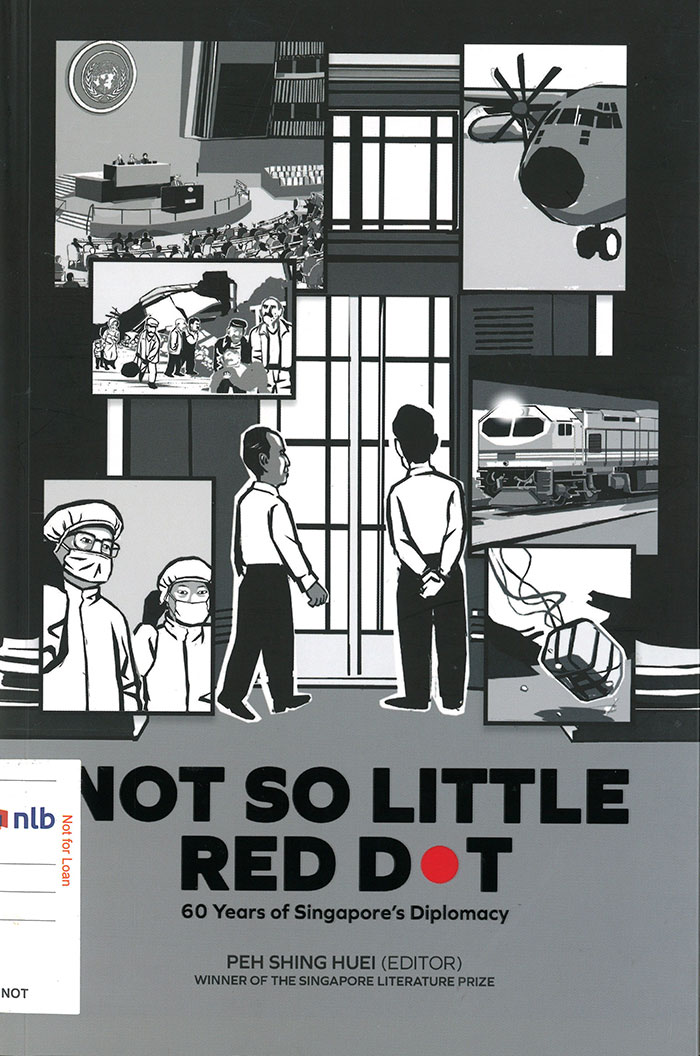
The main reason for this publishing trend: accessibility. In an age when people are reading less, the graphic novel form – with its multimodal interplay of visuals and text – is more appealing and helps readers to process and digest complex information faster. This was why when Singapore’s Ministry of Foreign Affairs wanted to commemorate Singapore’s 60th anniversary of independence in 2025, it commissioned Nutgraf Books to come up with a book that blends comics from Cheah Sinann and prose instead of the usual coffee table tome. Edited by Peh Shing Huei, Not So Little Red Dot: 60 Years of Singapore’s Diplomacy debuted in the Straits Times bestsellers list at number one.5
.jpg)
The corpus of graphic non-fiction books published in Singapore has been growing over the years. Some revisit historical events, drawing on archival sources or oral histories; others turn inward, chronicling personal experiences; still others use comics to report and document changing social norms. What follows is a working typology of three categories of graphic non-fiction, with a few representative examples. This list is by no means exhaustive.
Graphic Memoir
A graphic memoir is similar to a written memoir, except that the narrative is rendered in comic form, often written and illustrated by the artist himself. This is probably the most accessible mode, since creators largely draw on their life experiences, providing sharp insights that resonate immediately with readers. Two illustrators are prominent in this subgenre.
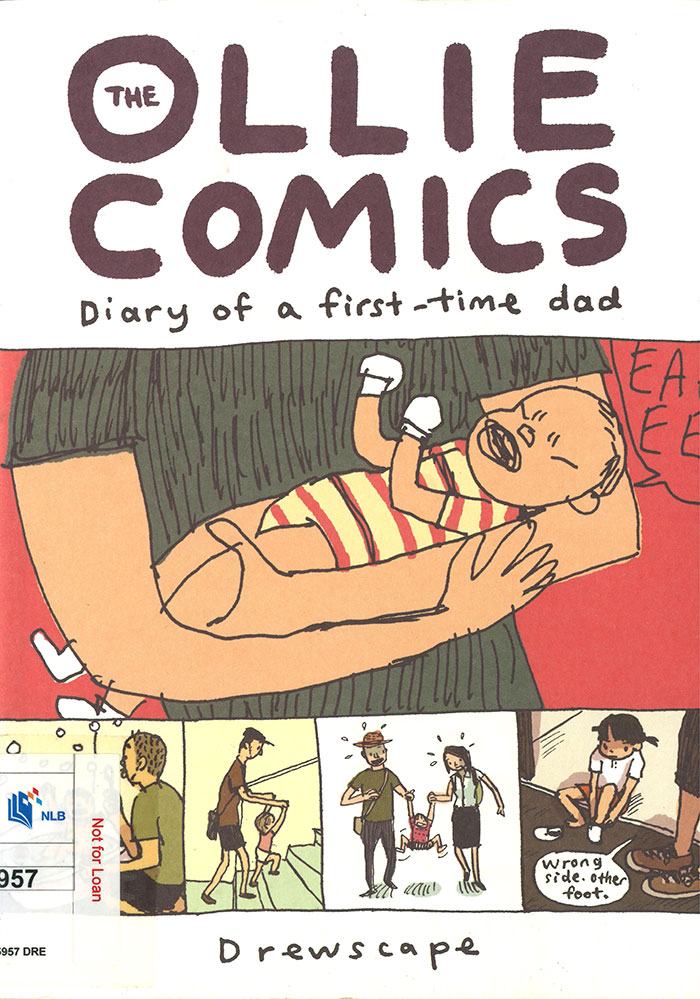
Andrew Tan is a freelance illustrator and an Eisner-nominated comic artist who writes under the pseudonym Drewscape. While his 2012 book, Monsters, Miracles & Mayonnaise (Epigram Books) has some autobiographical elements, it is occasionally fictional, with touches of magic realism. The Ollie Comics: Diary of a First-Time Dad (Drewscape, 2017) is more in the vein of a traditional memoir. In a series of short comics, often funny and relatable, Tan recounts the trials and tribulations of being a first-time father, such as doing night feeds and changing diapers.6
.jpg)
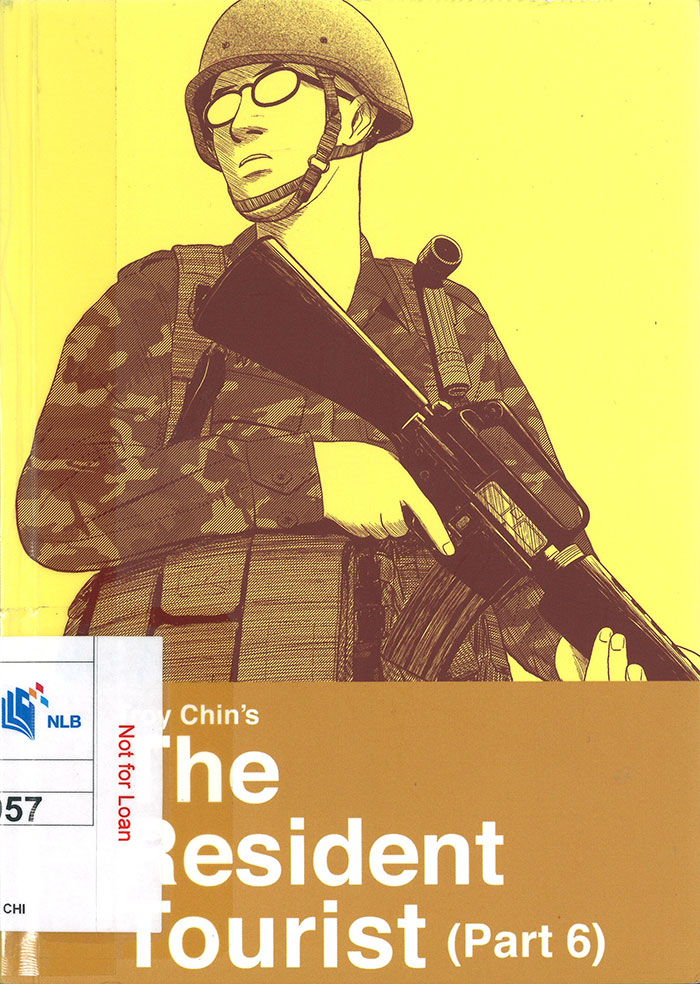
What if you chronicle almost everything that happens to you, no matter how significant or minor it is? This was what the 2011 National Arts Council’s Young Artist award recipient, Troy Chin, set out to do in nine volumes of The Resident Tourist (Math Paper Press, 2007–17). Be it his time in national service, dealing with his family, the demands of his job or love life, Chin was ever ready to record it in his trademark deadpan humour. Navel-gazing? Perhaps. Honest? Definitely. Little wonder he has confessed to losing friends as a result of his bare-all approach.7
.jpg)
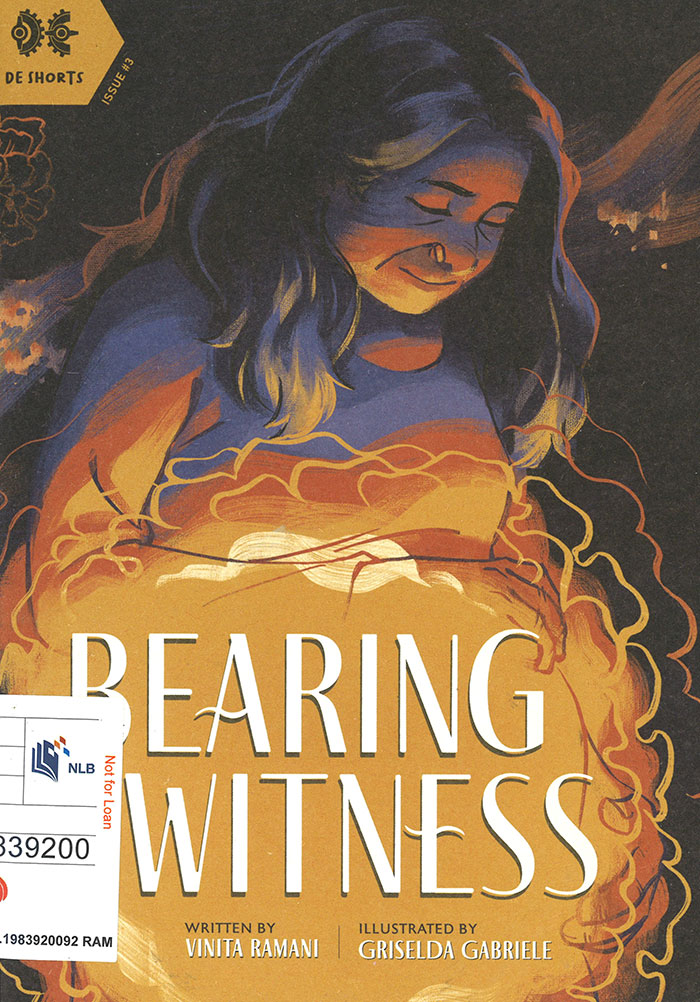
Of late, more female-centric graphic memoirs have also found their way into the bookstore. There is the very moving Bearing Witness by Vinita Ramani, with artwork by Griselda Gabriele (Difference Engine, 2022), in which Ramani delves deep into the trauma of losing her second child.8
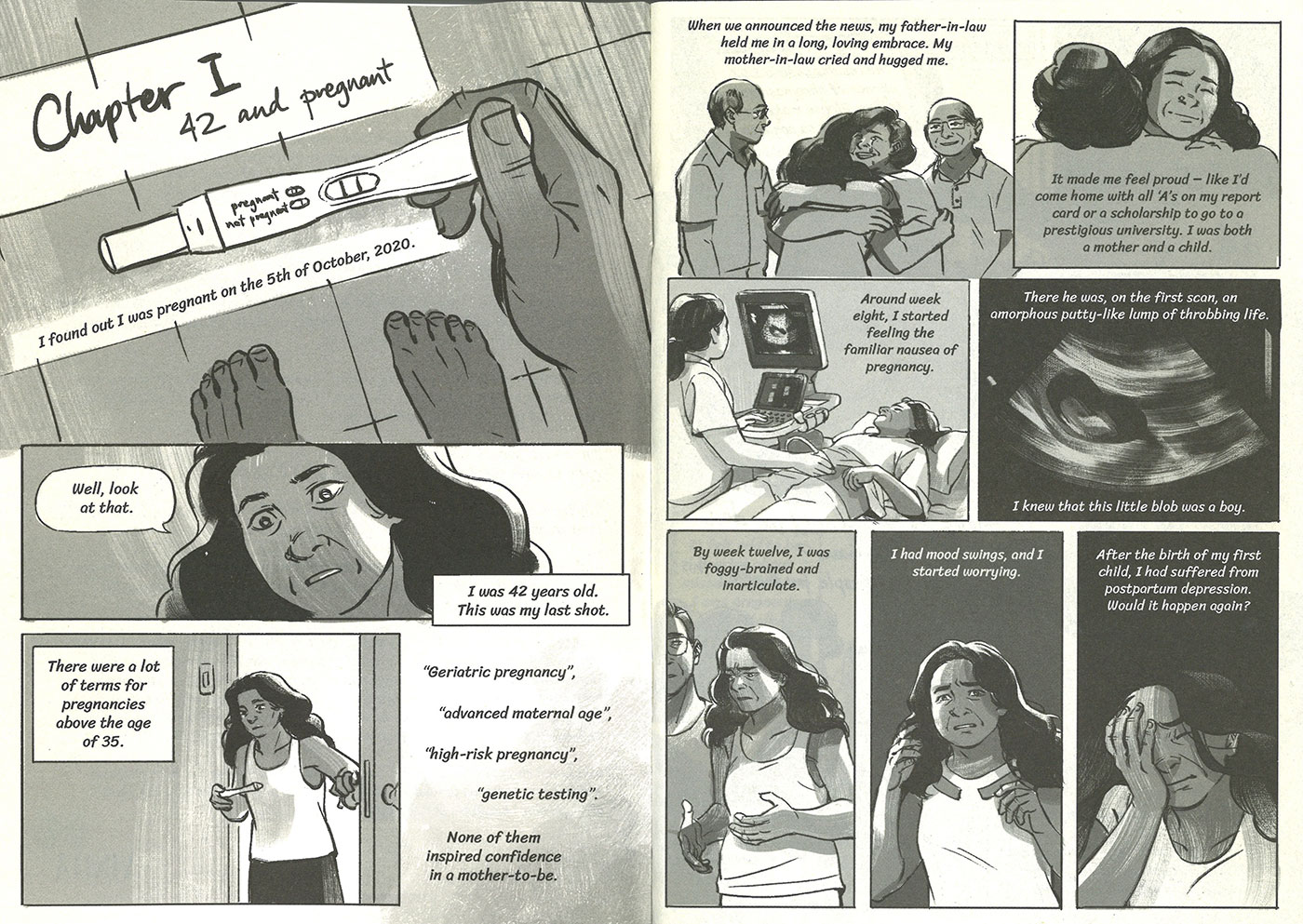
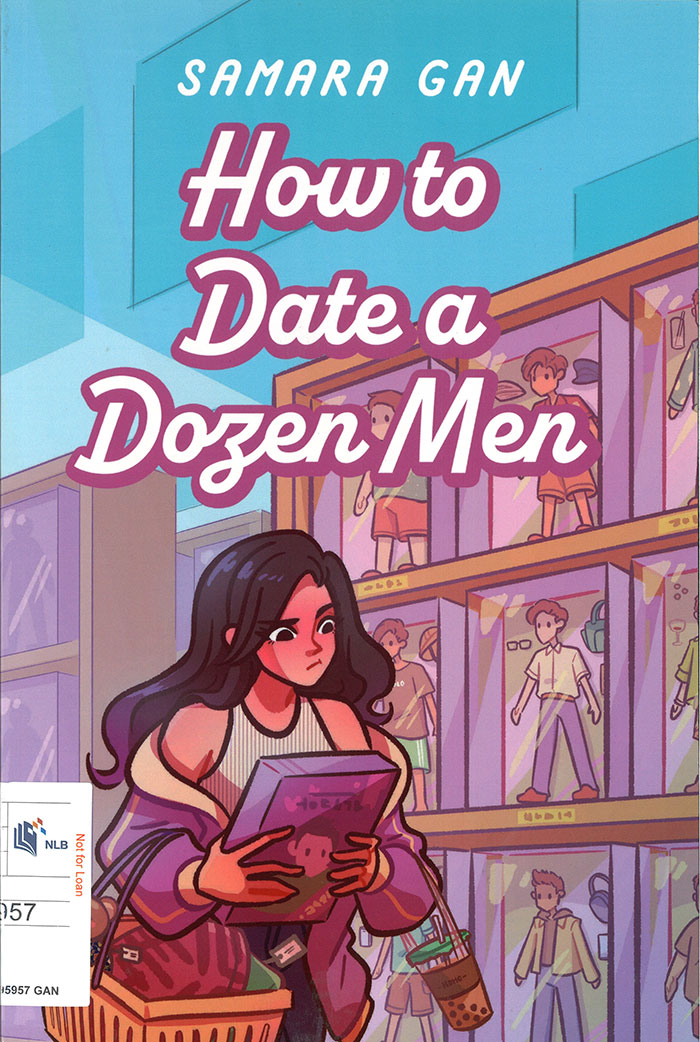
In Let’s Not Talk Anymore (Drawn & Quarterly, 2021), Weng Pixin weaves together stories of five generations of women from her family tree (including herself and a fictional future daughter).9 On the lighter side, there is How to Date a Dozen Men (Epigram Books, 2023), which chronicles Gen-Z writer-illustrator Samara Gan’s (mis)adventures in the dating game.10
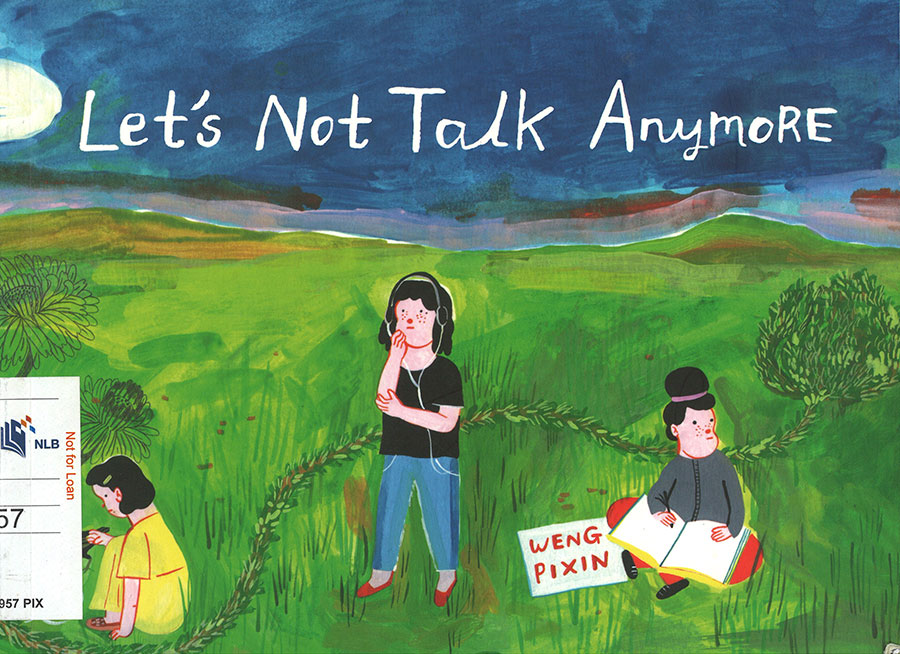
Weng Pixin weaves together stories of five generations of women from her family tree. Image reproduced from Weng Pixin, "Let’s Not Talk Anymore" (Montréal, Québec: Drawn & Quarterly, 2021). (From National Library Singapore, call no. RSING 741.595957 PIX).
.jpg)
Other notable titles in this subgenre include Joseph Chiang’s Chronicles of a Circuit Breaker (Epigram Books, 2021) and Asher Ong’s BMT Sketchbook (Landmark Books, 2023). Chiang documents life during the two months between April and June 2020 when Singapore entered a “circuit breaker” as a result of Covid-19. Ong’s book, winner of the Best Illustrated Non-Fiction Title at the Singapore Book Awards 2025, captures the experiences and moments of his Basic Military Training (BMT) on Pulau Tekong.11
Graphic Biography
Another strand of graphic non-fiction adapts the scope and ambition of biography, depicting real lives (or lives inspired by real contexts) in graphic novel form. This might sometimes involve imaginative reinterpretation rather than strictly “factual” retelling. Such graphic biographies tend to revolve around famous people for obvious reasons. The bigger the name, the more likely the public will snap up the book. The lives of these people are already well documented in archival newspapers and the National Archives of Singapore, so creators have many research sources to turn to.
Graphic biographies are categorised mainly into two types: pre-independence personalities and post-independence personalities.
The graphic biographies of pre-independence personalities typically coalesce around founders, pioneers and World War II heroes. To date, Asiapac Books has produced five of such books, including Lim Bo Seng: Singapore’s Best-Known War Hero (1998); Stamford Raffles: Founder of Modern Singapore (2002); and Tan Kah Kee: Entrepreneur Par Excellence (2023).12
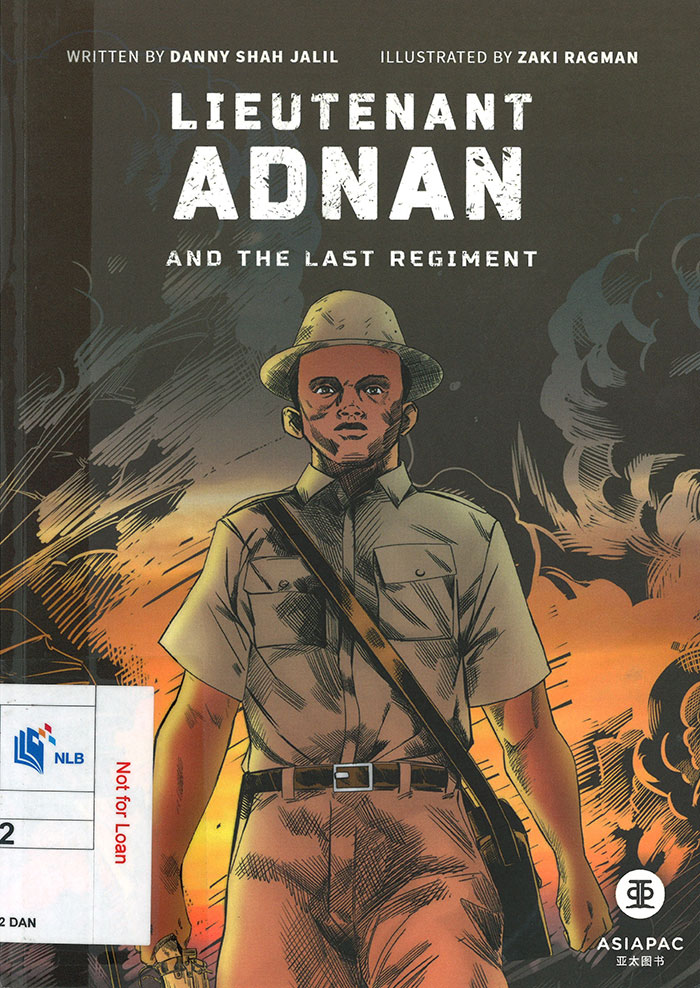
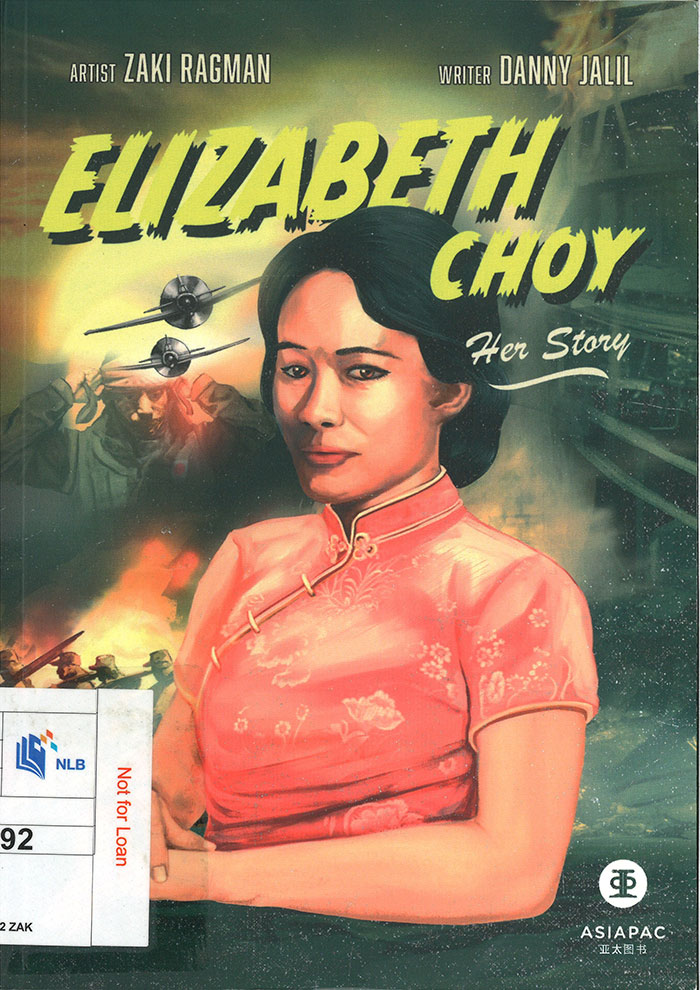
While the quality of the writing is uneven, often just by-the-numbers checkpoints of the person’s life, there are exceptions such as the other two books: Lieutenant Adnan and the Last Regiment (2017) and Elizabeth Choy: Her Story (2020), both written by Danny Shah Jalil and illustrated by Zaki Ragman. They attempt to get under the skin of the person and narrate the story from their perspective, giving it an interiority, a depth of subjectivity often missing from a third-person standpoint. Adnan Saidi and the Malay Regiment fought the Japanese soldiers on Bukit Chandu and were captured and tortured, while Elizabeth Choy suffered 200 days of starvation and torture for her suspected involvement in the Double Tenth Incident.13 The incident refers to the arrest and torture on 10 October 1943 of 57 civilians and Changi camp internees whom the Japanese suspected of being responsible for the damage of seven Japanese shipping vessels in Singapore waters; 15 died.
.jpg)
.jpg)
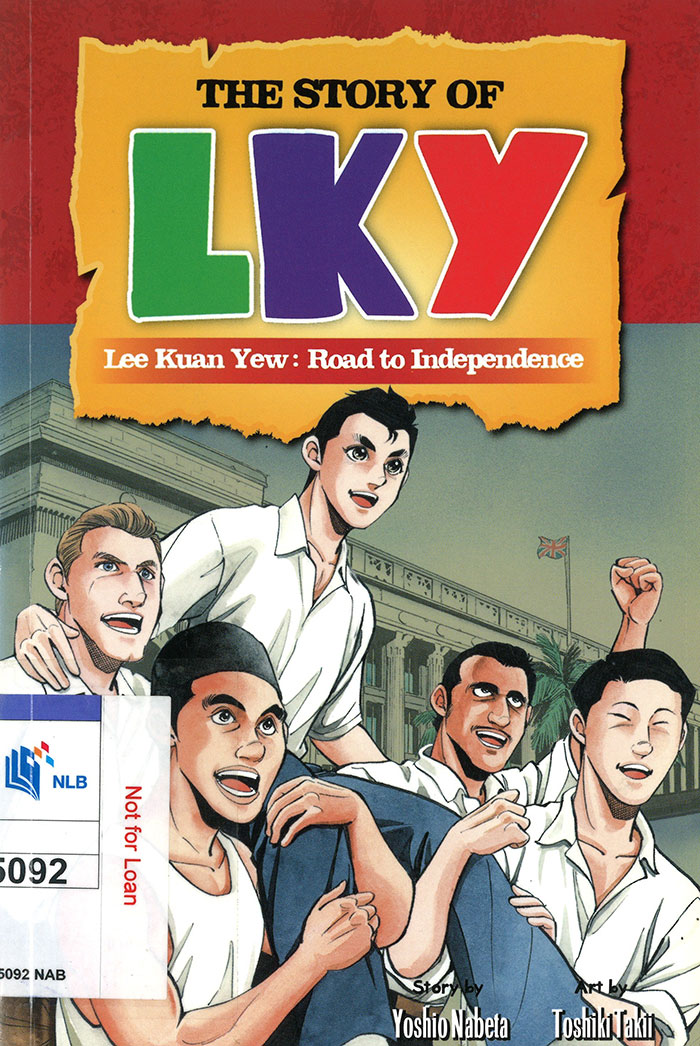
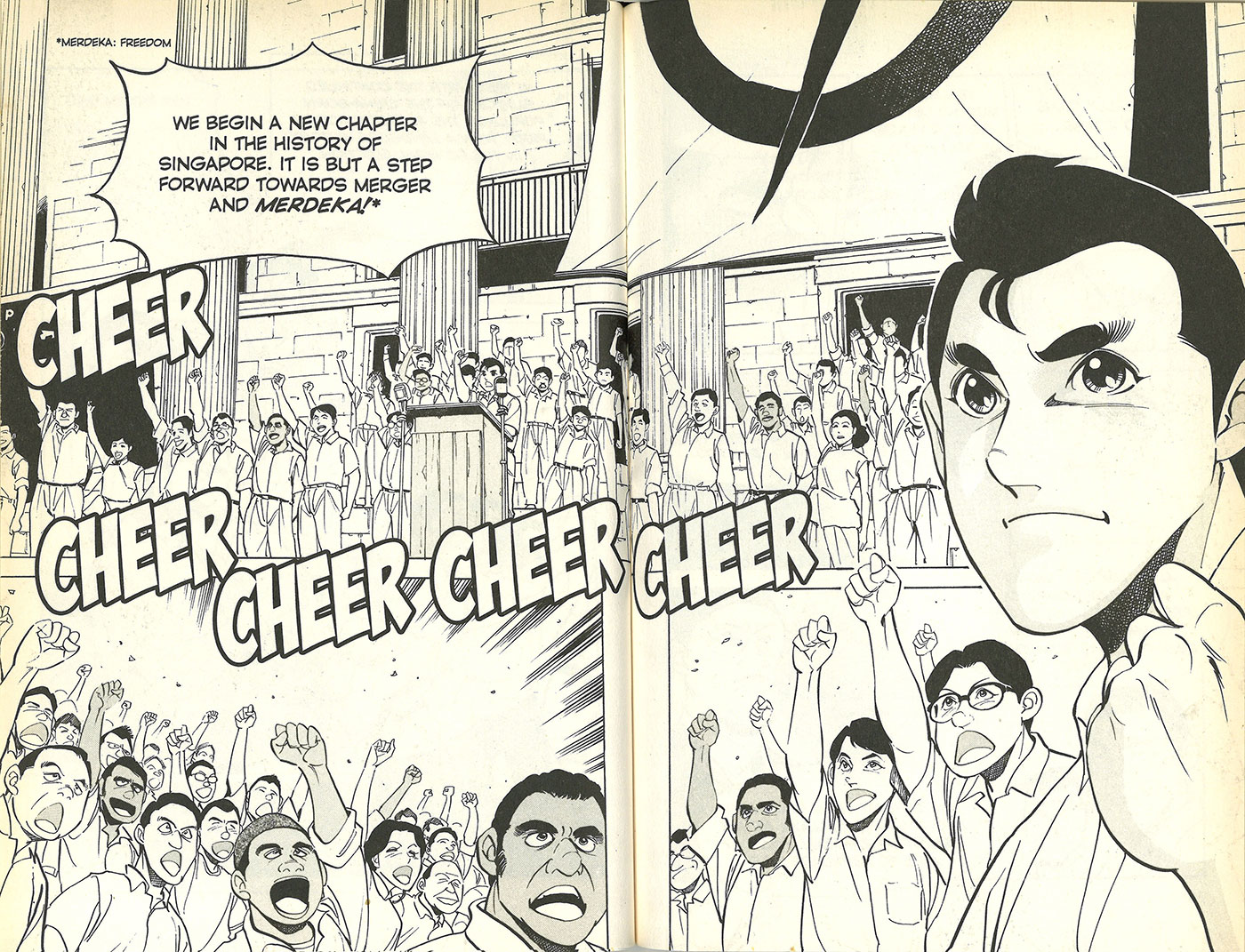
Founding Prime Minister Lee Kuan Yew takes the spotlight among post-independence personalities with at least four known graphic biographies (not counting various children’s picture books) about his life. Interestingly, three of these volumes, all published by Shogakukan Asia, were authored by Japanese writer Yoshio Nabeta. He collaborated with artist Yoshihide Fujiwara on The LKY Story: Lee Kuan Yew, the Man Who Shaped a Nation (2016) and, a year later, adapted it into a children’s version with artist Toshiki Takii in two volumes: Lee Kuan Yew: Growing Up (2017) and Lee Kuan Yew: Road to Independence (2017). The art style is thus very much manga (Japanese comics). As Fujiwara explained, “it is quite normal to do this kind of manga [in Japan] to portray historical events or the biographies of famous people”.14
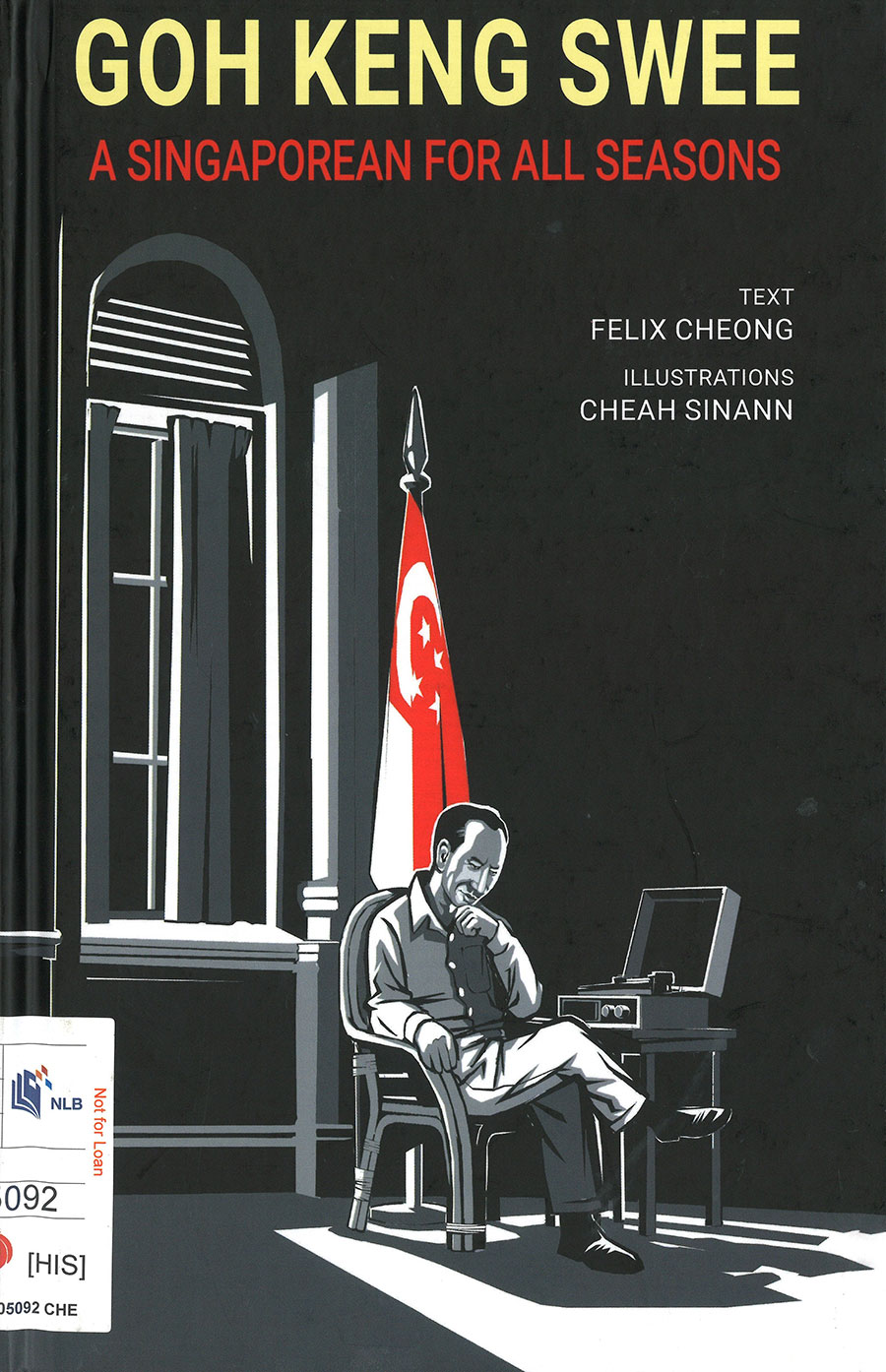
Lee’s right-hand man, Finance Minister Goh Keng Swee, has his own graphic biography too. Goh Keng Swee: A Singaporean for All Seasons (Marshall Cavendish, 2023) was written by me and illustrated by Cheah Sinann. Instead of taking a cradle-to-grave chronology of his life, we telescoped the timeline to seven crucial years between 1959 and 1966 when he set up Jurong Industrial Park (once described as “Goh’s Folly” by naysayers who didn’t think it would succeed).15
.jpg)
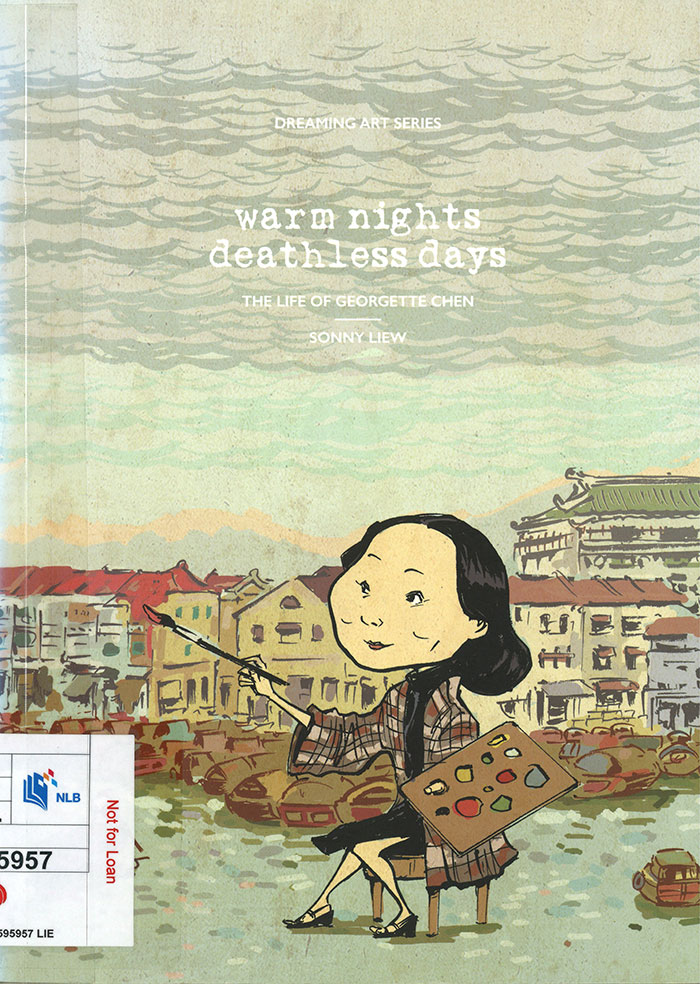
Beyond the portraiture of founding statesmen, two other graphic biographies worth mentioning are about artists: Sonny Liew’s Warm Nights, Deathless Days: The Life of Georgette Chen (National Gallery Singapore, 2014) and Drawn to Satire: Sketches of Cartoonists in Singapore (Pause Narratives, 2023), a homage to pioneering cartoonists lovingly put together by artist Koh Hong Teng and writer Lim Cheng Tju.16
.jpg)
Over the next decade, I am sure more graphic biographies will be published, especially those of other founding fathers such as E.W. Barker, S. Rajaratnam, Toh Chin Chye, Othman Wok, Lim Kim San and Ong Pang Boon.
Graphic Medicine
Graphic medicine is increasingly being recognised as a comics subgenre in its own right. A term coined by Ian Williams, himself a comics creator with three books to his name, it refers to comics that are at “the intersection between the medium of comics and the discourse of healthcare”.17 This sounds like a wide scope and it certainly is, as the subgenre covers a smorgasbord of topics, ranging from Covid-19 and mental health to the lives of healthcare workers and stories of patients.
That defining period of the 21st century has not one but two books dedicated to Covid-19. While these may read somewhat dated now, they stand as testament to a time when the world came to a standstill for months.
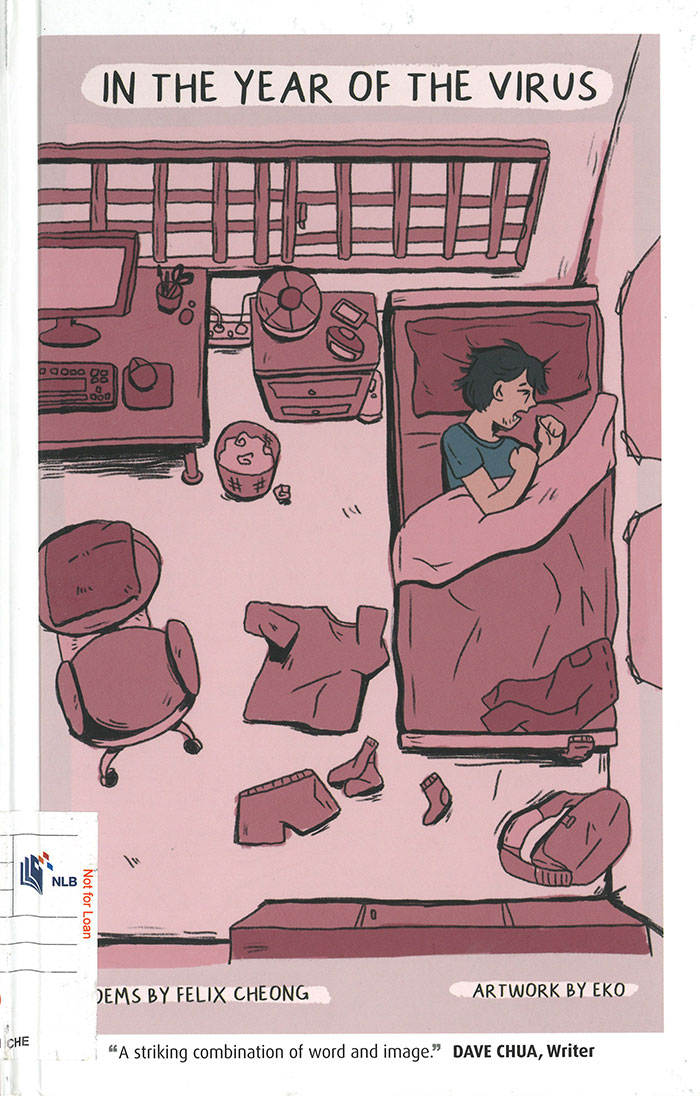
In the Year of the Virus (Marshall Cavendish, 2020) – a slim volume of poetry comics – was written by me and illustrated by Eko as a meditation on how the pandemic had impacted and transformed lives.18
.jpg)
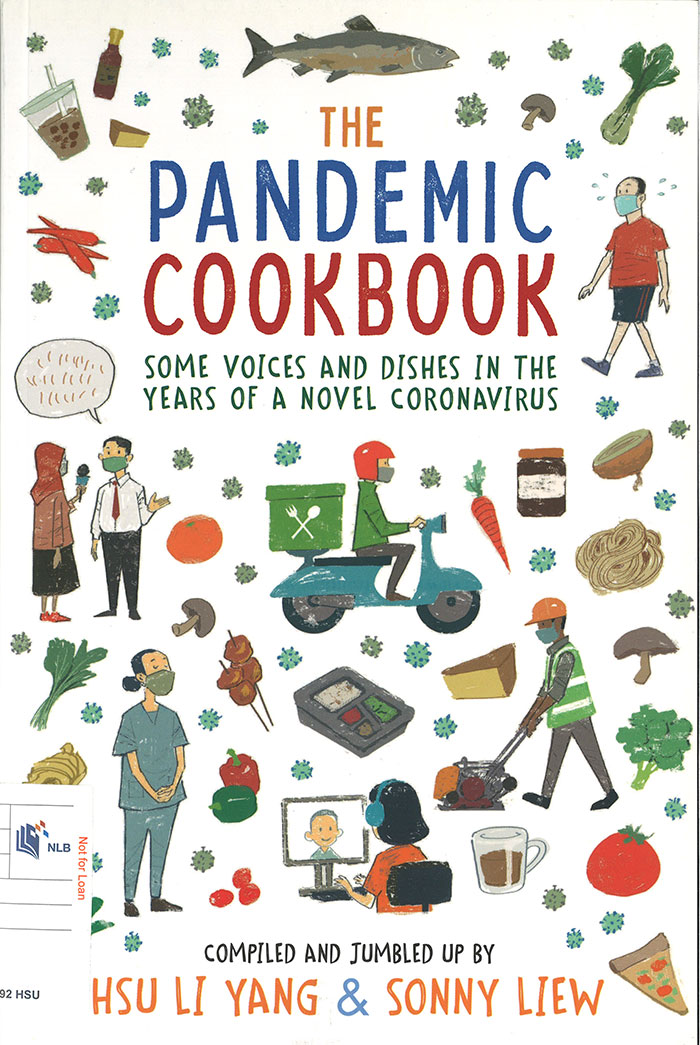
The Pandemic Cookbook: Some Voices and Dishes in the Years of a Novel Coronavirus (Epigram Books, 2022) – based on interviews with frontline workers, journalists, policymakers and academics – is the mother of all Covid-19 books. Cowritten with infectious disease doctor Hsu Li Yang, Sonny Liew revisits checkpoints of the pandemic period, from the circuit breaker to social distancing rules. It was shortlisted for the Singapore Literature Prize 2024 in the inaugural Comics/Graphic Novel category.19
.jpg)
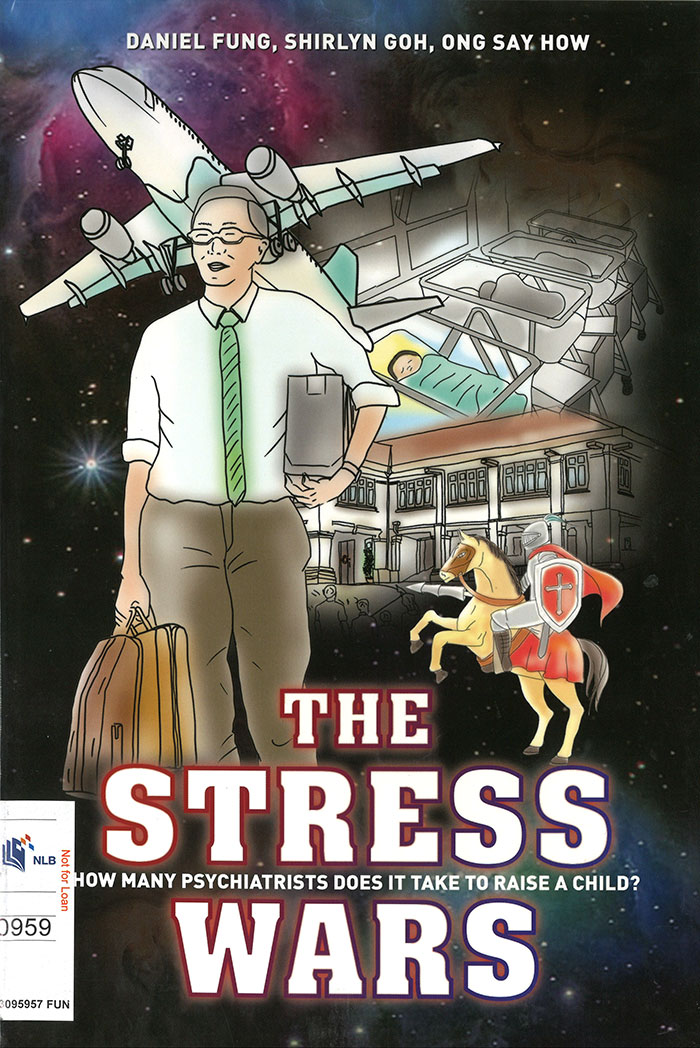
With the Singapore government making mental wellbeing a priority in its national agenda in 2024,20 graphic non-fiction books addressing mental health issues have also come to the fore. Chief among them is a book written by Institute of Mental Health professionals Daniel Fung, Ong Say How and Shirlyn Goh. The Stress Wars: How Many Psychiatrists Does It Take to Raise a Child? (Marshall Cavendish, 2021) offers guidance for families on how to manage the mental health of children.21
.jpg)
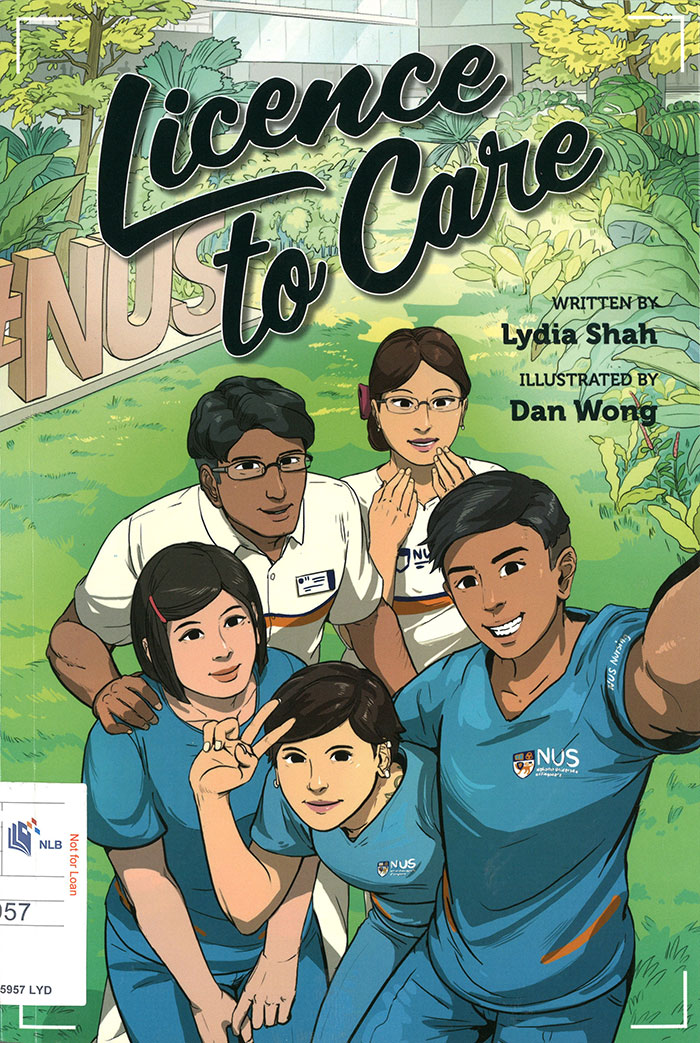
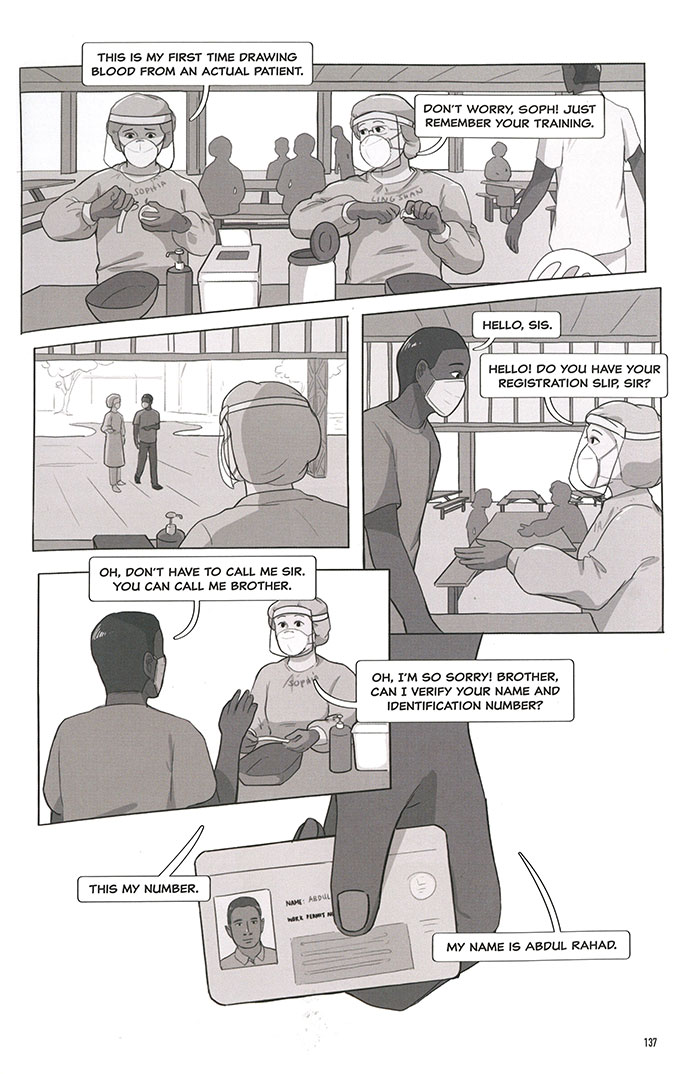
The last category narrates the experiences of patients and frontline workers. White Coat Tales (Epigram Books, 2021) by Suffian Hakim and Eugene Lim follows the lives of five freshies in their first year of medical school, while Licence to Care (Epigram Books, 2022) by Lydia Shah and Dan Wong takes the same approach with three trainee nurses.22
These comics show how graphic non-fiction need not be dry or strictly documentary. By blending fact and fiction, they lead the reader to emotional truths about place, identity and memory.
Still a Work in Progress
Despite these developments, the graphic non-fiction scene in Singapore remains nascent. There are several reasons why the form has not achieved full mainstream penetration. First, publishing costs are high, which can stymie production volume and the frequency of publication. Second, there is limited public awareness and demand for local graphic non-fiction. Although a few notable works have gained acclaim and traction, the audience for this genre of comics remains small. Third, some readers still expect comics to be escapist and light reading, which can make graphic non-fiction comics harder to market or appreciate.
Still, given these constraints, the field remains wide open. With the growing recognition of comics as serious literary work in Singapore, there is potential for more support from entities such as the National Arts Council, libraries, heritage bodies and education institutions.
About the Author
Felix Cheong is the bestselling author of 32 books, including nine graphic novels. Conferred the Young Artist Award in 2000 by the National Arts Council, Felix has been invited to writers’ festivals all over the world. He holds a masters in creative writing and is currently a university adjunct lecturer.
Endnotes
1 Jacqueline Lee and Chiang Yu Xiang, “Singapore Comics: Panels Past and Present (opens in new tab),” BiblioAsia 17, no. 3 (October–December 2021): 4–11.
2 “Comics Stores Drive Graphic Novel Sale Growth,” Publishers’ Weekly, 17 July 2025, https://www.publishersweekly.com/pw/newsbrief/index.html?record=5455 (opens in new tab); Julia Webster Ayuso, “A Boom in Comics Drawn from Fact,” New York Times, 30 January 2024, https://www.nytimes.com/2024/01/24/books/french-nonfiction-comic-books.html (opens in new tab).
3 Oleg Benesch, Shaul Mitelpunkt and Charlotta Salmi, “Graphic Narratives and History in the Americas,” The American Historical Review 130, no. 1 (March 2025), 231–64, https://academic.oup.com/ahr/article/130/1/231/8069659 (opens in new tab).
4 Brad Rouse, “Graphic Novels: New Frontiers, New Audiences,” Library Journal, 3 March 2020, https://www.libraryjournal.com/story/graphic-novels-new-frontiers-new-audiences (opens in new tab); The Washington Post and Jan Feindt, The Mueller Report Illustrated: The Obstruction Investigation (opens in new tab) (From NLB OverDrive); Michael Schaub, “A Mueller Report Graphic Novel Will Be Released by San Diego Publisher,” Los Angeles Times, 24 June 2019, https://www.latimes.com/books/la-et-jc-mueller-report-graphic-novel-20190624-story.html (opens in new tab).
5 Peh Shing Huei, ed., Not So Little Red Dot: 60 Years of Singapore’s Diplomacy (opens in new tab) (Singapore: The Nutgraf Holdings Pte Ltd, 2025). (From National Library Singapore, call no. RSING 327.5957 NOT); Shawn Hoo, “The Straits Times Weekly Bestsellers Nov 29,” Straits Times, 29 November 2025, https://www.straitstimes.com/life/arts/the-straits-times-weekly-bestsellers-nov-29 (opens in new tab).
6 Drewscape, The Ollie Comics: Diary of a First-Time Dad (opens in new tab) (Singapore: Drewscape, 2017). (From National Library Singapore, call no. RSING 741.595957 DRE); Drewscape, Monsters, Miracles & Mayonnaise (opens in new tab) (Singapore: Epigram Books, 2012). (From National Library Singapore, call no. RSING 741.595957 DRE)
7 Troy Chin, The Resident Tourist. Part 1 (opens in new tab) (Singapore: Dreary Weary Comics, 2011). (From National Library Singapore, call no. RSING 741.595957 CHI); Mysara Aljaru, “A Troy Story (opens in new tab),” Today, 6 April 2016, 42. (From NewspaperSG)
8 Vinita Ramani, Bearing Witness (opens in new tab) (Singapore: Difference Engine, 2022). (From National Library Singapore, call no. RSING 362.1983920092 RAM)
9 Weng Pixin, Let’s Not Talk Anymore (opens in new tab) (Montréal, Québec: Drawn & Quarterly, 2021). (From National Library Singapore, call no. RSING 741.595957 PIX)
10 Samara Gan, How to Date a Dozen Men (opens in new tab) (Singapore: Epigram Books, 2023). (From National Library Singapore, call no. RSING 741.595957 GAN)
11 Joseph Chiang, Chronicles of a Circuit Breaker (opens in new tab) (Singapore: Epigram Books, 2021). (From National Library Singapore, call no. RSING 741.595957 CHI); Asher Ong, The BMT Sketchbook (opens in new tab) (Singapore: Landmark Books, 2023). (From National Library Singapore, call no. RSING 355.54095957 ONG)
12 Clara Show, Lim Bo Seng: Singapore Best-known War Hero (opens in new tab) (Singapore: Asiapac, 1998). (From National Library Singapore, call no. RCLOS 940.5425092 SHO-[JSB]; Raffles: Founder of Modern Singapore (opens in new tab), trans. Geraldine Goh (Singapore: Asiapac, 2002). (From National Library Singapore, call no. RSING 959.57092 STA); JDC Amane, Tan Kah Kee: Entrepreneur Par Excellence (opens in new tab) (Singapore: Asiapac Books Pte Ltd, 2023). (From PublicationSG)
13 Danny Shah Jalil and Zaki Ragman, Lieutenant Adnan and the Last Regiment (opens in new tab) (Singapore: Asiapac Books Pte Ltd, 2017). (From National Library Singapore, call no. RSING 355.0092 DAN); Danny Shah Jalil and Zaki Ragman, Elizabeth Choy: Her Story (opens in new tab) (Singapore: Asiapac Books, 2020). (From National Library Singapore, call no. RSING 371.10092 ZAK)
14 Yoshio Nabeta and Yoshihide Fujiwara, The LKY Story: Lee Kuan Yew, the Man Who Shaped a Nation (opens in new tab) (Singapore: Shogakukan Asia Pte Ltd, 2016). (From National Library Singapore, call no. RSING 959.5705092 NAB); Yoshio Nabeta and Toshiki Takii, Lee Kuan Yew: Growing Up (opens in new tab) (Singapore: Shogakukan Asia Pte Ltd, 2017). (From National Library Singapore, call no. RSING 959.5705092 NAB); Yoshio Nabeta and Toshiki Takii, Lee Kuan Yew: Road to Independence (opens in new tab) (Singapore: Shogakukan Asia Pte Ltd, 2017). (From National Library Singapore, call no. RSING 959.5705092 NAB); “Lee Kuan Yew – Now Manga Hero,” Malay Mail, 30 October 2016, https://www.malaymail.com/news/read/2016/10/30/mr-lee-kuan-yew-now-manga-hero/1239071. (opens in new tab)
15 Felix Cheong, Goh Keng Swee: A Singaporean for All Seasons (opens in new tab) (Singapore: Marshall Cavendish Editions, 2023). (From National Library Singapore, call no. RSING 959.5705092 CHE); “Some Who Thought Jurong Was ‘Goh’s Folly’ (opens in new tab),” Straits Times, 22 May 1970, 7. (From NewspaperSG)
16 Sonny Liew, Warm Nights, Deathless Days: The Life of Georgette Chen (opens in new tab) (Singapore: National Gallery Singapore, 2014). (From National Library Singapore, call no. RSING 741.595957 LIE); Lim Cheng Tju, Drawn to Satire: Sketches of Cartoonists in Singapore (opens in new tab) (Singapore: Pause Narratives, 2023). (From National Library Singapore, call no. RSING 741.595957 LIM)
17 Ian Williams, “What Is Graphic Medicine?” Graphic Medicine, accessed 10 March 2026, https://www.graphicmedicine.org/%20why%20graphic%20medicine/ (opens in new tab).
18 Felix Cheong, In the Year of the Virus (opens in new tab) (Singapore: Marshall Cavendish Editions, 2020). (From National Library Singapore, call no. RSING S821 CHE)
19 Hsu Li Yang and Sonny Liew, The Pandemic Cookbook: Some Voices and Dishes in the Years of a Novel Coronoavirus (opens in new tab) (Singapore: Epigram Books, 2022). (From National Library Singapore, call no. RSING 614.592 HSU); “Singapore Literature Prize 2024 Shortlist,” Singapore Book Council, accessed 10 March 2026, https://www.bookcouncil.sg/slp-2024/slp-shortlists (opens in new tab).
20 Goh Yan Han, “Mental Health a National Priority, Says DPM Wong; 28,000 More to Be Trained to Help in Community,” Straits Times, 7 February 2024, https://www.straitstimes.com/singapore/politics/mental-health-a-national-priority-says-dpm-wong-28000-more-to-be-trained-to-help-in-community (opens in new tab).
21 Daniel Fung, Shirlyn Goh and Ong Say How, The Stress Wars: How Many Psychiatrists does It Take to Raise a Child? (opens in new tab) (Singapore: Marshall Cavendish Editions, 2021). (From National Library Singapore, call no. RSING 362.2083095957 FUN); Eveline Gan, “Gen Z Faces Different Forms of Stress, May Be More Anxious, Depressed Than Others Before Them, Says IMH CEO,” CNA, 27 February 2021, https://www.channelnewsasia.com/singapore/gen-z-faces-different-forms-stress-may-be-more-anxious-depressed-others-them-says-imh-ceo-4632311 (opens in new tab).
22 Suffian Hakim and Eugene Lim, White Coat Tales (opens in new tab) (Singapore: Epigram Books, 2021). (From National Library Singapore, call no. RSING 741.595957 SUF); Lydia Shah and Dan Wong, Licence to Care (opens in new tab) (Singapore: Epigram Books, 2022). (From National Library Singapore, call no. RSING 741.595957 LYD)