
Article
Sengkang: From Fishing Village to Integrated Town
Topics
History
Places and Buildings
17 April 2026
Where fishing nets were once cast, Sengkang has grown into a modern township that weaves together heritage, green spaces, integrated transport and excellent amenities into a vibrant community.
By Darren Seow
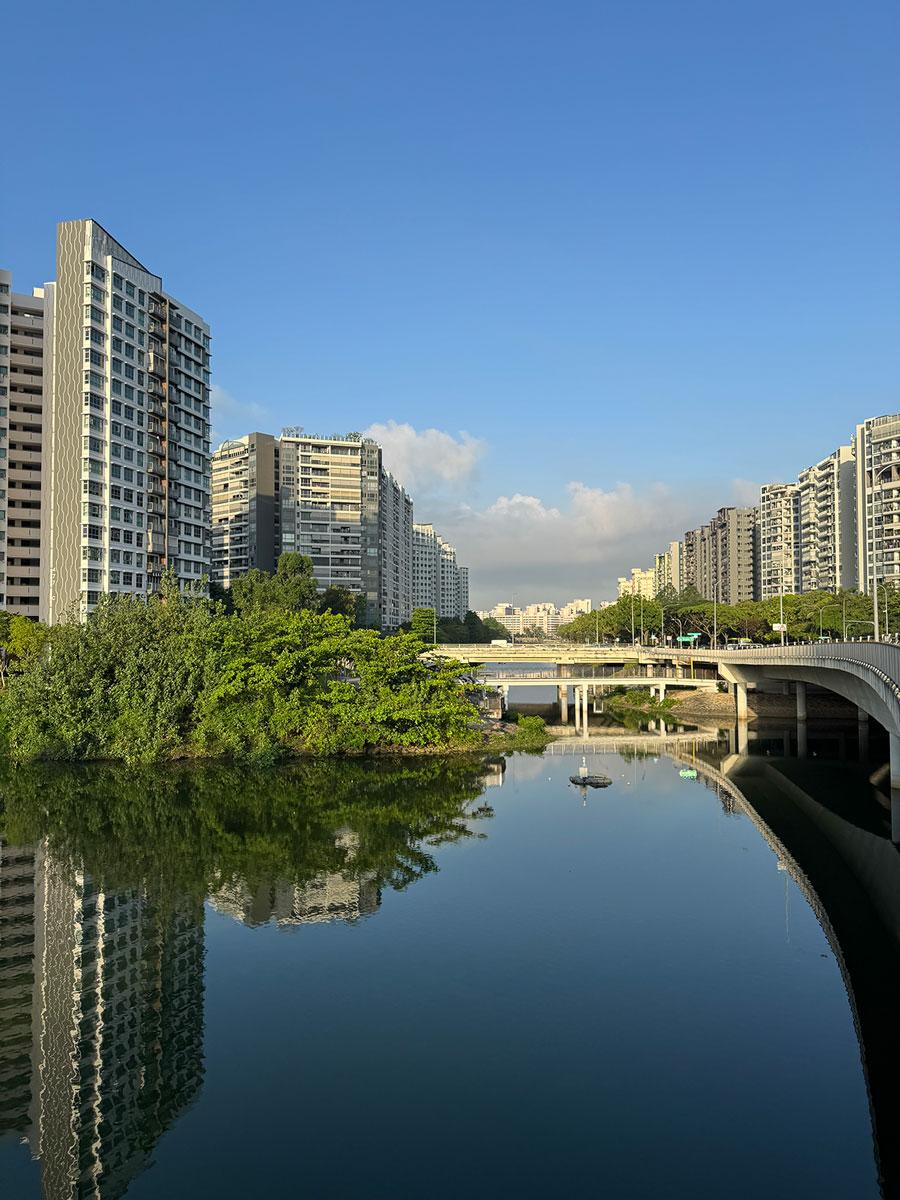
Flats in Sengkang reflected on the surface of Sungei Pinang canal, 2026. Kangkar wholesale fish market used to be located at the end of Upper Serangoon Road. The road has since been extended and this point where the road goes over Sungei Pinang canal is close to where the old market once stood. Photo by Jimmy Yap.
If you go to the end of Upper Serangoon Road today, you will reach a point where the canalised Sungei Pinang branches off from the Serangoon River. Tall, modern glass-clad apartments line either side of the road, affording residents a pleasant view of the area.
About four decades ago, things looked very different. Back in the early 1980s, Upper Serangoon Road was about 400 m shorter than what it is today and the spot where the road met the river was a bustling base for some 90 local offshore fishing boats and 16 fish merchants.
Each morning, fishermen would deposit their catch and buyers would bid for fish to be resold in markets around Singapore. This place was no mere wet market either – the Kangkar wholesale fish market in Kangkar Village handled 40 tonnes of fish each day. [“Kangkar” is derived from the Chinese term gang jiao (港脚), which means “foot of the port”.]
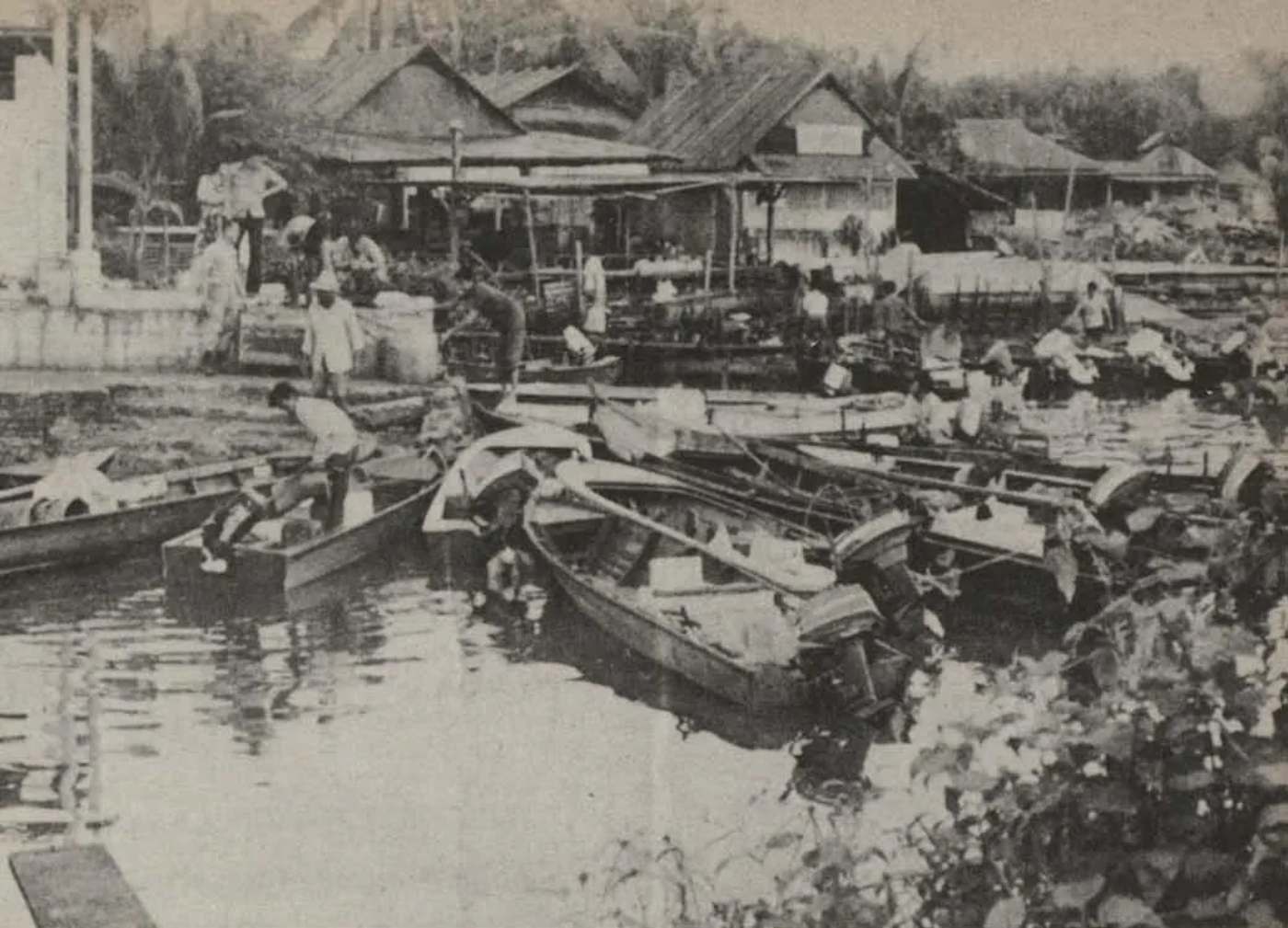
Fishermen unloading their catch at Kangkar market, undated. Collection of the National Library Singapore.
The Old Kangkar Fish Market
In June 1983, the Straits Times newspaper painted a vivid picture of a typical morning there. “Four a.m., and a tide of pungent fish rolls into a quiet little village at the end of Upper Serangoon Road. Wet crates are flung on the pitted concrete pier and tipped over – fish, some still flapping feebly, and crushed ice, vaporising, slide with a hiss onto the ground. Wet rubber boots squelch around the floor. Wet hands hook Salter scales on ropes hanging from the cross beams of the roof. Wet rattan trays with high curving handles loaded with fish are shoved into rows.”1
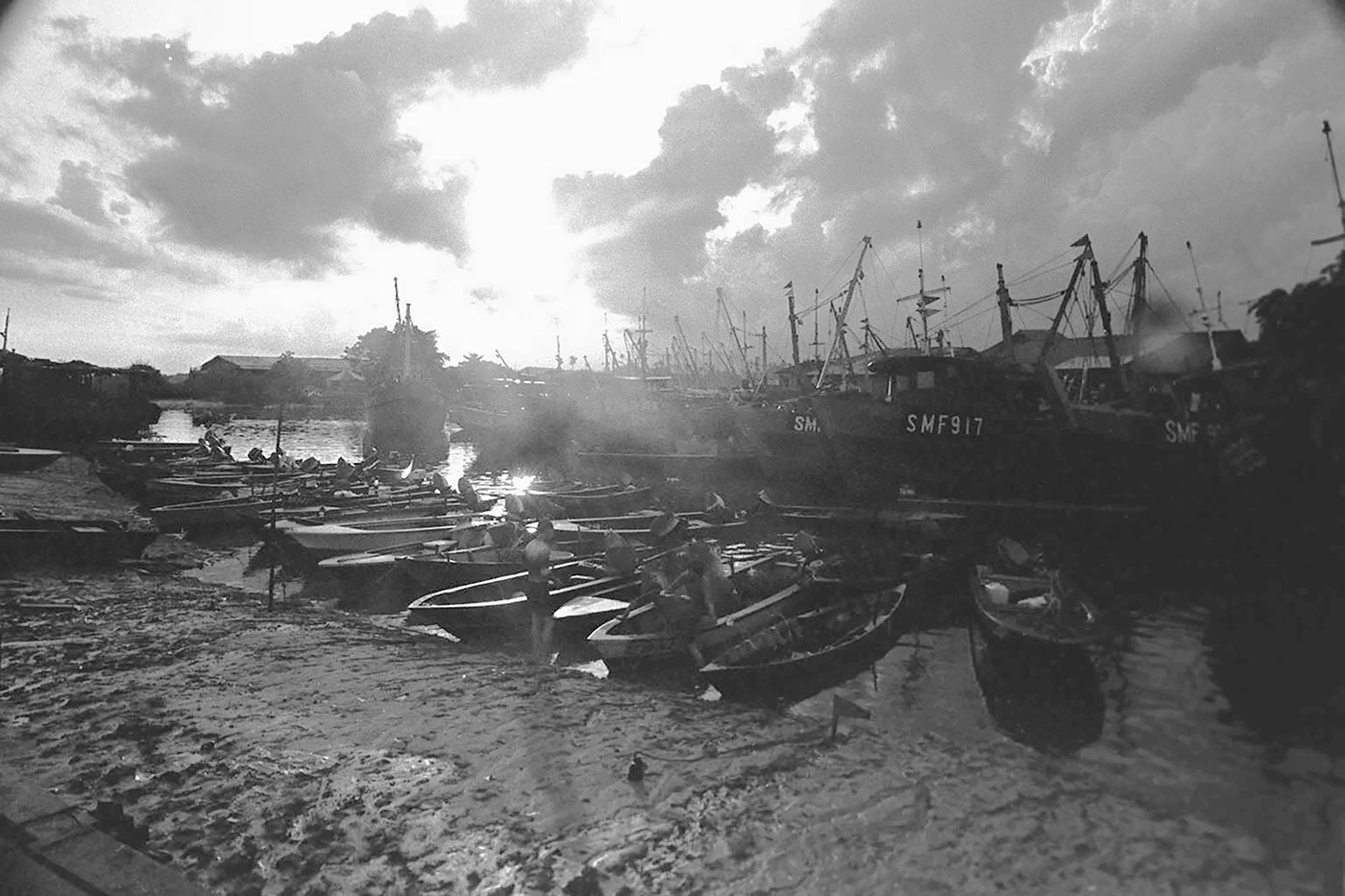
Fishing boats docked at Kangkar Village, 1983. The fishermen would unload their catch from 4 am, which were sold by their agents in the wholesale fish market. Source: The Straits Times © SPH Media Limited. Permission required for reproduction.
By 4.30 am, a different tide would come in. Fishmongers and food-stall operators would arrive in “battered trucks and cars parked any which way, to buy fish, prawns, shrimps, crabs, cuttlefish, squid, clams and oysters”.2
According to the Straits Times, the market operated on what was described as a “very loose” auction. “Sellers call out prices of items that are not moving, then nimbly run them up or down from movement to movement, following the trend of demand. If two buyers want a particular tray of goods, they have to outbid each other.” The sellers paid the fishermen after deducting a commission of between 6 and 8 percent. Kangkar market was all business, the article noted. “Outsiders get snubbed, for they tend to misread the delicate bargaining signals or do not understand the lingua franca, which is predominantly Teochew.”3
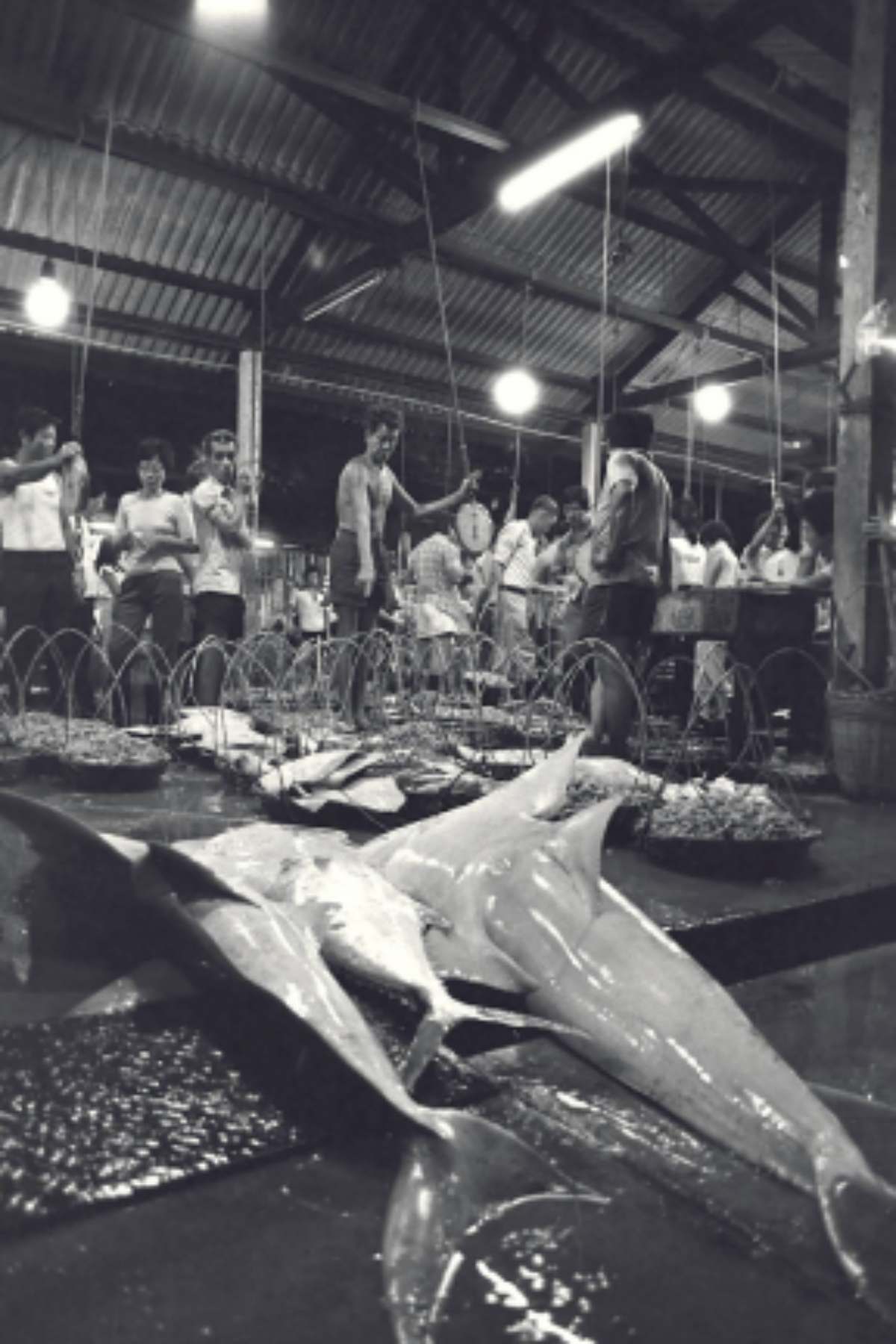
Fishmongers and wholesalers at a fish auction at the Kangkar wholesale fish market, 1983. Source: The Straits Times © SPH Media Limited. Permission required for reproduction.
This, however, was a snapshot of a place on the verge of change. The government was building a new market some 5 km away; the $11.7-million Punggol Fishing Port and Wholesale Fish Market would be larger and offer facilities such as taps, stalls selling crushed ice and actual designated parking lots. Instead of attap huts, there would be proper offices for businesses. In April 1984, after six decades of operations, the Kangkar market was closed; by 1986, the remaining few hundred villagers had been resettled, marking the end of an era.4 (Punggol Fishing Port was replaced by Senoko Fishery Port in 1997 which was, in turn, closed in 2024. Jurong Fishery Port is now the only such port in operation in Singapore.5)
Even after they had been resettled and Kangkar Village largely abandoned, some of the former inhabitants of the village would still make their way back to their old homes, at least for a while. “This is our clubhouse. So we still come back here for breakfast and we cook some of our meals here just as we used to before,” said former resident Loh Kiam Chung. Although no one lived in the old house anymore, the three-walled kitchen was still stocked with everything one would need to make porridge and coffee.6
Other former villagers continued to turn up in the morning to buy fish and vegetables from a mobile market. The Straits Times reported that the women, who were in their 60s and 70s, would walk from their new home to buy from the hawker at Kangkar because “according to one, the fish in other places is never as fresh as what they can get here”.7
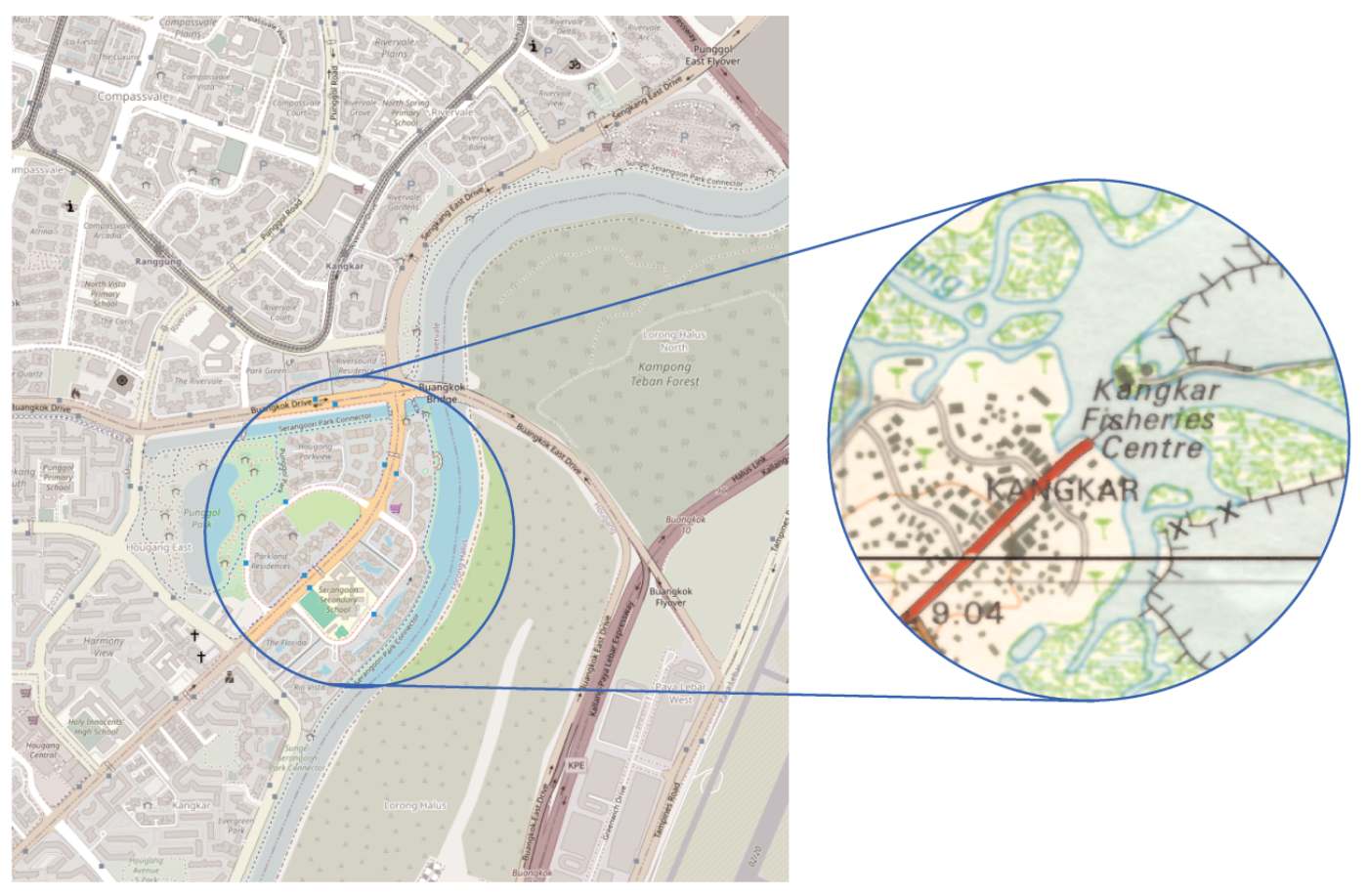
The old Kangkar wholesale fish market was located around where Boathouse Residences and Heron Bay executive condominium stand today. The detail comes from a map from 1975. The current map is from Open Street Map, while the 1975 map is from Historical Maps of Singapore, National University of Singapore Libraries, courtesy of Singapore Land Authority.
Modern Developments
There was only so long, however, that these old timers could hang out at their old haunts. The area around Kangkar would eventually be turned into the modern township of Sengkang, which means “prosperous harbour” (sheng gang; 盛港) in Chinese, reflecting the area’s rich maritime history. By the 1980s, the government had cleared most of the area, leaving the land largely unused. Individuals illegally staked out parcels of land, leasing them to businesses such as automobile machine shops and small furniture workshops.8
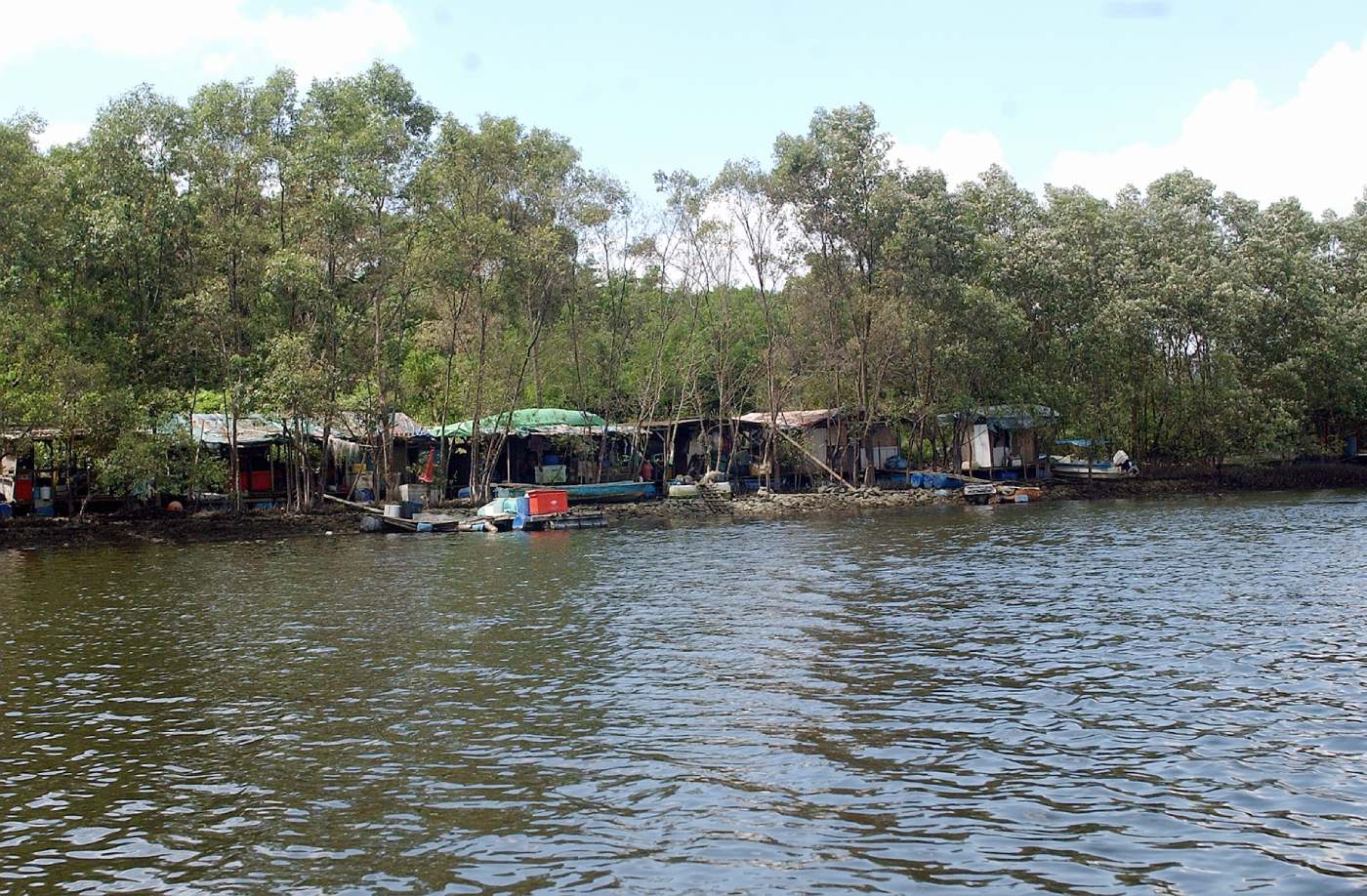
These huts sit half hidden in the mangroves of Serangoon River, which runs through Sengkang, 2003. The huts were eventually cleared. Source: The Straits Times © SPH Media Limited. Permission required for reproduction.
The 1990s marked a turning point. The government resumed clearing land, and by the mid-1990s, Sengkang had embarked on its journey as a housing estate. In 1997, the Housing and Development Board (HDB) completed the first flats in Rivervale, one of the neighbourhoods in Sengkang, building nearly 6,000 flats within a year.9
However, the rapid development brought challenges. Sengkang’s roads and facilities struggled to keep pace with the growing number of residents. Michael Lim, Member of Parliament for Pasir Ris-Punggol Group Representation Constituency, recalled: “At first, units were sprouting up at the rate of almost 1,000 a month. Residents were pouring in, but the facilities weren’t there to support them.”10
The transport infrastructure was also inadequate in the early days. With Punggol Road as the only exit, residents needed 30 minutes just to leave Sengkang. “Quite a number of households have been moving in, but nothing has been done to improve the traffic situation,” Sengkang resident Neo Kim Guan, an associate engineer, grumbled to the Straits Times. “During peak hours, cars can stretch from one end of Punggol Road to the Tampines Expressway,” he added.11
By 2003, the situation had improved with four major routes out of the estate, two flyovers connecting it to the Tampines Expressway and new public transport facilities, including the Northeast Mass Rapid Transit (MRT) and Light Rapid Transit (LRT) lines. Sengkang by then had become a vibrant town with modern infrastructure and recreational facilities, home to some 115,000 residents in more than 36,000 housing units.12
In the next two decades, Sengkang grew even more, extending its boundaries to Seletar and Punggol to the north, Pasir Ris and Paya Lebar to the east, Hougang and Serangoon to the south, and Yishun and Ang Mo Kio to the west. In 2025, more than 267,600 residents were living in Sengkang, making it one of Singapore’s five planning areas with populations exceeding 250,000.13
Retaining Links to the Sea
In developing Sengkang, HDB planners sought to preserve elements of its past. In 1994, the HDB formed a 10-member team led by senior architect Cheong Kin Man to conceptualise the new town, drawing inspiration from the area’s history. “Bounded by Sungei Serangoon on the east and sliced through on the west by Sungei Punggol, Sengkang is blessed with two rivers,” Cheong noted. “It is not a coastal town like Punggol 21 or has a resort feel like Pasir Ris. In the past, the rivers were used to transport harvests from the plantations. It’s this history that gives Sengkang its unique identity.”14
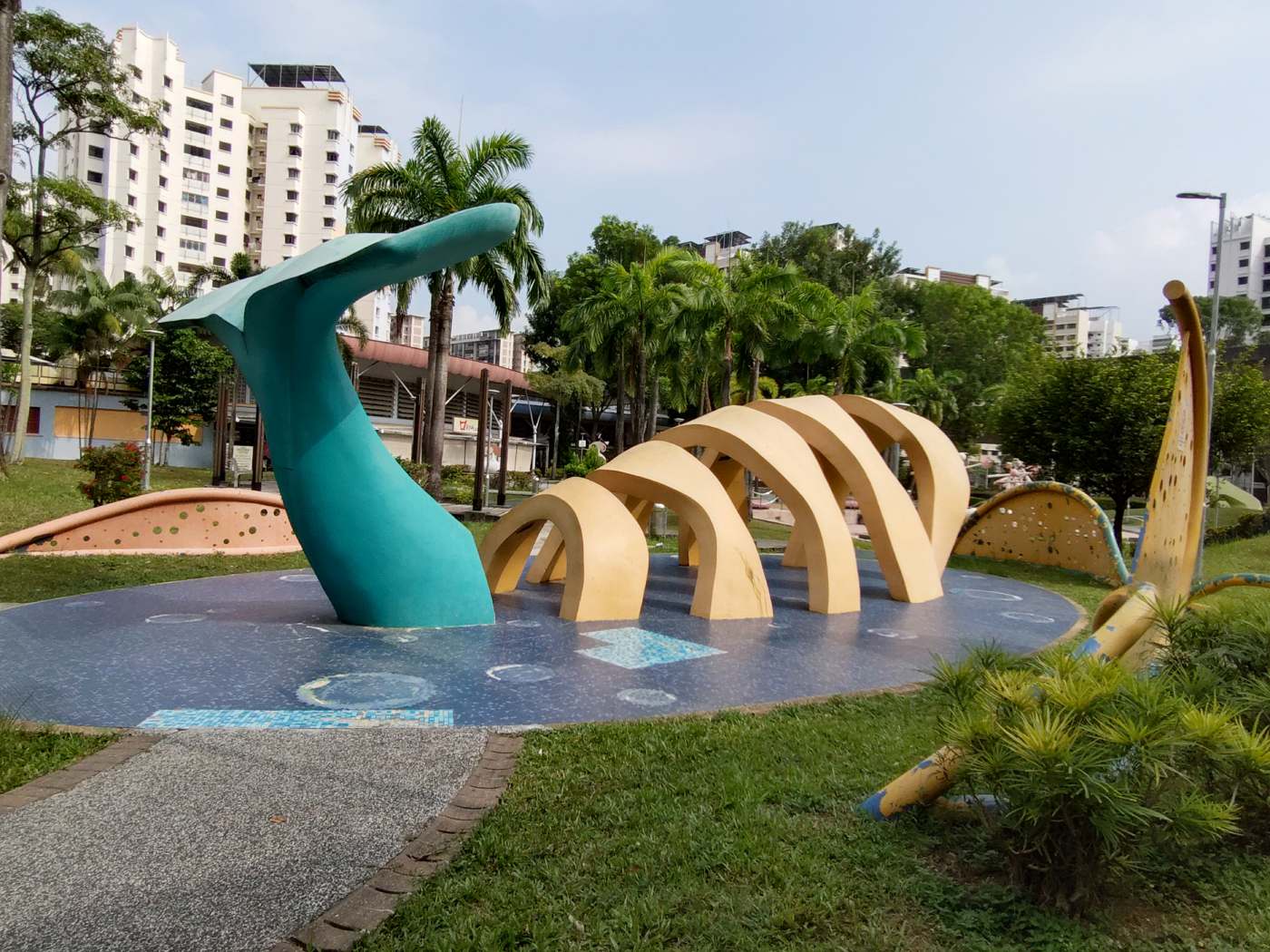
The HDB embedded marine elements into the urban infrastructure. With the theme “Town of the Seafarer” reflecting Sengkang’s ties to the sea, marine motifs such as stylised fish heads, bones, fins and hooks were installed around the estate, giving it a recognisable character. In Rivervale, for instance, footpaths are adorned with concrete fish imprints and fish-scale cobblestones.15
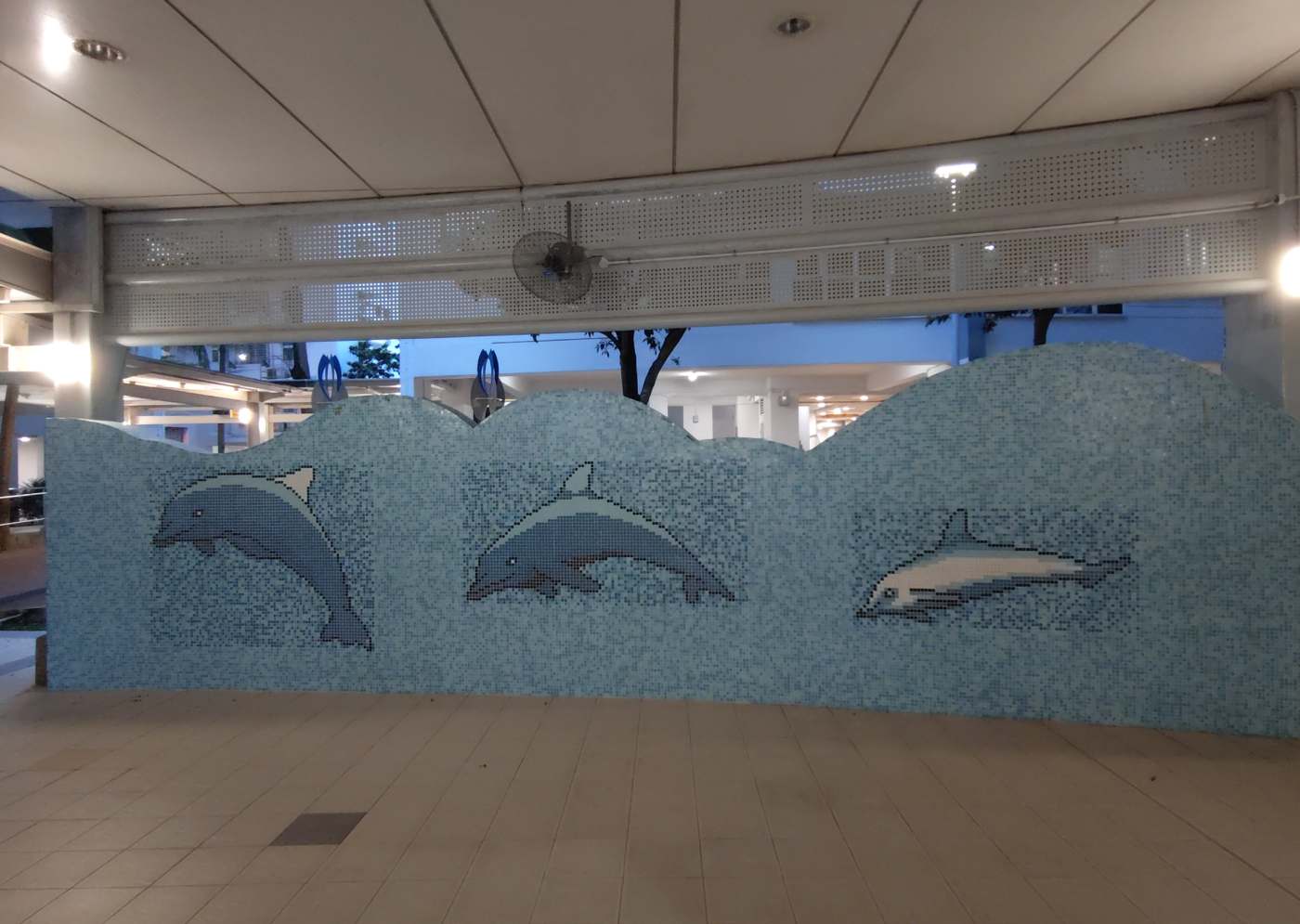
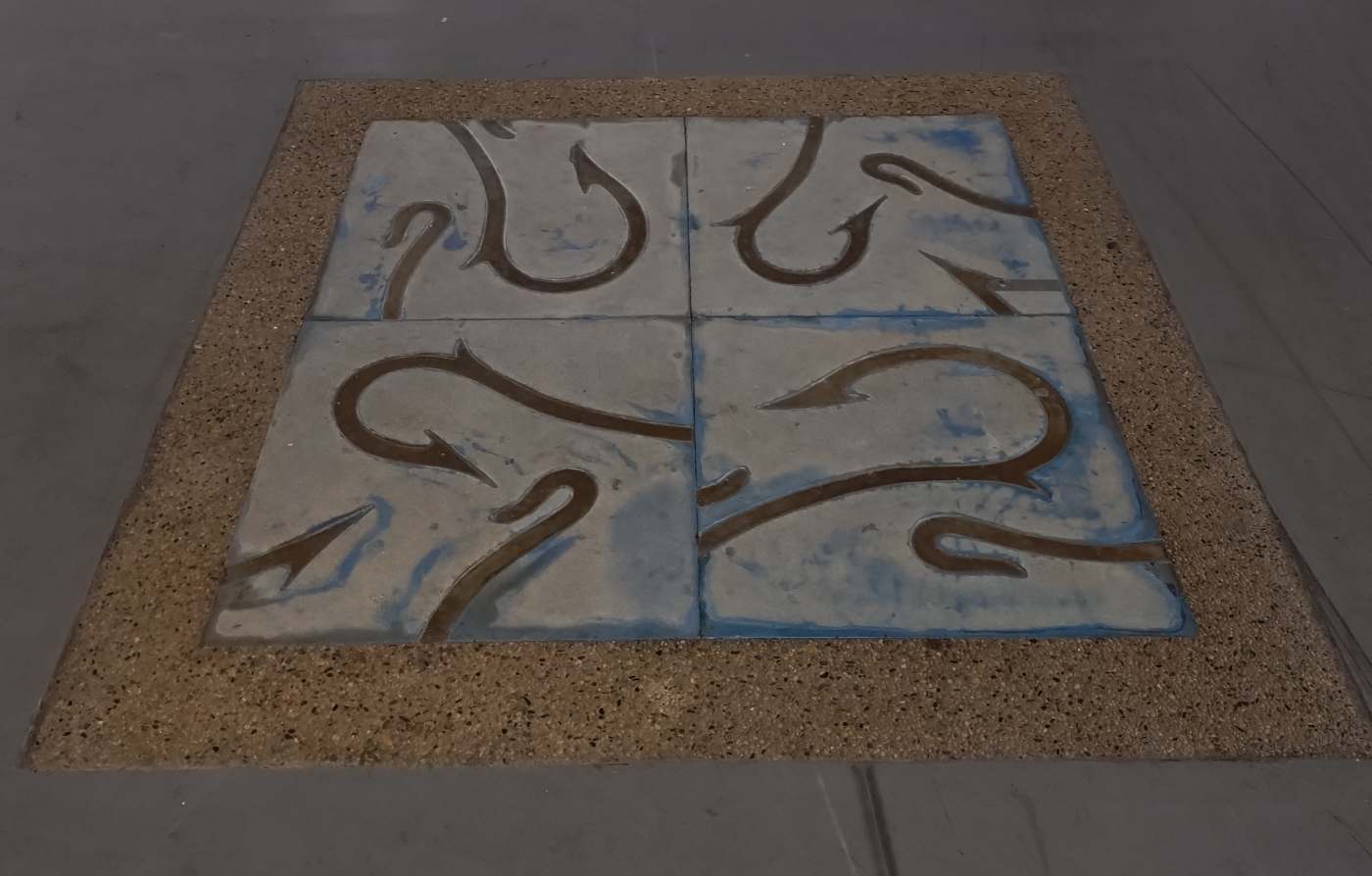
Other interesting features include three-storey-high columns at the base of housing blocks, which resemble the stilts of fishing villages, while multistorey car parks display net-like parapets reminiscent of fishing nets. Mosaic murals of sea creatures are used to decorate void decks, and public art emphasises the seafaring aesthetic. Sengkang Sculpture Park also showcases sculptures of fishermen, boats and marine life that evoke the area’s history.16
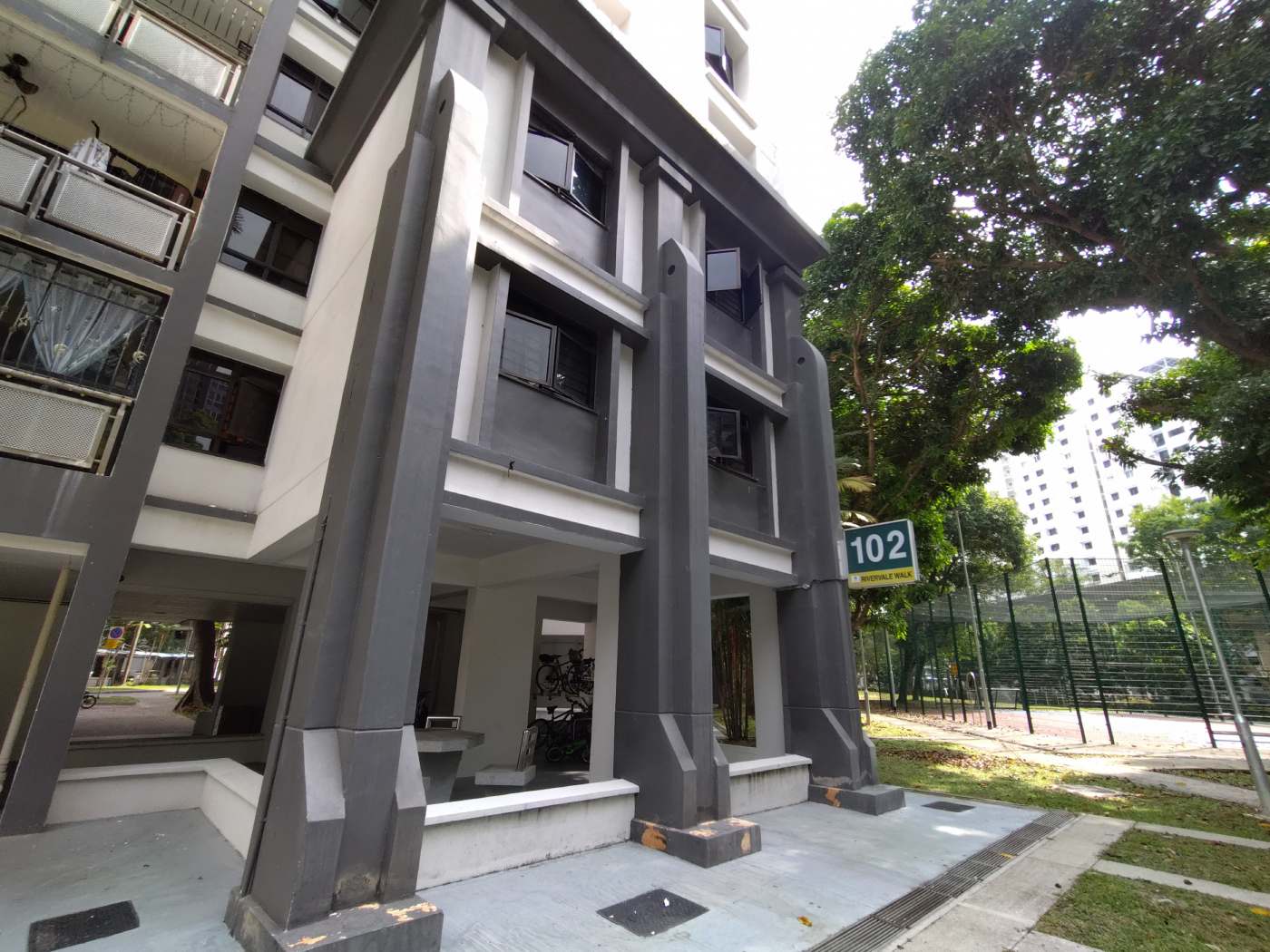
Placenames in the town – Compassvale, Anchorvale and Rivervale – also echo Sengkang’s links with the sea and the area’s history. While the major roads in the area have a generic nautical theme, the LRT stations have names that reflect Sengkang’s heritage. Kangkar station harks back to the area’s previous name, while Cheng Lim and Renjong stations are named after the now-expunged Cheng Lim Farmway and Lorong Renjong.17
Other stations were named after natural elements that used to be common in the area: Kupang station is named after a type of clam, Rumbia station’s name comes from the Sagu Rumbia plant, once common in swamps, while Bakau station refers to the Bakau mangrove tree that was valued for its strength and durability. Embedding these names in maps, street signs and neighbourhoods ensures that Sengkang’s heritage is not forgotten.18
Integrated Town Planning
Beyond aesthetics, Sengkang also stands out for the way the whole town was planned. “In the planning of Sengkang Town, land use assignment, transport facilities and infrastructure development would be highly integrated,” said HDB chairman Hsuan Owyang. The Straits Times reported in 2000 that “the town is one of the first planned with a mixed commercial-cum-residential development in the town centre that is also integrated with transport facilities”.19
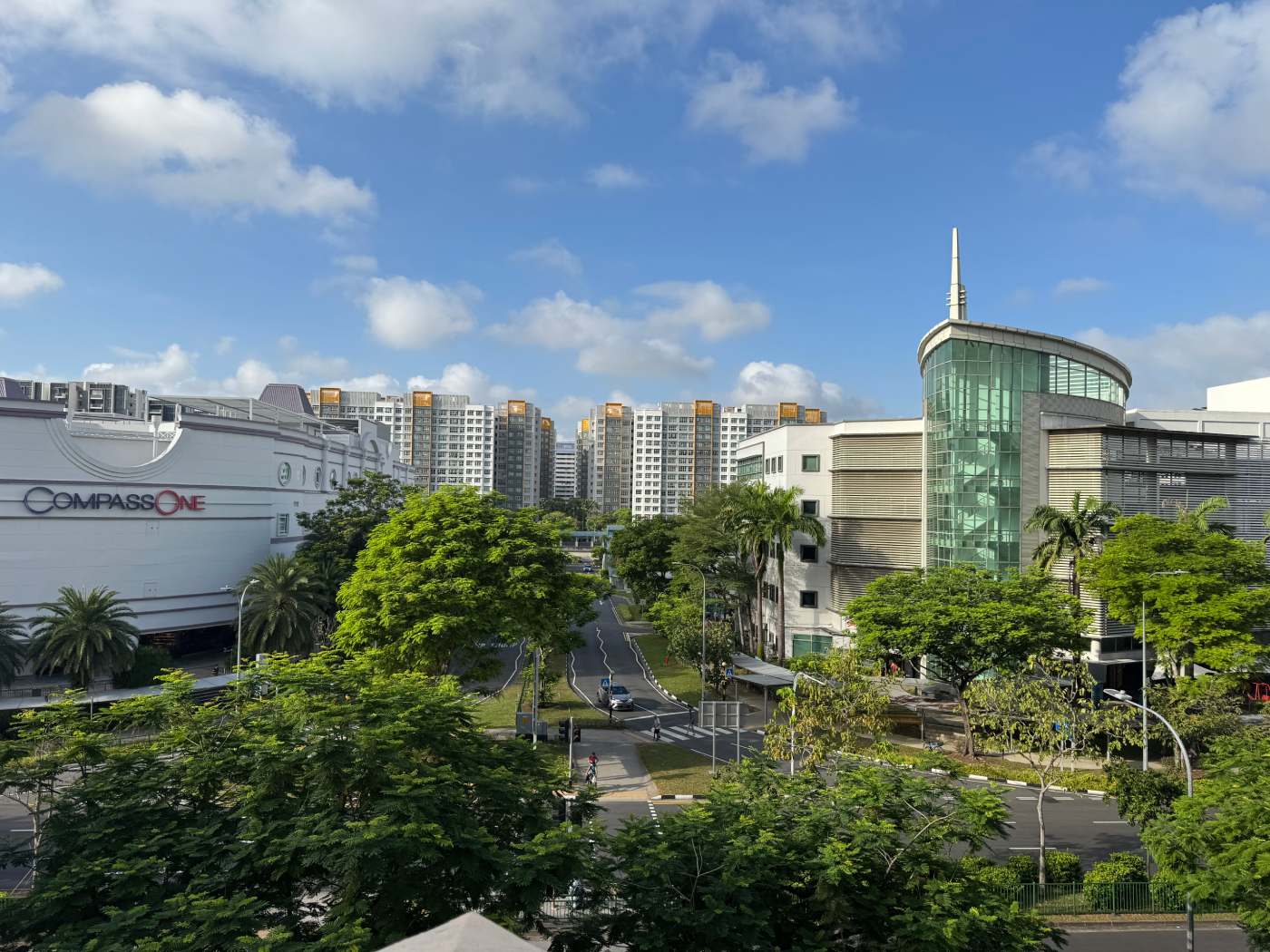
Sengkang is served by two integrated transport hubs – one in Sengkang itself and the other in Buangkok – where bus interchanges connect to MRT stations and nearby developments. At the town centre, the bus interchange is seamlessly integrated with Sengkang MRT and LRT stations, Compass Heights residences and Compass One shopping mall.20
The Sengkang LRT system was designed and built alongside the town’s development. The 10.7-kilometre-long network comprises 14 stations across east and west loops. Stations are located near residential blocks, ensuring residents walk no more than 400 m to the nearest stop.21
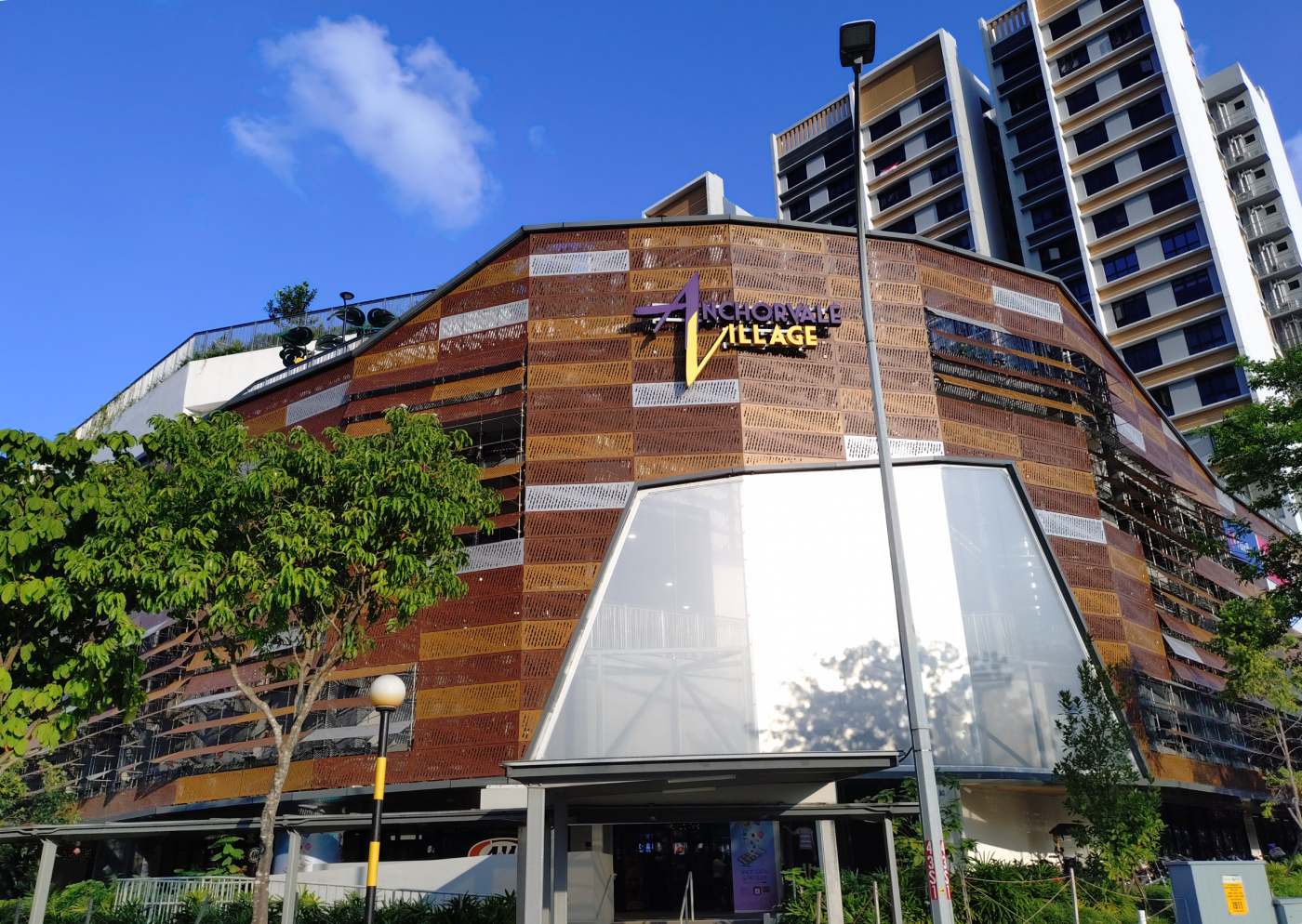
The integrated concept is carried through to the amenities and facilities. Anchorvale Village serves as both a residential and commercial hub. Its two 15-storey HDB blocks are integrated with three levels of retail, offering easy access to a hawker centre, supermarket, eateries and shops, while community spaces – including a plaza, play park and roof garden – encourage resident interaction.22
Similarly, Fernvale Community Club and Fernvale Hawker Centre & Market bring together key amenities within a five-storey complex. The lifestyle hub houses recreational spaces that include a jogging track, badminton courts, a gymnasium, a childcare centre and a playground.23
Waterways and Riverine Recreation
The waterways that bound Sengkang to the east and west have also been used to enhance the town’s greenery and liveability. The 26-kilometre-long North Eastern Riverine Loop follows the banks of Sungei Punggol and Sungei Serangoon, linking four parks: Sengkang Riverside Park, Punggol Park, Punggol Waterway Park and Punggol Point Park.24 These rivers are part of the Punggol-Serangoon Reservoir Scheme, completed in 2011.
Opened in 2008, the 21-hectare Sengkang Riverside Park also forms part of the Park Connector Network’s Round Island Route.25 The park, with the Punggol River running through it, has a man-made wetland that collects and filters rainwater through its aquatic plants, doubling as a wildlife habitat. National water agency PUB awarded the Active, Beautiful, Clean Waters Certification to the park, showing how water resource protection can be integrated sustainably with urban planning.26
In addition, there is the 2,400-square-metre Sengkang Floating Wetland in Punggol Reservoir. Completed in 2010, this floating structure connects Anchorvale Community Club and Sengkang Sports Complex on one bank with Sengkang Riverside Park on the other. Special plants are cultivated on the floating wetland, their roots extending into the water to absorb nutrients. The wetland improves water quality and provides a habitat for birds, fish and other wildlife. Visitors can stroll across boardwalks to view the ecosystem up close.27 It was Singapore’s largest man-made floating wetland until 2021 when a 3,850-square-metre floating wetlands was constructed in Jurong Lake Gardens.28
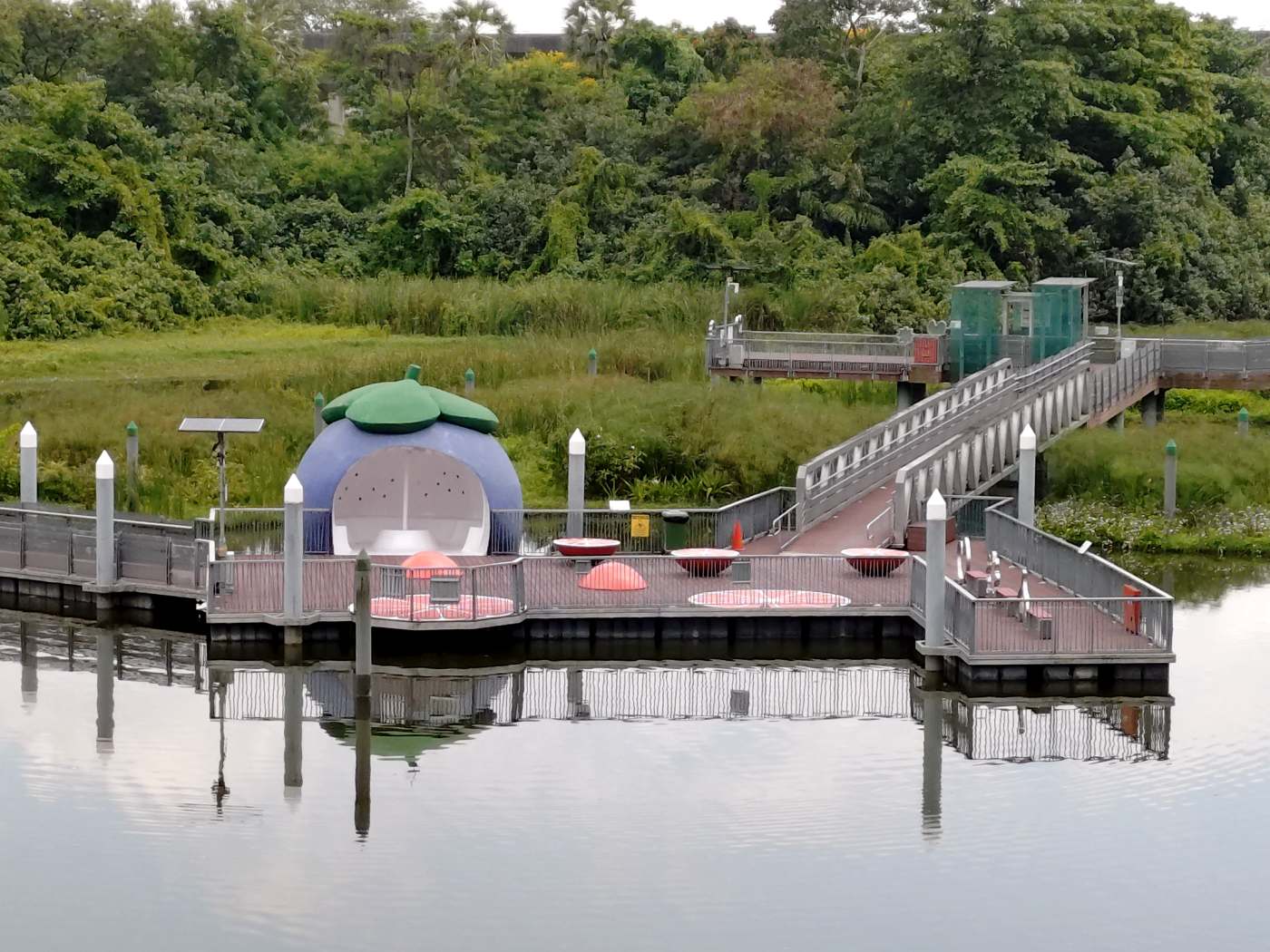
Sengkang Floating Wetland, 2026. Part of PUB’s Active, Beautiful, Clean Waters programme, the wetland turns Punggol Reservoir into a scenic waterscape that supports birds, fish and other wildlife. Photo by Darren Seow.
Charting New Waters
More changes are afoot for Sengkang. The Urban Redevelopment Authority’s (URA) Draft Master Plan 2025 outlines plans for a new integrated community hub near Sengkang MRT in the next 10 to 15 years. The hub will house sports, recreational, healthcare and retail facilities, designed to strengthen community bonds across all ages and interests.29
Meanwhile, a new residential estate is being planned in Fernvale North on an 18.9-hectare site bounded by Jalan Kayu, Fernvale Street, Sengkang West Drive and the Tampines Expressway. About the size of 25 football fields, it will be located near Kupang and Thanggam LRT stations as well as Sengkang Riverside Park. According to the URA, the proposed development will accommodate some 10,000 homes.30
Over the last three decades, urban planners have successfully weaved together Sengkang’s history and its natural surroundings with integrated transport links and recreational facilities to create a vibrant and modern township that has become an attractive place to live in. Sengkang’s transformation demonstrates how thoughtful planning can honour the past while embracing the future.
About the Author
Darren Seow is a Senior Librarian with the National Library Singapore. His responsibilities include content development, research and the provision of reference and information services.
Endnotes
1 “Auctioning Will Go on at New Site,” Straits Times, 17 June 1983, 4. (From NewspaperSG)
2 “Auctioning Will Go on at New Site.”
3 “Auctioning Will Go on at New Site.”
4 “Going, Going... and Kangkar Is Gone,” Straits Times, 6 April 1984, 11. (From NewspaperSG)
5 Joyce A. Tuining, “Senoko Fishing Port,” Singapore Infopedia. National Library Singapore. Article published May 2020; “Information on Jurong Fishery Port,” Singapore Food Agency, last updated 29 March 2026, https://www.sfa.gov.sg/wholesale-markets-fishery-ports/fishery-ports/information-on-jurong-fishery-port.
6 Audrey Perera, “Kangkar Village Draws Fond Ex-residents Back,” Straits Times, 21 December 1986, 22. (From NewspaperSG)
7 Perera, “Kangkar Village Draws Fond Ex-residents Back.”
8 “Creating a Home,” Straits Times, 26 October 2003, 34. (From NewspaperSG)
9 “Creating a Home”; Tee Hun Ching, “Life Behind the Vale,” Straits Times, 24 September 2000, 2. (From NewspaperSG)
10 “Creating a Home.”
11 Tee, “Life Behind the Vale.”
12 “Creating a Home.”
13 “Geographical Distribution Dashboard,” Singapore Department of Statistics, last updated 29 September 2025, https://www.singstat.gov.sg/publication-resources/population-trends-dashboard/geographical-distribution; “URA Space,” Urban Redevelopment Authority of Singapore, accessed 30 March 2026, https://eservice.ura.gov.sg/maps/.
14 “Fancy Living in S’pore’s Ocean Park?” Straits Times, 24 September 2000, 3. (From NewspaperSG)
15 Jose Raymond, “Sengkang Takes Shape,” Straits Times, 8 February 2000, 28; Joanne Lee, “Spot the Fish,” Straits Times, 29 September 1998, 28. (From NewspaperSG)
16 Housing and Development Board, Our Town, Sengkang Town Design Guide (Singapore: Housing & Development Board, 2025), 12, 28, https://www.hdb.gov.sg/-/media/about-us/our-role/plan-and-design-towns/town-design-guides/Sengkang-Town-Design-Guide.pdf.
17 Tan Mae Lynn, “Is It a Bird? Is It a Boat? It’s an LRT Station,” New Paper, 9 February 2004, 2. (From NewspaperSG)
18 Tan, “Is It a Bird? Is It a Boat? It's an LRT Station.”
19 Housing and Development Board, Annual Report 1994/1995 (Singapore: Housing and Development Board, 1995), 15. (From National Library Online); Raymond, “Sengkang Takes Shape.”
20 “Integrated Transport Hub,” Land Transport Authority, last updated 26 June 2025, https://www.lta.gov.sg/content/ltagov/en/upcoming_projects/road_commuter_facilities/integrated_transport_hub.html; “Sengkang Central: Not Your Typical Integrated Development,” Urban Redevelopment Authority, 27 August 2024, https://www.ura.gov.sg/Corporate/Resources/Ideas-and-Trends/Integrated-development-Sengkang-Central.
21 Clarice Chow, Jean Chia and Mina Zhan, Integrating Land Use & Mobility: Supporting Sustainable Growth (Singapore: Centre for Liveable Cities, 2018), 69, https://knowledgehub.clc.gov.sg/publications-library/integrating-land-use-mobility/.
22 “Integrated Developments,” Housing and Development Board, last updated 5 June 2023, https://web.archive.org/web/20230130050121/https://www.hdb.gov.sg/cs/infoweb/about-us/hdbs-refreshed-roadmap-designing-for-life/ilve-connected/integrated-developments; “Anchorvale Village,” Kyoob Architects Pte Ltd, accessed 11 December 2025, https://www.kyoob.com.sg/project/anchorvale-village/.
23 “Award Winners 2022,” Building and Construction Authority, last updated 31 March 2026, https://www1.bca.gov.sg/growth-and-transformation/bca-awards/universal-design-excellence-award/award-winners-2022/.
24 “North Eastern Riverine Loop,” National Parks Board, last updated 2 December 2025, https://pcn.nparks.gov.sg/the-pcn-experience/nerl/.
25 “Sengkang Riverside Park,” National Parks Board, last updated 27 January 2026, https://www.nparks.gov.sg/visit/parks/park-detail/sengkang-riverside-park/; Gurveen Kaur, “Urban Escapes,” Straits Times, 21 November 2014, 4–5. (From NewspaperSG)
26 “Sengkang Riverside Park – Parks & Nature Reserves – Gardens, Parks & Nature,” National Parks Board, archived 13 April 2023, https://eresources.nlb.gov.sg/webarchives/2023-04-13%2004:23:43.000/wp/details/https%3A%2F%2Fwww.nparks.gov.sg%2Fgardens-parks-and-nature%2Fparks-and-nature-reserves%2Fsengkang-riverside-park; “ABC Waters Certification,” PUB, Singapore’s National Water Agency, last updated 3 March 2026, https://www.pub.gov.sg/Professionals/Awards-and-Certification/ABC-Waters-Certification.
27 Tay Suan Chiang, “Wet and Wow,” Straits Times, 26 March 2011, 14; Leong Phei Phei, “At Home with Nature,” Straits Times, 3 July 2011, 18–19. (From NewspaperSG); “Sengkang Floating Wetland,” PUB, Singapore’s National Water Agency, last updated 10 September 2025, https://www.pub.gov.sg/Public/Places-of-Interest/Our-Reservoirs-and-Waterways/Sengkang-Floating-Wetland.
28 Chantal Sajan, “Wild, Wild Wetlands,” Straits Times, 10 July 2021, C2–C3. (From NewspaperSG)
29 Ry-Anne Lim and Chong Xin Wei, “More Homes, Business Hubs and Parks – What’s Coming Up in Singapore in Next 10 to 15 Years,” Business Times, 25 June 2025, https://www.businesstimes.com.sg/property/more-homes-business-hubs-and-parks-whats-coming-singapore-next-10-15-years.
30 Jessie Lim, “URA Prepares Massive Site in Sengkang to House New Residential Estate,” Business Times, 30 April 2024, https://www.businesstimes.com.sg/property/ura-prepares-massive-site-sengkang-house-new-residential-estate; Isabelle Liew, “New Residential Estate in Sengkang Could Have 10,000 Homes,” Straits Times, 2 May 2024, https://www.straitstimes.com/singapore/housing/new-residential-estate-in-sengkang-could-have-10000-homes.