
Article
The Perfect Brew: Singapore’s Chinese Tea Culture
18 May 2026
Topics
Culture
Food
Singapore’s Chinese tea heritage tells a story where traditional practices, community and adaptive innovation have shaped an evolving yet enduring cultural legacy.
By Ng Yun Ling
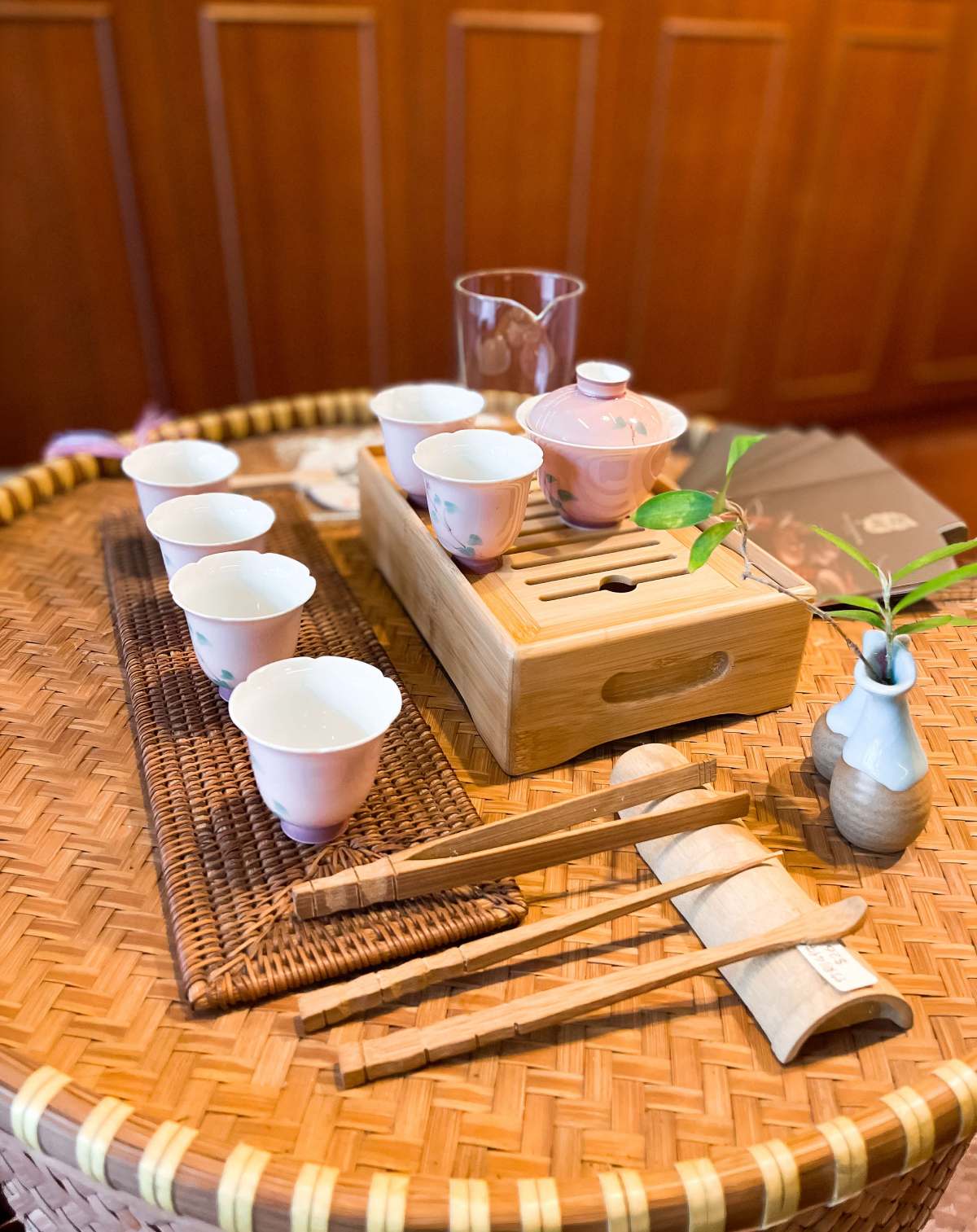
Teawares and tea accessories at Tea Chapter, 2026. Photo by Ng Yun Ling.
Today, if you come across a long and winding queue in a shopping mall in Singapore, it is likely for the latest bubble tea outlet or modern tea beverage chain to hit our shores. From herbal milk teas at Amacha (阿嬷茶语) in Chinatown to tea-inspired cocktails at the modern restaurant-bar Synthesis, novelty teas are embraced by Gen Z and millennials, who often feature them on social media.
But before bubble tea arrived here in 1992, drinking Chinese tea meant visiting an artisanal teahouse to experience the fine art of tea brewing. Here, one could sip tea from dainty teacups, listen to live Chinese classical music from a guzheng or pipa, admire paintings on the wall and even indulge in Chinese calligraphy – all in a cosy and relaxing ambience to meet up with friends over a tête-à-tête.1
Early Tearooms and Teahouse Restaurants
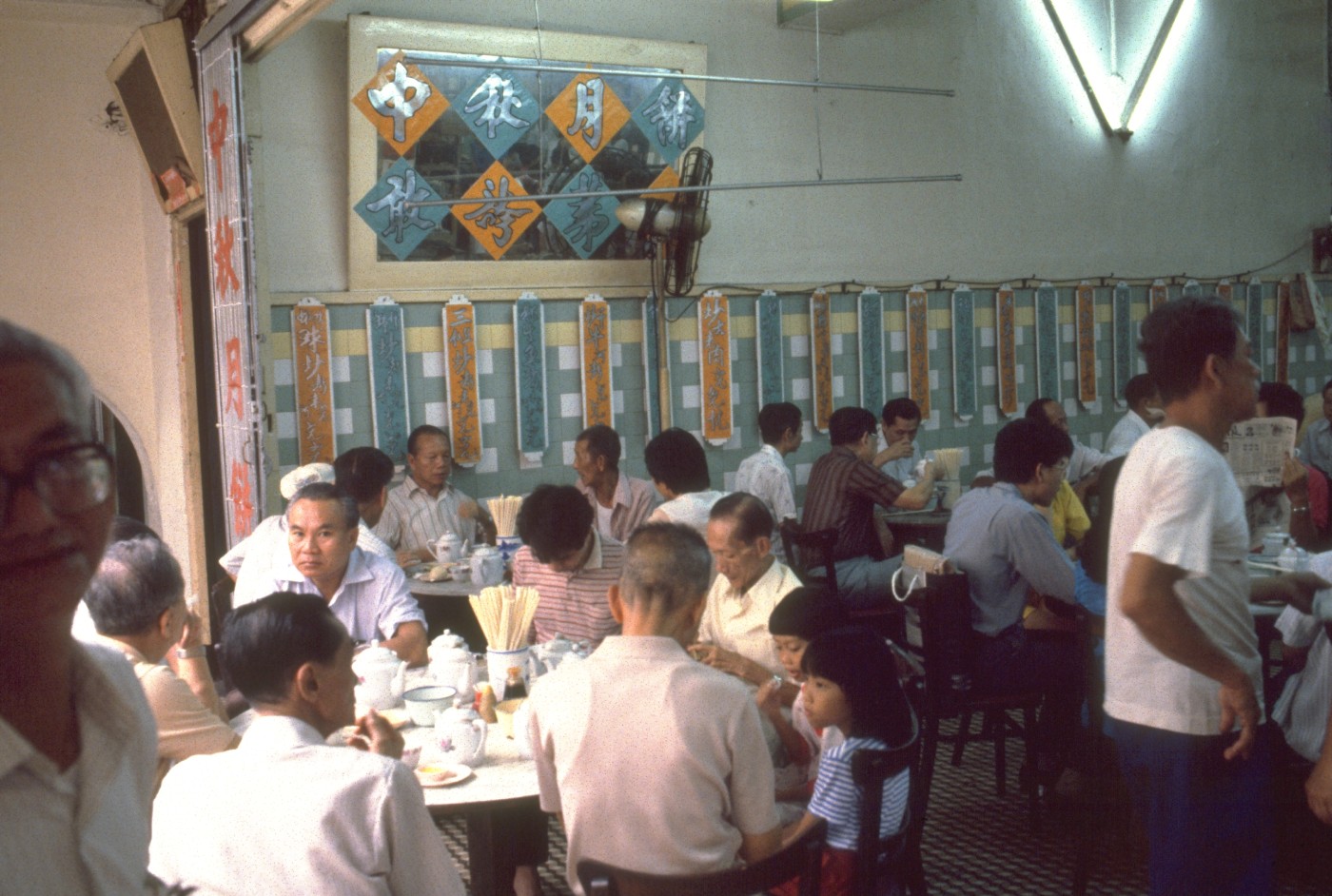
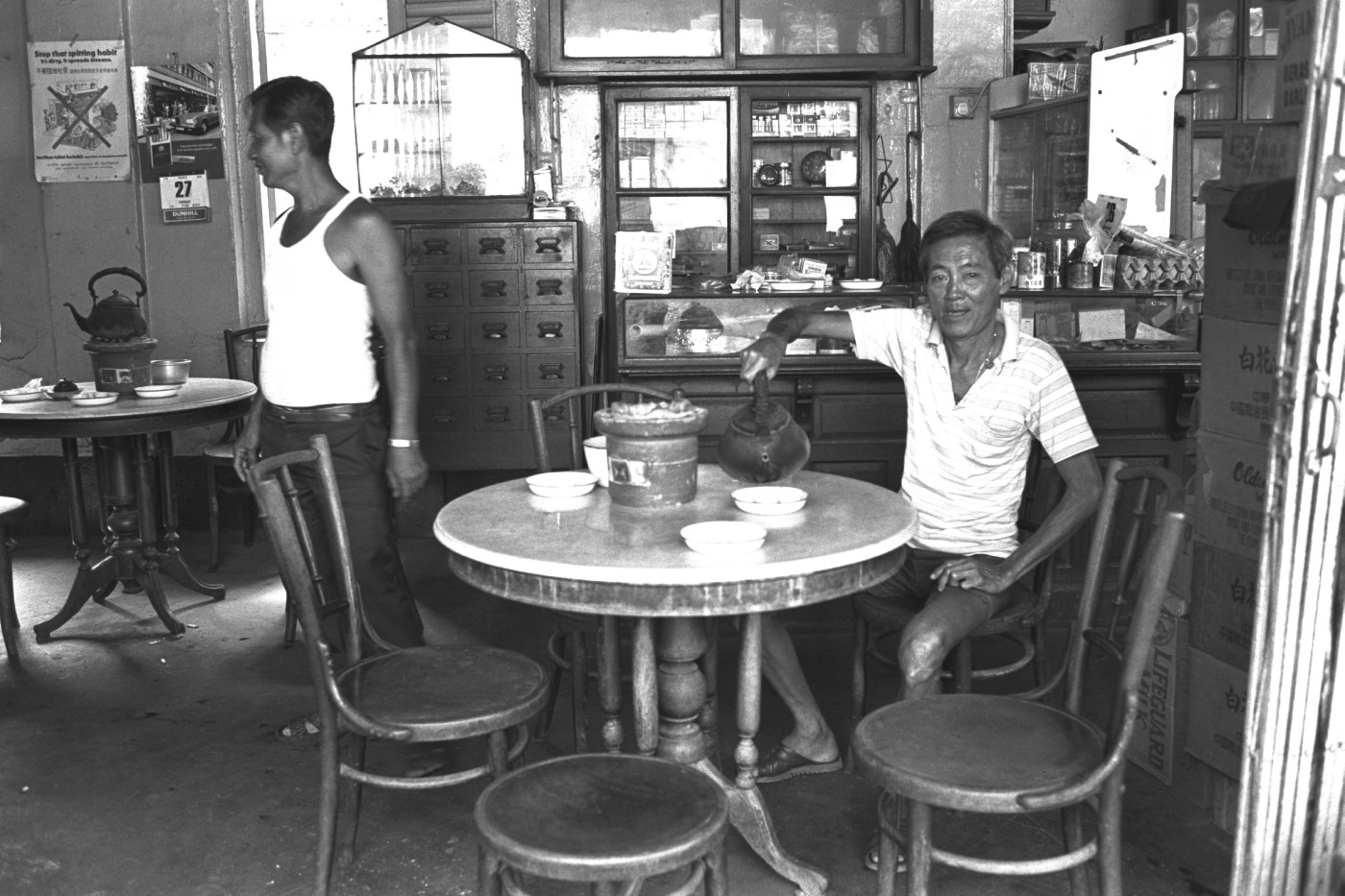
Early tearooms and teahouse restaurants, which first opened in Singapore in the late 19th century, were social hubs woven into everyday life. Tearooms, known as cha shi or cha sat in Cantonese (茶室), were casual local establishments offering tea and confectionery akin to a coffeeshop. In a letter to the Straits Times in 1993, reader Chan Kwee Sung wrote that early tearooms or “no-frill” teahouses “flourished once in Singapore, not to cater to the genteel but to the hoi polloi of the Chinese community for whom that early morning cuppa and a dian xin breakfast were the first essentials of the day”.2
Tong Heng Traditional Cantonese Pastries (東興) was one such tearoom established in 1935 at 33 Smith Street, where they started selling their signature diamond-shaped egg tarts, traditional omelette toast (similar to French toast but made with lard) and other Cantonese pastries. Just across from Tong Heng was the famed Lai Chun Yuen Opera House, whose avid fans often bought pastries and snacks from Tong Heng as gifts for their favourite performers.
“During those days, whenever there’s a performance, Tong Heng can operate till 3 am. It’s not unusual for fans to order our omelette toast for the artistes,” said Ana Fong, its fourth-generation successor. Today, Tong Heng has branches on South Bridge Road and in Jurong Point shopping mall.3
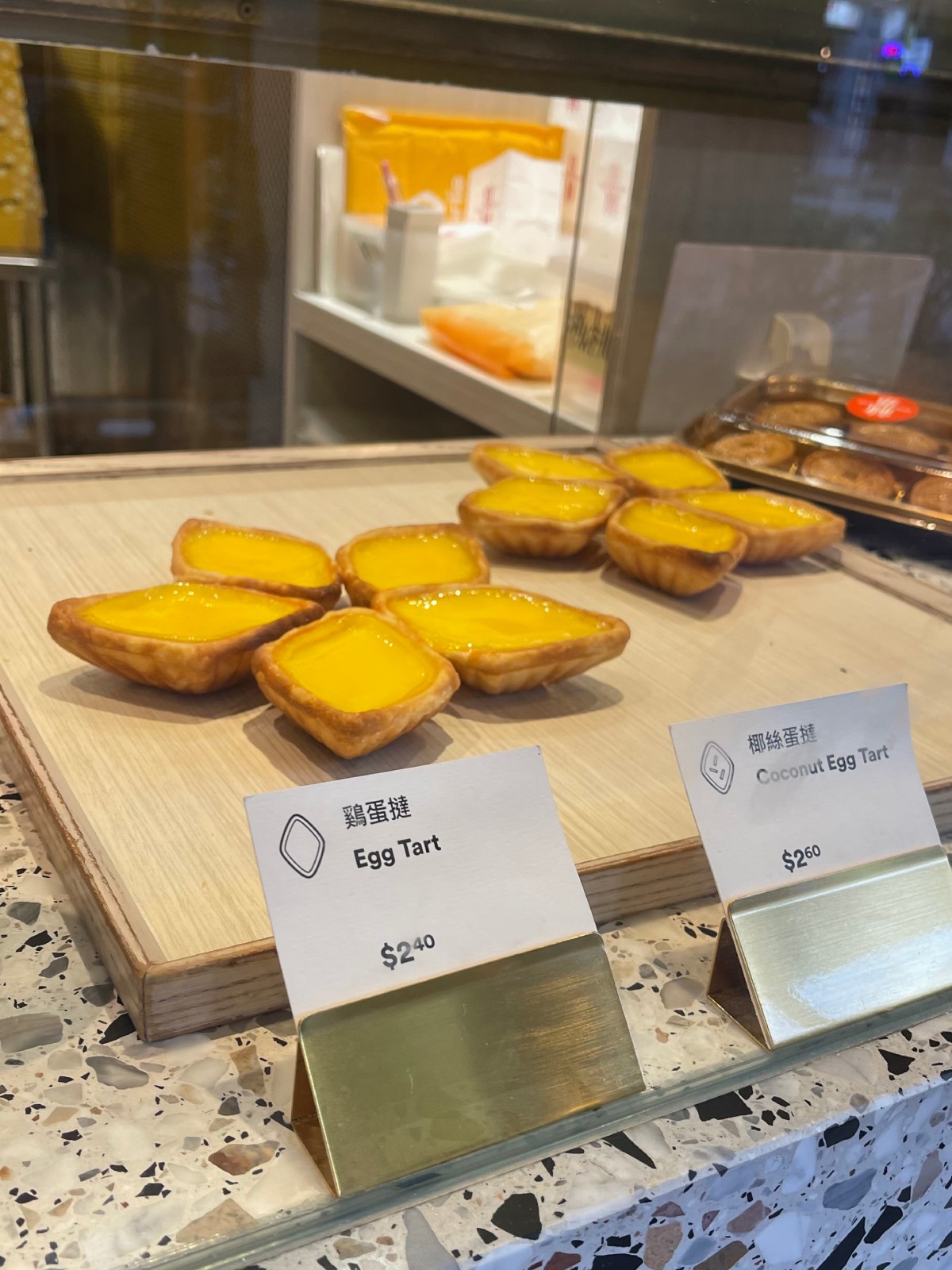
Tong Heng’s signature diamond-shaped egg tarts, 2025. Photo by Ng Yun Ling.
Teahouse restaurants, known as cha lou (茶楼), were multistorey upscale establishments that served tea with dim sum and light refreshments. Typically, teahouse restaurants began operations at 3 am or 4 am, allowing customers to indulge in unhurried conversations over brewed tea for one to two hours before daybreak.4 At night, bigger teahouse restaurants took on a different identity by transforming into banquet halls, where gatherings and weddings took place.5
There were also teahouses in rural areas such as Peck San Tea Pavilion (碧山茶亭) in Kampong San Teng (碧山亭). The residents were mostly descendants of early Cantonese, Teochew and Hokkien immigrants. Nearby the tea pavilion were amenities such as an open-air theatre, reflecting the rich communal culture of the local community.6
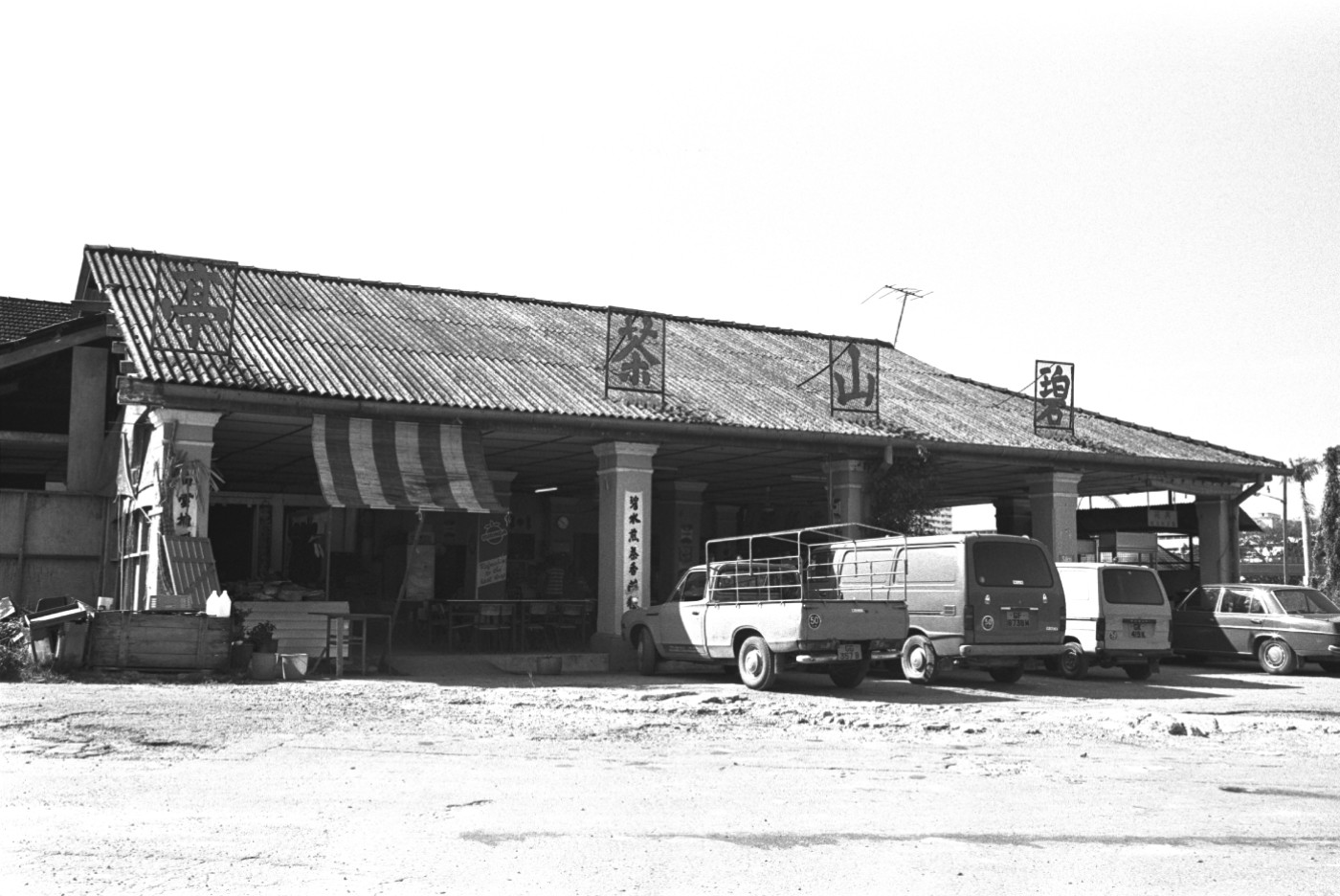
The teahouse in Pek San Village, 1986. Courtesy of National Archives of Singapore (Media - Image No. 19980005065 - 0031).
The Artisanal Teahouse Experience
From the 1980s onwards, Chinese tea art, or zhonghua chayi (中华茶艺), became popular in China and Taiwan. Artisanal teahouses, known as chayi guan (茶艺馆), were curated venues where visitors could experience the refined art of brewing tea, which involved warming the teacup, boiling the water and soaking the tea leaves. Tea art prioritises small-batch production, experimental techniques as well as the tea brewer’s personal interpretation of traditional methods of tea brewing. The tea brewer makes intentional micro-adjustments to parameters like leaf-to-water ratio, water temperature, infusion time and choice of teaware so that their own sensory preferences and aesthetic are reflected in the brew.
The development of tea art in Singapore took shape through the establishment of several teahouses, starting with Tea Chapter (茶渊) on Neil Road in 1989. Here, “[t]ea drinkers enjoy sipping brews in dainty cups amidst a quiet and traditional ambience – rattan screens separating the cane tables and chairs on wooden floors, and piped soft Chinese classical music,” the Straits Times reported.7
According to Lee Kim Eng, manager of Tea Chapter, “tea is appreciated like wine”. “But the quality of tea, unlike wine, is determined by the brewer. No two cups of tea will taste alike. He or she can control the strength and flavour through the standing time given for infusion as well as setting the water temperature.”8
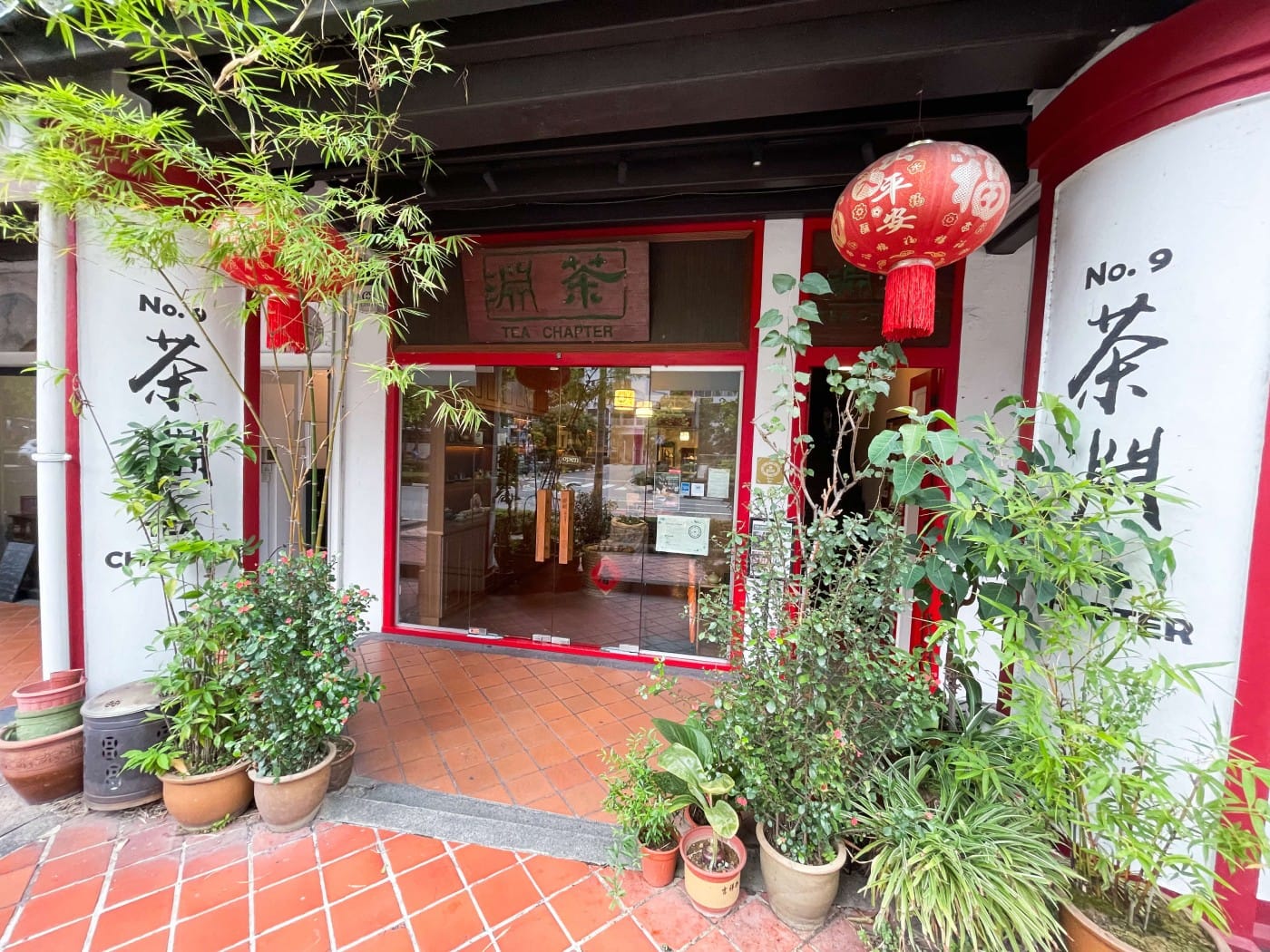
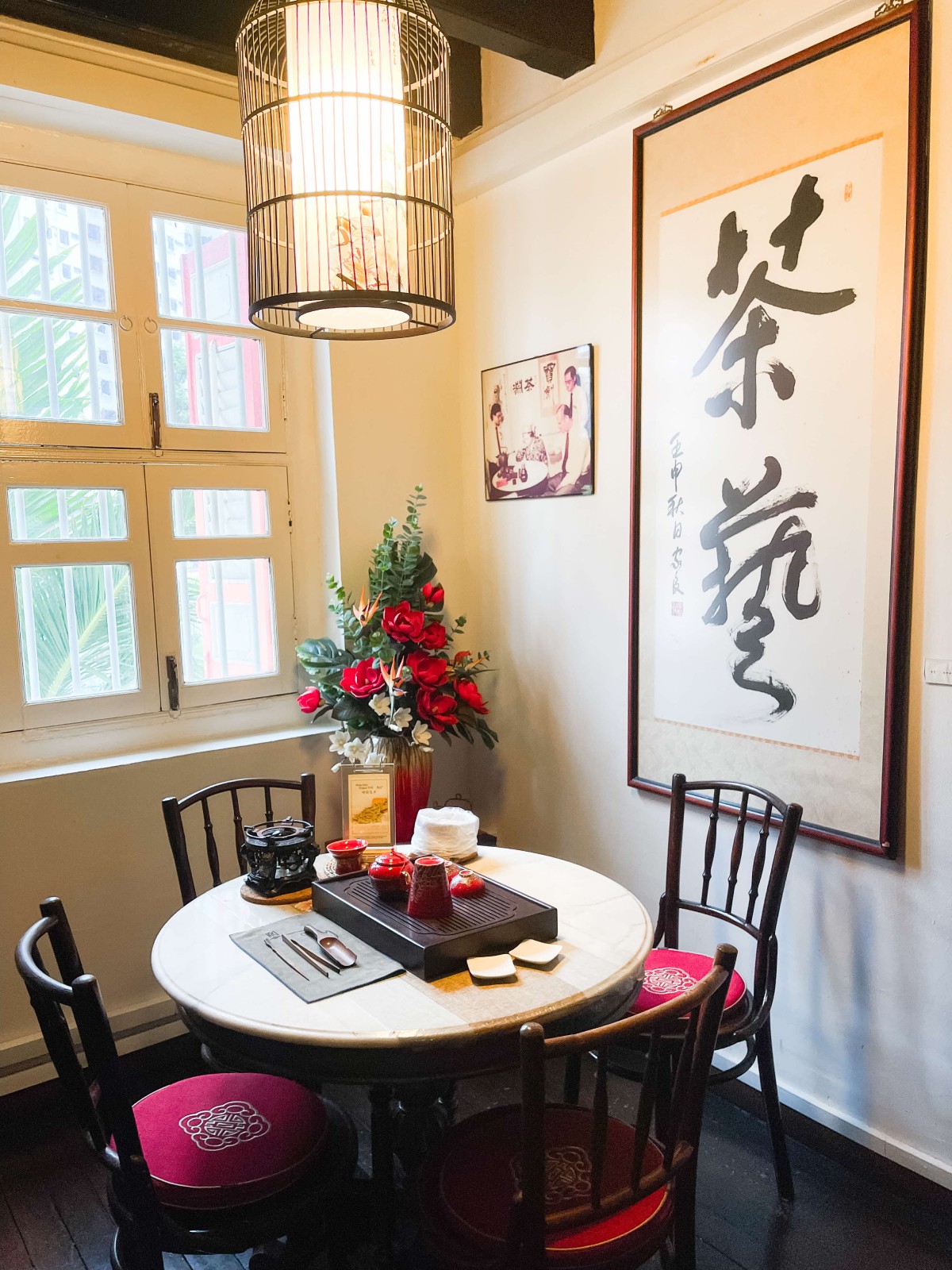
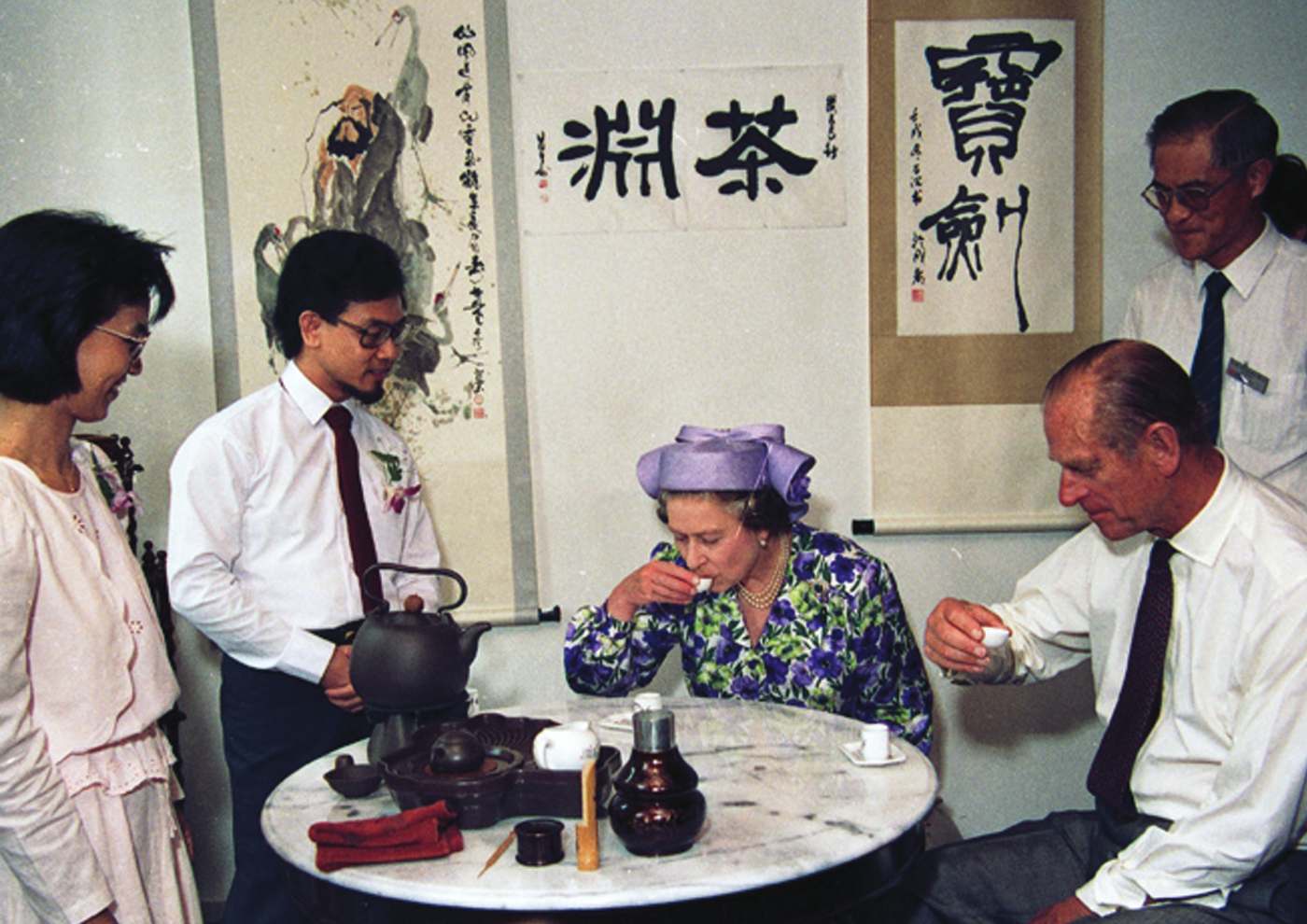
Other teahouses opened in succession, including Green Bamboo Tea House (绿竹村), Chinese Tea House (新加坡茶馆), Sanyang Tea Palace (三阳茶宫) and Liu Xiang Teacraft (留香茶艺坊).9 These teahouses often occupy conserved shophouses or intimate upper-storey spaces, with specially curated tea rooms for retreat and quiet conversation. Many teahouses position themselves as custodians of Chinese tea heritage, using traditional teaware and emphasising brewing as a craft through guided tasting and appreciation sessions. These teahouses stand apart from the city’s ubiquitous fast-food outlets, trendy cafes, lively bars and discos, providing a more culturally authentic and contemplative space.
Compared to alcohol and soft drinks, tea offers health benefits. “Many people are very health-conscious and tea, without additives of preservatives, is a natural choice,” said Lee, who was also co-partner of Cha Xiang teahouse (茶香) on Sago Street. Agreeing, publishing company executive Edmund Chong began visiting teahouses instead of lounges and coffeeshops. “I like the relaxed atmosphere of [Cha Xiang]. I bring my clients here because tea-drinking is healthier and costs less than going to lounges,” he said.10
Besides working adults, students were also frequent patrons of teahouses as these were “ideal [places] for doing homework, writing, reading or studying”. “This is my third time here in [Tea Chapter], and I’ve visited all the teahouses in Singapore,” said 17-year-old college student Song Qingyuan. “A friend took me to the tea house at North Bridge Centre after my O levels and I liked it. I started reading up on tea as well.”11
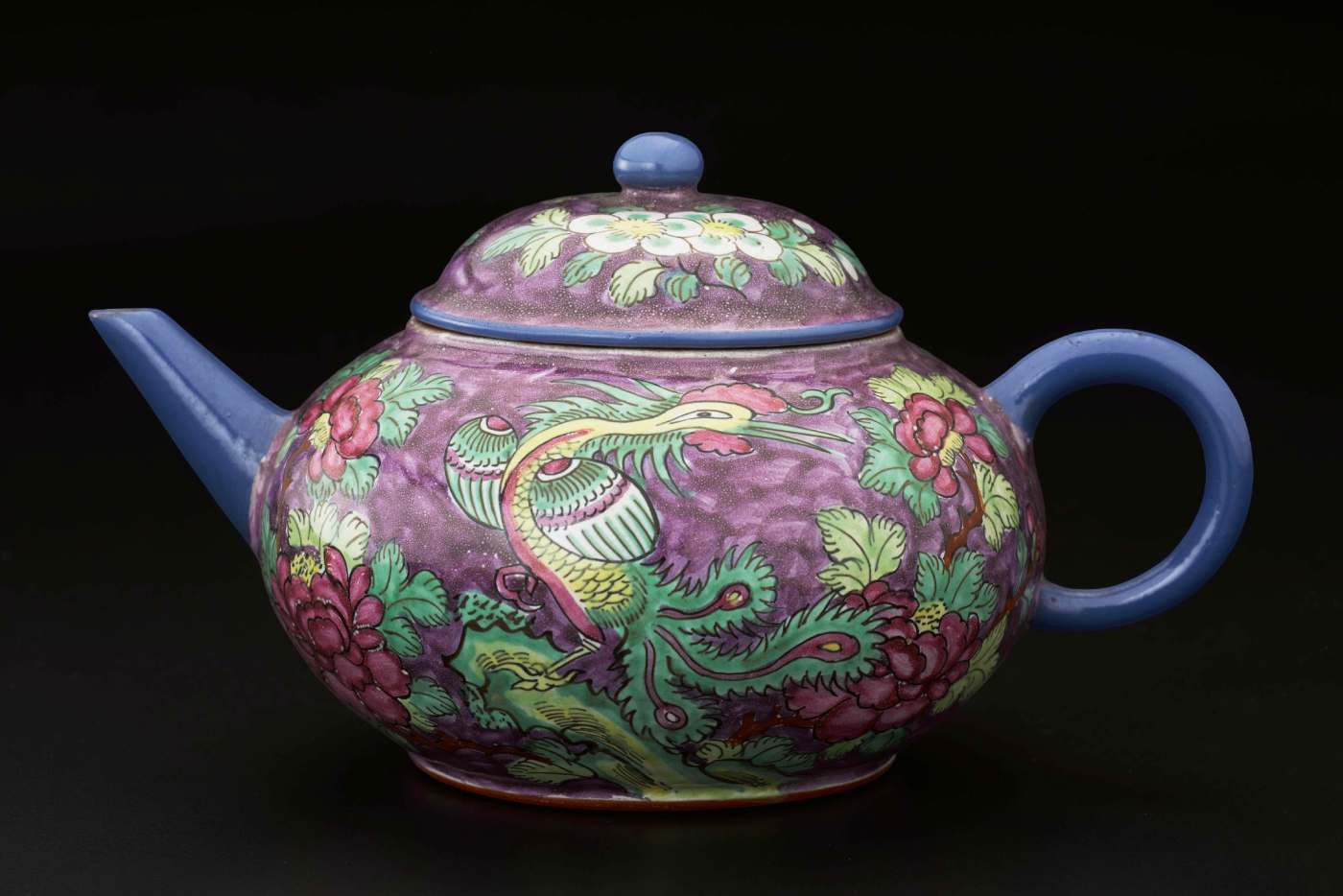
The art of drinking and brewing tea led to the creation of exquisite tea accessories, such as teapots and teacups, which became prized collectors’ items. The trend of collecting Chinese teapots began in Taiwan and Hong Kong in the late 1980s before reaching Singapore. Teapots are treasured for their high quality clay as well as skilled craftsmanship, with those by renowned artisans fetching a premium. “More collectors in Singapore are buying expensive Chinese teapots, and some are willing to pay up to $300,000 for one,” Lee Chee Keong, chairman of the Tea Cultural Society (Singapore), told the Straits Times in 1994.12
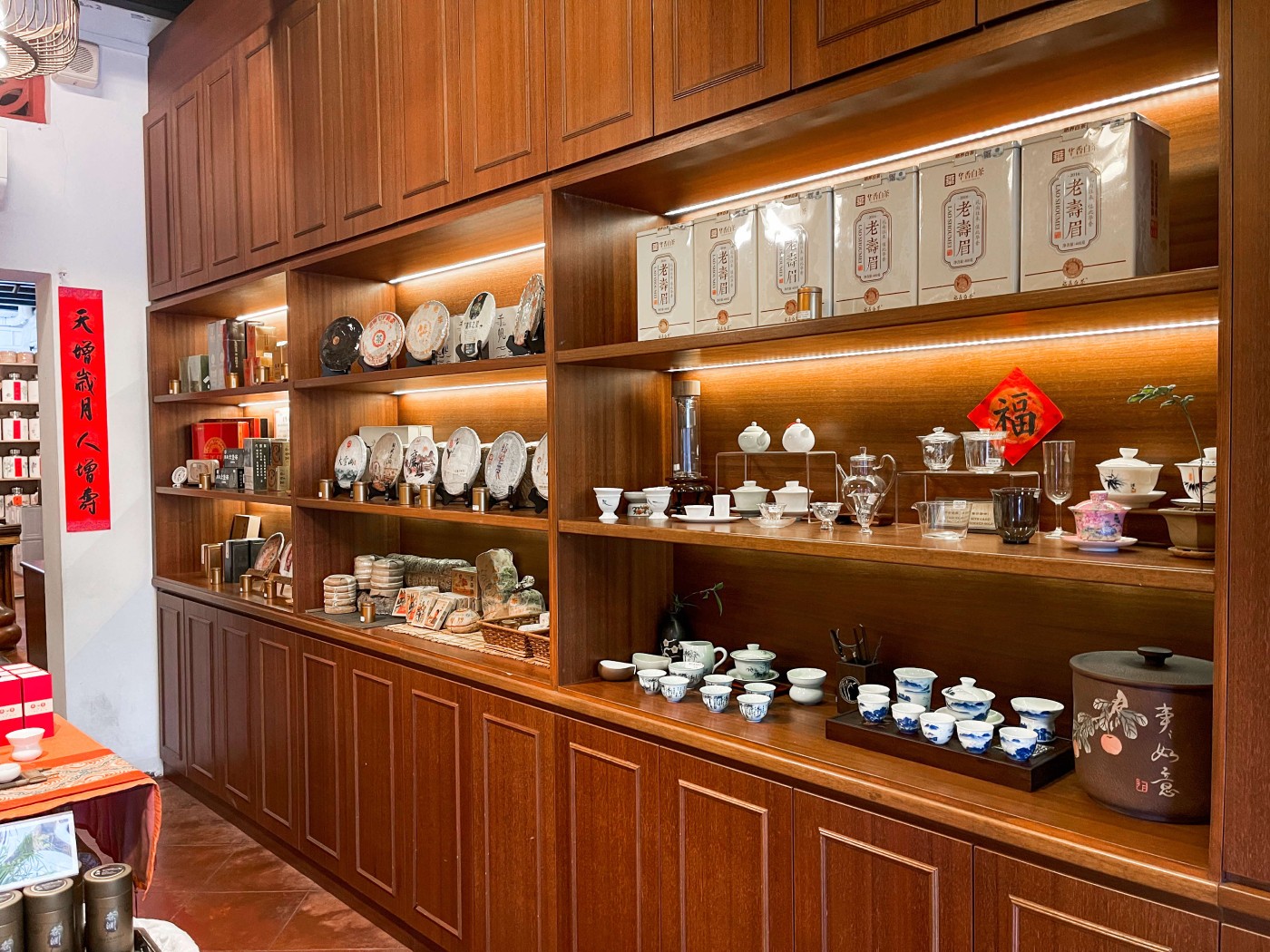
A collection of teawares and tea accessories at Tea Chapter, 2026. Photo by Ng Yun Ling.
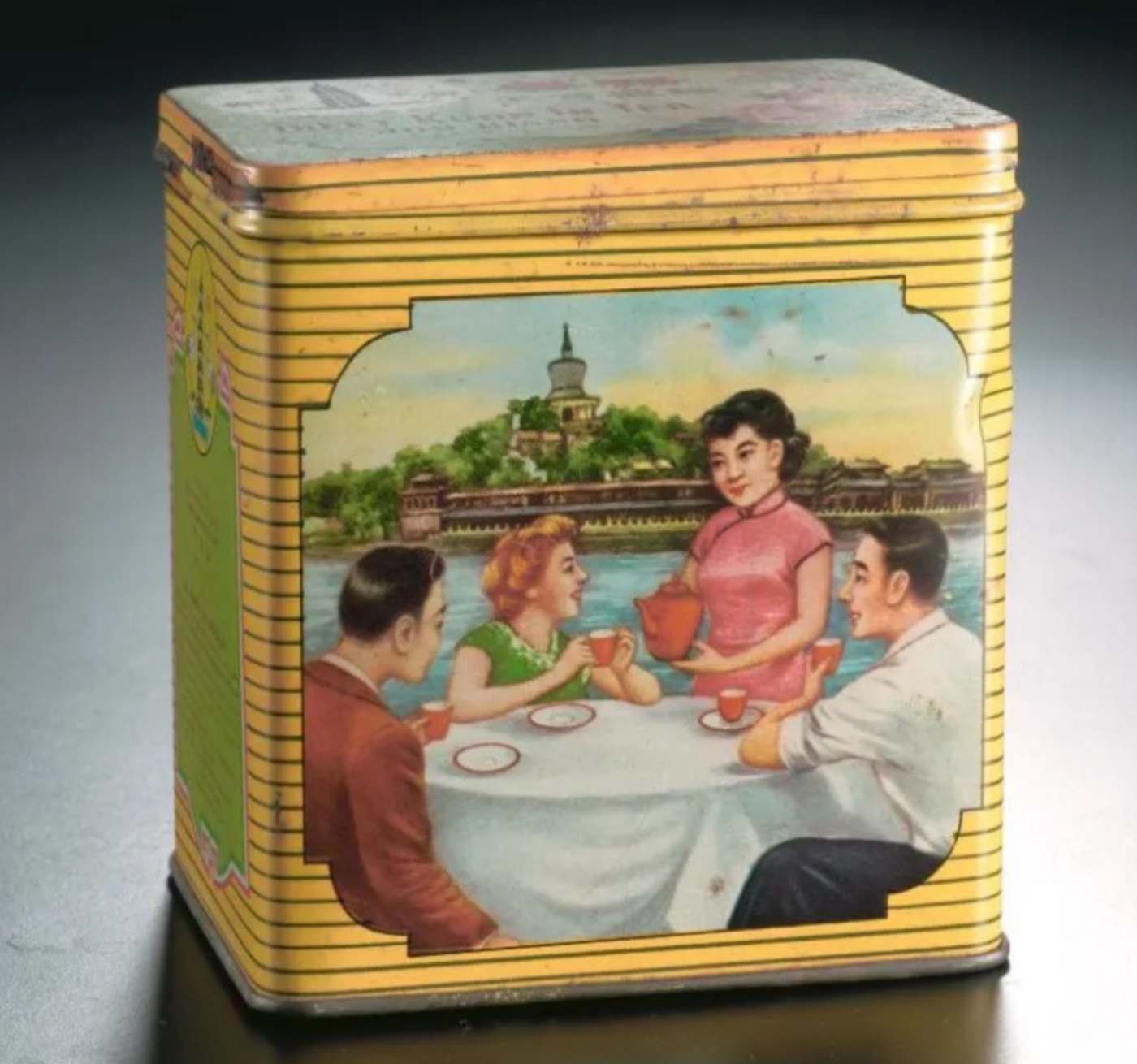
At these teahouses, tea connoisseurs would select their preferred teapots or bring along their personal teaware. Oriental Tea House was one of the many establishments that retailed premium yixing zisha teapots (宜兴紫砂壶), handcrafted from a rare mineral-rich clay known for retaining the aroma and depth of brewed tea over time. After purchase, these pieces, along with other fine tea sets, were entrusted to the care of the teahouses for their owners’ subsequent visits.13
My Cup of Tea
Over time, tea drinking evolved from a formal ritual to a refined lifestyle choice, embraced by the wider public. The formation of the Tea Cultural Society in 1992 further strengthened this movement, providing a platform for tea professionals to connect, collaborate and promote the appreciation of tea culture across all segments of society. The society brought together 40 teahouse operators, tea sellers and community centre tea clubs.14 Members of the society also joined study tours abroad to learn new tea brewing practices and immerse in tea culture.
Premium and specialty teas became more accessible to Singapore in the 1990s. “Like wine, some types of tea leaves appreciate with time,” said Lee Chee Keong, chairman of the Tea Cultural Society and owner of Liu Hsiang Teacraft.15 At the time, the market price of tea cakes ranged from $10,000 to $25,000 for 300 g, which was approximately $30 for a cup of brewed tea. These were mainly pu er tea leaves that had been compressed under high pressure and then underwent fermentation, allowing the tea to develop more complex flavours with age.
However, with more tea establishments opening in the 1990s, there was increased competition and they had to look at ways to reinvent their business models. Tea Chapter, for instance, held talks by well-known writers and introduced cultural performances such as harmonica and guzheng recitals.16 The Reading Mill on the fourth floor of Bras Basah Complex was co-located with a Chinese bookstore for customers to read while sipping tea.17 Teahouses such as Sam Yong Tea Palace on Jalan Senang and Tea Pavilion on Sago Street incorporated karaoke facilities to attract a wider clientele and sustain their businesses, while Oriental Tea House included liquor and soft drinks in their menu.18
Unlike traditional karaoke lounges, karaoke teahouses were smoke-free and suitable for families as there were no hostesses. Cha Xuan No Memories (茶轩) teahouse on Bukit Pasoh Road had private rooms of varying sizes to accommodate different groups of customers, offering discount packages at different hours of the day, including special promotions for students. Chinese Town Karaoke Tea House & Restaurant on Kreta Ayer Road served Chinese tea alongside Indonesian coffee, and staged performances by Indonesian dancers as well as those by a song, dance and opera troupe from China.19
Also in the early 1990s, the age-old ritual of tea brewing in traditional teahouses gave way to a wave of “bubble” teahouses, which emerged across Taiwan to cater to the younger crowd. At these modern teahouses, hot tea was cooled with ice and shaken like cocktails to create a foam and then served in a cocktail glass.20 Later, tapioca balls, or “pearls”, were also added to the drink.
This innovation soon reached Singapore, and in 1992, Bubble Tea Garden opened in Marina Square, serving beverages with names such as “Pearl Red Bubble Tea”, “Yam Shake” and “Honey Egg Yolk”, which had frothy tops.21 By 2002, there were more than 5,000 bubble tea shops in Singapore. This fad died down just a year later when many had to shutter.
Bubble tea, however, has since made a comeback in Singapore with popular brands like LiHO, KOI Thé and HeyTea to name a few. Besides the regular pearls, unusual toppings such as aloe vera, konjac jelly and cheese have been introduced to discerning customers, who could even customise the sugar levels and temperature settings.22
Of late, Singapore’s tea scene has become more vibrant with the arrival of modern tea chains such as CHAGEE (霸王茶姬) and CHICHA San Chen (吃茶三千), which offer healthier tea options and high-quality ingredients.
Early Tea Trade Networks
Another aspect of the tea business is the tea import and export business. Tea, of course, was an important export commodity for China, and firms in Singapore played an important role in the supply chain.
Before the 1920s, the China tea trade in Singapore was dominated by the Teochews from the Chaoshan region (comprising the cities of Chaozhou, Jieyang and Shantou), who exported Fujian oolong tea from the port of Shantou on the eastern coast of Guangdong province. This trade dynamic shifted with the large-scale influx of Anxi merchants (a prominent subgroup of the Hokkien community) from Fujian province to Singapore, who began exporting tea from Xiamen and establishing a robust Fujianese merchant network.23
In the early 20th century, political instability and economic disruption in Fujian created a climate of uncertainty, leading merchants to seek business opportunities in more stable environments beyond their homeland. Singapore was a conducive destination due to its advantageous geographical position, free port status and an entrepôt under the British. Notably, Singapore was positioned at the intersection of maritime routes that connected the United Kingdom to Southeast Asia and also served as a node in intra-Asian trade networks.24
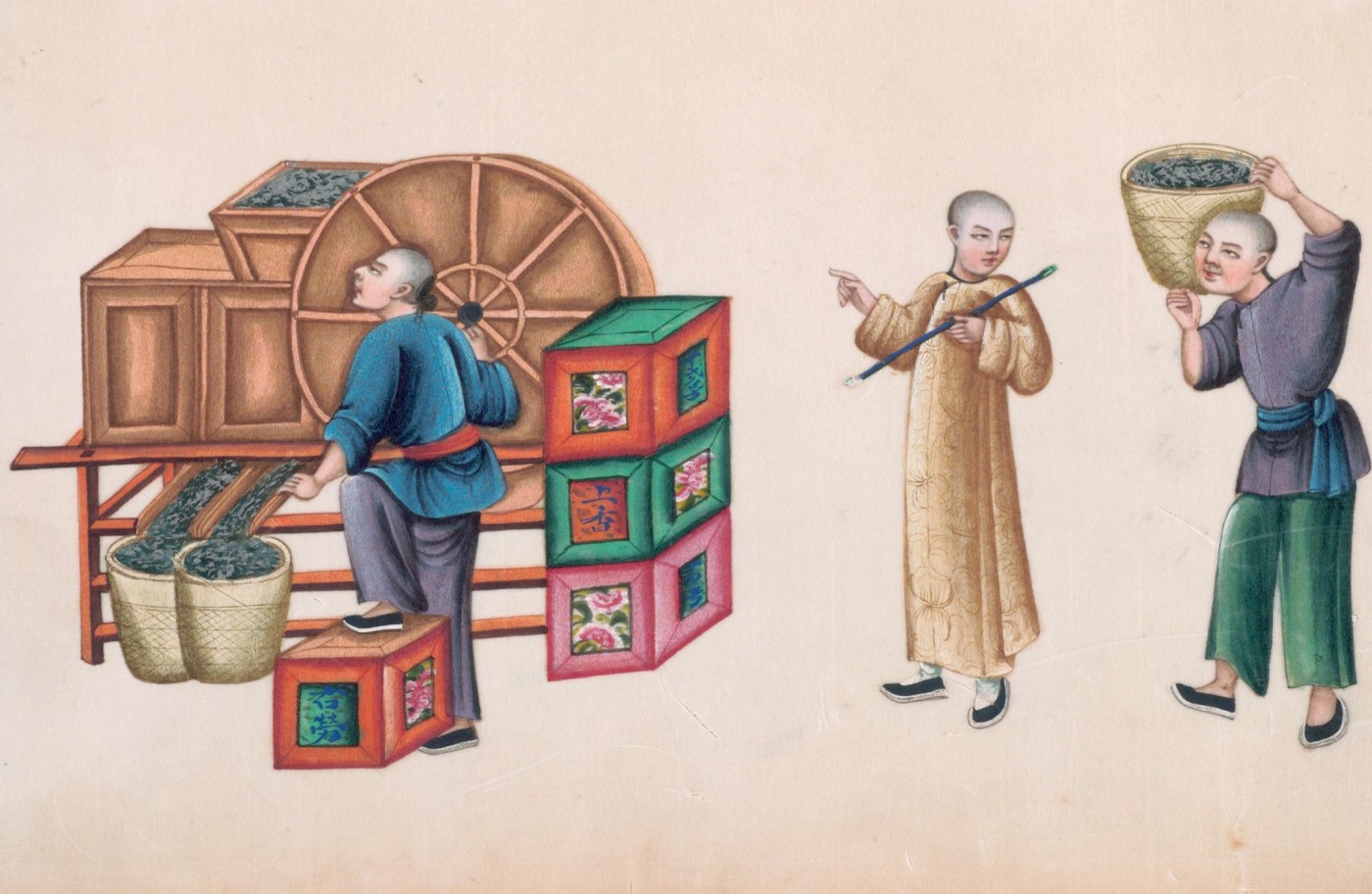
This watercolour painting shows a man directing a worker with a basket of tea leaves on his shoulder, while a worker on the left watches the tea leaves passing through a machine, 20th century. Collection of the Asian Civilisations Museum.
In Singapore, Anxi merchants either managed branches of established family enterprises based in Fujian or founded new businesses to tap into the growing regional tea trade. Early tea shops were focused on importing and selling two oolong cultivars that were in demand: tieguanyin from Anxi (安溪铁观音), which is representative of Southern Fujian oolong tea (闽南乌龙茶), and shuixian (Shui Hsien) from the Wuyi Mountains (武夷水仙), a Northern Fujian oolong tea (闽北乌龙茶). Anxi tieguanyin is a bright golden tea with a delicate aroma that carries through several brews, while Wuyi shuixian is a deep amber infusion with a caramel-like flavour and a smooth, robust texture that is richer in leaves from mature tea plants.25
In 1928, tea merchants in Singapore established the Singapore Chinese Tea Importers and Exporters Association (SCTIEA), which had close ties with the Singapore Ann Kway Association whose members came from Ann Kway (Anxi) in Fujian.26
The tea association coordinated trade policies, enforced quality standards and strengthened business ties across Southeast Asia, solidifying Singapore’s position as a crucial centre in the Fujian-Singapore tea commerce network.27 As Fujian’s tea trade faced competition from Ceylon, India, Japan and Taiwan, Singapore’s market provided essential support that sustained Fujianese merchant networks up till the late 1950s.
After 1949, Singapore tea merchants expanded beyond Fujian tea, seeking lower-cost alternatives from Taiwan and other regions due to changes in supply and pricing. They adapted to new markets by diversifying their business, no longer focusing on a single tea cultivar.
By the 1960s, more than 100 tea rooms and tea enterprises were involved in the Chinese tea trade in Singapore. Post-independence, some tea merchants in Singapore obtained citizenship and expanded their businesses. When China opened to international trade in 1982, these tea merchants resumed trade and rebuilt direct links with Chinese producers, integrating into global supply chains and adapting to new market demands.28
Not a Storm in a Teacup
Apart from the import-export trade, there were also tea shops known as cha zhuang (茶庄) that reprocessed and repackaged tea imported into Singapore. These shops had their own distinctive collection of specialty teas. Blending tea leaves in handwoven bamboo sieves and roasting them over charcoal was the earliest method used by local tea shops, a craft refined through experience and guided by the senses rather than fixed formulas.
Tian Xiang Tea Merchant (天香茶庄) was one of the first few Teochew-owned tea shops in Singapore. The original shop was located at the junction of New Bridge Road and Circular Road around 1900 before relocating to Merchant Road in 1920.29 The shop had a corner where customers could sample different types of tea prepared using the traditional gongfu cha (功夫茶) method (literally “tea made with effort”; the art of brewing tea with skill involving many quick infusions so that the tea evolves in flavour, aroma and texture over time). This was a meticulous Teochew ritual using the brazier, zisha (紫砂) teapot and small teacups.30 “For decades, the shop had been a meeting place for the Chaozhou [Teochew] community of traders, clerks, labourers and others,” the Straits Times reported in 1984. But just two years later, on 23 June 1986, Tian Xiang Tea Merchant closed down.31
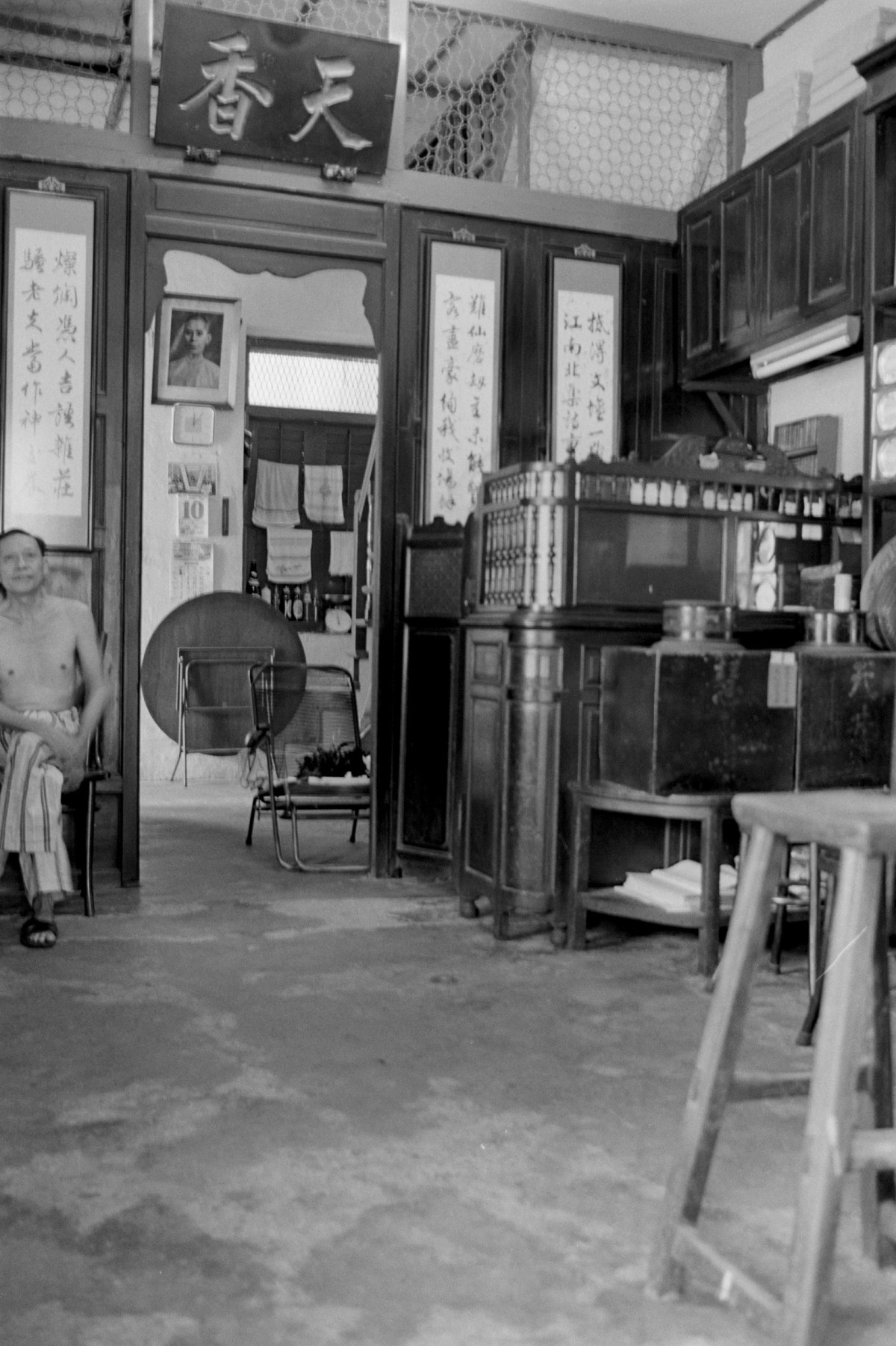
Tian Xiang Tea Merchant, 1983. Lee Kip Lin Collection, National Library Singapore.
This was a craft that took decades to master, and each tea shop zealously guarded its trade secrets for achieving the ideal roast. Once the oven was set up, workers would tend to it for a full 24-hour shift in a high-temperature room.32 Few people were inclined to carry on with the craft as it was laborious and skill intensive.
Pek Sin Choon Tea Merchant (白新春茶庄) and Guan Chong Bee Tea Merchant (源崇美茶庄) are two of the early Fujianese establishments founded during the 1920s that continue to thrive today. Pek Sin Choon developed high-quality yet affordable teas to pair with bak kut teh (literally “meat bone tea”; a pork rib dish cooked in broth), which was traditionally served with a free cup of tea made from lower-grade leaves. They were the exclusive suppliers of bu zhi xiang tea (不知香; meaning “Renowned Unknown Fragrance”), which has a rich, roasted depth with a persistent and sweet aftertaste. This tea is a local Nanyang adaptation of a traditional Chinese oolong (Southeast Asia was known as Nanyang, or “South Seas”, in the 19th to mid-20th centuries).33
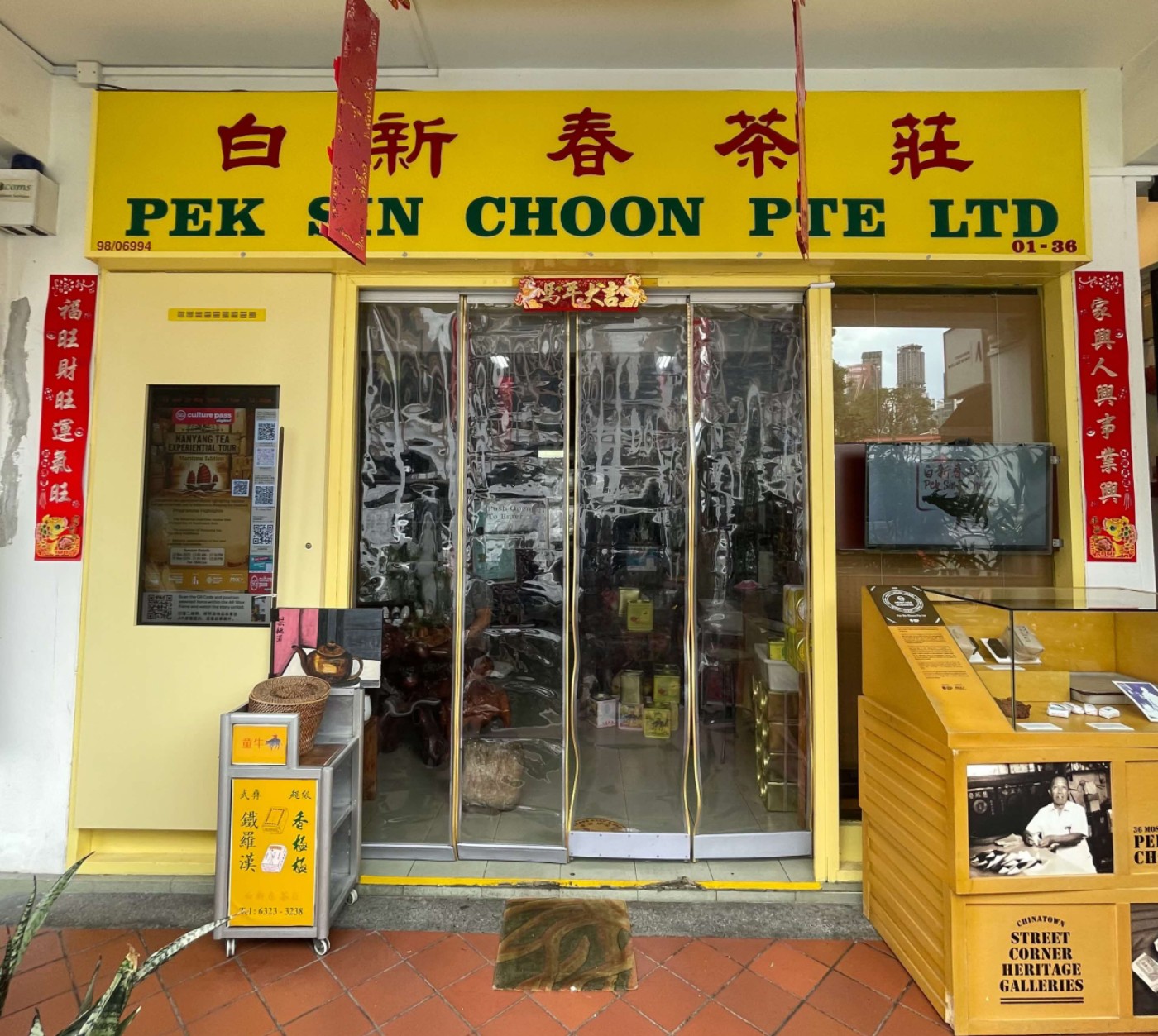
Pek Sin Choon at 36 Mosque Street, 2026. Photo by Ng Yun Ling.
Guan Chong Bee faced early challenges, but eventually prospered and became one of Singapore’s best-known tea establishments involved in the regional tea trade. In the 1970s, the tea merchant turned to electric tea roasting, which allowed it to accurately control the temperature and timing of tea brewing.34
By the mid-1980s, advancements in technology played a role in accelerating tea production when tea merchants started to incorporate mechanised blending and packaging. Ong Hui Sing, the chairman of Ong Sam Yong Tea Merchants, a tea packaging factory, told the Straits Times in 1984: “Tea was once a small home business. But it has become an international enterprise.”35
Today, Singapore’s tea trade has evolved from family-run ventures to a structured and global industry, with Singapore positioned as a regional trading and re-export hub. Tea is imported mainly from China, Morocco, Japan, South Korea and Taiwan and then re-exported to neighbouring markets. At the same time, tea is also supplied domestically to wholesalers, brands and cafes in Singapore. Flavoured and specialty teas account for an increasing share of value and volume.36 In addition, local companies are also going beyond Chinese tea. TWG Tea sources tea leaves from around the world, which are then blended, packaged and sold in its boutiques across Asia, Europe, the Middle East and North America.37
Traditional tea merchants in Singapore have shifted from solely retail-front businesses to hybrid roles as small-scale wholesalers, blenders and private-label suppliers to meet the growing demand for bespoke blends and novelty teas. However, they have remained faithful to their origins.
Pek Sin Choon, which traces its history back to 1910, has retained its traditional pink paper packaging along with the use of recycled metal tins for their Nanyang tea blends. According to fourth-generation owner Kenry Peh, they started using pink wrapping paper during the Japanese Occupation when resources had run out and paper had to be sourced from a Chinese medicinal hall. After the war, it was kept and became a lasting symbol of continuity and appreciation for times of peace. As a supplier of tea leaves to many bak kut teh shops in Singapore, fans of the dish will be able to enjoy their comfort food paired with a cup of piping hot tea for years to come.38
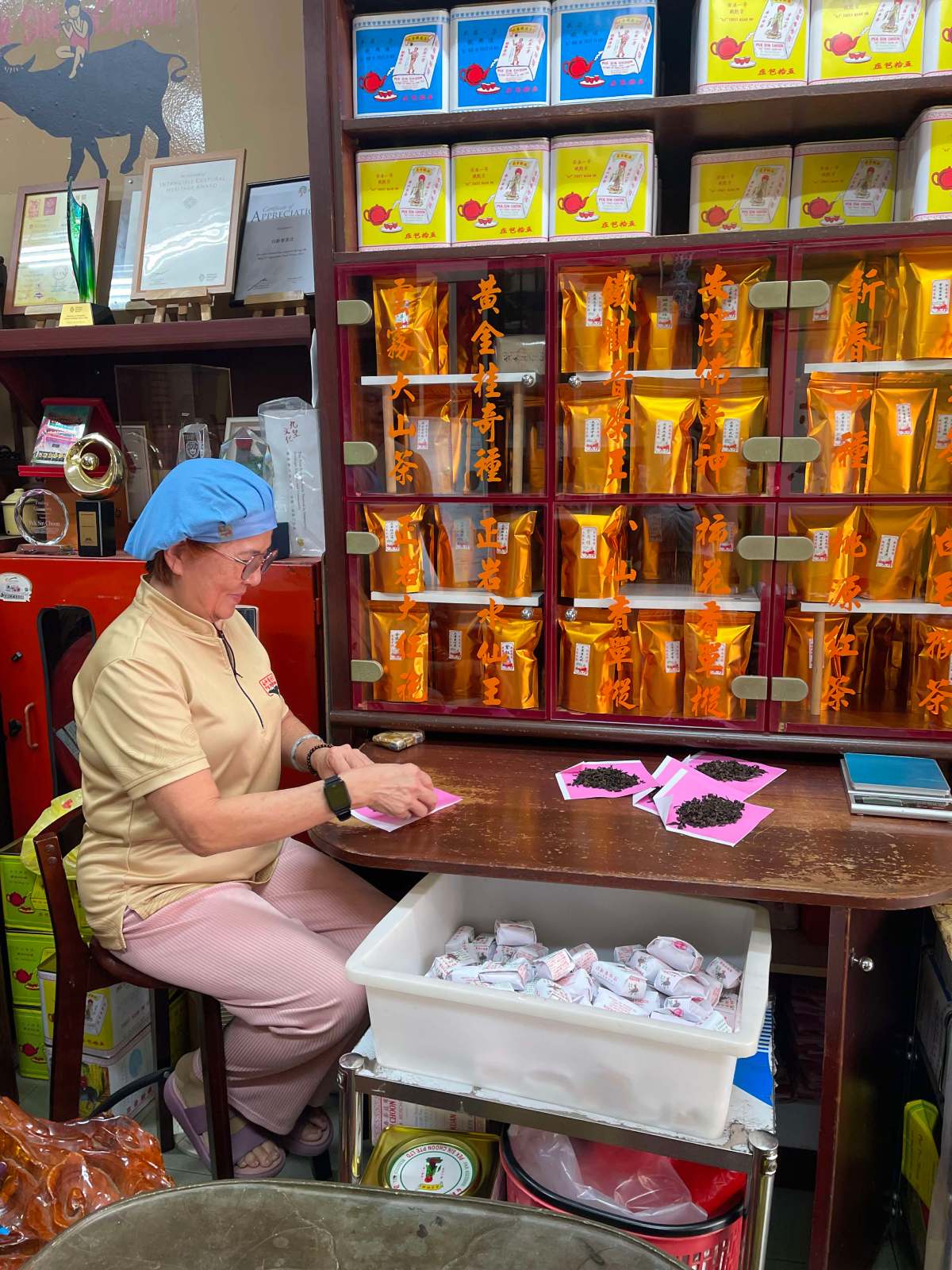
At Pek Sin Choon Tea Merchant, tea leaves continue to be packed by hand in the shop’s signature pink paper, 2026. Photo by Ng Yun Ling.
About the Author
Ng Yun Ling is a Librarian with the National Library Singapore. She is part of the team overseeing Digital Heritage, which leads and develops the National Library’s digital collections and open datasets. She is involved in enhancing the search and discovery of Singapore’s documentary and published heritage through user-centred design and innovation.
Endnotes
1 “In a Chinese Teahouse (opens in new tab),” Straits Times, 12 April 1992, 2. (From NewspaperSG)
2 Chan Kwee Sung, “Teahouses Catered to Rural Folk in Past (opens in new tab),” Straits Times, 3 December 1993, 5. (From NewspaperSG)
3 Joyce Yang, “Meet the Fourth Generation Heir of Tong Heng, the Egg Tart Empire Founded in the 1920s in Singapore,” CNA, 9 March 2024, https://cnalifestyle.channelnewsasia.com/dining/tong-heng-egg-tart-chinatown-singapore-386311 (opens in new tab).
4 Han Shanyuan 韩山元, “Bu hui xiaoshi de gulao hangye guangzhou fengwei de xinjiapo chalou” 不会消失的古老行业 广州风味的新加坡茶楼 (opens in new tab) [An ancient industry that will never disappear: Guangzhou-style Singapore teahouse], Lianhe Wanbao 联合晚报, 24 June 1983, 3. (From NewspaperSG)
5 Wood 木, “Guangdong de ‘yin cha’” 广东的 ‘饮茶’ (opens in new tab) [“Drinking tea” in Guangdong], Lianhe Wanbao 联合晚报, 18 March 1983, 18. (From NewspaperSG)
6 “From Old Cemetery to Vibrant New Town; A Peck San Theng Heritage Gallery,” Remember Singapore, 23 December 2018, https://remembersingapore.org/2018/12/23/peck-san-theng-bishan-heritage-gallery/ (opens in new tab).
7 Cephah Tan, “Tanjong Pagar Restored Shops Pack Them In (opens in new tab),” Straits Times, 16 January 1990, 27. (From NewspaperSG)
8 Khng Eu Meng, “Quality’s in the Brewer, Not the Tea (opens in new tab),” Straits Times, 28 October 1989, 4. (From NewspaperSG)
9 “Yao nin pin min” 邀您品茗 (opens in new tab) [Invitation to enjoy tea], Lianhe Zaobao 联合早报,
8 February 1991, 88; Wang Youyin 汪优茵, “Chayi guan·jing kaishe shaonian ren·fen ya ji” 茶艺馆·竞开设少年人·纷雅集 (opens in new tab) [Teahouses: Competing to open for young people], Lianhe Wanbao 联合晚报, 8 December 1990, 9. (From NewspaperSG)
10 “In a Chinese Teahouse (opens in new tab).”
11 “In a Chinese Teahouse (opens in new tab).”
12 “Brewing Up an Art (opens in new tab),” Straits Times, 19 February 1992, 8; Ho Sheo Be, “More Singaporeans Turn Chinese Teapot Collectors (opens in new tab),” Straits Times, 20 February 1994, 5. (From NewspaperSG)
13 Sima Lang 司马浪, “Guangdong kala OK chaguan cha xiang zhen zhen gesheng piao” 广东卡拉OK茶馆 茶香阵阵歌声飘 (opens in new tab) [Guangdong Karaoke Tea House, the aroma of tea and the sound of singing], Xin Ming Ri Bao 新明日报, 6 April 1994, 21; Ah Sai 阿塞, “Dongfang chaguan kala OK mai cha mai jiu ye mai hua” 东方茶馆卡拉OK 卖茶卖酒也卖画 (opens in new tab)[Oriental Teahouse Karaoke sells tea, wine and paintings], Xin Ming Ri Bao 新明日报, 13 April 1994, 20. (From NewspaperSG)
14 Goh Beng Choo, “The Fine Taste of Tea (opens in new tab),” Straits Times, 7 August 1992, 14. (From NewspaperSG)
15 Ho Sheo Be, “$30 for a Cup of Tea, Anyone? (opens in new tab)” Straits Times, 20 March 1995, 11. (From NewspaperSG)
16 Ho Sheo Be, “Middle Road Rediscovered (opens in new tab),” Straits Times, 27 May 1994, 24; Wong Chee Meng, “Tea Houses Here a Hit with Tourists (opens in new tab),” Straits Times, 6 September 1996, 16. (From NewspaperSG)
17 Goh Beng Choo, “A Reading Room with Tea and Empathy (opens in new tab),” Straits Times, 9 January 1990; “Going Beyond Books to Survive (opens in new tab),” Straits Times, 27 February 1994, 3. (From NewspaperSG)
18 Wong, “Tea Houses Here a Hit with Tourists (opens in new tab)”; Ho Sheo Be, “Teahouses Fight for Survival (opens in new tab),” Straits Times, 19 November 1993, 6. (From NewspaperSG)
19 Li Qin 李勤, “You cha you jiu de kala OK cha xuan” 有茶有酒的卡拉OK 茶轩 (opens in new tab) [Karaoke tea house with tea and wine], Xin Ming Ri Bao 新明日报, 8 December 1993, 14; Man Li 曼莉, “Cha xuan kala OK sanfa chu zhongxi langman qingqu” 茶轩卡拉OK 散发出中西浪漫情趣 (opens in new tab) [Tea House Karaoke exudes Chinese and Western romance], Xin Ming Ri Bao 新明日报, 30 August 1995, 14; Valarie Tay, “PUB Talk: No Stopping Chinese Town Karaoke (opens in new tab),” New Paper, 24 May 1996, 59. (From NewspaperSG)
20 Goh Beng Choo, “New ‘Bubbly’ a Hit with Youth Here (opens in new tab),” Straits Times, 27 May 1992, 8. (From NewspaperSG)
21 Goh, “New ‘Bubbly’ a Hit with Youth Here (opens in new tab).”
22 Annie Tan, “Commentary: Singaporeans, We Need to Pump the Brakes on Our Bubble Tea Obsession,” CNA, 27 June 2025, https://www.channelnewsasia.com/commentary/bubble-tea-culture-tealive-boba-customisation-health-5177276 (opens in new tab).
23 Jason Lim, Linking an Asian Transregional Commerce in Tea: Overseas Chinese Merchants in the Fujian-Singapore Trade, 1920–1960 (opens in new tab) (Leiden: Brill, 2010), 73–76. (From National Library Singapore, call no. RSING 382.4566394095 LIM)
24 Lim, Linking an Asian Transregional Commerce in Tea (opens in new tab), 73–76.
25 Jason Lim, “The Dynamics of Trans-regional Business and National Politics: The Impact of Events in China on Fujian-Singapore Tea Trading Networks, 1920–1960,” in Singapore in Global History (opens in new tab), ed. Derek Heng and Syed Muhd Khairudin Aljunied (Amsterdam: Amsterdam University Press, 2011), 135–50. (From National Library Singapore, call no. RSING 959.57 SIN-[HIS])
26 Mo Meiyan 莫美颜, “Dangnian fujian jie huaren shetuan huiguan duo” 当年福建街华人社团会馆多 (opens in new tab) [In those days, there were many Chinese associations in Fujian Street], Lianhe Zaobao 联合早报, 17 March 1996, 46. (From NewspaperSG)
27 Lim, Linking an Asian Transregional Commerce in Tea (opens in new tab), 73–76.
28 “Bendi chaye maoyi he chaguan ceng you duanzan huihuang” 本地茶叶贸易和茶馆曾有短暂輝煌 (opens in new tab) [The local tea trade and teahouses had a brief period of glory], Lianhe Zaobao 联合早报, 13 January 2012, 5. (From NewspaperSG); Lim, Dynamics of Trans-regional Business and National Politics (opens in new tab), 144–48.
29 Xie Yanyan 谢燕燕, “Gulao cha zhuang he gongfucha” 古老茶庄喝功夫茶 (opens in new tab) [Drink kungfu tea in an ancient teahouse], Xin Ming Ri Bao 新明日报, 17 July 1986, 3. (From NewspaperSG)
30 Tan Gia Lim, An Introduction to the Culture and History of the Teochews in Singapore (opens in new tab) (Singapore: World Scientific Publishing, 2018), 116–18. (From National Library Singapore, call no. RSING 305.895105957 TAN). In gongfu cha, tea leaves are first rinsed with hot water to remove debris and to open the leaves. The first steep is usually between 15 and 30 seconds. The steeping time is then adjusted for repeated steeps to taste the different flavour profiles. High-quality teas can yield up to 12 infusions, with each infusion bringing out different notes in the tea.
31 Chong Wing Hong, “Blending Tea and Methods (opens in new tab),” Straits Times, 1 November 1984, 1; “Qi cha hangjia youle chuanren” 沏茶行家有了传人 (opens in new tab) [Tea-making experts have found successors], Lianhe Zao Bao 联合早报, 24 October 1986, 5. (From NewspaperSG)
32 Xie, “Gulao cha zhuang he gongfucha (opens in new tab).”
33 Xie Yanyan 谢燕燕, “Bai xinchun cha zhuang ming cha duorou gu tang tiancha xiang nong” 白新春茶庄名茶多 肉骨汤甜茶香浓 (opens in new tab) [There are many famous teas in Pek Sin Choon teahouse, and the meat and bone soup sweet tea is fragrant], Xin Ming Ri Bao 新明日报, 24 December 1998, 17; Guan Lai 关莱, “Bai xinchun cha zhuang – pin ming zhi jia ‘buzhi xiang’ cha gan xiang nongyu tishen jie shu baojian yangsheng jia” 白新春茶庄 — 品茗之家‘不知香’茶甘香浓郁提神解暑保健养生佳 (opens in new tab) [Pek Sin Choon teahouse – the home for tea tasting’s ‘Shizhixiang’ tea is sweet and fragrant, refreshing and good for relieving summer heat and maintaining health], Lianhe Wanbao 联合晚报, 19 June 1996, 8. (From NewspaperSG)
34 Mo Meiyan 莫美颜, “Cha xiang man shi cha zhuang hao” 茶香满室茶庄好 (opens in new tab) [The aroma of tea fills the room and the teahouse is good], Lianhe Zaobao 联合早报, 15 October 1989, 36. (From NewspaperSG)
35 Chong, “Blending Tea and Methods (opens in new tab).”
36 “Tea in Singapore,” Observatory of Economic Complexity, accessed 4 May 2026, https://oec.world/en/profile/bilateral-product/tea/reporter/sgp (opens in new tab); “Brewing Up a Storm,” Business Times, 25 September 2015, https://www.businesstimes.com.sg/lifestyle/brewing-storm-0 (opens in new tab).
37 “Our Story,” TWG Tea, accessed 21 May 2026, https://twgtea.com/en/about-us (opens in new tab).
38 Savanna Tai, “Tradition Is Their Cup of Tea: What’s the Story Behind Pek Sin Choon in Chinatown?” CNA, 10 January 2023, https://cnalifestyle.channelnewsasia.com/dining/pek-sin-choon-chinese-tea-singapore-heritage-chinatown-history-342666 (opens in new tab).