
Article
The Long Surrender: The Experience of Japanese Soldiers Interned in Rempang After the War
18 August 2026
Topics
History
War
After Japan’s surrender, many Japanese soldiers were shipped off to an island in Riau to await repatriation. There, they had to contend with harsh living conditions, malaria and food shortages.
By Eriko Ogihara-Schuck and Cecilia Gaspar
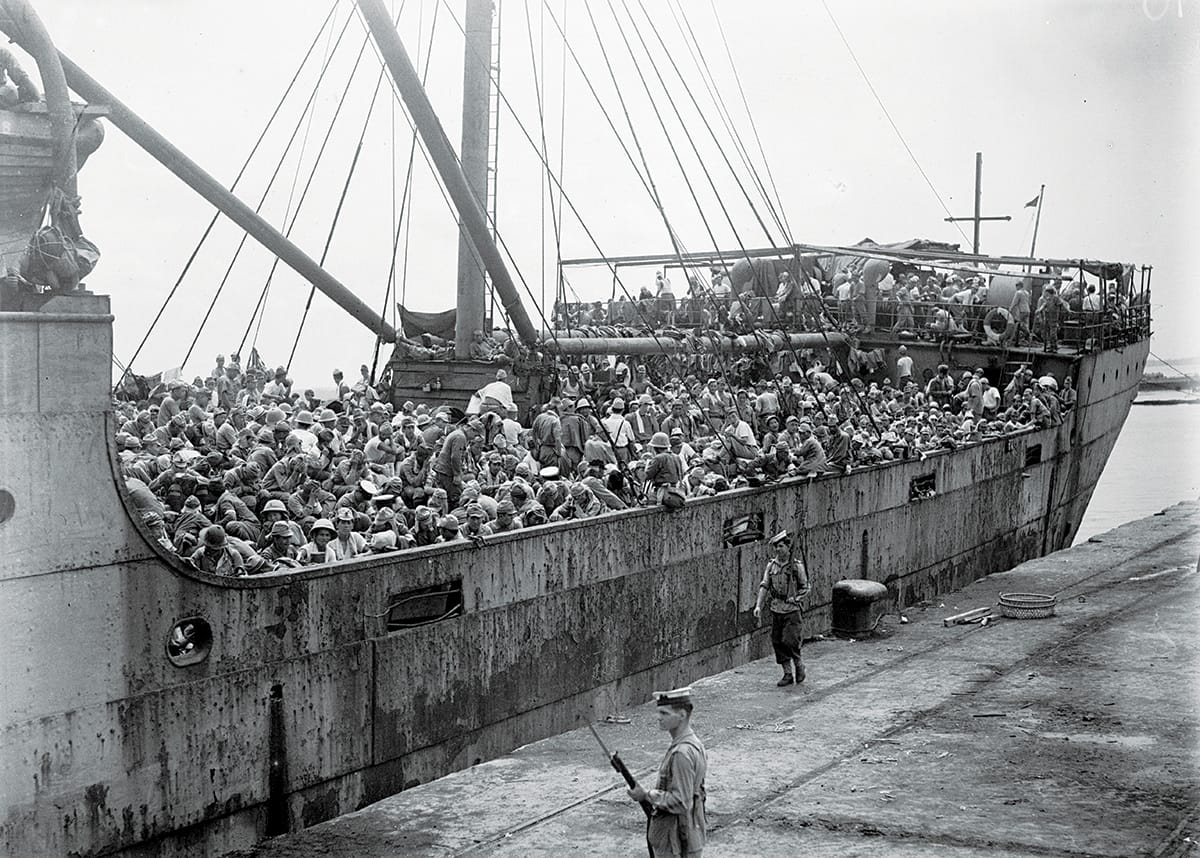
Japanese soldiers on board an evacuation freighter to Rempang, 1945. Imperial War Museums (A 30706).
While Japan’s surrender in 1945 was obviously welcomed by the people in the countries occupied by Japan during the Second World War, it created a new challenge: in Southeast Asia there were hundreds of thousands of Japanese military personnel who had to be repatriated to Japan. This was a major logistical problem because these men had to be housed and fed until they could be sent back. These men were designated as Japanese Surrendered Personnel, and in the end, some remained in Southeast Asia for two and a half years before they could return to Japan.1
In Malaya, a contingent was used as labour for postwar reconstruction. However, most were relocated to remote locations, including the islands of Rempang and, subsequently, neighbouring Galang in the Riau Archipelago, where they awaited repatriation. Rempang was particularly favoured because it had water and building materials, and relatively few inhabitants had to be evacuated to make way for the Japanese.2
The Japanese lived on Rempang between October 1945 and July 1946. At one point, there were about 68,000 Japanese interned on this Dutch-ruled island, which is about one-fifth the size of Singapore and located 2.5 km southeast of Batam.3
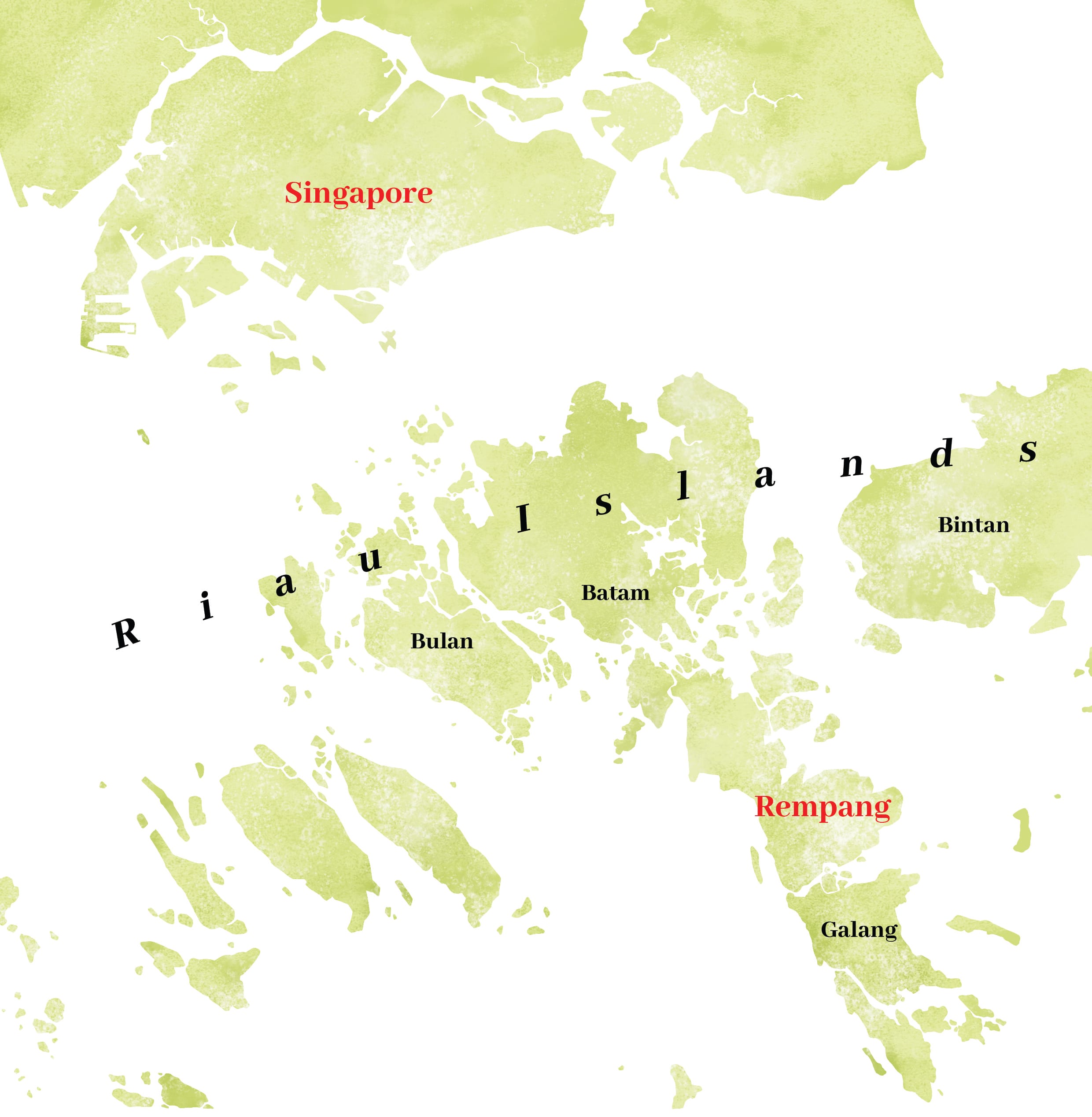
Map showing Singapore, Batam, Rempang and Galang.
On Rempang, the Japanese had to start largely from scratch. They had to build roads and places to live, and rely on farming to supplement the meagre rations they were given. In addition to hunger and malnutrition, they also suffered from diseases such as malaria. For those who survived and returned to Japan, the hardships they endured in Rempang left an indelible mark. Some documented their experiences in memoirs, while others drew on the Rempang internment as inspiration for fictionalised accounts.
One prominent person who was interned in Rempang was the well-known Japanese singer Ichiro Fujiyama (1911–93) who was held first on Galang island and then on nearby Rempang. In his 1986 memoir, Let the Singing Voice Echo Across the Southern Skies, Fujiyama recalled the challenging conditions he experienced and observed: “We supplemented our meagre food supplies by painstakingly cultivating small plots of land and somehow managed to avoid starvation.”4
A former civilian appointee attached to the Imperial Japanese Navy in Java, Fujiyama, together with his naval unit, was ordered to relocate to Riau after Japan’s surrender.5 Being a famous singer, though, Fujiyama probably had it easy. On both islands, he was given administrative duties and had to sing for British military officers.6 Many of his compatriots were not so fortunate.
Hunger and Starvation
The majority of the Japanese who were relocated to Rempang believed that they were being sent to an “uninhabited island” (無人島) where humans had been unable to survive. Some had heard that 3,000 German prisoners-of-war had been transported there, either during or after the First World War, and had all died of malaria and other diseases, and starvation.7 Many were thus probably expecting to die on the island. Contrary to the rumours, however, Rempang did have people living on it. According to the interpreter Beck Swee Hoon, who was involved in evacuating the inhabitants of Rempang before the arrival of the Japanese, about 1,000 Chinese and Malays had lived on the island. (The 14th Army Headquarters of the South East Asia Command gave a figure of 200 inhabitants.)8
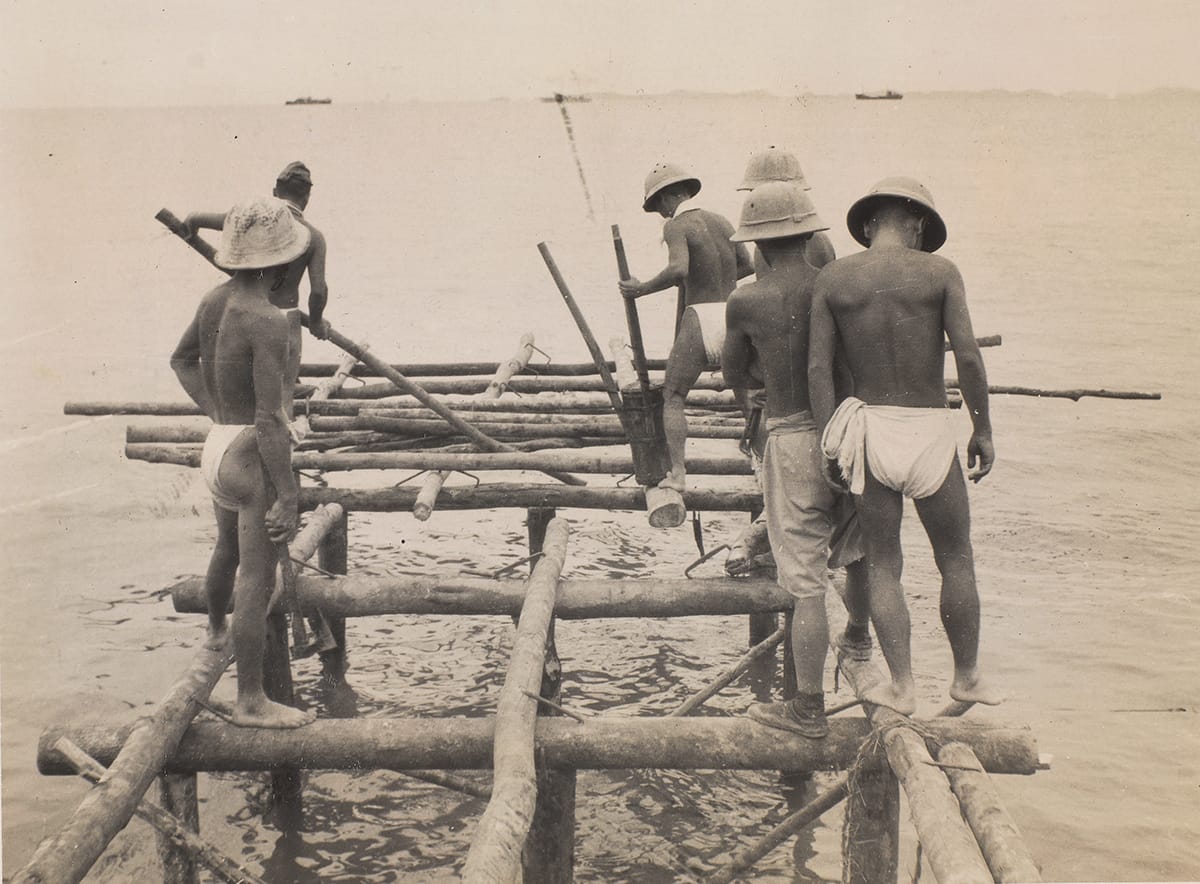
Japanese soldiers building the jetty on Rempang, 1945. Image courtesy of the National Army Museum, London (NAM. 2009-11-4-7).
On Rempang, the Japanese discovered, to their relief, that there was “a small native village” as well as “shrines and huts decorated with Spring Festival couplets that clearly belonged to Chinese inhabitants”.9 The island, however, did not have facilities to house the thousands of incoming Japanese. Establishing a sustainable living environment proved difficult, and during the internment period, more than 150 died on Rempang and Galang together, mainly from malaria.10
The situation was exacerbated by severe food shortages. When the Japanese first arrived, they had enough supplies to last 30 days.11 Each person was supposed to receive 280 g of rice per day – an amount considered sufficient for light labour. But this amount was reduced to just under 50 g per meal by the time it reached those at the bottom of the chain.12
As there was insufficient rice for civilians across Southeast Asia, rations for the Japanese were reduced as well. On 24 November 1945, Admiral Lord Louis Mountbatten, Supreme Allied Commander, South East Asia Command, announced: “Due to the fact that the Japanese left the food stocks in Malaya very low at the time of the surrender, the civilian population of the country is now on a very reduced ration scale. This is the fault of the Japanese. The ration of rice issued to the Japanese Surrendered Personnel will not at any time be more than [what] the civilian population in Malaya is getting. Reductions in the Japanese ration may therefore be necessary but as the civilian situation improves so the Japanese ration will be increased.”13
To stretch their meagre food supplies, the Japanese made porridge with as much water as possible. They also foraged for what they could find to supplement their rations. This included grass, leaves, mice, snakes, scorpions, bats and pythons.14
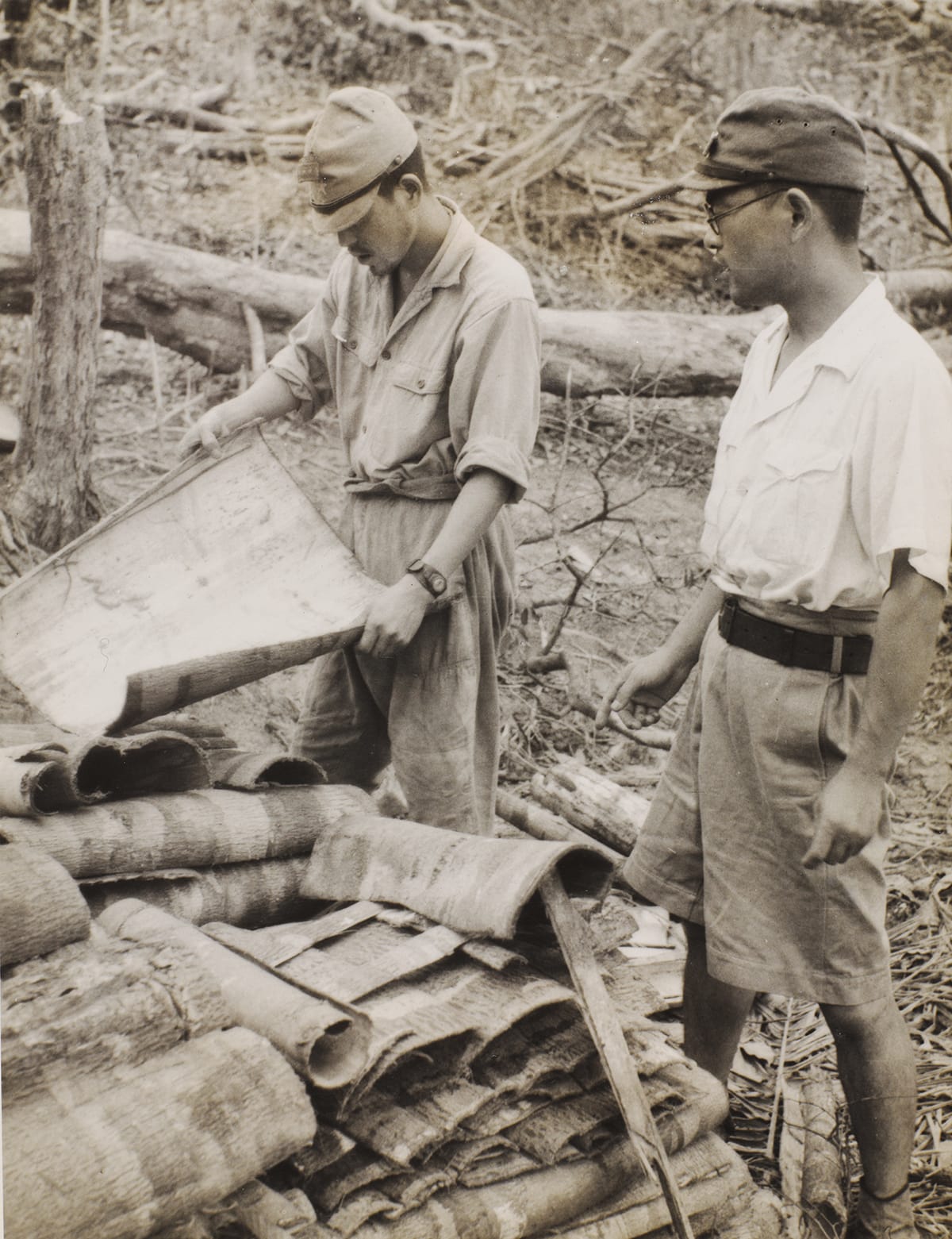
Japanese soldiers stacking tree bark into a pile, 1945. Image courtesy of the National Army Museum, London (NAM. 2009-11-4-4).
The novelist Kazuo Takemori, a private in the Imperial Japanese Army, had been relocated to Rempang in October 1945. In his memoir, he wrote that the lack of food caused once healthy faces to become darkened and distorted, with “eyes sharpened into narrow triangles”, showing that “hunger begins its work on a person through the eyes”.15 This is how Rempang acquired its nickname “Love Meal Island” (恋飯島, which is pronounced the same way as the Japanese name for Rempang Island, レンパン島).16
After nearly two months of “a marked decline in health due to malnutrition and hard work”, the situation improved.17 In early December, the Japanese began to receive rations packed in small tin cans, with each can containing 3,300 calories or three meals. The rations consisted of, for instance, coffee powder, powdered soup, biscuits, a fruit bar, canned fish, sugar cubes, lemon juice, chocolates and candy. According to Takemori, “[everyone] devoured [the food] in tears of joy” and the food revitalised them dramatically. “Unsteady legs straightened, the swelling in their faces subsided, and their eyes regained their vitality.”18
The British rations, equivalent to Japanese dried noodle packages and hardtack, also made the Japanese aware of the material gap between themselves and the British.19 Takemori recalled that “before they had even taken a single bite, they deeply felt their defeat simply by looking at the splendid packaging of the rations”. “Even though we came to realise that wars are not won by military force alone, it was already too late,” he wrote.20
When a British naval officer visited Rempang at the end of January 1946, he claimed that “[a]ll the Japanese looked incredibly healthy and well-fed, although there were several sick, particularly from the Andamans and Nicobars”.21 That may have been true, but a month later, rice rations were cut from 14 to 4 ounces (400 g to 113 g) a day to ensure that civilians in Malaya had enough.22
In response to the Japanese request for an increase in rice rations, the British cited – along with the shortage of ships and the political uncertainties in some regions – the general “shortage of tens of thousands of tons of rice throughout [Southeast Asia]” as the main cause. They also remarked that this situation had been caused by the Japanese themselves during the war: “There had not been sufficient sowing and planting under Japanese control.”23
According to British Chief of Staff Lieutenant-General Frederick Browning, the only remaining solution to the food shortage was for the Japanese to become more self-sufficient: “The more the Japanese surrendered personnel themselves sowed and grew, particularly in Rempang Island, the more they would have to eat.”24
Creative Efforts
Although the soil in Rempang was “almost universally bad, being a thin layer of topsoil on laterite”,25 the Japanese were able to grow crops, with tapioca as the main staple. In April 1946, the Singapore Free Press praised their efforts in creating a self-sufficient settlement. “Rempang and Gelang, hitherto a dense mass of jungle growth, have been turned into fertile, food producing islands.” The paper further noted that the Japanese had “rapidly converted [the islands] into a ‘Little Japan’”.26
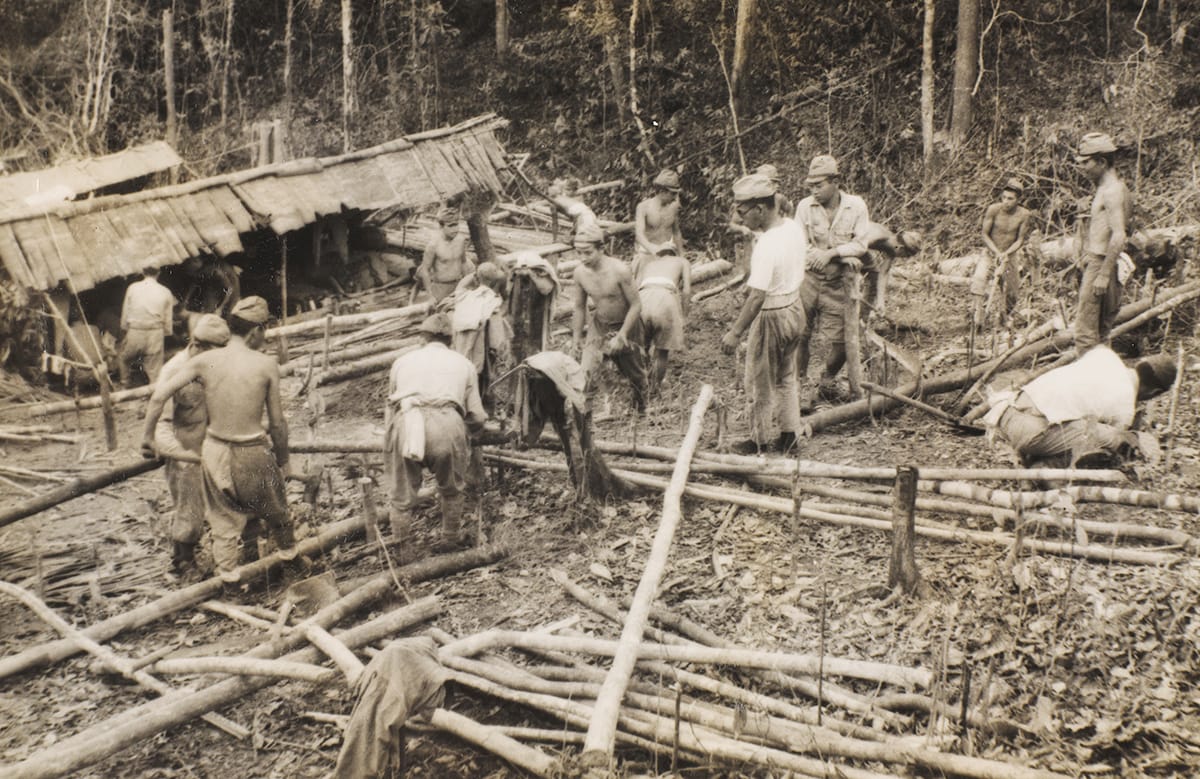
Japanese soldiers sorting felled trees, 1945. Image courtesy of the National Army Museum, London (NAM. 2009-11-4-6).
The Japanese showed considerable creativity and resourcefulness despite the shortage of materials. “Ingenuity took the form of a persistent struggle to improve adverse conditions,” Kiyotsugu Hibino wrote in his memoir Stars in Rempang (1949).27 A banker who worked for the Accounting Inspection Department of the Southern Army Military Administration, he had been relocated to Rempang in March 1946, and his memoir about internment on Rempang was the first such work to be published.
To combat the insects that destroyed tapioca crops, they managed to make a pesticide. They also fashioned mortars from wood and stone, and made creative use of old ration cans. Hibino recalled that from the cans they created utensils, bowls, plates, pots, buckets and various kinds of stationery. By scraping wax from the waterproof wrappers of food rations, they made candles and also used the wrappers as roofing material.28
The Japanese found ways to sustain their spirits. Apart from playing cards and the board game Go, they played string instruments made from ration cans.29 They also organised various artistic and musical performances and events. They established theatre groups, and musicians travelled around the island to give concerts.30 To celebrate Emperor Hirohito’s birthday on 29 April 1946, comedy performances and historical plays were held.31 In their leisure time, they also composed poems to cope with the challenges of everyday life and express their longing for home.32
Around 450 poems were included in the booklet, The New Earth: A Record of Captivity on Rempang Island. This booklet was printed and distributed on 29 April 1946 among members of the 254 Independent Infantry Battalion. Many of the poems were written in either the haiku (5-7-5 syllables) or tanka (5-7-5-7-7 syllables) formats and reflect “the cry of life in the struggle against starvation”.33 They mostly depict scenes of landscapes, farming and fishing, insects, animals and birds in a celebratory and aesthetic manner, capturing the essence of haiku and tanka poetry: a close engagement with the natural environment.
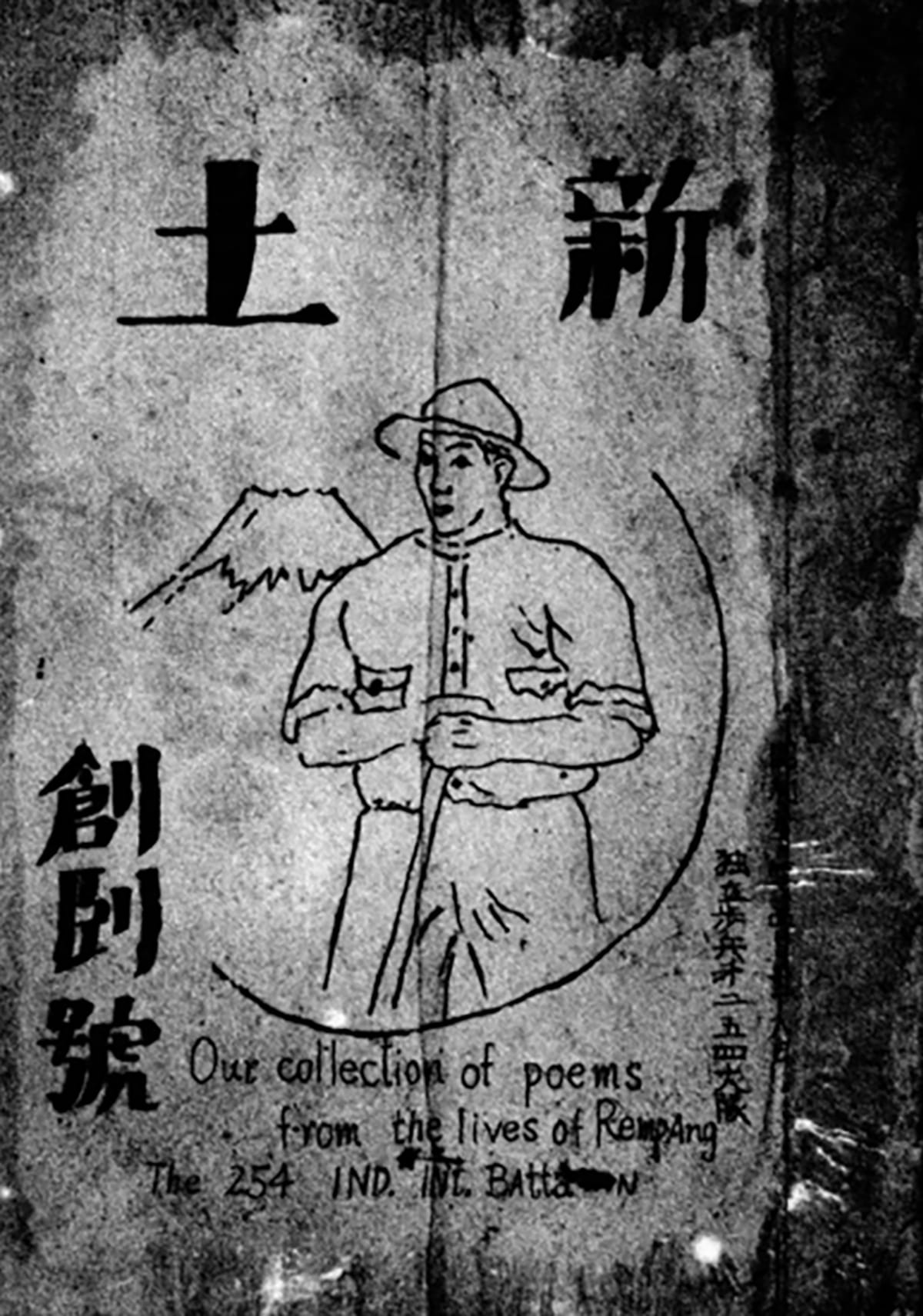
Poems composed by the Japanese soldiers on Rempang were compiled in The New Earth: A Record of Captivity on Rempang Island (April 1946). This cover is from the 1977 edition. Courtesy of the National Diet Library.
The following poem expresses the discovery of the joy of life in nature amid harsh living conditions:
吾が植し初めての種芽をふきし
一坪農園に おきる喜び34
Waga ueshi hajimete no tane me o fukishi
hitotsubo nōen ni okiru yorokobi
Seeds I planted sprout for the very first time,
in my little plot, a joy begins to grow.
Interestingly, quite a few poems mention spring and autumn – seasons that do not exist in the tropics.
タピオカや 若芽の青さ 春の色35
Tapioka ya wakame no aosa haru no iro
Tapioca pearls, the green of young sprouts,
the colour of spring.
常夏に 蛍一匹 秋近し36
Tokonatsu ni hotaru ippiki aki chikashi
In the everlasting summer, a single firefly,
autumn draws near.
Postwar Recollections
After their return to Japan, a number of soldiers wrote memoirs about their experiences on Rempang and Galang. Novelists who had not been interned on the islands but had heard about the internment experience were also inspired to write historical fiction.37 What ties the fictional works together is their romanticised portrayal of the internment experience on the islands, including fictional encounters between the Japanese and local inhabitants. This reflects the longstanding Japanese fascination with Southeast Asia that persisted even after the war.
The short story, “A Beloved Uninhabited Island” (1946) by Haruo Sato, formerly a member of the Writers’ Unit stationed in Java and Malaya during the war, recalls the hardships of life on Rempang. “We had all fallen into the realm of the hungry ghosts.”38 The story reaches its climax with the protagonist’s unexpected encounter and fascination with a Chinese fishmonger, his Malay wife and their newborn child during his visit to Galang. The protagonist is invited into their hut where he is struck by their dwelling and captivated by the beauty of the wife’s clothing, “a lavishly decorated sarong made of Pekalongan batik”.39
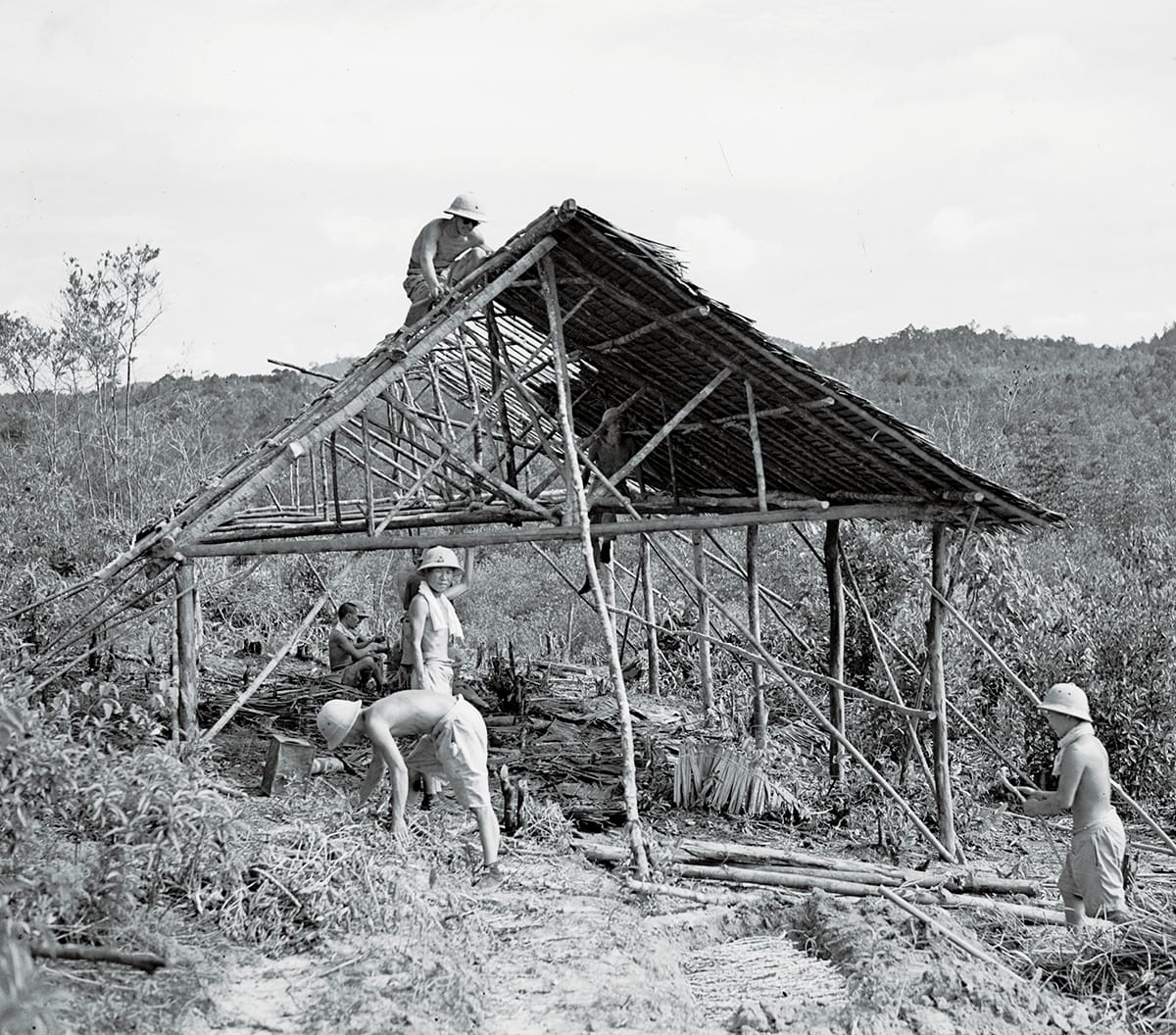
Japanese soldiers building a thatched hut, 1945. Imperial War Museums (A 30956).
The short story “A Travelling Companion” (1949) by Fumiko Hayashi, a former war correspondent in Java, Singapore and Borneo, describes the experience of a Japanese police officer who was previously interned on Rempang. The protagonist, now back in Japan, faces a female criminal who reminds him of his difficult time in Rempang. Longing to “bring back” the memory and to “relive [it] again”, he serves dinner to the woman before she is imprisoned, just as a Javanese guard had secretly brought him food during periods of starvation.40 However, this gesture is misinterpreted, and the police officer is accused and condemned. Although he is eventually exonerated, the officer resigns from his position. He then denounces Japanese society for its moral decline and the erosion of innate human compassion, while elevating his memory of the Javanese guard as the antithesis of that decline.
“A Story About an Uninhabited Island” (1948) also romanticises the Rempang experience. Written by Jiro Osaragi, a former war correspondent in Malaya and Sumatra, the story portrays life on Rempang as harsh and exhausting, marked by starvation, illness and forced labour. Yet, it concludes with the protagonist expressing his longing for Rempang, remarking that it was preferable to postwar Tokyo, which was dominated by black marketeers who exploited the people. “In Rempang we had to do everything on our own, so we were full of spirit and could sense the vitality of strong and healthy people.”41
The full-length historical novel Rempang Island (1974) by war veteran Ryojin Shimizu, tells the story of the friendship between a pet monkey named Hanako, her owner, and his subordinate. The subordinate uplifts the spirits of the others with creations such as “Rempang milk” (a milk substitute made from water left over from washing rice), cigarettes made from tea leaves and portable sundials (wrist watches).42 In the end, however, the subordinate and Hanako both meet a tragic fate just before repatriation.
Postwar Reconstructions
Despite the existence of the literary works and an abundance of memoirs, the postwar Rempang and Galang experiences remain largely unknown in Japan. Historian Eiichi Hayashi notes that studies of postwar internment in Southeast Asia are far fewer than those of the Japanese interned in Siberia. He attributes this disparity partly to the relatively brief duration of internment in Southeast Asia and also to the ambiguous status of those interned. Having themselves been implicated in Japan’s wartime violence and occupation in the region, those interned on Rempang were not purely victims.43
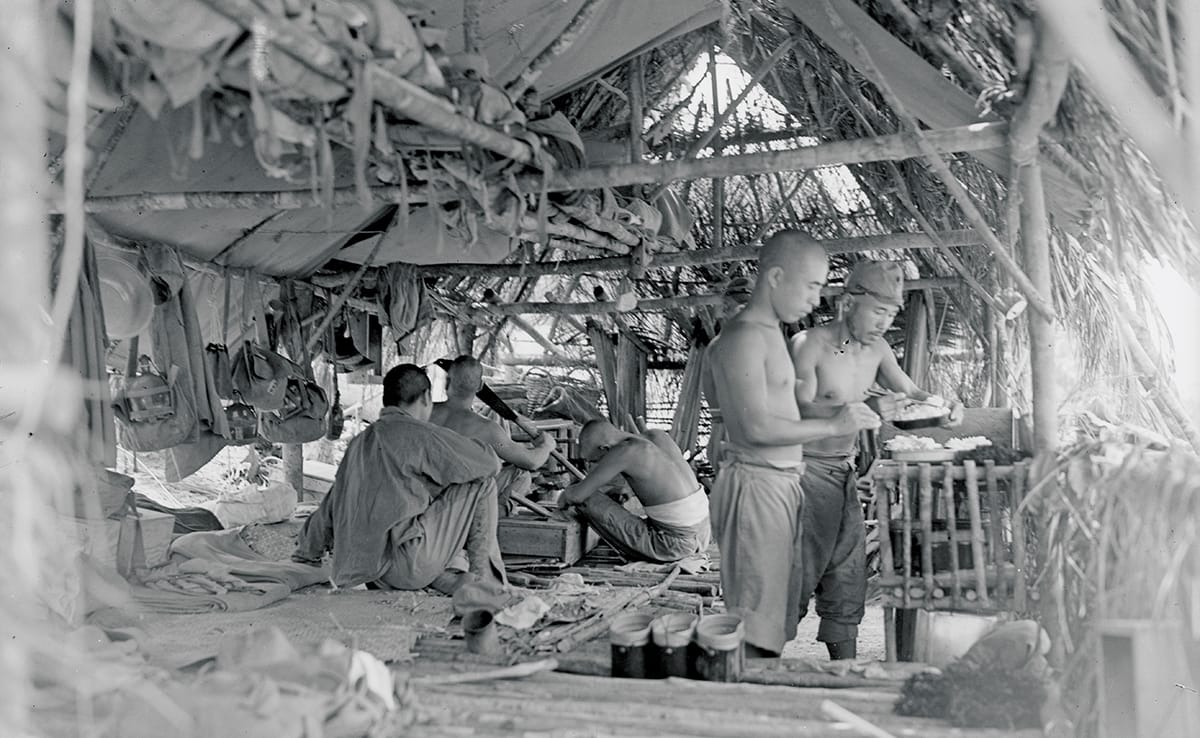
Japanese soldiers sharing cooked rice, 1945. Imperial War Museums (A 30962).
Southeast Asian studies scholar Hiroyuki Yamamoto argues that literary representations of the internment experience, or what he terms “[literary] purification of the South”, contributed to the ignorance.44 By “literary purification”, he means the transformation of internment narratives by fiction writers into Robinson Crusoe-like stories in which the experiences of hardships are idealised and become depictions of pure human relationships and alternative values. Yamamoto’s argument is that the downplaying of Japanese suffering in these fictional narratives has helped erase Rempang and Galang from the wider Japanese collective memory.
Although many in Japan are unaware of the Japanese internment on the two islands, some Rempang residents remember the former Japanese soldiers who visited the island from the 1970s, but few know that these men had been interned there after the war. In 1978, more than 30 years after their repatriation, some former soldiers established the Rempang Friendship Association and began visiting the island on an annual basis. The association’s original goal was to share their postwar experiences with younger generations in Japan.45 After members erected a monument on Rempang on 23 August 1981, they continued to visit the island regularly to search for the remains of their fallen comrades and to promote friendship with the locals. The Minamisebo monument (Tugu Jepang Sembulang) stands as a memorial to the former Japanese soldiers interned on Rempang and as an expression of the desire to foster postwar friendship between Japan and Indonesia.
.jpg)
The Minamisebo monument (Tugu Jepang Sembulang) erected by the Rempang Friendship Association on 23 August 1981. Inscribed on the monument are names of the association members. Below the names are the photos of some members. Photo by Eriko Ogihara-Schuck.
Rempang resident Pak Long Iwan, son of the late village chief M. Amin Bujur, has kept photographs of the visits by the Japanese as well as newspaper articles reporting on the visits. An Indonesian newspaper report from August 1995 mentions M. Amin Bujur’s aspiration to turn Rempang into a historical tourism site in response to the Japanese visits and their fascination with nature.46
Pak Long Iwan and his generation, who were primary school pupils at the time of the visits in the 1980s, have fond memories of the Japanese visitors. “We received coloured pencils, and the Rempang residents cooked shrimp and seafood for the guests from Japan,” said Marsita, who goes by one name, and is now an entrepreneur and property advisor at Brighton Batam.47 The Japanese painter Naotoki Yamada visited Rempang in 1991 to search for the remains of his father, who had died on the island, and he gave the children painting materials.48 Although these visits gradually ceased in the mid-1990s as the former Japanese soldiers grew older, Rempang residents who had been children at the time have passed on memories of their encounters with the Japanese to their next generation.49
Nenek Amlah, now 106 and formerly a fisher, recalled that on returning after the war, she found the landscape around her home transformed by the Japanese internees, although she had never encountered them herself. She was among those who fled to nearby Jemara Island at the outset of the Japanese Occupation and did not return until all the Japanese had been repatriated. “When I saw that the Japanese had built three huts near my residence, I decided to leave. At 5 am, before the sun rose, we escaped from Rempang. When we returned [more than four years later], all the Japanese were gone,” she said. Upon her return, Nenek Amlah recalled: “The surroundings were brighter than before because a new road had been constructed near my residence and trees had been cut down.”50
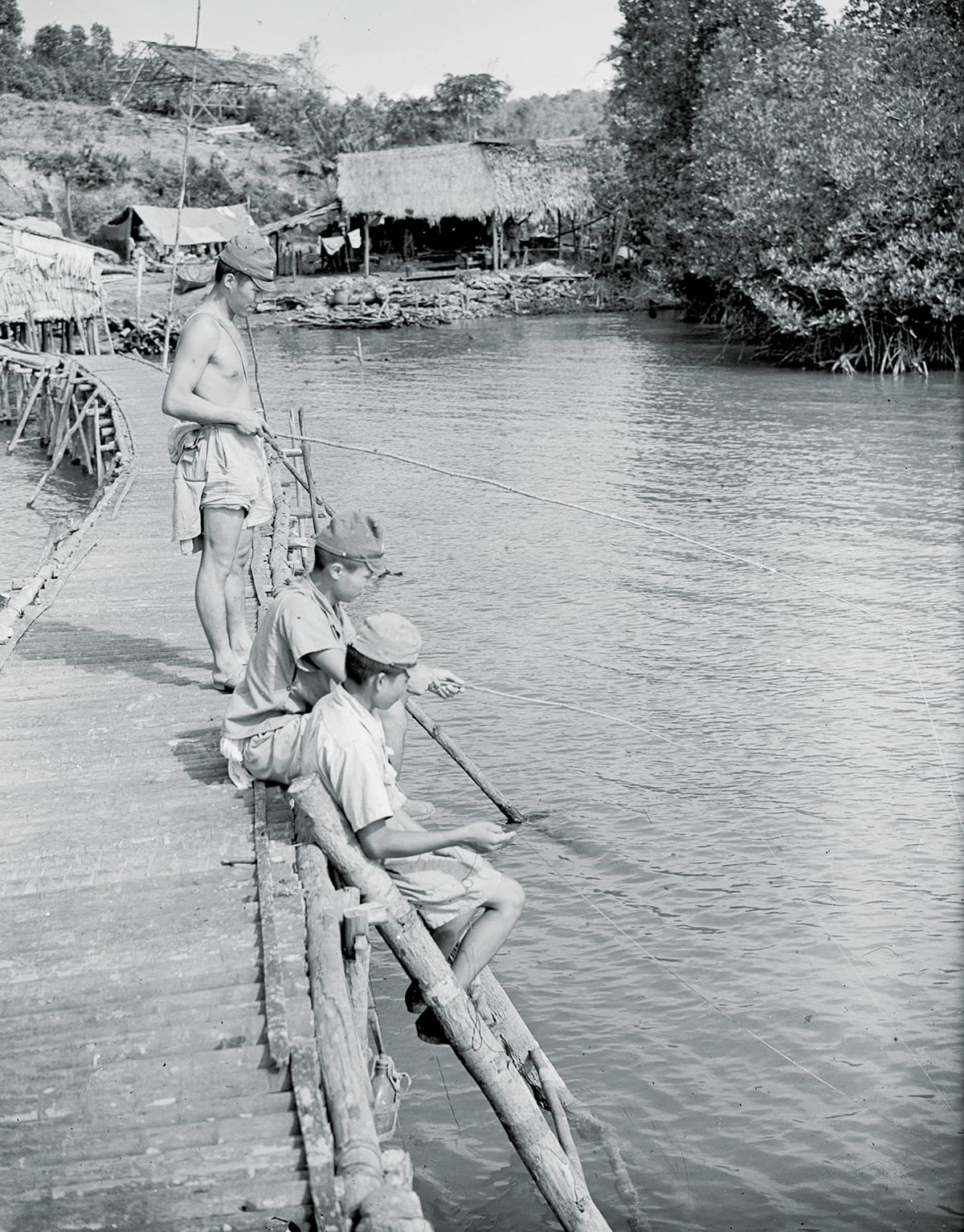
Japanese soldiers fishing using a homemade tackle, 1945. Imperial War Museums (A 30963).
Today, Rempang is at the centre of public debate over the Rempang Eco-City Project, a large-scale plan to transform the island into an industrial, urban and tourism hub. While some see new opportunities for economic growth, many local residents oppose the project because they fear the loss of their homes and traditional way of life.51 Whichever direction this takes, Rempang has entered a new chapter in its complex history.
The writers thank Dedi Arman and Bobi for making the fieldwork on Rempang possible, as well as Marsita and Rara Restu Humaira for acting as interpreters.
About the Authors
Dr Eriko Ogihara-Schuck, originally from Japan, is a postdoctoral scholar in English and American Studies who is working on a book about Singapore’s decolonisation discourse at TU Dortmund University in Germany. She is the author of Miyazaki’s Animism Abroad: The Reception of Japanese Religious Themes by American and German Audiences (McFarland, 2014) and a regular contributor to BiblioAsia.
Cecilia Gaspar is a researcher in cultural memory, wartime history and artistic exchange. Her collaborations include heritage projects with Dr Eriko Ogihara-Schuck; the publication Once Upon an Island: Images of Singapore (1950–1980) Through the Lens of Dr. Ivan Polunin (Suntree Media, 2023); and the National Heritage Board’s exhibition, Museum of U & Me (2025).
Endnotes
1 As at October 1945, the exact number was 718,314 in regions controlled by the South East Asia Command (SEAC), and this did not include the Philippines which was part of the U.S. Pacific Theatre of Operations. See National Archives (United Kingdom), “WO 203/5469: Joint Planning Staff Paper No 195: Concentration Areas for Surrendered Japanese Personnel (opens in new tab),” 11 October 1945, 23. (From National Archives, United Kingdom Collection, National Archives of Singapore accession no. WO 203/5469)
2 National Archives (United Kingdom), “WO 203/2567: Concentration of Japanese Forces to Islands in the Riouw Archipelago. Part 1 (opens in new tab),” 4 October 1945, 128. (From National Archives, United Kingdom Collection, National Archives of Singapore accession no. WO 203/2567)
3 As at 20 April 1946, five days before the first repatriation to Japan on board a Liberty ship which began on 24 April, in North and South Rempang as well as Galang, a total of 79,82[9] Japanese Surrendered Personnel were living there. See National Archives (United Kingdom), “WO203/2460: British Liaison Staff Rempang: Report on the Concentration of Japanese Surrendered Personnel in the Riouw Islands 1945 October to 1946 July (opens in new tab),” 20 July 1946, 47. (From National Archives, United Kingdom Collection, National Archives of Singapore accession no. WO 203/2460)
4 Ichiro Fujiyama 藤山一郎, Utagoe yo hibike minami no sora ni: Fujiyama Ichirō nanpō jūgunki 歌声よひびけ南の空に: 藤山一郎南方従軍記 [Let the singing voice echo across the southern skies: The record of Ichiro Fujiyama’s wartime service in Southeast Asia] (Tokyo: Kojinsha, 1986), 199, National Diet Library, https://ndlsearch.ndl.go.jp/books/R100000002-I000001797575 (opens in new tab).
5 In his memoir, Ichiro Fujiyama did not mention exactly when he arrived on Galang. It could have been either at the end of April 1946 or later, as Captain R.G. Kerr of the British Liaison Office who met him upon his arrival on Galang was not stationed there until 26 April 1946. See Fujiyama, Utagoe, 191; National Archives (United Kingdom), “WO 203/2460: British Liaison Staff Rempang: Report on the Concentration of Japanese Surrendered Personnel in the Riouw Islands 1945 October to 1946 July (opens in new tab),” 20 Jul 1946, 65.
6 For Ichiro Fujiyama’s experience on Galang and Rempang, see Fujiyama, Utagoe, 190–208. For a picture of his performance, see “Jap Film Star at Rempang (opens in new tab),” Singapore Free Press, 9 July 1946, 1. (From NewspaperSG)
7 Kiyotsugu Hibino 日比野清次, Marai-gun yokuryūki レムパンの星:マライ軍抑留記 [The stars of Rempang: An internment memoir of the Malaya armed forces] (Tokyo: Kōhaku shobō, 1949), 21, National Diet Library, https://ndlsearch.ndl.go.jp/books/R100000002-I026240498 (opens in new tab). No evidence of this German episode has been identified. See for instance, Gerhard Dannemann, Gefangen am anderen Ende der Welt: Deutsche im Ersten Weltkrieg in Ostasien und Australien [Trapped on the other side of the world: Germans in East Asia and Australia during the First World War] (Hamburg: BoD, 2018), Deutsche Nationalbibliothek, https://d-nb.info/1159684790 (opens in new tab).
8 Beck Swee Hoon, “Kepala Jernih: A Story of the Rhio Archipelago (opens in new tab),” Straits Times, 7 October 1946, 4. (From NewspaperSG); National Archives (United Kingdom), “WO 203/2567: Concentration of Japanese Forces to Islands in the Riouw Archipelago. Part 1 (opens in new tab),” 5 Oct 1945, 128. For a historiography of studies on inhabitants on Rempang Island since the 19th century, see Dedi Arman, Orang Darat di Pulau Rempang: Tersisih Dampak Pembangunan Kota Batam [The Orang Darat on Rempang island: Marginalised by the impact of Batam city’s development] (Yogyakarta: Sulur, 2023), https://sulur.co.id/product/orang-darat-di-pulau-rempang-tersisih-dampak-pembangunan-kota-batam/ (opens in new tab).
9 Tatsuo Yamamoto 山本立夫, Kyokugen no shima “Renpan”: Sei heidan sanbō no kaitaku shuki 極限の島「レンパン」: 静兵団参謀の開拓手記 [Rempang, an island of extremes: A Sei brigade staff officer’s memoir of pioneering] (Tokyo: Tamiko Yamamoto, 1979), 54, 61, National Diet Library, https://ndlsearch.ndl.go.jp/books/R100000002-I000001438187 (opens in new tab).
10 Malaria was the primary cause of death, responsible for 52 out of 156 deaths between November 1945 and June 1946. See National Archives (United Kingdom), “WO 203/2460: British Liaison Staff Rempang: Report on the Concentration of Japanese Surrendered Personnel in the Riouw Islands 1945 October to 1946 July (opens in new tab),” 20 Jul 1946, 52.
11 National Archives (United Kingdom), “WO 203/2460: British Liaison Staff Rempang: Report on the Concentration of Japanese Surrendered Personnel in the Riouw Islands 1945 October to 1946 July (opens in new tab),” 20 Jul 1946, 13.
12 Yoshiharu Mori 森由治, “Shūsen soshite kiga no Renpantō e: Dai 3 kishō rentai”
“終戦そして飢餓のレンパン島へ: 第3気象連隊” [“The end of the war and to Rempang island of starvation: 3rd weather regiment”], in Heiwa no ishizue gunjin gunzoku tanki zaishokusha ga kataritsugu rōku Ⅵ 平和の礎 軍人軍属短期在職者が語り継ぐ労苦Ⅵ [The foundation of peace: The hardship passed down by short-term military personnel] (Tokyo: Public Foundation for Peace and Consolation, Incorporated Administrative Agency, 1996), 36, https://www.heiwakinen.go.jp/wp-content/uploads/archive/library/roukunote/onketsu/06/O_06_030_1.pdf (opens in new tab).
13 National Archives (United Kingdom), “WO 203/2727 Japanese Surrendered Personnel: Organisation and Policy (opens in new tab),” 24 November 1945, private records, 297. (From National Archives of Singapore, accession no. WO 203/2727)
14 Mori, “Shūsen,” 36; “Wide News: Renpantō nihonjin horyo shūyōjo tomo no kai sengo 34-nen-me no tanjō” “Wide News レンパン島日本人捕虜収容所友の会戦後34年目の誕生 [“Wide news: The establishment of the Friendship Association of the Rempang Island Japanese internees 34 years after the war”], Shūkan Yomiuri 週刊読売 16 July 1978, 143, National Diet Library, https://ndlsearch.ndl.go.jp/books/R100000002-I000000010824-d1814987 (opens in new tab).
15 Kazuo Takemori 竹森一男, Renpantō レンパン島 [Rempang island] (Tokyo: Hodaka Books, 1958), 72, National Diet Library, https://ndlsearch.ndl.go.jp/books/R100000002-I000000984402 (opens in new tab).
16 See for instance, Mori, “Shūsen,” 33.
17 National Archives (United Kingdom), “WO 203/2460: British Liaison Staff Rempang: Report on the Concentration of Japanese Surrendered Personnel in the Riouw Islands 1945 October to 1946 July (opens in new tab),” 20 Jul 1946, 48.
18 Kazuo Takemori, “Renpantō” (“Renpang island”), Seikai Ōrai 政界往来 20, no. 5 (1954), 195, National Diet Library, https://ndlsearch.ndl.go.jp/books/R100000002-I000000012797-d2740322 (opens in new tab).
19 Yamamoto, Kyokugen no shima “Renpan”, 102.
20 Takemori, “Renpantō,” 195.
21 National Archives (United Kingdom), “WO 203/4936: Treatment of Japanese Forces (opens in new tab),” 29 January 1946, 34. (From National Archives of Singapore, accession no. WO 203/4936)
22 As at February 1946, rice rations had been cut from fourteen to four ounces per day “in order that supplies to the inhabitants of Malaya should not be curtailed”. See National Archives (United Kingdom), “WO 203/4936: Treatment of Japanese Forces (opens in new tab),” 27 Feb 1946, 24.
23 National Archives (United Kingdom), “WO 203/4936: Treatment of Japanese Forces (opens in new tab),” 29 Jan 1946, 38. The postwar food crisis, and especially rice shortage in Southeast Asia, led to an organisation of conferences in March and April 1946. See “S’pore Food Talks a Success – Killearn (opens in new tab),” Malaya Tribune, 29 March 1946, 4/1. (From NewspaperSG)
24 National Archives (United Kingdom), “WO 203/4936: Treatment of Japanese Forces (opens in new tab),” 29 Jan 1946, 39.
25 National Archives (United Kingdom), “WO 203/2460: British Liaison Staff Rempang: Report on the Concentration of Japanese Surrendered Personnel in the Riouw Islands 1945 October to 1946 Jul (opens in new tab),” 20 Jul 1946, 11.
26 “Japs ‘Colonise’ Two Dutch Islands (opens in new tab),” Singapore Free Press, 9 July 1946, 3. (From NewspaperSG)
27 Hibino, Remupan no hoshi, 126–27.
28 For the full list of items created by the Japanese in Rempang, see Hibino, Remupan no hoshi, 126–35.
29 Hibino, Remupan no hoshi, 135.
30 Mori, “Shūsen,” 39; “Wide News,” 144.
31 Goro Nagai 長井五郎, ed., Aratsuchi: Toraware no shima Renpantō no ki
新土: 捕われの島レンパン島の記 [The new earth: A record of captivity on Rempang island] (Tokyo: Shigekuni Iwata, 1977), 164, National Diet Library, https://ndlsearch.ndl.go.jp/books/R100000002-I000001352838 (opens in new tab).
32 The Japanese in Woodlands Camp in Singapore also wrote many poems and published them in the magazine Kaenju (火焔樹 (opens in new tab)) between June 1946 and June 1947. (From National Library, Singapore, call no. RRARE 895.685 K)
33 Shigekuni Iwata 岩田茂邦, “Preface,” in Nagai, Aratsuchi, 5.
34 Nagai, Aratsuchi, 71.
35 Nagai, Aratsuchi, 28.
36 Nagai, Aratsuchi, 29.
37 Eiichi Hayashi 林英一, Nanpō yokuryū: Nihon-gun heishi, mōhitotsu no higeki 南方抑留: 日本軍兵士、もう一つの悲劇 [Internment in Southeast Asia: Another tragedy of Japanese soldiers] (Tokyo: Shinchosha, 2025), 52, National Diet Library, https://ndlsearch.ndl.go.jp/books/R100000002-I034176902 (opens in new tab).
38 Haruo Sato 佐藤春夫, “Natsukashii mujintō” “なつかしい無人島” [“A beloved uninhabited island”], Kuraku 苦楽 2, no. 10 (1946): 18, National Diet Library, https://ndlsearch.ndl.go.jp/books/R100000002-I000000006031-d3546615 (opens in new tab).
39 Sato, “Natsukashii mujintō,” 26.
40 Fumiko Hayashi 林芙美子, “Michizure” “道づれ” [“A travelling companion”], in Gyūniku: Hayashi Fumiko Shōsetsushū 牛肉: 林芙美子小説集 [Beef: The short story collection of Fumiko Hayashi] (Tokyo: Kaizōsha, 1949), 71, National Diet Library, https://ndlsearch.ndl.go.jp/books/R100000002-I000000860048 (opens in new tab).
41 Jiro Osaragi 大佛次郎, “Mujintō no hanashi” “無人島の話” [“A story about an uninhabited island”], in Kamakura tsūshin: Wakai hitotachi ni 鎌倉通信: 若い人達に [Kamakura correspondence: To the youth] (Tokyo: Kenkyusha, 1949), 133, National Diet Library, https://ndlsearch.ndl.go.jp/books/R100000002-I000001427878 (opens in new tab).
42 Ryōjin Shimizu 清水寥人, Remupantō レムパン島 [Rempang island] (Takasaki: Asaosha, 1974), 395, 397, 413, National Diet Library, https://ndlsearch.ndl.go.jp/books/R100000002-I000001263717 (opens in new tab).
43 Hayashi, Nanpō yokuryū, 7–8.
44 Hiroyuki Yamamoto 山本博之, “Sengo Nihon ni okeru nanpō yokuryū no kioku: Renpantō no bungakuteki junka to zaichisei no danzetsu” “戦後日本における南方抑留の記憶: レンパン島の文学的純化と在地性の断絶” [“The memory of southern internment in postwar Japan: The literary purification and local disconnection of Rempang Island”], Intākaruchuraru インターカルチュラル 24 (2026), 100, National Diet Library, https://ndlsearch.ndl.go.jp/books/R000000004-I034750189 (opens in new tab).
45 “Wide News,” 142.
46 “Rempang, Wisata Sejarah Yang Menjanjikan” [“Rempang, a promising historical tourist destination], Sijori Pos, 15 August 1999.
47 Marsita, interview with Eriko Ogihara-Schuck, 3 August 2026.
48 “Senshi no chi: 45-nen-buri mitsuketa” “戦死の地 45年ぶり見つけた” [“The site where he fell in battle was found 45 years later”], Sankei Shimbun, 25 May 1991, National Diet Library, https://ndlsearch.ndl.go.jp/books/R100000002-I000000062460 (opens in new tab).
49 Rara Restu Humaira, correspondence with Eriko Ogihara-Schuck, 5 August 2026.
50 Nenek Amlah, interview with Eriko Ogihara-Schuck, 3 August 2026.
51 Syed Huzaifah Bin Othman Alkaff and Sayed Fauzan Riyadi, “From Conflict to Collaboration: The Rempang Dispute and Indonesia’s Reinvented Transmigration Policy,” IDSS Paper, no. 43, 16 March 2026, S. Rajaratnam School of International Studies, https://rsis.edu.sg/wp-content/uploads/2026/03/IP26043.pdf (opens in new tab).