
Podcast
Legacy on a Hill: The Maqam Habib Noh
28 October 2026
Topics
People
Places and Buildings
In a BiblioAsia Podcast episode, architectural historian Imran Tajudeen talks about the history and architecture of Maqam Habib Noh, including its multiethnic neighbourhood.
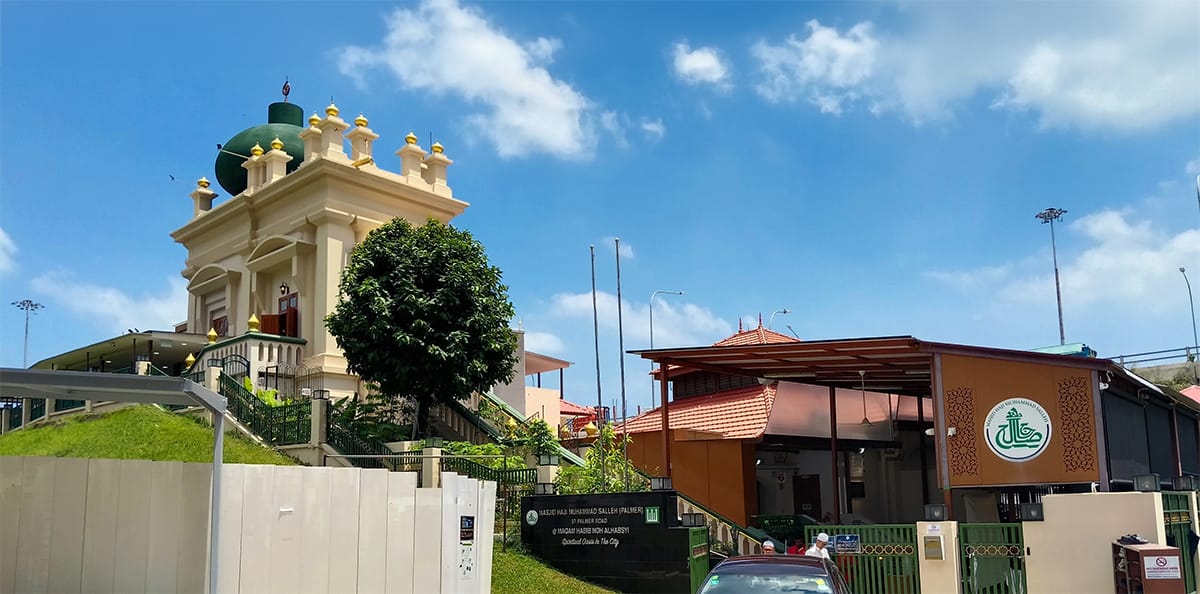
The Haji Muhammad Salleh Mosque is on the right, 2026. Photo by M. Adrian Jurhami. (From Wikimedia Commons).
Imran Tajudeen is a senior lecturer in the Department of Architecture, College of Design and Engineering, National University of Singapore. He teaches subjects on identity and representation through the arts, urban history and built cultural heritage in maritime Southeast Asia, with a focus on Singapore and maritime Southeast Asia. He is currently writing a book about Maqam Habib Noh, which reopened in January 2026 after one-and-a-half years of renovations. The keramat (shrine) is dedicated to the Muslim man Habib Noh and houses his tomb.
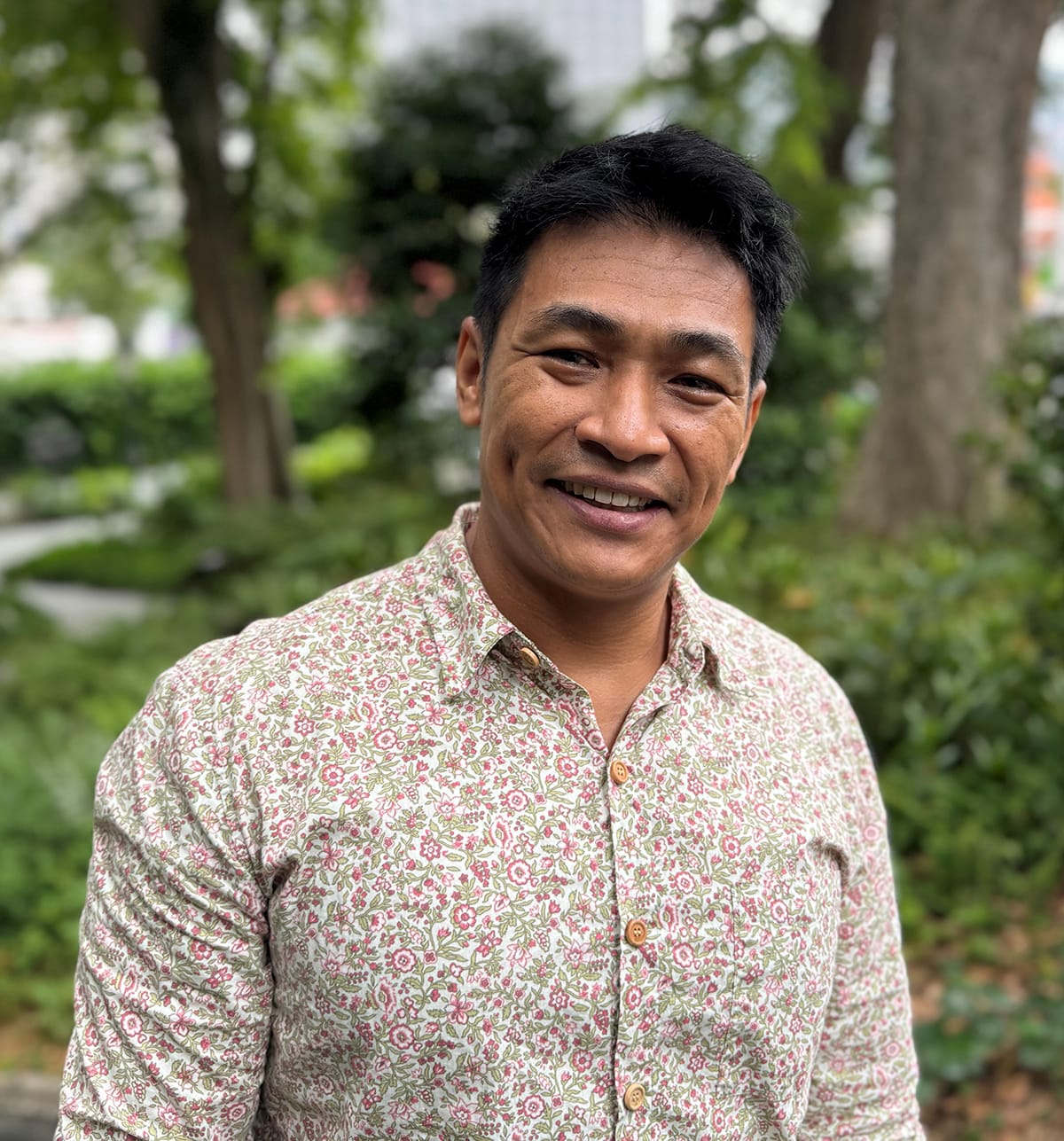
Architectural historian Imran Tajudeen, 2026. Photo by Jimmy Yap.
Imran
One of the remarkable things about the mausoleum is that it’s on a hillock [off Palmer Road], so it necessitated that monumental staircase. The staircase was built, as we know now, by no less than Swan & Maclaren. In fact, it’s a bridge. If you look at the structure properly, it’s not resting directly upon the hillside. It’s like a bridge with arches, with foundations into the ground, so that any landslide won’t affect the staircase. If you imagine [it] like an overhead bridge-staircase, that’s what it is.
Jimmy
Interesting.
Imran
With arches, though, because this is brick, not concrete, right? The overhead bridges we are familiar with today are in concrete. This is in brick and plaster. So, if you look carefully at the sides, you’ll be able to see the former arches that have now been walled over in between the arches.
Jimmy
You can still see the outline.
Imran
The outlines of the arches are articulated in mouldings. So, it’s a very beautifully built staircase, with granite steps, no less. And Shanghai plaster balustrades on top. And then the mausoleum itself is also interesting because it takes on European features, if you look at the mouldings outside the windows. But it has a dome, and the dome itself is interesting because it’s actually circular. It’s a globe, but a flattened globe with a disc on top. So, it’s not a typical dome that you would find.
Jimmy
What do you mean by a flattened dome?
Imran
So instead of being a perfect sphere, it’s somewhat elliptical.
Jimmy
Okay, so it’s a little bit flatter.
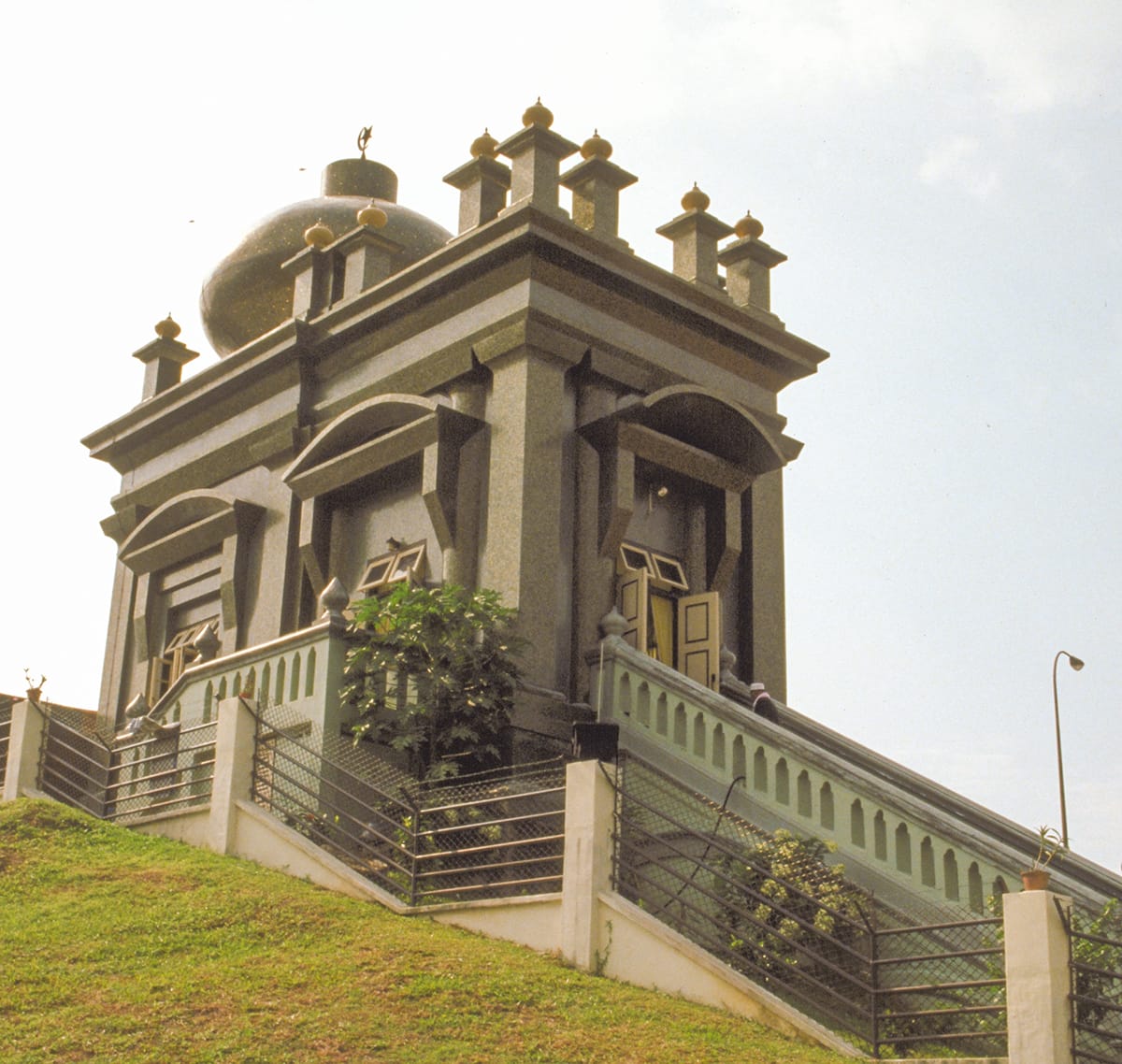
Maqam Habib Noh, 1989. Courtesy of National Archives of Singapore (Media - Image No. 19980007354 – 0066).
Imran
Flatter, yeah. And then on top of that is a circular drum. It would be called a drum in architectural terms, meaning that it’s like a cylinder on top of it. But of course, the function of these domes above mausoleums is well known in Islamic architecture. In fact, the word in Arabic for dome, qubba, is also synonymous with the term for maqam, or mausoleum. So, if you say qubba, people would assume you’re talking about a mausoleum or tomb. The use of qubba or domes for mosques is less frequent. In fact, early Arabian mosques didn’t even have a dome.
Jimmy
Yes, that’s right.
Imran
Now, this is the interesting confusion I want to bring in. People have mistaken the mausoleum at the hillock summit to be the mosque when in fact it is a mausoleum. The humble roofed, two-tiered roofed building at the base of the hill next to the base of the staircase is the mosque [present-day Haji Muhammad Salleh Mosque].
Jimmy
That’s so interesting.
Imran
Yes, that’s the mosque. And maybe it’s a good point here to introduce the mosque a little bit. Kampong Sambau, as I said, [was] a very old settlement. It was already there when [Habib Noh] came, and it was already there when the Hakkas built the temple [present-day Fook Tet Soo Hakka Temple/Hock Teck See Temple]. The mosque had existed as a wooden building nearby. We have the old maps to show it.
Jimmy
So, it’s an exact location, and it’s not where it is now?
Imran
Yeah, it’s slightly further away. It was rebuilt around 1907 – we have the building drawing for it. And this is where Haji Muhammad Salleh [a good friend of Habib Noh] entered the picture. By all accounts, we don’t have more precise documentation on him, but we do know his descendants who are still around.
But they don’t remember all the full details either, so this is where it gets a bit less certain. But we know that Haji Muhammad Salleh endowed the mosque, and he rebuilt it. Now, this is something forgotten because people assume that he built the mosque from scratch. But from my study of the old maps and documents, the mosque was already there before him.
Jimmy
But that makes complete sense, right? Because this is an old kampong.
Imran
There would’ve been a surau [small prayer house]. In fact, in English, we don’t make the distinction, but in Malay it would be a surau, right? As opposed to a masjid [mosque]. So, a surau was definitely already there, and he [Haji Muhammad Salleh] rebuilt it in about 1907 in the form we see more or less today. There were some renovations in the mosque actually, in 1984. Without visuals though, it’s difficult to explain. From having four interior columns, it was expanded to six. So usually when I do some architectural tours for Singapore Heritage Festival, I would ask whether you can tell which are the two new columns. Some people can tell because if you look at the mouldings of the column capital, you can tell that the [newer] ones are a bit different. That was from 1984 as opposed to the 1907 original construction.
This is an edited extract of the full interview.
Listen to the full episode on BiblioAsia Podcast, “The 160-Year-Old Tomb of Holy Man Habib Noh (opens in new tab)”.