Article
Too Many Tongues? How Lee Kuan Yew’s 1979 Visit to Mauritius Influenced the Speak Mandarin Campaign
22 October 2026
Topics
History
Prime Minister Lee Kuan Yew made a largely forgotten trip to the Republic of Mauritius, accompanied by three journalists, in August 1979. What they observed there would contribute to debates on language policy back in Singapore.
By Caleb Leow
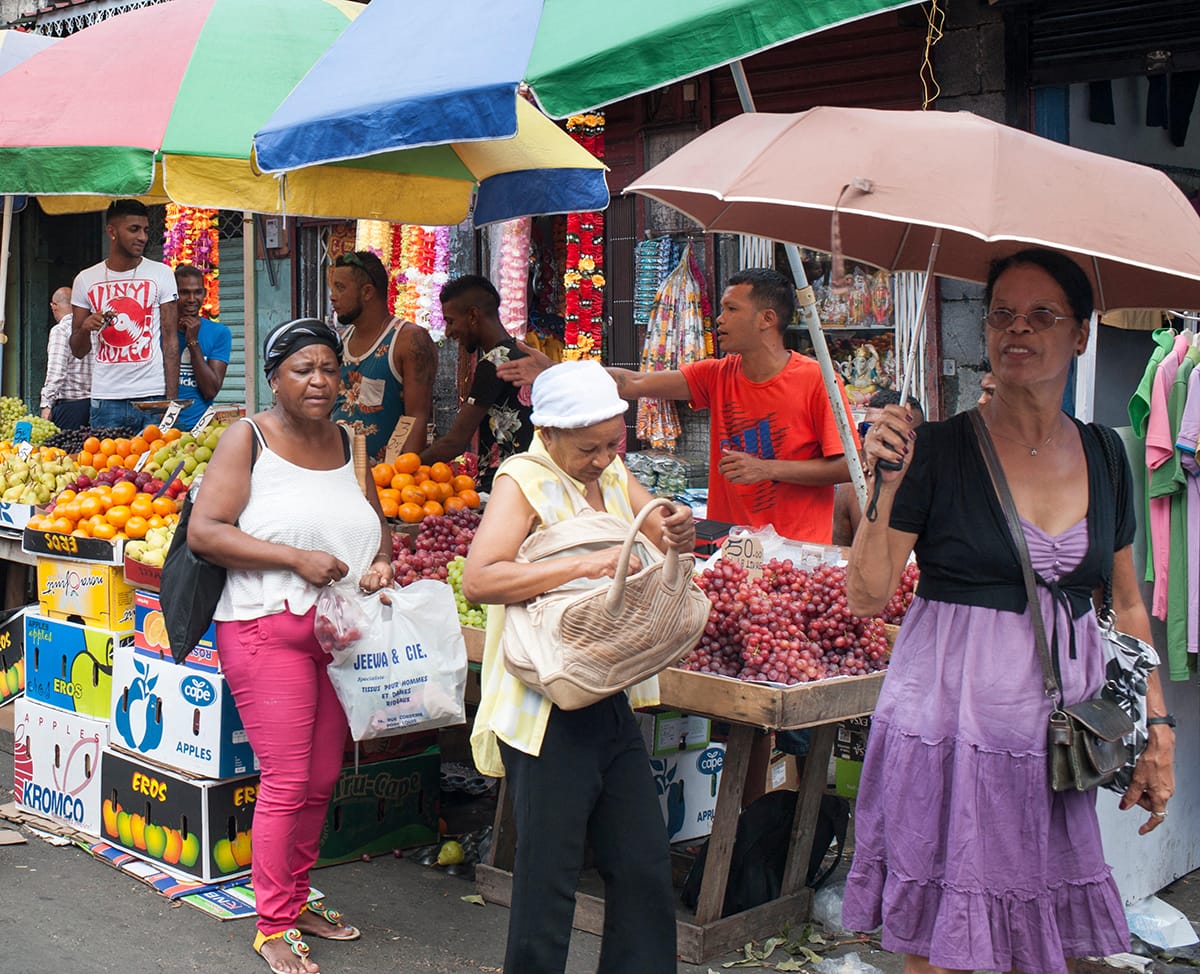
A street market in Port Louis, Mauritius, 2016. Eric Nathan/Alamy.
More than 5,000 km separate Singapore and Mauritius, an island nation in the Indian Ocean off the southeastern coast of Africa. Yet the two island nations have more in common than their geographical separation might suggest. Almost three times the size of Singapore, Mauritius is another former British colony whose diverse cultures and languages have been shaped by centuries of trade, migration and encounters between East and West.
The similarities between the two islands extend beyond these broad historical parallels. In August 1979, Prime Minister Lee Kuan Yew made a three-day visit to Mauritius following the Commonwealth Heads of Government Meeting in Lusaka, Zambia. Accompanying him were three journalists: Lam Keng Loi of Nanyang Siang Pau, Loy Teck Juan of Sin Chew Jit Poh and Seah Chiang Nee of the Straits Times. There, Lee encountered a multilingual society that offered a striking illustration of the difficulties of mastering multiple languages – a challenge that also confronted Singapore.1
Describing his experience in Mauritius in his National Day Rally speech that year, Lee declared: “It was a revelation to me.”2 His observations from the trip would feature in his arguments for the Promote the Use of Mandarin Campaign, better known today as the Speak Mandarin Campaign, which he officially launched on 7 September 1979, less than a month after his visit.3
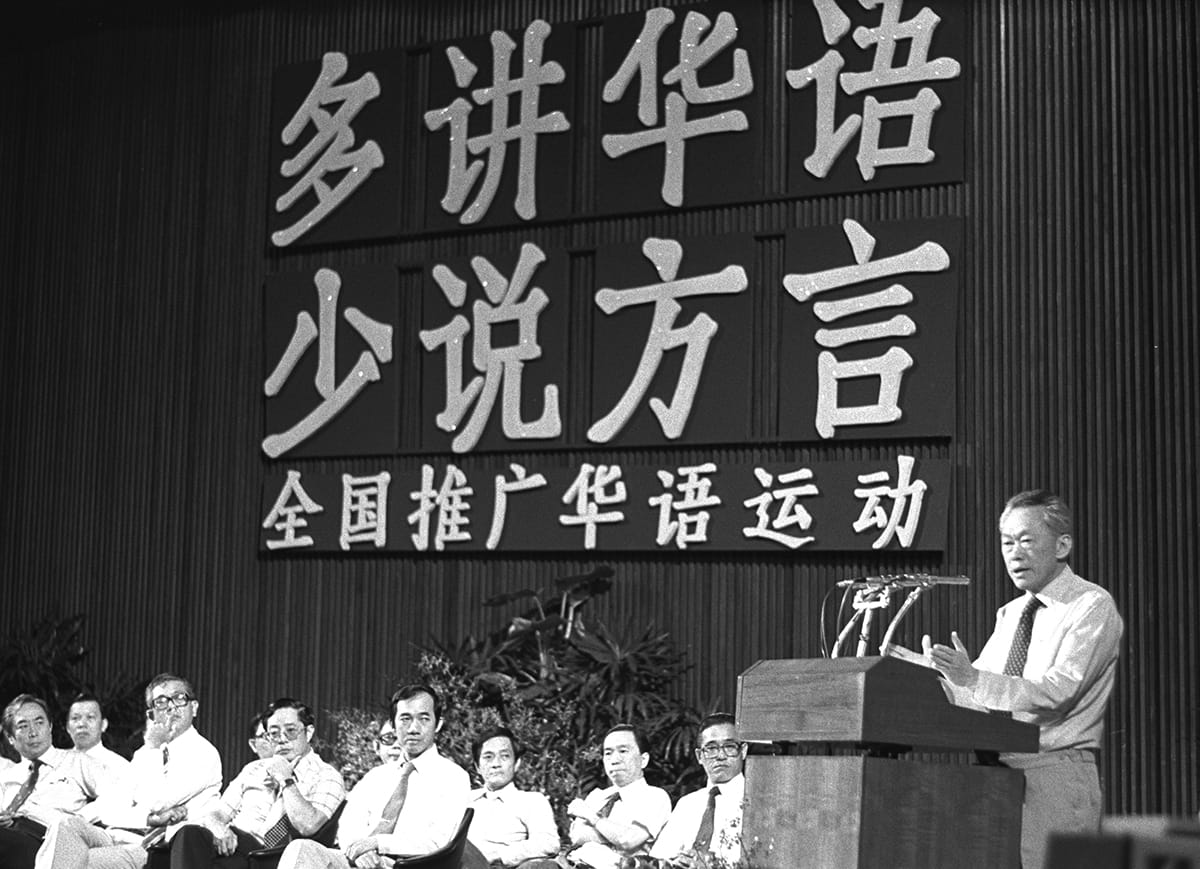
Prime Minister Lee Kuan Yew speaking at the launch of the Speak Mandarin Campaign at the Singapore Conference Hall on 7 September 1979. Ministry of Information and the Arts Collection, courtesy of National Archives of Singapore (Media - Image No. 19980002275 - 0028).
A Babel of Languages
Like Singapore, Mauritius is a multiracial and multicultural society. Of its approximately 1.2 million inhabitants today, around two-thirds are Indo-Mauritian, about a fourth are Creole, while smaller proportions are of Chinese and Franco-Mauritian descent.4 And as is the case in Singapore, this multiculturalism owes much to the island’s historically strategic location.
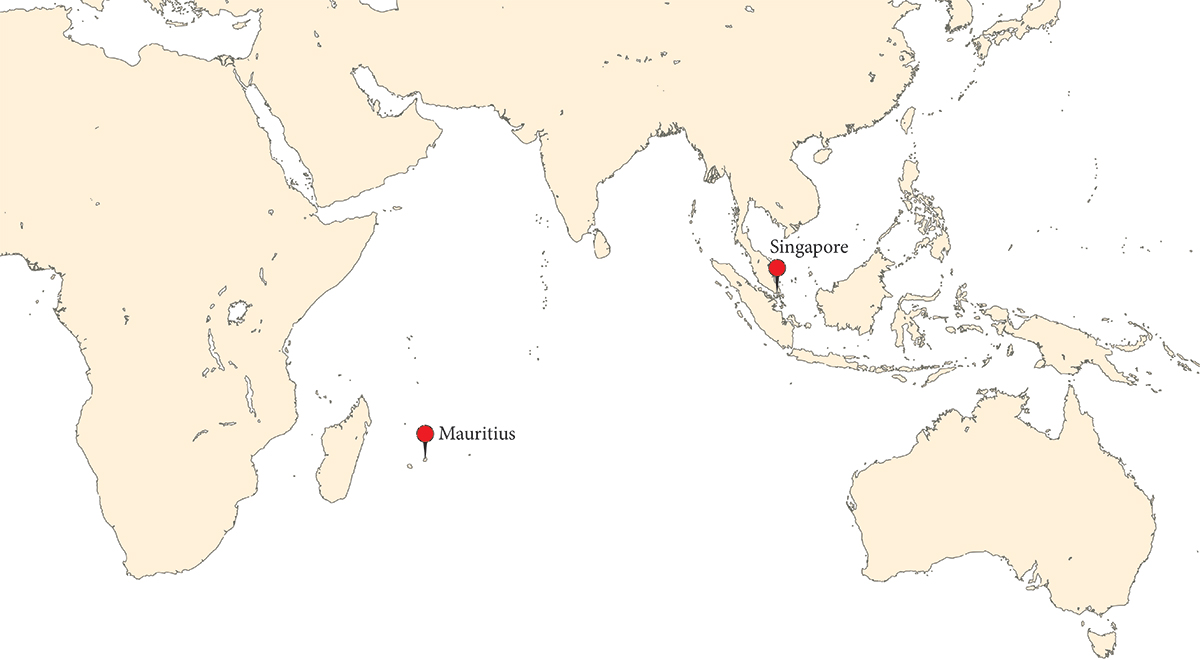
Mauritius is an island nation in the Indian Ocean located about 5,585 km away from Singapore. Like Singapore, the people of Mauritius are diverse in ethnicity, culture, language and faith.
It was only under the Dutch – who first arrived in 1598 and began settlement around 1638 – that the island began to be populated when the Vereenigde Oostindische Compagnie, or Dutch East India Company, transported colonists and enslaved labourers to Mauritius, primarily for the harvesting of ebony wood.6 In 1715, five years after Dutch withdrawal, the French took possession of the island and brought over more enslaved labourers – mostly from Madagascar, Mozambique and elsewhere in East Africa – mainly to develop its sugarcane industry which had been established by the Dutch.7
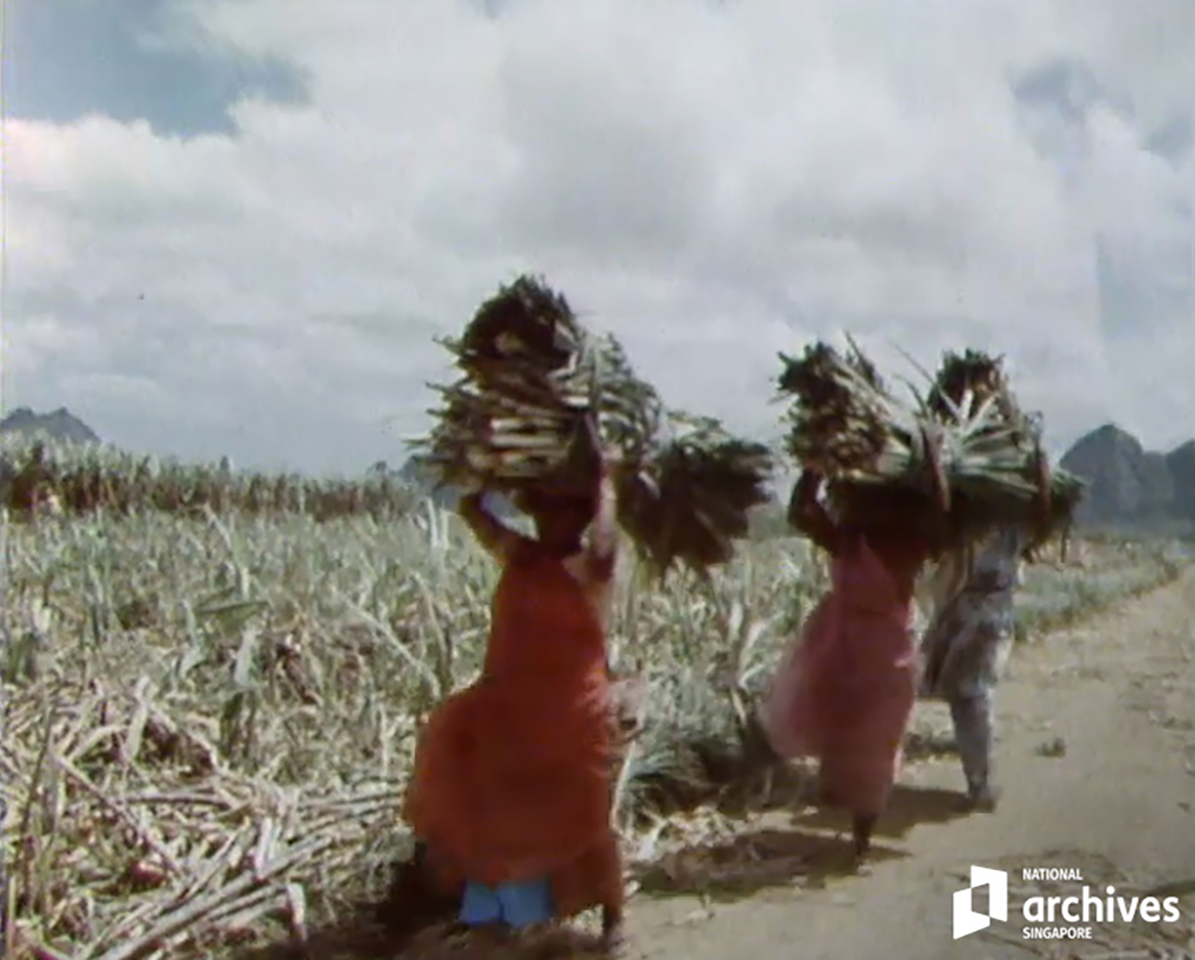
Three plantation workers carrying bundles of sugarcane over their heads as seen in the documentary, Mauritius and Luxembourg – A Language Profile, aired during the televised discussion between Prime Minister Lee Kuan Yew and the three journalists on language competence and multilingual societies on 20 November 1979. The sugarcane industry in Mauritius was originally introduced by the Dutch but was later developed on a commercial scale by the French. Courtesy of Mediacorp Pte Ltd and National Archives of Singapore (Accession no. 1997001802).
Situated at the crossroads of Africa, Asia and the Middle East, Mauritius has attracted a succession of travellers, explorers and colonisers over the centuries. Historical evidence suggests that the island was visited by Arab traders as early as the 10th century. While it served as a port of call for the Portuguese in the early 16th century, it remained uninhabited during this period.5
The demographic composition of the island would continue to evolve under the British, who took over in 1810 after defeating the French in a fierce naval battle. In the 1820s, the British began experimenting with bringing in indentured labourers, mainly from India, to sustain the plantation economy. This migration intensified following the abolition of slavery in Mauritius in 1835, as plantation owners increasingly relied on indentured labour.8
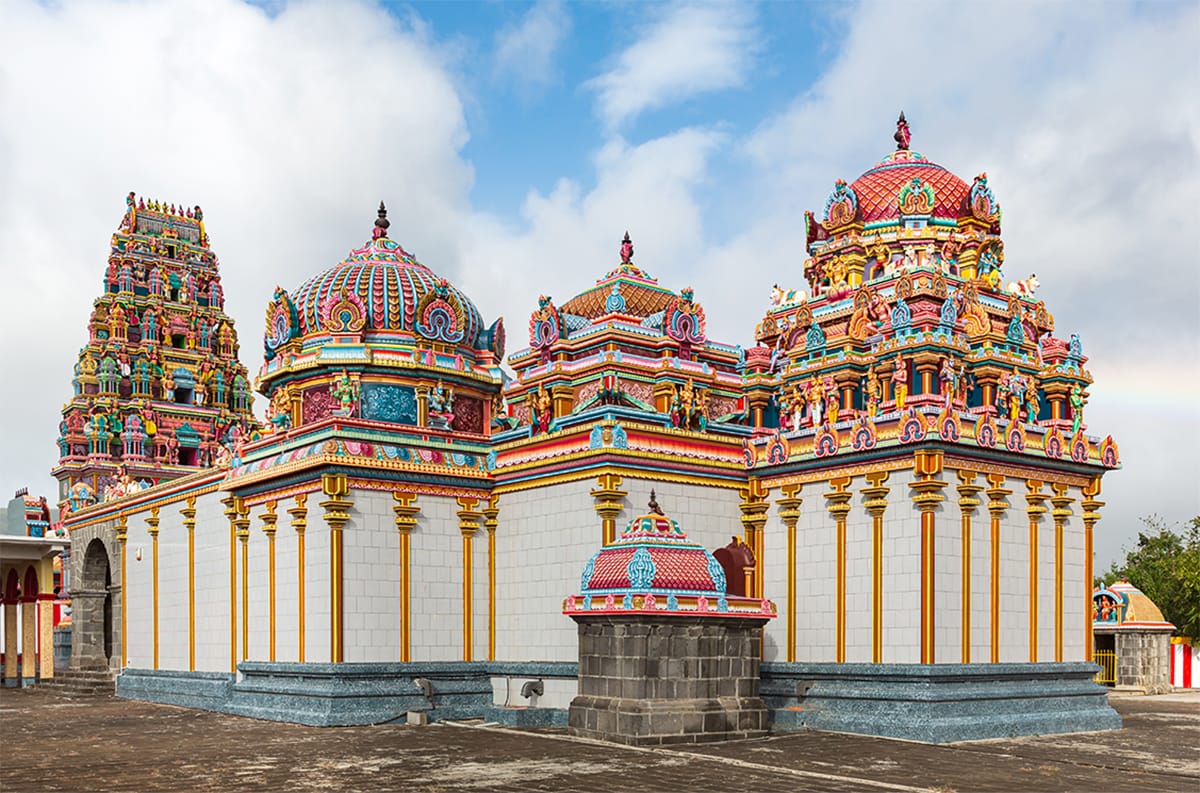

Similarly, the contemporary contours of Singapore’s population were largely shaped by British colonialism, under which “demand for labour in the public works and agricultural plantations” had engendered “large and sustained immigration” from China, the Indian subcontinent and the Dutch East Indies.9 Both island states thus faced a similar issue after independence from the British in the 1960s. With a highly heterogeneous population – composed largely of communities of diverse migrant origins and linguistic traditions – how would people communicate? What should the national language be?
Here, the Mauritian case offered answers that Singapore did not have at the time. A hybrid language had developed on the island known as Creole, which was already widely spoken by the time of its independence in 1968. Creole served as a lingua franca of sorts for the island’s inhabitants even as they continued to use a multitude of languages in different settings. A legacy of French colonial rule, Mauritian Creole is a French-based creole that developed in the multilingual environment of colonial Mauritius and subsequently incorporated vocabulary from African, Malagasy, Indian and English sources.

Mauritian dailies in a multitude of languages as seen in the documentary, Mauritius and Luxembourg – A Language Profile, aired during the televised discussion between Prime Minister Lee Kuan Yew and the three journalists on language competence and multi-lingual societies on 20 November 1979. Courtesy of Mediacorp Pte Ltd and National Archives of Singapore (Accession no. 1997001802).
The development of Creole was facilitated by one of the French surrender clauses, which allowed the continued use of the French language under British rule.10 Creole was widely spoken across Mauritius, and during the 1970s and early 1980s, there were campaigns by Mauritian intellectuals and political activists to recognise it as a national language.11
In Singapore, Lee sensed that interactions between people of different linguistic backgrounds would similarly lead to the emergence of some shared, hybrid language. This was particularly so as more of the population moved into Housing and Development Board flats throughout the 1970s where, in Lee’s words, “our neighbours do not speak what we are speaking at home”. Lee further remarked: “Out of this interaction, some Singapore patois will emerge. Before the war and immediately after the war, that patois was bazaar Malay. After the war, particularly after Chinese education acquired larger numbers of students, that patois became more and more Singapore Hokkien, not Amoy Hokkien, not standard Hokkien but Singapore Hokkien with Malay words, English words – a Singapore patois.”12
Mauritius offered much food for thought regarding the future of language in Singapore. In his oral history interview with the National Archives of Singapore in 2022, Nanyang Siang Pau’s Lam Keng Loi recalled that it was only at the end of the Commonwealth meeting that Lee made a last-minute decision to visit Mauritius.13 Mauritian newspapers reported that Lee’s visit was meant to “spark off a political awakening among the island’s leaders to the realisation that Mauritius needed a strong government, proper economic direction and a metamorphosis of work ethics”.14 Lee, perhaps, also had other items on his agenda.
Masters of None
Stepping into Mauritius, Lam said, gave him an uncanny sense of being back in Singapore (“你一进去,去到毛里求斯,你就有那种感觉,就很像新加坡”). The intermingling of English, French and Creole, in particular, reminded Lam of the courts on South Bridge Road in Singapore, where one could often hear Hokkien, Malay, English and Mandarin all at the same time.15
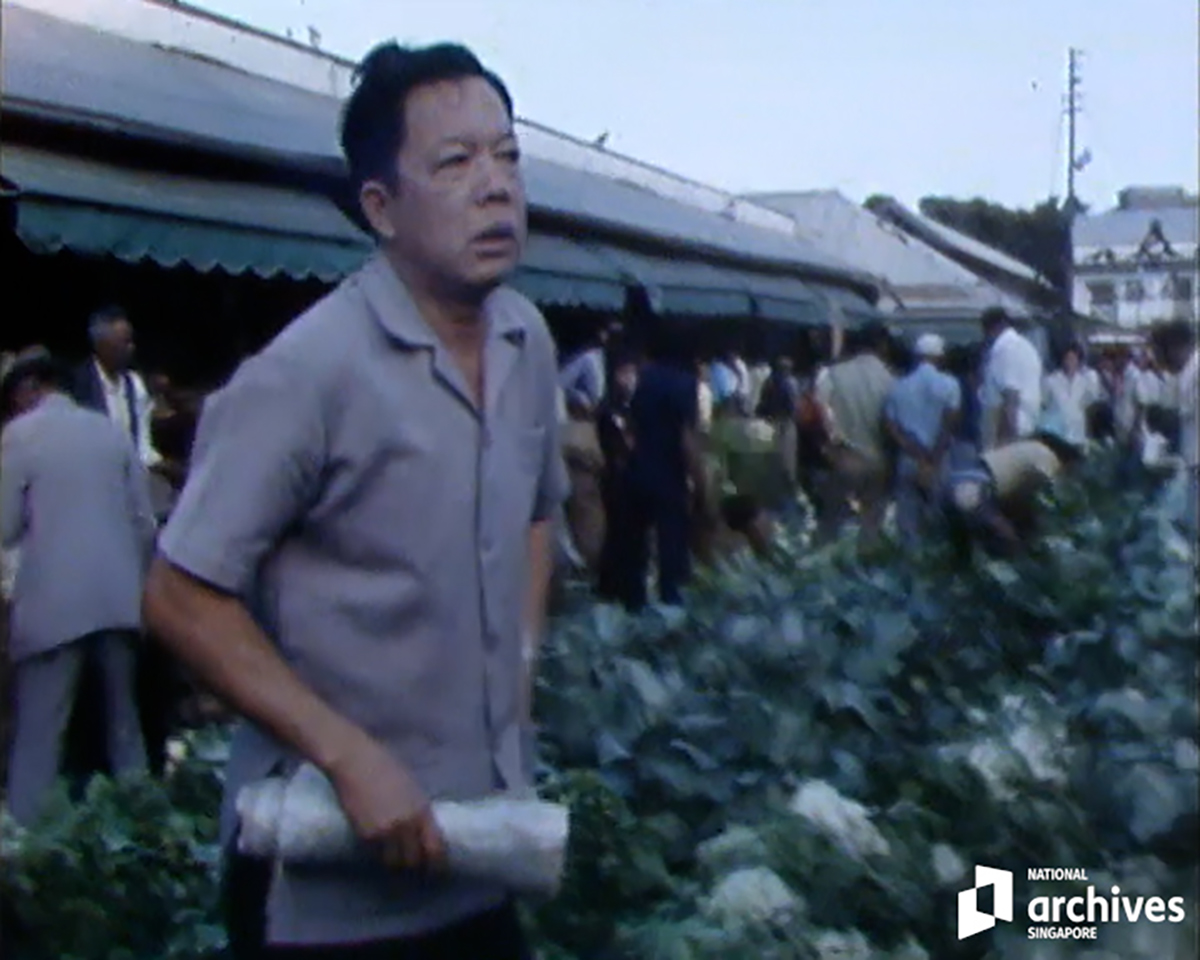
A Mauritian man, likely of Chinese origin, having an exchange in the marketplace where Mauritian Creole serves as the lingua franca. This is a still from the documentary, Mauritius and Luxembourg – A Language Profile, aired during the televised discussion between Prime Minister Lee Kuan Yew and the three journalists on language competence and multilingual societies on 20 November 1979. Courtesy of Mediacorp Pte Ltd and National Archives of Singapore (Accession no. 1997001802).
As in Singapore, a whole array of languages could be seen and heard across Mauritius, in both private and public settings. A 1978 account of Mauritius, presented at a Commonwealth broadcasting conference, captured this linguistic diversity: “Road signs are in English, newspapers are in French, Hindi gets extensive coverage on radio and television. Tamil, Telugu, Urdu and Bhojpuri also make frequent appearances. Prices in some shops are notched up in Chinese.”16
While Mauritians appeared to speak many languages, and often claimed to be bilingual or trilingual, their proficiency in each language varied widely. This became clear as Lee and the journalists began to meet Mauritian diplomats, who offered them an insider’s view of the linguistic situation of the republic. What they discovered, in the words of Seah Chiang Nee of the Straits Times, was that even those who were “high up in the government and well educated” found the overabundance of languages in Mauritius “punishing to the human mind”.17
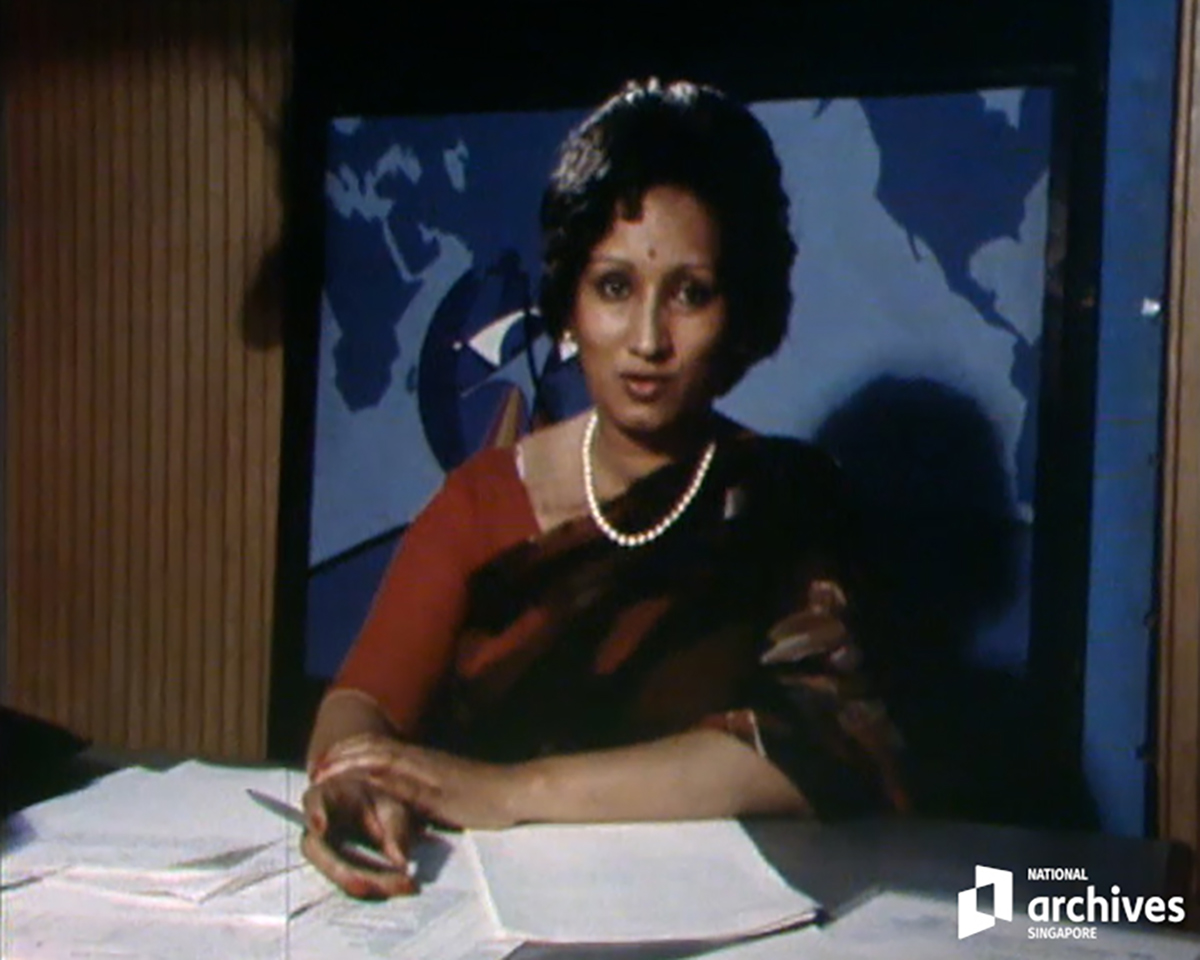
A newscaster reading the news for the Mauritius Broadcasting Corporation, which broadcast programmes in 12 languages. This is a still from the documentary, Mauritius and Luxembourg – A Language Profile, aired during the televised discussion between Prime Minister Lee Kuan Yew and the three journalists on language competence and multi-lingual societies on 20 November 1979. Courtesy of Mediacorp Pte Ltd. and National Archives of Singapore (Accession no. 1997001802).
A similar assessment was made by Lee, who had met the acting Governor-General of Mauritius, Dayendranath Burrenchobay. At a televised panel discussion titled “Language Competence and Multi-Lingual Societies”, featuring Lee and the three journalists on 20 November 1979, Lee described Burrenchobay as “a very able, very cultivated man”. “[Burrenchobay] is an engineer by training, an outstanding intellect educated at the Imperial College, London, PhD; he has been a civil servant; been in charge of education.”18
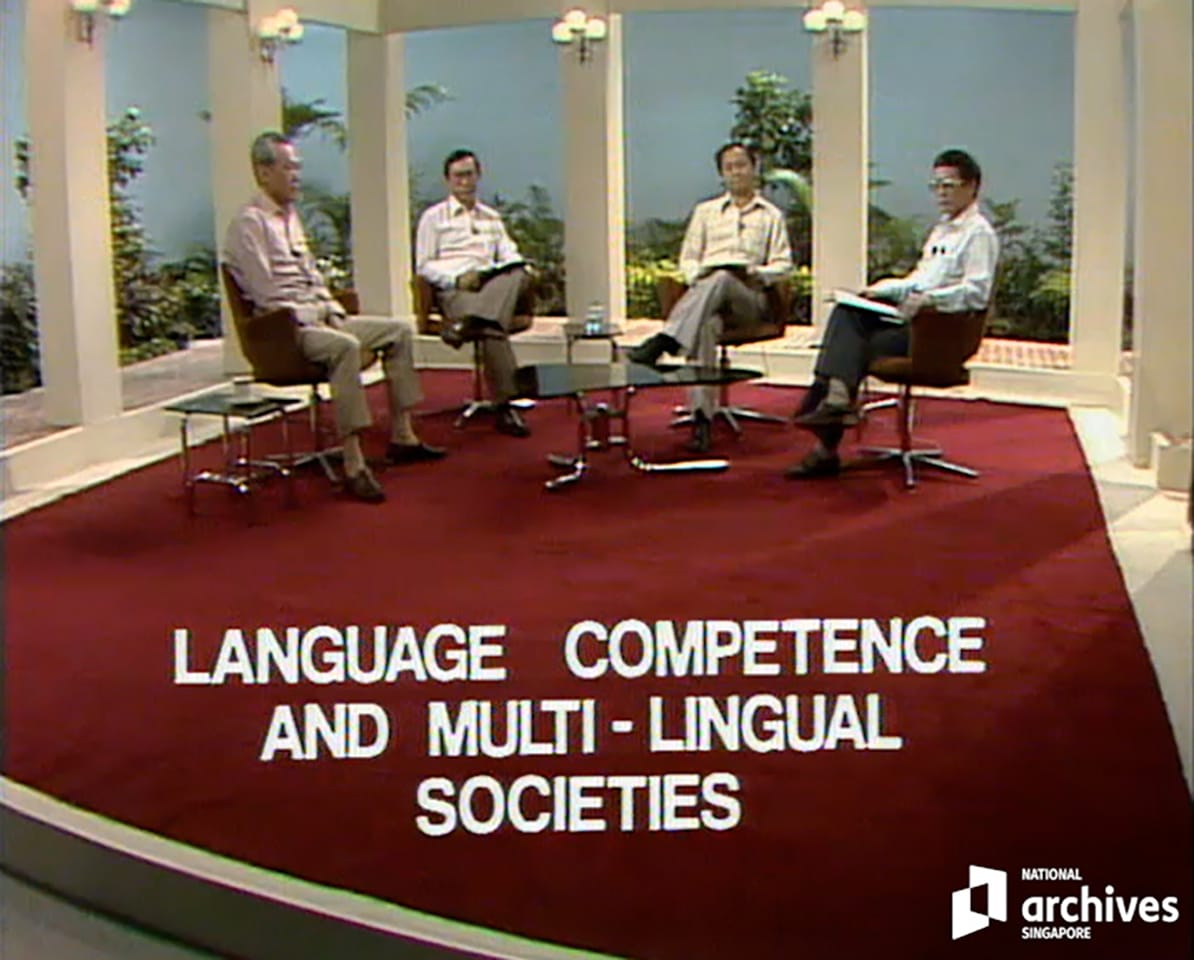
Prime Minister Lee Kuan Yew (extreme left) and the three journalists who accompanied him to Mauritius in the televised panel discussion aired on 20 November 1979 about language competence and multilingual societies. Courtesy of Mediacorp Pte Ltd and National Archives of Singapore (Accession no. 1997002179).
Burrenchobay also admitted to Lee the difficulties of maintaining proficiency across languages. Lee recalled Burrenchobay telling him: “My English I would rate at 70, my French I would rate at 60, my Creole I would rate at 50. […] When I’m staying in England for any length of time, then my English would go up to 90 or 85 and my French and my Creole would go down. But if I were to stay in Paris, then my French would go up to 75 or 80 and my English would go down.”19
If multilingualism imposed a burden even on highly educated Mauritians, the challenges appeared greater still for Mauritian students. These difficulties were explored in a documentary titled Mauritius and Luxembourg – A Language Profile, produced by Radio and Television Singapore and broadcast during the panel discussion, which discussed the educational challenges of multilingualism faced by the two titular countries, both of which Lee had visited earlier in 1979.20
Beginning with the case of Luxembourg, the documentary observes that “[t]he young Luxembourger starts life with the educational strain of having to acquire knowledge of at least four languages – German, French, English, and the native dialect Letzeburgisch”.21 The documentary then turns to Mauritius where students appeared to face similar challenges. As Mauritius’s Minister for Education and Cultural Affairs Khersingh Jagatsingh explained, the government had undertaken to teach the “oriental languages” of various ethnic groups on the island in addition to English and French, thus offering lessons in no fewer than 10 languages, including Hindi, Tamil, Urdu, Mandarin and Arabic.22
The effort to promote so many languages was not without obstacles. Phan Phouc, a teacher interviewed for the documentary, noted the challenges of teaching Mandarin to students in Mauritius: “They don’t have the opportunity to practise it because […] 50 percent of the pupils speak Hakka and 50 percent speak Creole with their parents at home,” she said.23 When Seah Chiang Nee asked Loy Teck Juan about the level of Mandarin being taught in the documentary, the latter simply remarked that “it is very low”.24
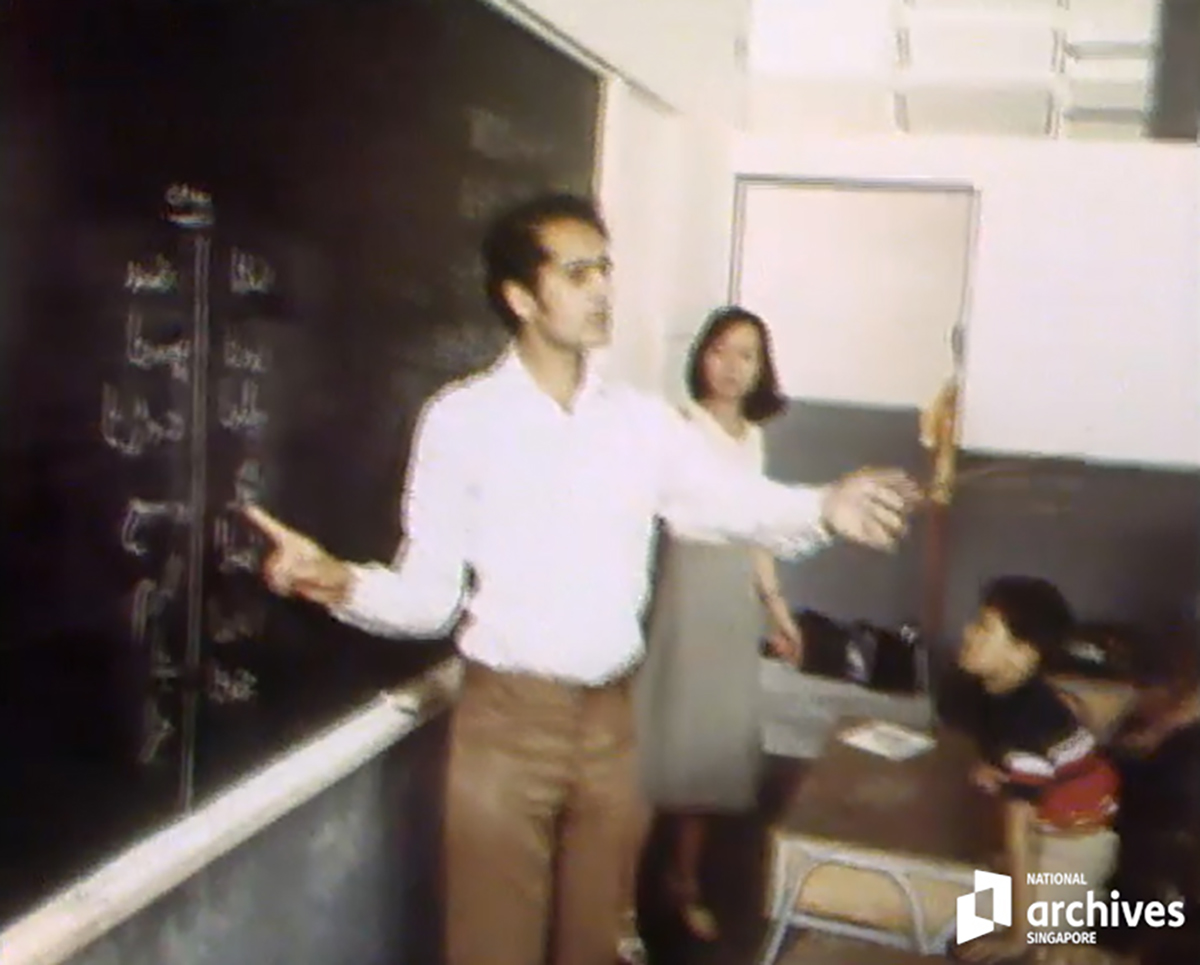
An Urdu teacher and a Mandarin teacher sharing the same classroom as seen in the documentary, Mauritius and Luxembourg – A Language Profile, aired during the televised discussion between Prime Minister Lee Kuan Yew and the three journalists on language competence and multi-lingual societies on 20 November 1979. Courtesy of Mediacorp Pte Ltd. and National Archives of Singapore (Accession no. 1997001802).
The journalists who travelled with Lee took home lessons about the challenges of multilingualism, although these were framed in rather harsh terms. “The cultural shortcomings of the Mauritian people can serve as a mirror for us,” Lam Keng Loi wrote in a Nanyang Siang Pau article. “We must make sure not to repeat the same mistakes. Singaporeans are practical people, and the shortcomings of the Mauritians can alert us to our own and allow us to make timely improvements.” (“毛里求斯人民的文化通病,正好作为我们的借镜,我们绝对不应该重蹈覆辙,新加坡人是着重实际的,毛里求斯的毛病,可以点醒我们,让我们及时改进。”)25
Languages, Dialects and Creoles
Just a few weeks after the Mauritius trip, Lee launched the Promote the Use of Mandarin Campaign on 7 September 1979. It is unlikely that the trip was the catalyst given that Radio and Television Singapore had banned television and radio advertisements in dialect a year earlier.26
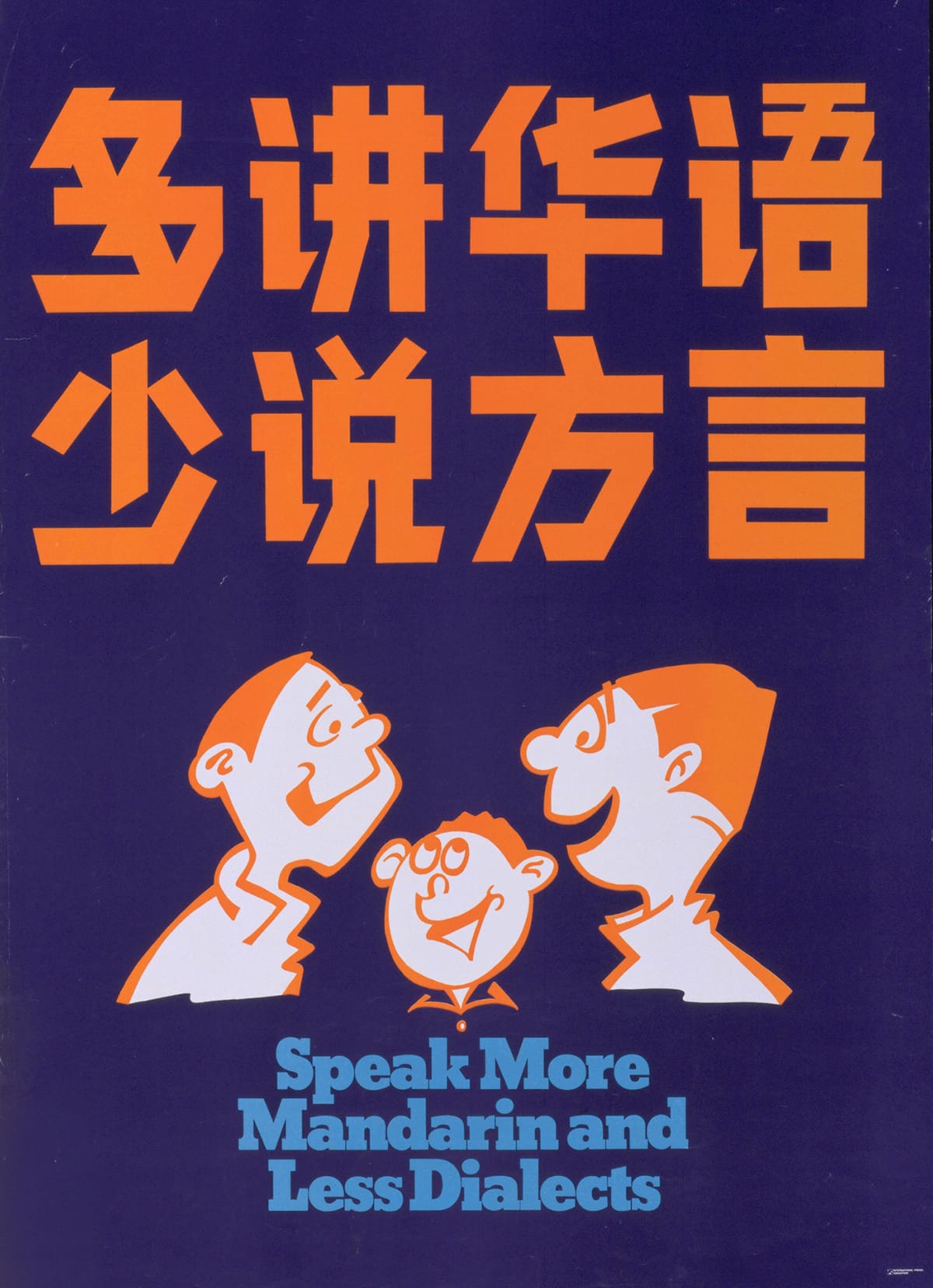
Poster for the inaugural year of Promote the Use of Mandarin Campaign (now known as Speak Mandarin Campaign), launched on 7 September 1979. Ministry of Culture Collection, courtesy of National Archives of Singapore (Media - Image No. 19990005265 - 0001).
In debates surrounding the campaign, the situation in Mauritius was used to demonstrate the difficulties of learning too many languages at once, and to show that the widespread use of Chinese dialects could potentially interfere with the mastery of English and standard Mandarin. Mauritian Creole was also a real-world case study that allowed Lee and the journalists to debate the merits and drawbacks of discouraging the use of Chinese dialects in Singapore.
Seah pointed out that both Creole and Chinese dialects shared the same advantage: they were arguably the most natural forms of language to many in Mauritius and Singapore respectively. Since there were already large communities in which they were spoken and used, there would be few emotional or psychological barriers to learning them. As Seah noted, “I think the argument, in fact, of the Mauritians is that, well, in Creole, we have in fact a language which we can use, you know, among 90 percent of our people, and it doesn’t really sort of pose that much of a mental burden on our people.” He reasoned that a similar case might be made about dialect use in Singapore where “unlike the other languages which we saw in the film, we don’t have to go to school to study them; we pick them up as a natural process”.27
Conversely, it was argued that Creole and Chinese dialects also shared the same disadvantages: they were rarely understood outside of the local context and were therefore seen as hindering, rather than facilitating, international economic and cultural engagement. Such concerns were also expressed within Mauritius’s educational establishment. In response to calls to make Creole a national language, Ramesh Ramdoyal, Deputy Director of the Institute of Education, noted in the documentary that giving “official preponderance” to Creole would end up “cutting [Mauritius] away from the main trends of world life” and hinder Mauritians from “open[ing] up out to the world”.28
Similarly, in Lee’s view, the promotion of Mandarin would ensure that for Chinese Singaporeans, “at least we are using a language of some international value and not Mauritian Creole or Jamaican pidgin or our own special particular sub-language”.29 During the panel discussion, Lee and the journalists had highlighted the case of Mauritian Creole as support for their arguments.
A Life of Their Own
For Lee and the three journalists, the trip to Mauritius seemed to affirm the view that the government had to play a more active role in streamlining language use in Singapore. While this was based on a belief that language proficiency is a zero-sum game, which should not be taken as a foregone conclusion, there was a desire to avoid what they perceived as the multilingual confusion of the relatively laissez-faire African republic, as well as to steer language policy in the same outward-looking direction as the economy. The Speak Mandarin Campaign, now in its 47th year, continues to encourage the use of Mandarin among the Chinese community in Singapore.30
Another language campaign, the Speak Good English Movement, was launched in 2000 by Prime Minister Goh Chok Tong to discourage the use of Singlish and to encourage Singaporeans to speak the kind of English that would, for him, offer “a distinct advantage in terms of doing business and communicating with the world”.31
Interestingly, even as Mauritius was used as a cautionary tale for Singapore in the language debates of the late 1970s, the linguistic landscape in Singapore today resembles Mauritius in a way. Singlish is a distinctive variety of English that draws on vocabulary and grammatical features from Malay, Tamil, Mandarin and Chinese dialects. It is widely spoken by Singaporeans in everyday life.
Singlish, like Mauritian Creole, has been increasingly seen as an indispensable marker of national identity. In a 2024 study on race, religion and language by the Institute of Policy Studies, more than half of the 4,000 respondents agreed that “Singlish gives Singaporeans a sense of identity, and that it is an important part of culture that should not be lost”.32
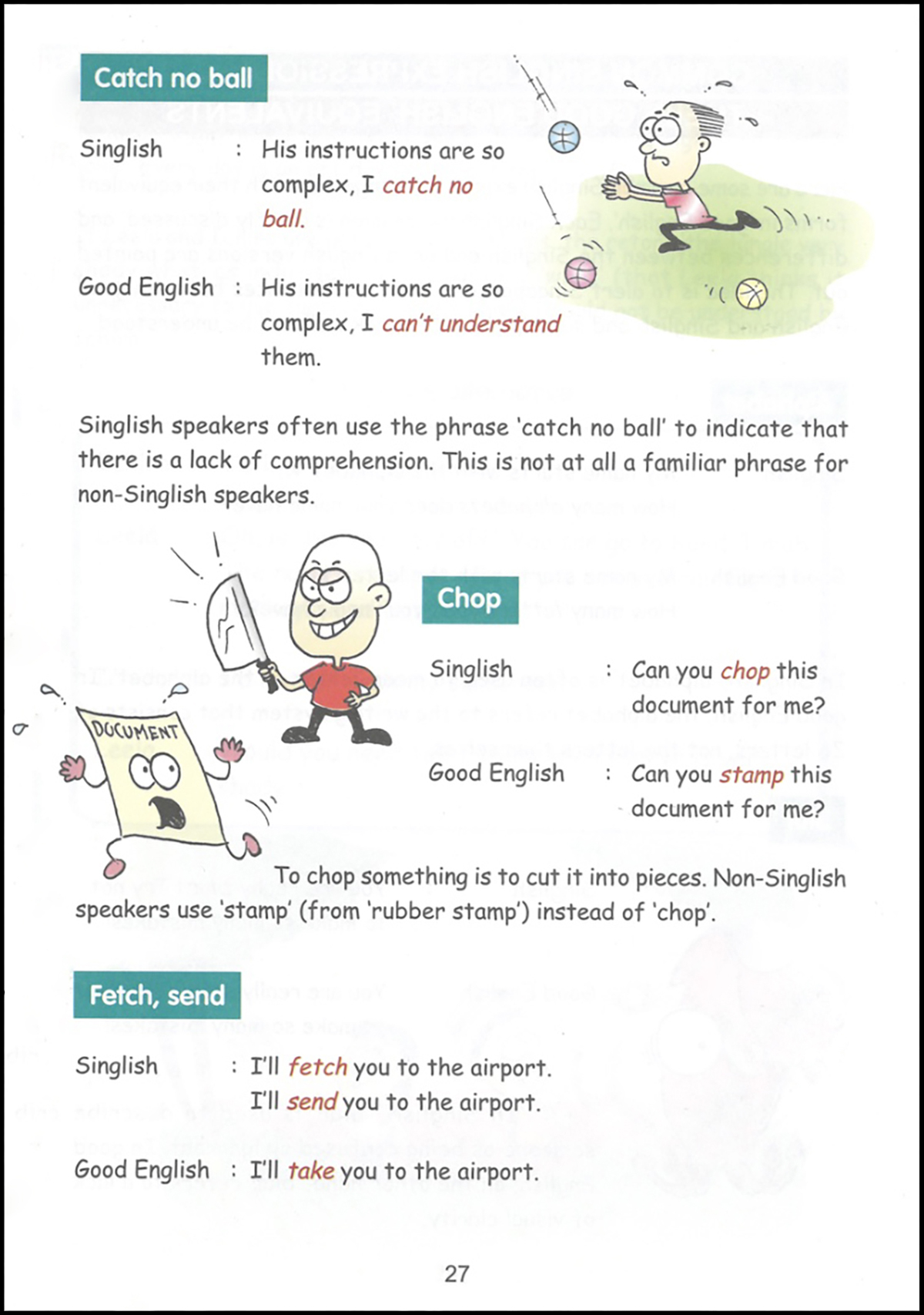
A page from a publication by the Speak Good English Movement explaining Singlish expressions while offering alternatives in standard English. Image reproduced from "Speak Well. Be Understood" (Singapore: The Speak Good English Movement Committee, 2000), 27. (From National Library Singapore, call no. RSING 427.95957 SPE).
Nearly half a century after Lee’s visit to Mauritius, the linguistic histories of the two islands offer a more complicated lesson. The Speak Mandarin Campaign and the Speak Good English Movement reflect sustained efforts by the Singapore government to shape how languages are used, but the persistence and popularity of Singlish also reveal the limits of such efforts. Like Mauritian Creole, Singlish reminds us that language is shaped not only by policy, but also by the communities that speak it, and can ultimately take on a life of its own.
About the Author
Caleb Leow is an Associate Librarian with the National Library of Singapore, who works with the Singapore and Southeast Asia collections. His responsibilities include collection and content development as well as providing reference and research services.
End Notes
1 “Language Forum on TV Tonight (opens in new tab),” Straits Times, 23 November 1979, 1. (From NewspaperSG)
2 Lee Kuan Yew, National Day Rally (Repeat Telecast) (opens in new tab), 21 August 1979, video, 43:36. (From National Archives of Singapore, accession no. 1997002308), 04:08.
3 “Lee to Launch ‘Use Mandarin’ Campaign (opens in new tab),” Straits Times, 7 September 1979, 1; Xie Lizhen 谢丽贞, “Duo jiang huayu you shenme haochu” “多讲华语有什么好处? (opens in new tab)” [What are the benefits of speaking more Mandarin?], 星洲日报 Sin Chew Jit Poh, 4 October 1979, 30. (From NewspaperSG)
4 L.W. Bowman, “Mauritius,” Encyclopedia Britannica, 28 August 2026, https://www.britannica.com/place/Mauritius (opens in new tab). While “Creole” remains a contested category in Mauritius, Encyclopedia Britannica glosses the term as referring to those “of mixed French and African descent”.
5 Denis Piat, Mauritius on the Spice Route, 1598–1810 (opens in new tab) (Singapore: Editions Didier Millet, 2010), 21, 25. (From National Library of Singapore, call no. R 969.8201 PIA)
6 Piat, Mauritius on the Spice Route, 1598–1810 (opens in new tab), 31.
7 William F.S. Miles, “The Creole Malaise in Mauritius,” African Affairs 98, no. 391 (April 1999), 213, https://doi.org/10.1093/oxfordjournals.afraf.a008008 (opens in new tab); Ulbe Bosma, “The Global Detour of Cane Sugar from Plantation Island to Sugarlandia,” in Colonialism, Institutional Change, and Shifts in Global Labour Relations, eds. Karin Hofmeester and Pim de Zwart (Amsterdam: Amsterdam University Press. 2018), 114, https://doi.org/10.5117/9789462984363/CH04 (opens in new tab).
8 Stefan Gua, “Mauritius at a Geopolitical Crossroads,” Monthly Review 77, no. 9 (February 2026), 39, https://doi.org/10.14452/mr-077-09-2026-02_4 (opens in new tab).
9 Saw Swee Hock, The Population of Singapore (opens in new tab) (Singapore: Institute of Southeast Asian Studies, 1999), 24. (From National Library of Singapore, call no. RSING 304.6095957 SAW)
10 Piat, Mauritius on the Spice Route, 1598–1810 (opens in new tab), 13–15.
11 William F.S. Miles, “The Creole Malaise in Mauritius”; Patrick Eisenlohr, “Creole Publics: Language, Cultural Citizenship, and the Spread of the Nation in Mauritius,” Comparative Studies in Society and History 49, no. 4 (October 2007), 980, https://doi.org/10.1017/S0010417507000825 (opens in new tab)
12 Radio and Television Singapore, Language Competence and Multi-Lingual Societies (2) – A Panel Discussion with Prime Minister Lee Kuan Yew (opens in new tab), 20 November 1979, video, 1:06:46. (From National Archives of Singapore, accession no. 1997002179), 13:33.
13 Lam Keng Loi, oral history interview by Tang Ai Wei, 14 July 2022, transcript (opens in new tab) and MP3 audio, Reel/Disc 1 of 2. (From National Archives of Singapore, accession no. E001149 (opens in new tab)), 9.
14 Seah Chiang Nee, “Mauritius Has Reached the Crossroads That Will Determine Its Future (opens in new tab),” Straits Times, 25 August 1979, 13. (From NewspaperSG)
15 Lam Keng Loi (opens in new tab), interview, Reel/Disc 1 of 2, 19.
16 Radio and Television Singapore, Portrait of an Island (opens in new tab), 15 November 1978, video, 23:54. (From National Archives of Singapore, accession no. 1997023666), 06:15.
17 Seah Chiang Nee, “Speakers of Many Tongues But Really Masters of None (opens in new tab),” Straits Times, 6 November 1979, 18. (From NewspaperSG)
18 Radio and Television Singapore, Language Competence and Multi-Lingual Societies (2) (opens in new tab), 59:21.
19 Radio and Television Singapore, Language Competence and Multi-Lingual Societies (2) (opens in new tab), 1:00:21.
20 “Lee and Party Off Today (opens in new tab),” Straits Times, 8 June 1979, 1. (From NewspaperSG)
21 Radio and Television Singapore, Language Competence and Multi-Lingual Societies (1) - A Panel Discussion with Prime Minister Lee Kuan Yew (opens in new tab), 20 November 1979, video, 31:37. (From National Archives of Singapore, accession no. 1997001802), 08:47.
22 Radio and Television Singapore, Language Competence and Multi-Lingual Societies (1) (opens in new tab), 15:53.
23 Radio and Television Singapore, Language Competence and Multi-Lingual Societies (1) (opens in new tab), 21:13.
24 Radio and Television Singapore, Language Competence and Multi-Lingual Societies (2) (opens in new tab), 57:31.
25 Lam Keng Loi 蓝大周, “Yuyan fuza zaocheng wenhua diluo maoliqiusi de yuyan tongbing” “语文复杂造成文化低落 毛里求斯的语文通病 (opens in new tab)” [Complications of language cause of cultural paucity: Mauritius and its linguistic shortcomings], 南洋商报 Nanyang Siang Pau, 22 August 1979, 3. (From NewspaperSG)
26 “Slow Wean from Dialects (opens in new tab),” New Nation, 27 January 1978, 8; “Dian shi tai yu diantai jinri kaishi buzai boying fangyan guanggao jin bochu cai si zhong guanfang yuwen de guanggao” “电视台与电台今日开始不再播映方言广告仅播出採四种官方语文的广告 (opens in new tab)” [TV and radio stations will stop broadcasting advertisements in dialect from today onwards, advertisements will only be broadcast in the four official languages], 南洋商报 Nanyang Siang Pau, 1 July 1978, 35. (From NewspaperSG)
27 Singapore Broadcasting Corporation, Language Competence and Multi-Lingual Societies (2) (opens in new tab), 19:00.
28 Radio and Television Singapore, Language Competence and Multi-Lingual Societies (1) (opens in new tab), 27:02.
29 Radio and Television Singapore, Language Competence and Multi-Lingual Societies (2) (opens in new tab), 18:39.
30 “About the Campaign,” Promote Mandarin Council, last updated 30 June 2026, https://www.languagecouncils.sg/mandarin/en/about (opens in new tab).
31 Goh Chok Tong, “Launch of the Speak Good English Movement (opens in new tab),” speech, Institute of Technical Education (ITE) Headquarters Auditorium, Dover Drive, 29 April 2000, transcript, Ministry of Information, Communications and the Arts. (From National Archives of Singapore, document no. 2000042904)
32 Christine Tan, “More Using Singlish in Their Daily Lives, Including at Work,” Straits Times, 25 May 2026, https://www.straitstimes.com/singapore/use-singlish-at-work-can-lah-say-more-people-in-spore-according-to-study (opens in new tab).