
Article
Multiculturalism: A Study of Plurality and Solidarity in Colonial Singapore
Topics
History
1 January 2011
This paper explores the social and linguistic history of colonial Singapore to propose a plurality-solidarity continuum as a means to study acculturation and assimilation.
By Phyllis Chew
Some foods have become such a part of everyday life in Singapore that their origins have been largely forgotten, and various races have each claimed these dishes as part of their traditional cuisines. Examples of some of these foods include sugee cake, fruit cake, pineapple tart, agar-agar, curry puff, meat patty, butter cake and kaya; these are believed to have originated from the Eurasian community (Marbeck, 2004). In a similar way, the following dishes and desserts that are part of the mainstream Malay menu, were originally Chinese: char kuay teow, tau suan, bubor terigu, mee rebus, tahu goreng and laksa. Roti prata (or roti canai in Malaysia), while an Indian derivative, is a favourite among all ethnic groups.
Yet, instead of celebrating this dynamic multiculturalism in Singapore food, Lai (2006) and Pereira (2003) note a tendency to highlight the divisive potential of race, religion and language. Many social scientists have labelled Singapore a “plural society” (Furnivall, 1956, p. 304) where people of different religions, cultures and languages “live side by side, but separately… meeting only in the market-place… mixing but not combining”. While it may be more newsworthy to focus on plurality and separateness, I will instead postulate a plurality-solidarity cline and draw from the social and linguistic history of colonial Singapore as a means to examine the extent of acculturation and assimilation that lay hidden beneath the seemingly divisive veneer of multiculturalism.
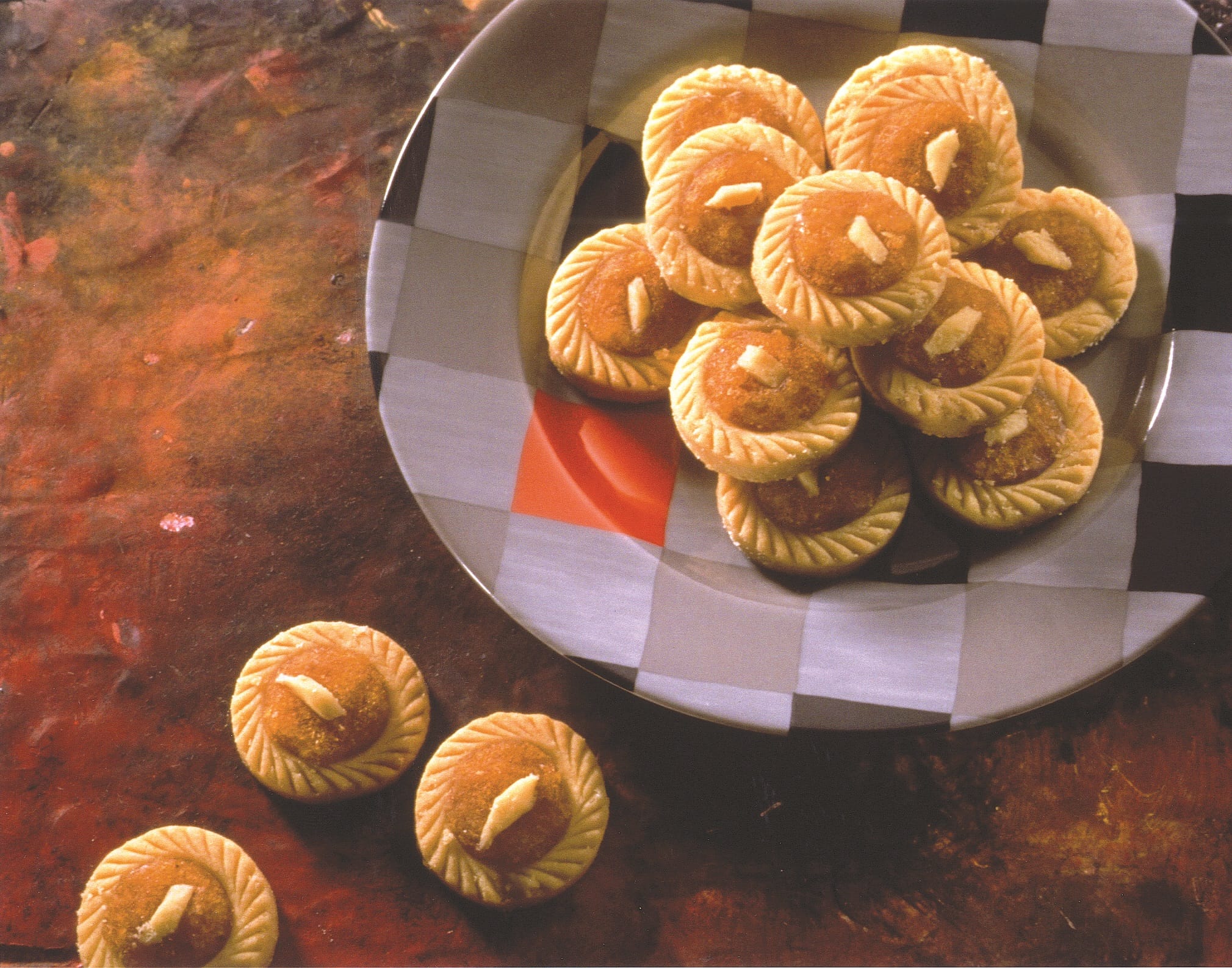
Pineapple tarts. Courtesy of Singapore Tourist Promotion Board.
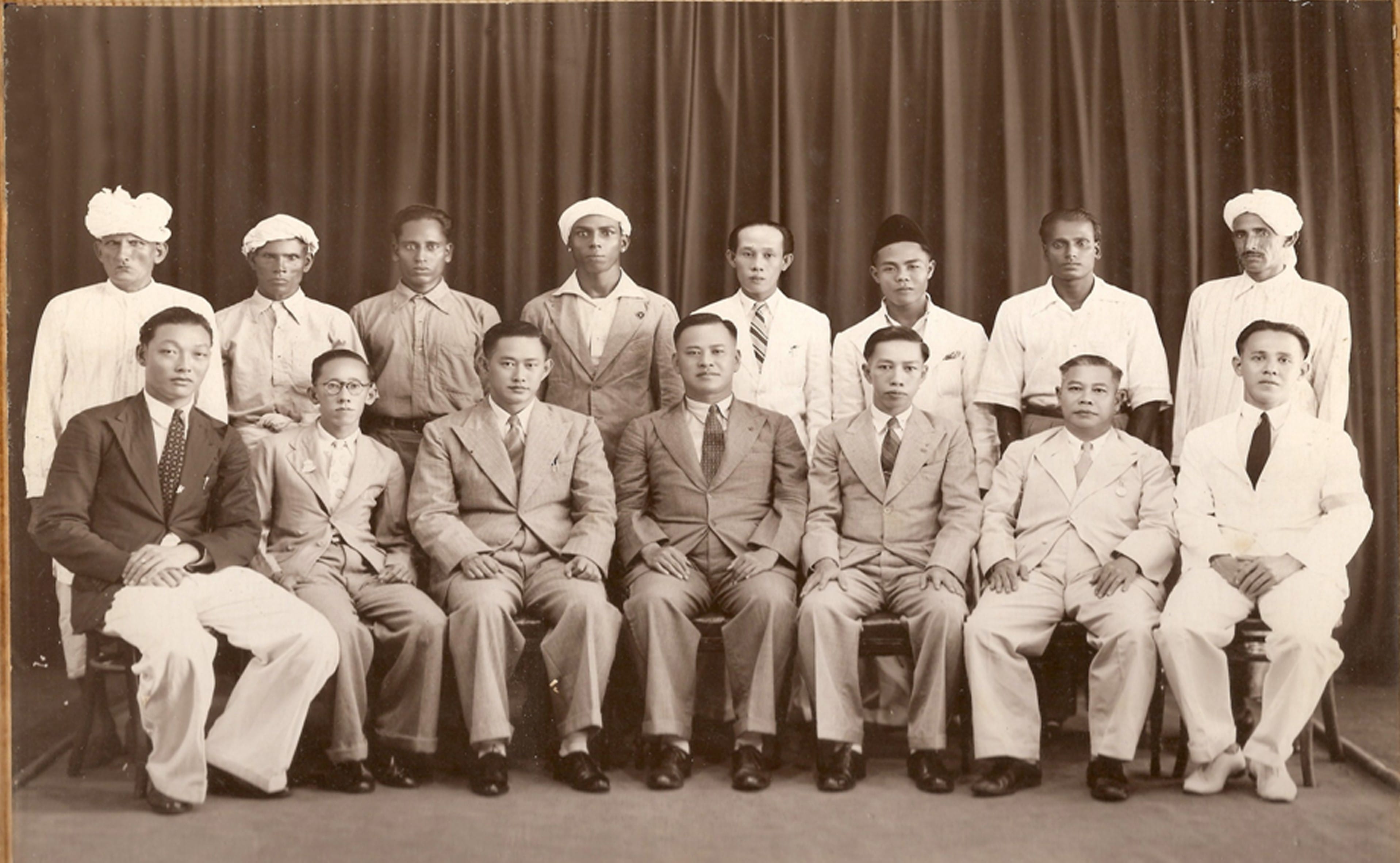
Staff of a Chinese firm, Keng Lee & Company, 1937. Note the multiracial composition of the staff, comprising Chinese, Malay and Indian people. Courtesy of Phyllis Chew.
A Three-Generation Model: The Plurality-Solidarity Cline
Our acculturation-assimilation continuum begins with plurality at one end, and solidarity at the other. While plurality conjures images of dissent and divisiveness, solidarity connotes cooperation and peaceful exchange.
Both acculturation and assimilation are degrees in the process of cultural integration. While acculturation sees cultural groups remaining as distinct entities, assimilation, which is found further along the cline, is a condition where the distinction among groups becomes indistinguishable. To illustrate, we may place a first-generation Chinese coolie (labourer) on one end of the cline and the second- or third-generation equivalent in the middle or far end of the cline. Where a newcomer is concerned, he is likely to speak in only his mother tongue, eat the cheapest of meals, and wear his ethnic (Chinese) clothes. Somewhere along the middle of the cline, we have the second or third generation, probably speaking native Malay, eating meals cooked with local ingredients such as tamarind and lemongrass, and wearing a Malayan outfit instead of traditional Chinese costume.

This simple model assumes that the newcomer and his offspring would adopt the values, behaviours and characteristics of the mainstream culture in a “straight line” progression. It also presumes that those who live in an environment for a long time tend to adapt to the dominant culture more easily than newcomers. The spoken vocabulary used may also indicate where the person is on the cline. For example, Shellabear (1913) surmised that when a Chinese man calls his father n-tia (“father” in Chinese dialect) rather than papa, he probably belongs to an earlier generation. Similarly in the Melaka Chetty community (descendants of Indian men from South India and local women from Melaka) (Thiyagaraj, 1998), it has been said that what instantly differentiates a newcomer from a member of the earlier generation would be his use of belacan (dried shrimp paste mixed with pounded chillies), belimbing (a tiny acidic fruit) and chilli padi (tiny hot chillies) in his cooking!
The speed of transculturation of a new migrant is affected by personal and sociopolitical variables. For example, when a penniless migrant arrives in colonial Singapore, he would naturally seek out people who can speak his native language and who can help him understand the “strange” culture around him. He is likely to stay in an enclave of linguistically similar people and, for survival, may be tempted to join clans or secret societies to alleviate the state of anomie that he is experiencing. Such groups and societies would provide him with an environment where familiar norms and values are practised. In this sense the plurality of the society is accentuated. However, there would come a time, the migrant after having paid off his bond, when he is likely to move out of his enclave to a new area to seek new opportunities for business or perhaps, marriage. Being able to stand on his own two feet and no longer a bonded employee, the migrant would quickly learn the linguas franca – English, Malay and Hokkien, in Singapore’s context.
Marriage plays a crucial role in the transculturation of new migrants. For example, if the singkeh (new arrival from China) marries a local-born woman, their children would be speedily acculturated to the local customs and way of life. However, if he were to marry, say, an entertainment artiste who is also a new migrant, the acculturation process might be much slower. In another example, if the migrant were to decide to get a wife from China, the acculturation process may be temporarily impeded as the woman would tend to follow her village culture, not the local culture. In instances of interracial marriage, the result is an interesting hybrid identity. Reid (1993) notes that some of the maritime and commercial people recognised by the Portuguese by labels such as Jawa, Malay, Luzon and Jawi are likely to have been the result of such Chinese hybrids.
It is not just the newcomer who journeys on the cline but also the indigene. In other words, acculturation is more likely to be a two-way process of bicultural blending rather than a zero-sum game where one culture is replaced completely by another. As a case in point, we see the Malays in Singapore adopting some Hokkien terms in their speech. This might be seen as a symbolic act of welcome and hospitality. For example, in spoken Malay, the days of the week were adapted from Hokkien pai-it, pai-zi, pai za (weekdays 1, 2, 3) through the use of hari satu, hari dua, hari tiga. This is seen as a variation of the standard Islamic-influenced terms: hari isnin, hari selasa and hari rabu. The Malays have also unconsciously absorbed much of Hokkien’s lexis through their usage of words such as beca (trishaw), bihun (vermicelli), cat (paint), cincai (anyhow), guli (marbles), kentang (potato), kamcent (sprout), tahu (bean curd) and tauke (boss). In reciprocity, later-generation Chinese Hokkiens have also adopted many Malay words in their vocabulary, such as agak (guess), botak (bald), champur (mix), gadoh (fight), jamban (toilet), kachau (disturb), longkang (drain), roti (bread) and tolong (help).
A Bi- and Multicultural Orientation
Progression along the cline is not necessarily unidirectional but often bi- or multidirectional. For example, the later-generation Chinese saw that their guanxi (beneficial social contact) was not only determined by their cultural affiliation to the Malay culture and their Malay language proficiency, but also their level of assimilation of western values, language and culture. For example, when the Babas founded the first modern school for girls, they wanted the language of instruction to be in both English and romanised Malay (Song, 1923, pp. 305–06). Wong Ah Fook, a migrant-made-good who came to Singapore in 1854 at age of 17, ensured that his children spoke not only Malay but also English and Chinese, by sending them to both English-medium and Chinese-medium schools (Lim, 2002). As a third example, Oei Tiong Ham, a Chinese entrepreneur, successfully petitioned the Dutch authorities for permission to wear western attire in public in 1889 (Rush, 1990, pp. 248–52).
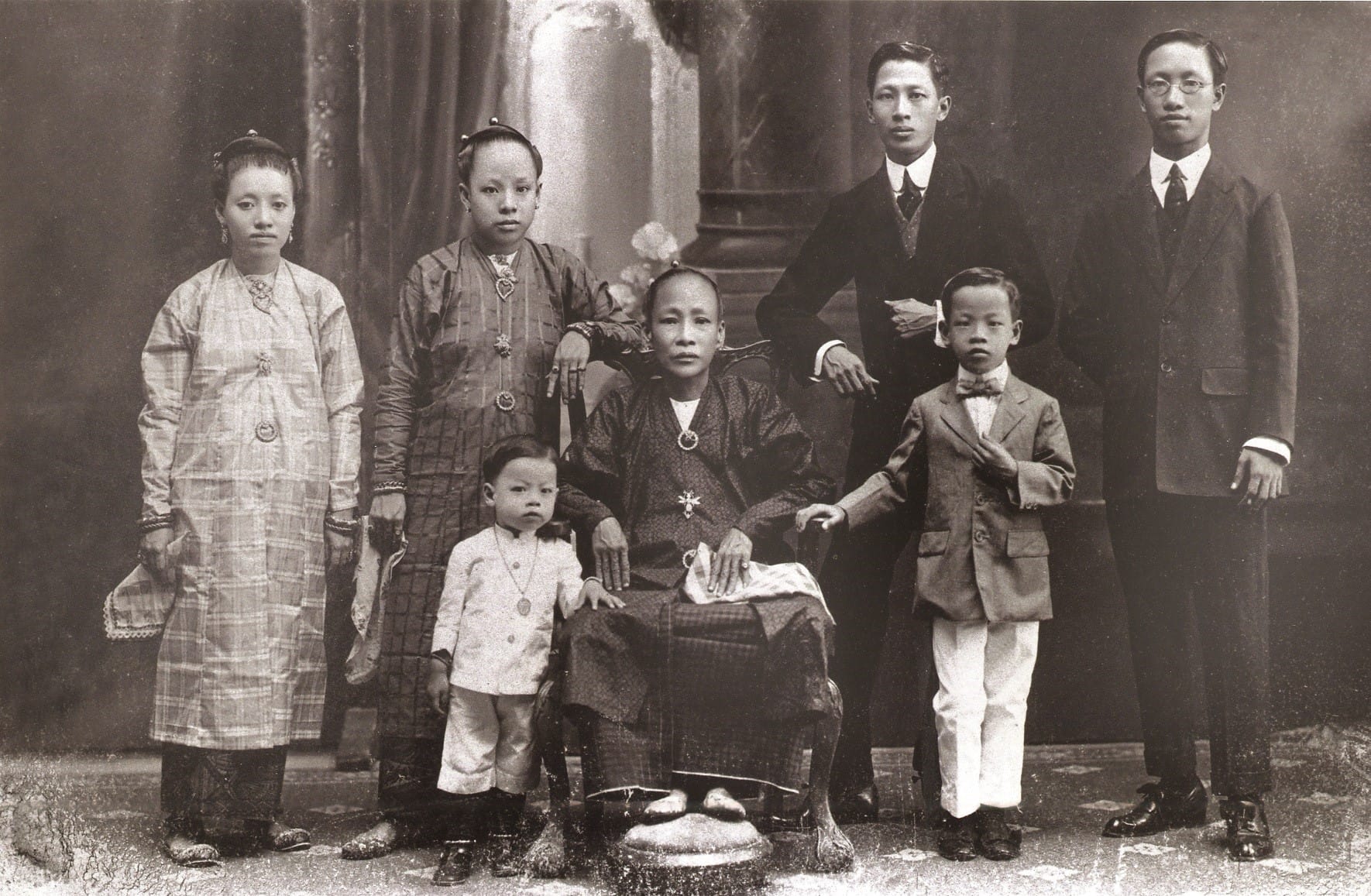
A Peranakan family. Lee Hin Ming Collection, courtesy of National Archives of Singapore.
Multidirectionality is also revealed through a survey of literary activities associated with the later generations. English-language newspapers such as the Straits Chinese Magazine (1897–1907) featured not just Confucian classics, but also interestingly Malay poetry such as the pantun and syair. A Malay-language newspaper entitled the Malaysian Advocate (founded in 1910) highlighted Malay poetry in the same way; one would note the irony that Malay literary activities were first initiated not by the Malays themselves but by the Baba Chinese (and the Jawi Peranakans), who loved the native genre. Not to be outdone by the flowering of Malay and English literary activities, another group of local-born Chinese, ostensibly influenced by the rise of nationalism in China, started the Chinese-medium press, the Lat Pau. The emergence of this pro-China, pro-Chinese lobby points to the fact that the Chinese populace, even among the later generation, was far from homogeneous in their tastes and inclinations. Thus, a study of diversity in colonial Singapore reveals that it is also intracultural, and should not be stereotyped as only intercultural, as has often been the case.
Last but not least, the multicultural orientation of the Babas can also be seen in their vocabulary at the turn of the 20th century, which according to Shellabear (1913) “was two-thirds Malay, one-fifth Hokkien and the remaining being Dutch, Portuguese, English, Tamil and an assortment of Indonesian languages”.
Backward and Forward on the Cline
While one can move forward on the cline, one may also move backwards. As the Malays gradually lost their political and economic power to the British Raj in the 19th century, the diverse races began to signal their assimilation to British rather than Malay values. For example, Donald Wijasuriya, a Sinhalese, recalls how his grandmother, a migrant, would always wear the sari while his wife “almost never used it”, preferring western dresses instead (Arseculeratne, 1992). Likewise, towards the end of our colonial period, younger Nonya ladies – unlike their older forebears – discarded sarong kebayas in favour of western clothes. This gradual aspiration towards British (rather than Malay) norms in the 20th century could also be discerned in food-related habits. For example, eating with your hands would be acceptable if one wished to identify with the Malay culture; but if one desired to be identified with the colonial masters, then one would use forks, spoons and knives – a practice that became more and more fashionable among the Chinese, Indians and Eurasians as colonial norms became entrenched (Clammer, 1979, p. 16).
Last but not least, it should not be assumed that movement on the cline is problem-free. Some people exhibited symptoms of “acculturative stress”. In addition, we may find distinct groups such as the Chetty Indians practising certain Malay customs that are no longer practised by the Malays themselves. Thiyagaraj (1998, p. 71), for example, observed that the Melaka Chetties “are also more Hindu than the Hindus in their meticulous observation of Hindu rites” (ibid.).
Public and Private Cooperation
In this section, I will discuss the extent of polarity or solidarity using cooperative behaviour; signifiers of socio-cultural identity such as costume and food; rites of passage such as birth, death and marriage; and language.
It is not unusual to find people of different races working harmoniously together to achieve a common goal in both public and private arenas. Race was irrelevant in encounters where the primary motivation is mutual gain. As early as 1852, Keppel (1852) noted that the Malays and Chinese hunted tigers in the jungle together as a group, taking advantage of each others’ strengths and specialisations. Arseculeratne (1992, p. 25) reminds us that many Chinese were known to prefer Sinhalese jewellers to those of their own kind because of the fine workmanship produced by the Sinhalese. In rites of passage, such as births, it did not matter who was consulted or whose services was engaged, as long as goals were achieved. For example, neither the Indian and Chinese communities were averse to using the services of the Malay bomoh (witch doctor) and bidan (midwife) (Baker, 1995).
In Singapore, during funerals, Sikh bandsmen were often hired to provide music (Abisheganaden, 2005, p. 11). At Bukit Brown Cemetery, one may still see ornate Chinese graves flanked by porcelain figures of Sikh guards. Former Chief Minister Lim Yew Hock (1986) recounted that when his father passed away in 1931, he was deeply touched by the condolences from his father’s friends, comprising people of many races (Chinese, European, Eurasian, Malay and Indian), who “unabashedly shed tears when paying their last respects”.
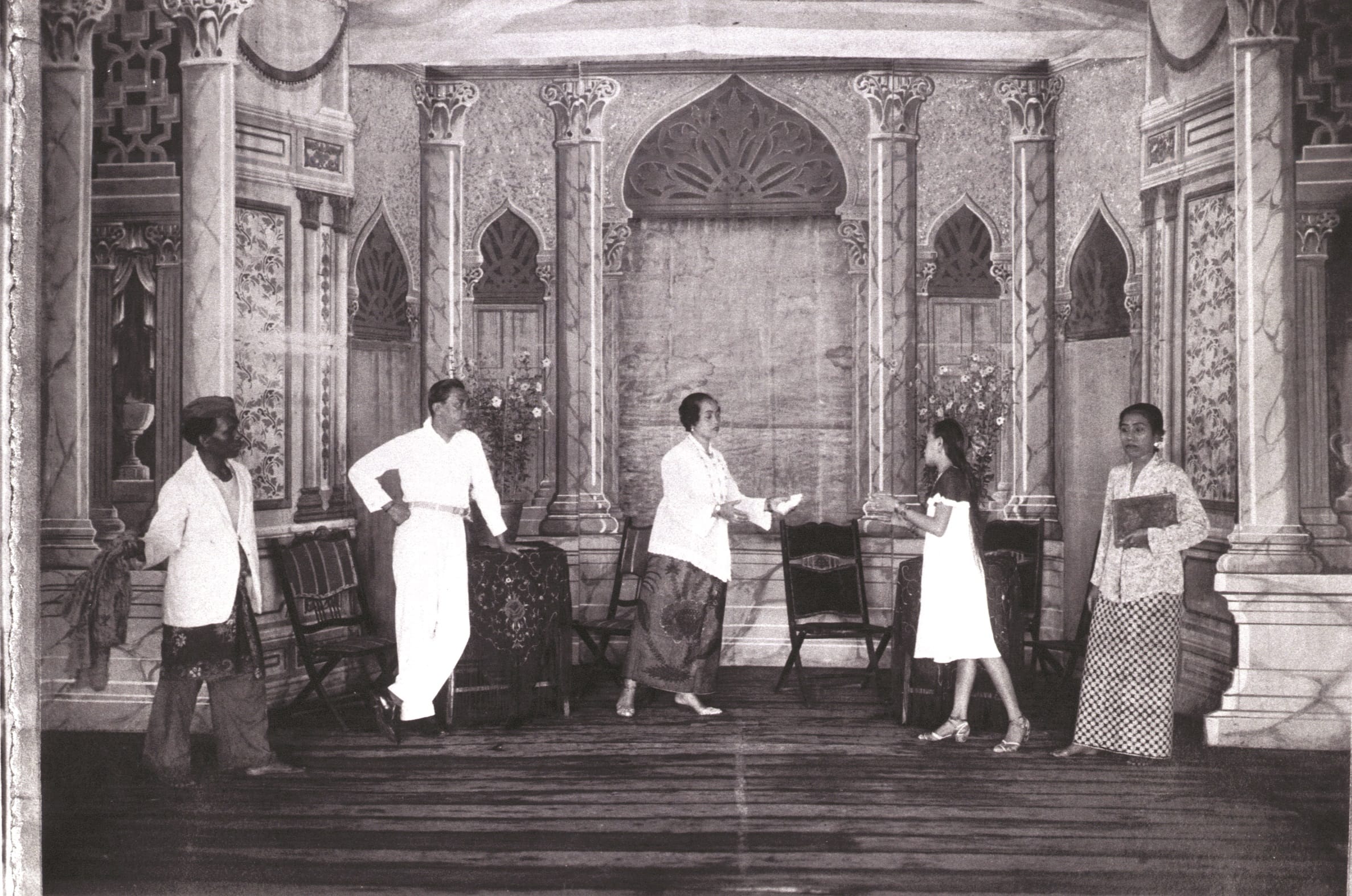
A bangsawan (Malay opera) scene. Mohd Amin Bin Kardarisman Collection, courtesy of National Archives of Singapore.
Politician-turned-diplomat Lee Khoon Choy (1988, p. 6), a second-generation Singaporean Chinese, whose once-penniless migrant father had married a local-born Chinese woman, recalled how in his youth, he had joined a multiracial (Chinese-Indian-Malay) musical group, or boria, which went from “home to home in their community during weekends, singing both English and Malay songs on their guitars and fiddles”. His biography is a good example of the second-generation Chinese’s fondness for the wayang bangsawan (classical Malay opera), the use of Malay music such as keroncong, and its adaptation for use in Chinese festivals such as Cap Goh Meh. Much earlier, Vaughn (1971, 1879) had observed that “the local-born Chinese” were fond of pantun (Malay poems) and lagu (Malay tunes) and had played them with western fiddles and eastern tomtoms to entertain guests. It was not just the Chinese who were attracted to Malay music but also the Indians; in his autobiography, Maurice Baker (2005, p. 9) recounts how his local-born Indian mother (who married an Englishman) loved attending bangsawan performances in the evenings.
Sociocultural Blending
Women and men’s dressing also reveals the personal agendas and identities of particular communities. For example, later-generation Chinese men such as the Babas wore western dress (which showed relative acculturation to the British Raj), while their women wore Malay dress (which showed an affective inclination to the Malay society).
In the arena of sports, Chinese and Indian subjects acquired a British preference for lawn tennis, golf, swimming, bodybuilding, chess and racing. However, in the arena of food, a Malay orientation was more likely. For example, Chinese Peranakan food is an intriguing mix of Chinese and Malay dishes. The nonya dish of babi pong tay, for example, is similar to the Chinese dish tau yew bak (pork belly slow-braised in garlic and soy sauce), but with a spicy Malay flavour of salted soyabean, cinnamon and pounded shallots. Another example is nonya laksa, a dish in which Peranakans combined Chinese coarse rice noodle with a Malay-style curry. Likewise, in Indian (Chetty) households, we see a similar fusion. There is the Malay-style ikan bilis sambal (anchovies fried with chilli paste), sambal tumis (fried chilli), achar (pickles), sambar (lentil stew) and Malay desserts such as pulot seraykaya, pulot hitam and kueh wajid on the same table (Thiyagaraj, 1998, p. 92).
Cultural blending is observed in marriage ceremonies too. For example, in a Chetty household, the Hindu rites and practices include the observance of the “tray-gift” ceremony and “dip for the ring”, which entails the newlyweds plunging their hands into the pot three times to retrieve either a knife, a shell or a ring, the “tying of the thaali” (a nuptial thread) by the groom for the bride, and the exchange of mini toe rings between the bride and groom.
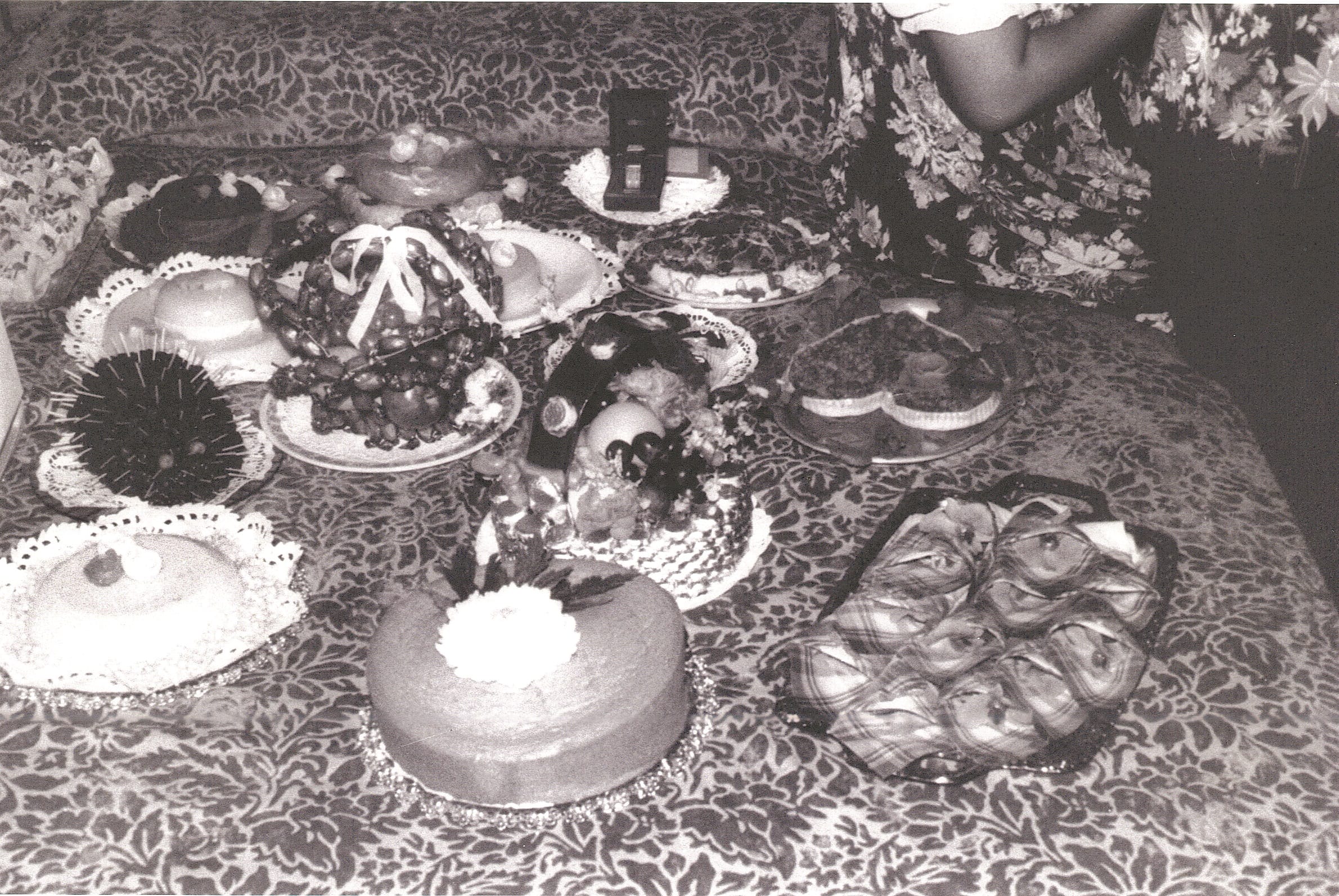
Food items prepared for a Malay engagement ceremony. Courtesy of National Archives of Singapore.
On the other hand, in a Malay wedding ceremony, the Malay chongkak (the game set consists of a wooden board and 98 pieces of cowry shells), a baju kebaya and bunga rampai are items prepared for the tray-gift ceremony, along with Malay desserts, Indian spices and sweets placed on large trays (Thiyagaraj, 1998, p. 86). More evidence of cultural blending in the marriage ceremony can be seen in the mixing of language in terms such as kasi maalai (to give the garland away), where kasi is a Malay word referring to the act of giving and maalai is a Tamil word that refers to the garland.
In the case of the Babas and Nyonyas, their marriage system transitioned from patriarchal and patrilineal to more bilateral and bifocal (Clammer, 1980, p. 111). The practice of uxorilocal marriage (where the groom moves in with the bride’s family) was also influenced by Malay practices.
The religion that a newcomer brings with him is not immune to contextual influences. For example, the Babas and Nyonyas’ religious practices are syncretic in the sense that while many retained ancestor worship and a Chinese perspective of the cosmos, their divinatory techniques carry strong Malay influences (Clammer, 1979). In addition, later-generation Chinese were not averse to learning Buddhism from the Sri Lankans. Service at Sinhalese temples such as at the Sri Lankaramaya temple (Arseculeratne, 1992, p. 155), originally conducted in Sinhalese, had to be conducted in English due to the growing Chinese patronage at the temple.
Witnessing such flexibility even in rites of passage, the migrant Sinhalese adopted a mish-mash of customs from their host cultures. For example, instead of opting for cremation – the normal funeral practice in Sri Lanka – they wore black armbands (like the Christians) and circled the grave thrice (like the Taoists). Arseculeratne (1992, p. 164) reported that visiting Theravada monks from Sri Lanka “were often shocked at the funeral ceremony”.
Conclusion
I have drawn from the social and linguistic history of colonial Singapore, and have proposed a plurality-solidarity cline with parameters such as dress, food, the arts, religious and literary activities, and rites of passage, as a means to study the processes of acculturation and assimilation. I have shown that while each ethnically distinct group maintained practices in accordance with their own religion, language and culture, they were not averse to communal interaction with one another. The patois that resulted and which is still evident in the spoken languages in Singapore today are poignant reminders of the combination and blending that occurred. This popular intermingling may not simply have been just a “multiracialism” but rather a deeper, more engaged “interculturalism”, which is unimaginable today.
Acknowledgements
The author wishes to acknowledge the contributions of Dr Radin Merennage Fernando, Senior Lecturer, National Institute of Education, and Dr Lim Beng Soon, Head of Programme, Malay Language and Literature, SIM University, in reviewing this research essay.
References
Alexius Pereira, “Triads and Riots: Threats to Singapore’s Social Stability,” in Past times: A Social History of Singapore, ed. Chan Kwok Bun and Tong Chee Kiong (Singapore: Times Editions, 2003). (Call no. RSING 959.57 PAS)
Henry Keppel, A Visit to the Indian Archipelago, in H.M. Ship Maeander: With Portions of the Private Journal of Sir James Brooke, vol. I and 2 (London: Richard Bentley, 1853). (From BookSG)
J. D. Vaughn, The Manner and Customs of the Chinese of the Straits Settlements (London: Printed at the Mission Press, 1879) (From BookSG); J. D. Vaughn, The Manners and Customs of the Chinese of the Straits Settlements (Singapore: Oxford University Press, 1971). (Call no. RSING 390.0951 VAU-[CUS])
J. S. Furnivall, Colonial Policy and Practice: A Comparative Study of Burma and Netherlands India (New York: New York University Press, 1956). (Original work published 1948). (Call no. RSING 959.1 FUR)
James R. Rush, Opium to Java: Revenue Farming and Chinese Enterprise in Colonial Indonesia, 1860–1910 (Ithaca: Cornell University Press, 1990). (Call no. RSING 363.45095982 RUS)
Joan Margaret Marbeck, Linggu Mai = Mother Tongue: A Kristang Keepsake (Lisbon: Calouste Gulbenkian Foundation, 2004). (Call no. RDET 469.7995 KRI)
John R. Clammer, The Ambiguity of Identity: Ethnicity Maintenance and Change Among the Straits Chinese Community of Malaysia and Singapore (Singapore: Institute of Southeast Asian Studies, 1979). (Call no. RSING 301.45195105957 CLA)
John R. Clammer, Straits Chinese Society: Studies in the Sociology of Baba Communities of Malaysia and Singapore (Singapore: Singapore University Press, 1980). (Call no. RSING 301.45195105957 CLA)
Lai Ah Eng, ed., Beyond Rituals and Riots: Ethnic Pluralism and Social Cohesion in Singapore (Singapore: Eastern Universities Press, 2004). (Call no. RSING 305.80095957 BEY)
Lee Khoon Choy, On the Beat to the Hustings: An Autobiography (Singapore: Times Books International, 1988). (Call no. RSING 320.95957 LEE)
Lim Yew Hock, Reflections. (Kuala Lumpur: Pustaka Antara, 1986). (Call no. RSING 320.9595050924 LIM)
Maurice Baker, A Time of Fireflies and Wild Guavas (Singapore: Federal Publications, 1999). (Call no. RSING 370.192 BAK)
P. Lim Pui Huen, Wong Ah Fook: Immigrant, Builder and Entrepreneur (Singapore; Times Editions, 2002). (Call no. RSING 305.895105957 LIM)
Paul Abishenganaden, Notes Across the Years: Anecdotes From a Musical Life (Singapore: Unipress, 2005). (Call no. RSING 780.95957 ABI)
S. N. Arseculteratne, Sinhaleses Immigrants in Malaysia & Singapore, 1860–1990: History Through Recollections (Colombo: K.V.G. De Silva & Sons (Colombo), 1991). (Call no. RSING 305.8914805957 ARS)
Sarah Thiyagaraj, S. (1998). The Chetty Melaka Community: Its Origin and Its Cultural Identity (University of New South Wales, 1998). (Call no. RSEA q305.89140595 THI)
W. G. Shellabear, “Baba Malay. An Introduction to the Language of the Straits Chinese,” Journal of the Straits Branch, Royal Asiatic Society 65 (December 1913): 49–63 (Retrieved from JSTOR via NLB’s eResources website). Reproduced John R. Clammer, Straits Chinese Society: Studies in the Sociology of Baba Communities of Malaysia and Singapore (Singapore: Singapore University Press, 1980), 153–65. (Call no. RSING 301.45195105957 CLA)