
Article
An Introduction to Design, Aesthetics and Ethics of the Built Environment
1 April 2013
The built environment is a space that reflects the dialogue among private, public and political spheres. Design impacts our lives everyday and good design can transform a mere place to one imbued with life and meaning.
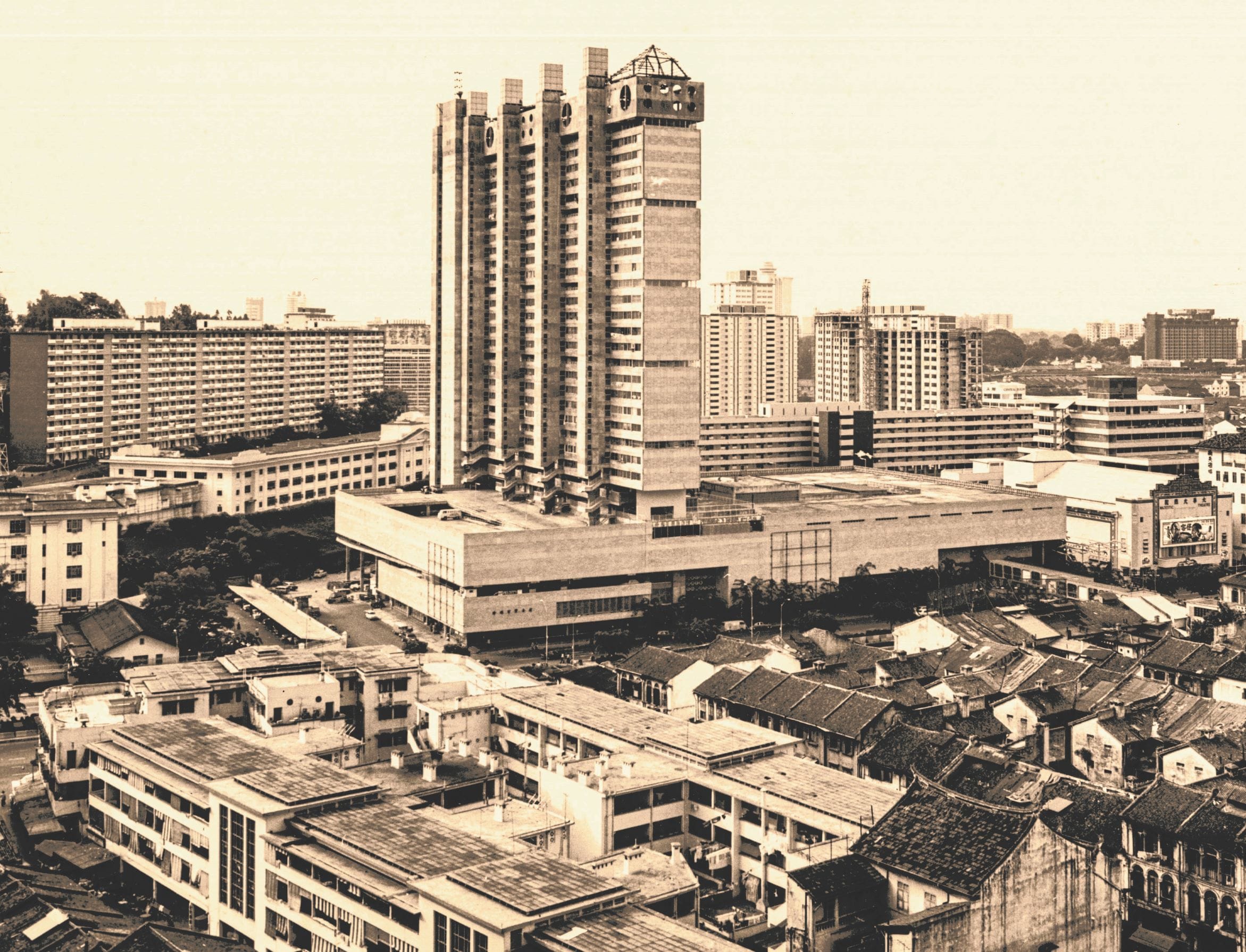
The Golden Mile Complex speaks a modernist architectural language, but is an iconic project in terms of its sensitive treatment of the social and cultural optimism of Singapore at the time. Courtesy of DP Architects Pte Ltd.
The built environment forms the backbone of any society; it is the backdrop of our lives, whether we realise it or not. As such, the design of the built environment is paramount to our well-being, to our ability to connect, to interact, to evolve individually and collectively.
The built environment is a space in constant tension between public, private and political interests; as such, any intervention within this forms an ethical judgement. Any decision made within the built environment will have an effect on one group over another. For example, building a road over culturally sensitive land favours the extraction of economic gains over cultural sensitivity to a group. This decision is more than a simple cost-benefit analysis; it also has a multitude of ethical considerations to it.
For anyone concerned with designing within the built environment, cultivating the ability to recognise, listen and respond to what people undergo and feel is vital. We relate to our environments emotionally, and we often fail to appreciate the complexity and variance of the human experience.
Good design within the built environment is mindful of the various tensions within spaces and acknowledges the importance for the population to feel connected to a place. Social, economic, cultural and political considerations will be present in all interventions within the built environment, thus one must have a good grounding in what design is and its importance in unlocking its potential for positive action.
Design and the Built Environment
Buildings are primary objects within the physical environment, necessarily permanent and largely impassive.2 Matters of location, design, visual impact, standards, place-making and so on are central to the experience and interpretation of the physical environment.3 Buildings become part of people’s lives;4 all architecture must be built with durability, convenience and beauty5 in mind.
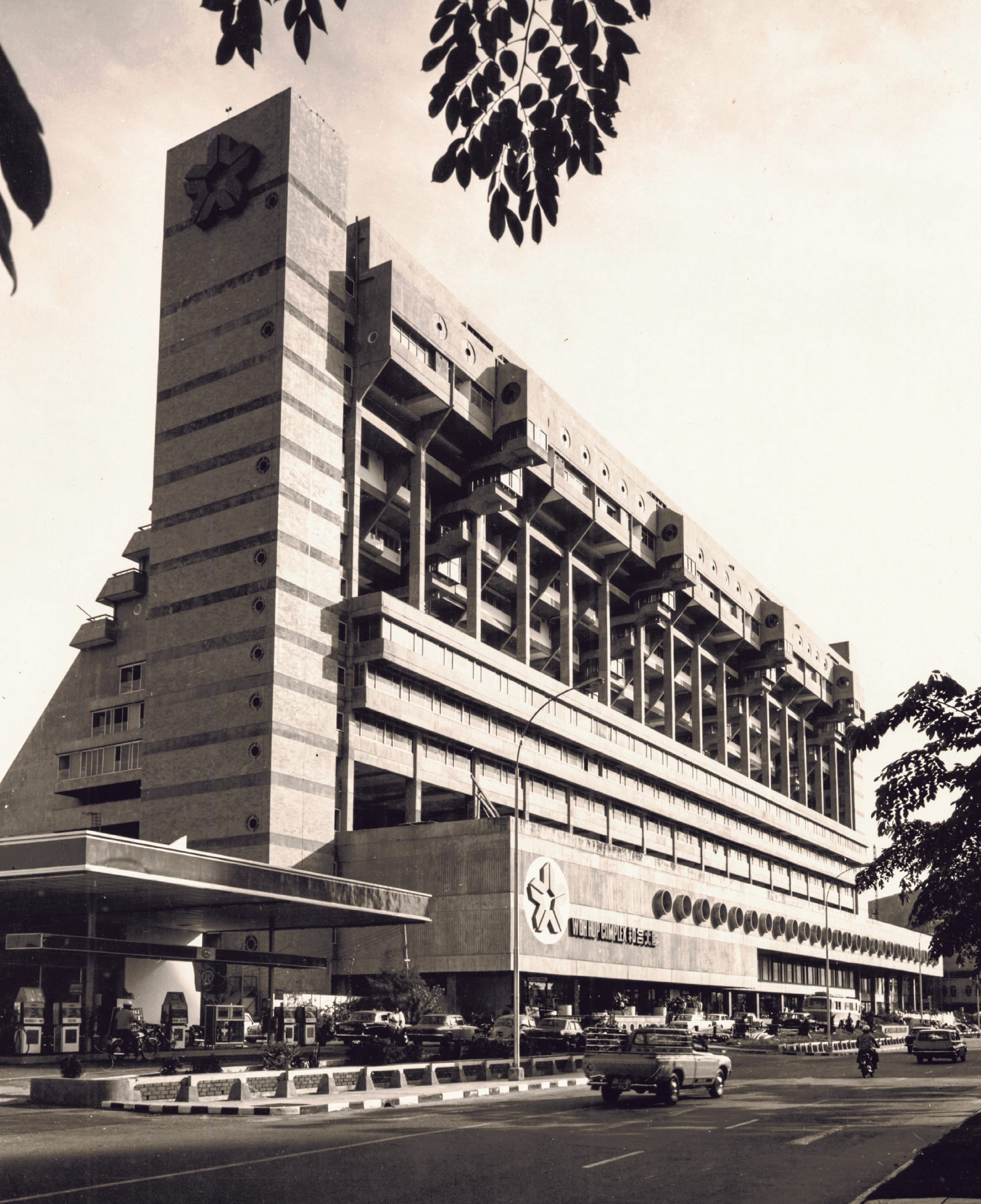
People’s Park Complex, a modernist icon, is lauded its sensitive treatment of the social and cultural optimism of Singapore at the time. Courtesy of DP Architects Pte Ltd.
The goal of design is “mainly to conceive, realise and maintain a solid, lasting, comfortable, and possibly beautiful common world”. Fundamental aesthetic and ethical principles are considered to be “of universal value… transcending time and space, climates and civilization”.6 For example, one can relate to: “The inexplicable features of old and or vernacular buildings, otherwise so straight forwardly organised, are often precisely those that attract us to inhabit them. Offering opportunity rather than giving direction.”7
The design of the built environment is often attributed as an action to make it “beautiful”. Great emphasis is placed on the idea of beauty, which is incorrectly used interchangeably with “aesthetics”. Beauty is the form of finality in an object; the beautiful pleases immediately.8 Therefore aesthetic ideas “are essentially different from rational ideas of determinate ends”.9 Beautiful architecture and “positive” space creates atmospheres that kindle our emotions – “architecture is the alchemy of transforming real substances into human sensations”.10 “When we speak of the ’draw’ of a good fireplace, when we feel the pull of an empty room for us to enter and dwell there.”11
Beauty cannot be a pure judgement on taste, but must have an intellectual component. It is attached to an idea of perfection. A work of architecture may have judgements of both free and ideal beauty present – free in the sense of aesthetic formalism, and ideal in the sense of how gracefully it achieves its use ends.12 Beauty lies in naturally grown things; that is not to suggest architecture built in an organic form, rather architecture that does not carry any signs or messages, a building that can manage perfectly well without the designer’s or builder’s personal rhetoric.
Architecture is at its most beautiful when things come into their own, when they are coherent, when they are “real”. Beauty thus is not an act of intense individualism, but an inherent property of the reasoned harmony of all the parts within a body,13 where “everything refers to everything else and it is impossible to remove a single thing without destroying the whole”.14
"Buildings can have a beautiful silence that I associate with attributes such as composure, self evidence, durability, presence, and integrity, and with warmth and sensuousness as well; a building that is being itself, being a building, not representing anything, just being, that is the definition of beauty."15
The powerful ideology of beauty (inherent in the majority of theories and aims of design professionals acting within the built environment) leads us to the act of “Design”. Design refers to the process that claims to improve the quality of the everyday, from objects that surround us (buildings, furniture, appliances, vehicles and gadgets) to advertising and marketing. Design within the built environment encompasses the idea of combining art, technology and society. Often, spaces have a utilitarian value and a symbolic value. The act of design is the way we plan and create the humanly shaped processes of public and private life, forming the interactions and transactions that constitute the social-environmental and economic fabric of a city, town village or country. Design offers a way of thinking about the world that is significant to addressing many of the human-created problems in contemporary culture.
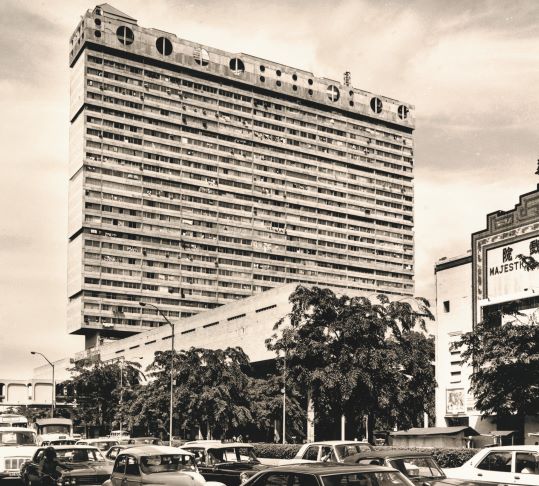
People’s Park Complex. Courtesy of DP Architects Pte Ltd.
"Today [design] incorporates spatial interests of social science, geography, cultural studies, economics, architecture, art history and other disciplines, and existential positions such as feminism, and sustainability."16
Design and “control” of the built environment is given a high weightage within the globalised world, where people and capital are increasingly mobile, thus ideals of liveability and quality of life are of a critical concern in attracting talent, motivating citizens and maintaining a “competitive advantage”. The ethical dimensions of design and the associated aesthetics must be considered at the macro level as well as the micro level (individual buildings). Analysing how one’s actions affect the wider world within the spheres of spatial equality, environmental and social harmony is as important as ensuring our built environment is conducive for people to live well with each other and well within the environment.
The feelings of well-being embodied through the relationships between groups of buildings, the open spaces and streets which link them are important. Therefore, it is the “townscape”, rather than the design of individual buildings, that gives the built environment its unique significance, providing the bridge between public and private life.17
"The external environment is a measure of convenience and accessibility, sanitary provisions, and comfort level. It reflects site planning standards… and deserves special attention."18
With this in mind, the main purpose and need for design within the built environment can be identified with the life support of settlements such as the provision of shelter, access to food, clean water, fresh air and effective sewage treatment. Today, design aims to move beyond basic health support and into quality-of-life projects to improve the health of the city, which often proceeds as a reaction to industrialisation. The period of industrialisation gave rise to the thinking of places, people and resources and inputs to an economic machine. The ideals of mass production, mass consumption and mass construction came with a great cost to the environment and the people living and working within these areas. As such, public health acts were created and paved the way for town planning and the improvements to urban health. These ideals aim to improve the humane aspects of the environment. These include the provision of parks, cycling networks, safe environments, reduced car reliance, equity in access and mediating various environmental impacts that economic activities produce.
But what is “good” design? Is it subjective and what is its value? “Good design is not a frill or a luxury, it’s a fundamental. Infrastructure will not function properly without good design.”19 Good design is design that meets the genuine needs, not of the faceless masses, but of real flesh-and-blood individuals. Consequently, generic design cannot be the way of the future. A number of environments of the past few decades that have been rejected (such as the many modernist European mass housing schemes, and the recent ghost cities in China and Africa) should serve as a warning against the concept of non-contextual standard design aesthetics.
The discourse of design often focuses on the form, composition and principles of beauty, usability and technological developments. There is less of a discourse on the ethical and political implications of design, and thus the moral and ethical dimensions of design and the built environment are not often explored. Design finds its purpose in the values of the life of its people and thus must be grounded in human dignity and human rights. We should advocate human-centred design that highlights the moral and intellectual purpose of design, which is built upon the foundation of technical and artistic skill.
Design in the Social, Political, Environmental and Economics
Design within the built environment is an explicit articulation of political, social and capital will. Every action within the built environment, every building, every idea, is an expression or physical representation of a value system, whether subconscious or conscious.
"Space has been shaped and moulded from historical and natural elements, but it has been a political process. Space is political and ideological. It is a product literally filled with ideology."20
Every era has its own ethics and aesthetics. Aesthetics are a physical representation of the values of a historical period. Early-20th-century design played a decisive role in giving form to modernity and the industrial or “rational” ideology of the architectural machine. During the 1980s, the reaction to modernity or “postmodern” design was the protagonist of a superficial and widespread “aestheticisation” of things in line with the rapidly developing consumer culture, and the built environment became an articulation of consumerism.21 Postmodernism identified that the built environment is not a coherent, logical or comprehensible “structure” designed by a rational process. Their thinking can be summarised as: there is no discourse that can accommodate the complexities of man and the city, thus all totalising discourses must be rejected. A wholesale anarchy of forms and spaces with an ethical void established itself, a mirror of the increasingly materialist world to which it is the physical representation of.
Ethics and aesthetics cannot be separated; thus, good design must also be an ethical one. Aesthetics move beyond questions relating to purely visual phenomena in order to include those derived from all facets of human experience. A good design is a considered approach to what the object represents, what it embodies, and who or what it is for. Why, for instance, a building’s form takes the shape it does, not only raises the more conventional aesthetic questions, but also questions of what purpose or meaning the building serves beyond purely visual stimulation. Does the form, for instance, relate somehow to a social or economic ideal? And if so, is this ideal something that its inhabitants subscribe to or are even aware of? Therefore aesthetic and moral judgements act as a pair. Morals are a set of beliefs and practices about how to live a good life, the aesthetical judgement thus contains the ethical dimension which is the conscious reflection on the adequacy of our moral beliefs.
Aesthetics and beauty are not synonymous. Beauty is simply the emphasis of the visual and external appearance of the element in isolation. Aesthetics, on the other hand, links together identity, form and history, politics, culture, ideology and economics. To put it another way: “beauty may be one approach to achieving betterment, but it is not a sufficient one” (Spatial Agency). Therefore aesthetics takes the urban form and expands it to the broader set of social conditions to which the built environment contributes strongly. The theme of aesthetics must be considered seriously: it has become commonplace to view the “aesthetic” dimension as secondary element, to be considered only when the rest has been resolved. This leads to the impression of a “contradiction between ethics (with its presumed rigour) and aesthetics (with its presumed frivolity)”.22
People are directly influenced and emotionally moved by the design of items surrounding them, often without realising this immediately. Design is not merely an adornment of cultural life, but is present in all the interactions and transactions that constitute the social and economic fabric of a country. This is evident if we consider the scope of design as it affects our lives. Design is the way we create all of the artefacts that serve us, striving to meet all our needs and desires, facilitating the exchange of information and ideas that is essential for civil and political life. Design is “the way we plan and create the complex wholes that provide a framework for human culture – the human systems and sub-systems that work either in congress or in conflict with nature to support human fulfilment”.23
An example of an organisation that had a very strong value system and profound effect within Singapore is the Singapore Improvement Trust (1927–59). The Trust emphasised the need to design for people and community, rather than just numbers.
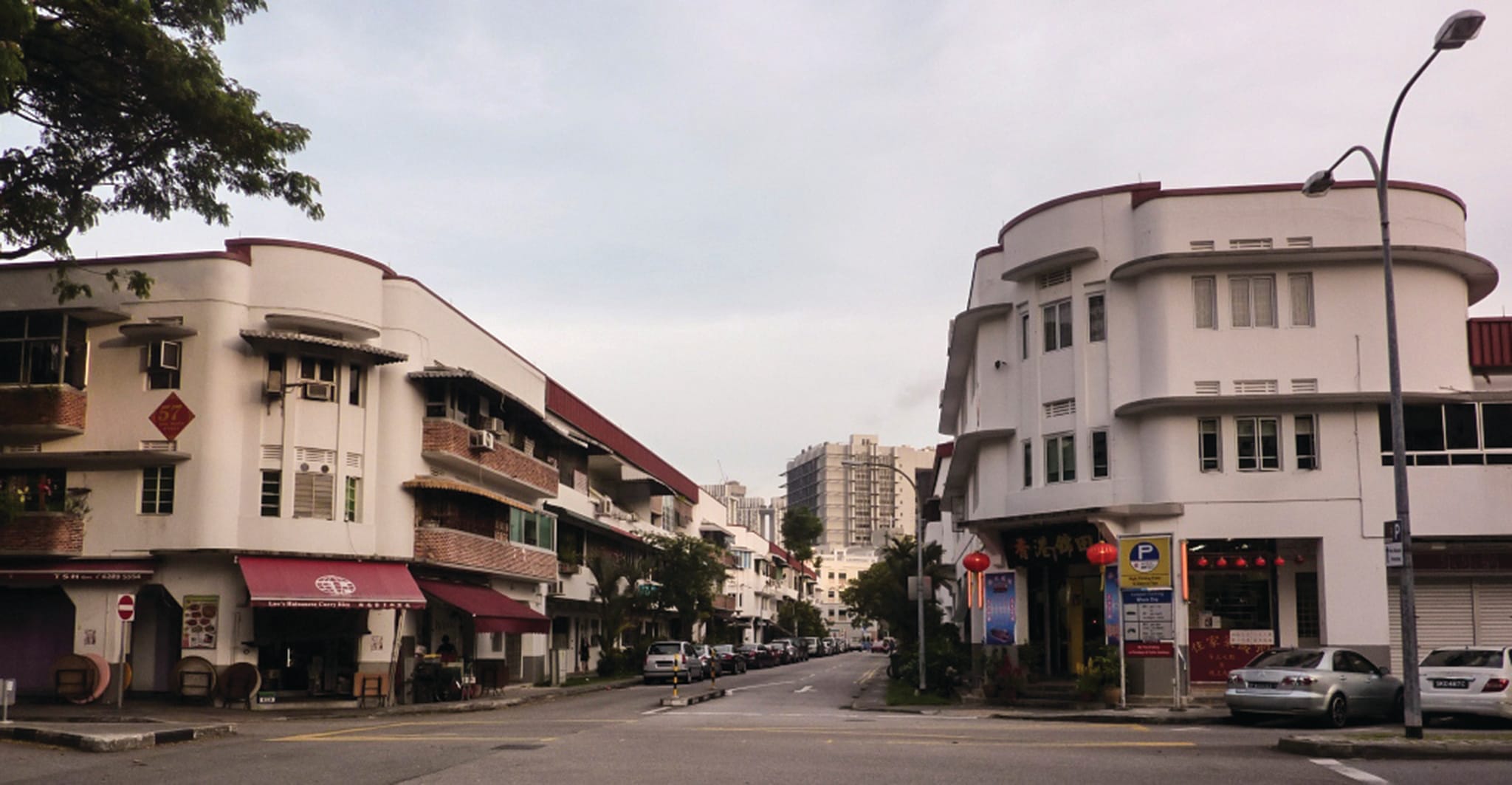
A great example of a resilient development at an urban level is the Singapore Improvement Trust’s first mass housing project of Tiong Bahru. Today, the area is still thriving and is testament to the importance of designing within a strong value system of a people-focused environment, rather than a machine for living in. Courtesy of Benjamin Towell.
“To know the number of housing units, or living rooms, will give no direct clue to the amount of open space required, the number of shops to provide, or the amount of playing field space required. Living rooms or houses don’t play games or go shopping. In my view it is dangerous, and might be disastrous, to forget we are trying to plan for persons, rather than impersonal ՙunits՚.” 24
Good design ethics take a stand against “the ruthless exploitation of people’s weaknesses for visual and haptic signals”,25 which much of globalisation engages in. For example, the glazed box as the sign of high-quality living from London, to Abu Dhabi, New York and Singapore. The marketing of these globalised "icons" have created a myth that these provide a high-quality built environment versus a contemporary interpretation of the vernacular. The competition between cities and countries to “out-do” each other in the built form may create fashionable areas of interest, but these ultimately have shelf lives. These often do not have the daily joy that simple, humble and thus resilient places can provide, such as popular “hawker centres” and local markets.
Architecture reinforces its position as the part of the culture industry, which commodifies the built environment into a respectable package according to the intrinsic contours of capital development. Architecture has ceased to engage in the discourse of architectural production as an integral part of all other social production. Architecture has forgone its role looking at the bigger picture; rather it has moved into the realms of the single object, the single entity, the project. Architecture has forgotten or simply fails to understand that space is constructed out of interrelations and interactions of people, at various levels and of various dispositions, and thus must engage these tensions rather than ignore them. With the consideration of the wider issues, the motivations of design will be ultimately more resilient in the ever-changing world. Thus cities will remain identifiable, useful and ultimately sustainable in the long term, rather than having to be rebranded and redesigned at frequent intervals.
Place-making, People and Identity
Architects and planners see design as the art of making places for people, and believe that design is critical in the realms of sustainable development, economic progress and social cohesion. Good design creates lively and distinctive places with character that are safe and accessible. Spaces are the embodiment of feelings, images and thoughts of those who live, work or are otherwise engaged in the area. Social space is dynamic space; its production continues over time and is not fixed to a single moment of completion, thus shifting the focus away from the static objects of display, and places it on the people and their lives. Good design addresses the physical aspects of space through addressing the relations within and of various social networks.
"You begin to realise that the important determinant of any culture is after all the spirit of place."26
Similarity is important in establishing a recognisable or identifiable sense of place.27 The aesthetics of places and place-making should be linked to the climatic vernacular and regional diversity through the spatial representation of the synergies of the life of the people,28 i.e., the place must reflect the climatic conditions of the area, as well as facilitate the daily interactions of the people. Places that foster a spatial representation of life are places such as hawker centres and local markets. These form a focal point in many Singaporeans’ lives; they are spaces where a great diversity of people congregate, and a local economy thrives. Hawker centres create a spatial attachment to a neighbourhood or an area, not through their outward appearance, but through their purpose.
At the urban level, Singapore followed good practice with island-wide tree-planting strategies to break up the increasing density of the built form. In a variety of key areas, the mix of the globalised “future” and traditional “cultural” past has been exceptionally juxtaposed, thus maintaining or, in the case of Boat Quay, enhancing an identity of place. Boat Quay, with its regenerated waterfront, traditional shophouses and the UOB Plaza fronting the Central Business District, became recognisable as the embodiment of “Singapore”. It was instantly recognisable and globally distinctive, representing the dichotomy that is Singapore.
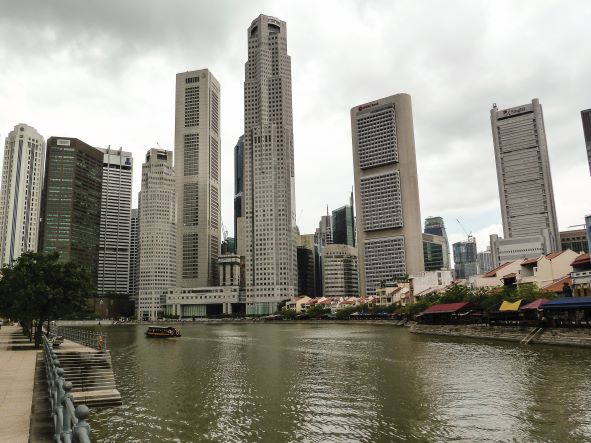
The desire for iconic architecture, if not mediated, can break the cohesion of the urban fabric and result in a mismatch collage of forms that share no relation of scale, context, local character or sustainability. Singapore’s Boat Quay is a prime example of the successful juxtaposition of a cohesive yet iconic contemporary form of the UOB Plaza, with traditional Straits shophouses in the foreground. Courtesy of Benjamin Towel.
There is a strong argument supporting design that values people and culture, and recognises the tensions within the processes of development that shape and make a resilient place. Resilience refers to the ability of the place to support itself and recover quickly against any difficult conditions; the place is able to adapt and change to stay relevant in the ever-changing world, or is able to thrive. The increasing globalisation of the world with the demand for symbolic capital by multinational corporations results in globalised spaces, which at its centre is represented by the dominant aesthetic of the glazed skyscraper29 where the individual becomes a passenger, customer or number who is “possessed” by the “passive joys of identity-loss”.30 People are seen as statics, as equations to be solved through the very systems that the Singapore Improvement Trust took a stand against. Our identity is lost through the process of mass consumption; we can be anywhere in the world surrounded by familiar city scenery and products, in hotel rooms identical from one city to the next, restaurants, streets, shopping malls, parks and promenades that are replicated everywhere. Without mediation, the new global archetype can damage the fragile relationship between people and their individual and collective identities. Responsible design prevents feelings of estrangement from one’s surroundings; it aims to enhance one’s sense of place and identity through considered reference to the established vernacular. Responsible design is the combination of the primary needs of people (shelter), the projection of the local ideology (theory) and the cultural projection of the population in the area. Thus, the architecture of Singapore must reflect the climate, culture and ideology which serve to enhance the general well-being of the population.
Places and objects of the everyday are not only situated within the realms of architecture, but in the realm of the human, where the built environment is dissolved into a world of perceptual experience, becoming a continuum with human life.
There is a global body of research that discusses the importance of the urban aesthetic as a space for the vitality of culture. “People make cities, but cities make citizens.”31 As such, the built environment is incredibly important. A successful urban realm fosters a civic identity that is formed through the feeling that public space is in the public’s communal ownership and responsibility.
"The public domain is the theatre of an urban culture. It is where citizenship is enacted; it is the glue that can bind an urban society."32
Public space and visual connections with buildings themselves are not enough to create an identity. Impersonal neighbourhoods and precincts make anonymous people;33 therefore, great architecture places ethical, climatically suited interventions that will blend in and become a part of the fabric over time. It is “the visual appearance of buildings, the relationships between them, the relationships with open spaces and all the other factors which combine to create the townscape”.34
Design has become a tool for preparing cities to attract visitors and investors, with the aim of improving the economic prospects and social conditions of cities. One should be careful that this does not manifest itself on a stage of branded designs, iconic single structures that can stress relationships between people and their environments. A negotiated balance is needed between the built environment as an economic driver, and as a cultural space for the articulation of multiple societal values.
"People’s ties, relationships, and attachment to their particular territorial niches in the metropolis were significant because it is in these niches that they 'come to have some sense of control’ where they are able to develop the sense of identity and comfortableness that a large downtown can make impossible."35
Designing for the Future
"Design is the key to unlocking the potential of the new energy and ecological awareness, giving architects a greatly expanded role."36
The challenge is naturally to construct more locally distinctive, socially inclusive and environmentally sustainable environments that can house a growing population, while accommodating increasing aspirations with fewer and fewer resources available.
“The new model of development will not be born on a drawing board or around a conference table as a perfectly complete theorem, but will emerge from a dialogue and conflict among a multiplicity of ideas, visions and proposals. It will come into being thanks to a widespread atmosphere of innovation involving all social actors."37
Design can give form to a changing world, and offer opportunities for new types of behaviour. To “give form” means to operate within a more general cultural context, by amplifying and rendering visible the weak signs expressed by society (in terms of new types of demand and behaviour), proposing consistent criteria of quality in a perspective of sustainability, and designing overall scenarios which give form to the sustainable society.38 Design can “offer opportunity for new types of behaviour and new lifestyles in keeping with a new notion of social quality”.39 New behaviour means looking at our current way of living, and examining how we can improve our relationship with each other and the environment without compromising our standard of living. How can our behaviour of consumption change, yet be a positive change both in terms of our enjoyment as well as that of our surroundings? The built environment forms the structure in which these changes can be made, from spatial organisation that makes the private automobile unnecessary, that allows a walk to school, to work and to recreation. A built form that requires no use of energy other than from its own sources, and that requires little food imports as it can be produced within its boundaries. A built form that celebrates and encourages interactions, innovations and most of all is people-centric. These are the areas in which design can play a significant role, indeed it must explore the possibilities within the social dynamics of a sustainable society.
There is an urgent need for design to become more socially progressive and environmentally conscious in the face of intensifying neoliberalism and neocorporatism. This means moving beyond the scope of the project and transcending professional boundaries. There is no one set of criteria according to which the design process is “supposed” to develop. However, thoughtful consideration of the moral and ethical responsibility of our actions, a greater awareness of social conditions and of the diversity of human experience are important in facilitating the production of a well-designed, well-negotiated and equitable built environment.
Good design is not a fetish; good design creates the natural foci of social intercourse where people will recognise each other as members of a local community as a result of continuous yet joyous physical proximity. With this model there is greater potential for physical social relationships to form as people meet in the context of their whole lives and not in part, such as mere colleagues in the same office or shoppers in the same shopping centre. The townscape will be varied and vibrant, accommodating a wide range of uses and catering for different kinds of people. “It may be physically unprepossessing, even dirty, but it will be a place that people know and, perhaps most important, feel at home in.”40
About the Author
Benjamin Towell is an Executive Manager with the Green Mark Department of the Building and Construction Authority of Singapore. Benjamin qualified as a Town (Urban) Planner from the University of Newcastle upon Tyne, UK. He studied architecture at the University of Newcastle upon Tyne, The Leeds School of Architecture and the National University of Singapore.
Endnotes
1 Casanova, 1979, p. 113.
2 Benedikt, 1988, p. 14.
3 Norberg-Schulz, 1980, p. 203.
4 Zumthor, 2007, p. 65.
5 Spector, 2007, p. 35.
6 Eisenman & Krier, 1989, p. 7.
7 Benedikt, 1988, p. 52.
8 Kant, 1790, p. 80.
9 Kant, 1790, p. 224.
10 Zumthor, 2007, p. 65.
11 Benedikt, 1988, p. 56.
12 Spector, 2001; Kant, 1790.
13 Spector, 2001; Benedikt, 1988.
14 Zumthor, 2007, p. 69.
15 Zumthor, 2006, p. 34.
16 Cuthbert, 2006, p. 15.
17 Grayson & Young, 1994.
18 Liu & Tan, 1979, p. 149.
19 Lazell & Henley, 10 Oct 2008.
20 Lefebvre, 1970, p. 31.
21 Manzini, 1994, pp. 37–43.
22 Manzini, 1994, p. 43.
23 Buchanan, 2001, p. 38.
24 Komlosy, 1953.
25 Rams, p. 25
26 Durrell, 1979, p. 156.
27 Kriken, Enquist & Rapaport, 2010, p. 134.
28 Tay, 1998.
29 Cuthbert, 2006.
30 Burns, 2000, p. 76.
31 Urban Task Force, 1999.
32 Urban Task Force, 1999.
33 Jacobs, 1993.
34 Grayson & Young, 1994.
35 Langer in Burns, 2000.
36 Edwards, 2000, p. 7.
37 Manzini, 1994, p. 39.
38 Manzini, 1994, p. 39.
39 Manzini, 1994, p. 43.
40 Grayson & Young, 1994.
References
Benedikt, M. (1988). For an architecture of reality. Santa Fe: Lumen. (Not available in NLB holdings)
Buchanan, R. (2001). Human dignity and human rights: Thoughts on the principles of human-centred design. Design Issues, 17 (3), 35–39. Retrieved from JSTOR via NLB’s eResources website.
Burns, A. (2000). Emotion & urban experience: Implications for design. Design Issues, 16 (3), 67–79. Retrieved from JSTOR via NLB’s eResources website.
Casanova, R.T. (1979). Land policies and practices (p. 113). In S.H.K. Yeh & Laquian (Eds.), Housing Asia’s millions: Problems, policies and prospects for low-cost housing in Southeast Asia. Ottawa: IDRC. (Call no.: RSING 363.5095 HOU)
Cuthbert, A. (2006). The form of cities: Political economy and urban design. Oxford: Blackwell Publishing. (Not available in NLB holdings)
Durrell, L. (1969). Spirit of place. London: Dutton. (Not available in NLB holdings)
Edwards, B. (2000). Sustainable housing: Architecture, society and professionalism (pp. 12–34). In B. Edwards & D. Turrent (Eds.), Sustainable housing principles & practice. Abingdon: Taylor & Francis. (Not available in NLB holdings)
Eisenman, P., & Krier, L. (1989). My ideology is better than yours. Architectural Design, 59, 6–18, pp. 9–10. Retrieved from JSTOR via NLB’s eResources website.
Franklin, B. (2001). Discourses of design: Perspectives on the meaning of housing quality and “good” housing design. Housing, Theory and Society, 18 (1–2), 79–92. Retrieved from Taylor & Francis Online.
Grayson, L., & Young, K. (1994). Quality of life in cities. London: The British Library. (Not available in NLB holdings)
Jacobs, J. (1993). The death and life of great American cities. New York: Random House. (Not available in NLB holdings)
Jiven, G., & Larkham, P.J. (2003). Sense of place, authencity and character: A commentary. Journal of Urban Design, 8 (1), 67–81. Retrieved from Taylor & Francis Online website.
Kant, I. (1786). Groundwork of the metaphysics of morals. New York: Harper & Row. (Not available in NLB holdings)
Kant, I. (1790). The critique of judgement. Oxford: Clarendon Press. (Not available in NLB holdings)
Komlosy, D. (1953). Working party on Queenstown: Memorandum by Chief Planning Officer, Diagnostic Survey Team Queenstown Estate – Densities. Singapore: National Heritage Board, National Archives.
Kriken, J., Enquist, P., & Rapaport, R. (2010). City building: Nine planning principles for the twenty-first century. New York: Princeton Architectural Press. (Call no.: RART 711.4 KRI)
Langer, P. (1984). Sociology – Four images of organised diversity: Bazaar, jungle, organism, and maching. (pp. 97–117). In L. Rodwin & R. Hollister, Cities of the mind: Images and themes of the city in the social sciences. New York: Plenum Press. (Not available in NLB holdings)
Lazell, M., & Henley, W. (2008, October 10). Lords call for design to be at the heart of Planning Bill. Retrieved from Building Design website.