
Rising Dragon, Crouching Tigers: Foreign Policy Responses of Malaysia and Singapore to a Re-emerging China, 1990–2005
1 March 2014
As China rose in power during the post-Cold War era, Singapore and Malaysia responded by hedging their foreign policy to protect their national interests and build diplomatic ties.
By Kuik Cheng-Chwee
Abstract
This study is a comparative inquiry into smaller states’ reactions to a rising major power within close geographical proximity. By focusing on the cases of Singapore and Malaysia and their “hedging” behaviour in response to a re-emerging China in the post-Cold War era, it seeks to analyse how and why two smaller states in Southeast Asia — which share a range of domestic, diplomatic and strategic variables — have chosen to respond to their giant neighbour in seemingly parallel but subtly distinctive ways. The findings of the study suggest that Malaysia and Singapore share four key areas in common: economically, a pragmatic approach to maximise trade and investment benefits; diplomatically, an engagement policy to integrate the big power into ASEAN-led regional institutions; politically, a dominance-denial position to prevent China from evolving into an unchecked hegemonic power; and strategically, an indirect-balancing stance to prepare for contingencies.
These similarities notwithstanding, Malaysia’s China policy is fundamentally different from that of Singapore’s in one important aspect — the readiness to accommodate and selectively utilise China’s growing power to pursue its own national interests, as shown by Kuala Lumpur’s desire to see Beijing as a partner to push for East Asian regionalism and other common foreign policy goals. Singapore, on the other hand, has rejected this “limited bandwagoning” option because of its geopolitical difficulty and its wariness about the long-term ramifications of a powerful China.
The main argument of the paper is that the two ASEAN states’ China policies are not directly determined by a fear of the power’s aggregate capabilities as claimed by Waltian realism. Rather, they are a function of the individual states’ pathways of regime legitimation through which the ruling elites seek to capitalise on the dynamics of the rising power, for the ultimate goal of consolidating their own political authority at home.
Introduction
China will be a formidable player in the region. No combination of other East Asian
economies — Japan, South Korea, Taiwan, and ASEAN will be able to balance China.
The Russian Federation will not be a major player for at least another 20 years.
Therefore the role of America as the balancer is crucial if we are to have elbow room
for ourselves.
Lee Kuan Yew, Senior Minister of Singapore, 2001
China is conscious that it needs to be seen as a responsible power and has taken
pains to cultivate this image. This is comforting to regional countries. Nevertheless,
many in the region would feel more assured if East Asia remains in balance as China
grows. In fact, maintaining balance is the over-arching strategic objective in East Asia
currently, and only with the help of the US can East Asia achieve this.
Goh Chok Tong, Prime Minister of Singapore, 2003
It is high time for us to stop seeing China through the lenses of threat and to fully
view China as the enormous opportunity that it is. … In my view, to perceive
China as a threat and to fashion our security order around this premise would not
only be wrong policy, but it would also be a bad and dangerous one. We need to
fundamentally reassess our notions about the so-called Chinese threat.
Mahathir Mohamad, Prime Minister of Malaysia, 1995
Malaysia’s China policy has been a triumph of good diplomacy and good sense. …
I believe that we blazed a trail for others to follow. Our China policy showed that
if you can look beyond your fears and inadequacies, and can think and act from
principled positions, rewards will follow.
Abdullah Badawi, Prime Minister of Malaysia, 2004
What do states do when faced with an increasingly stronger and potentially threatening power in an anarchic international system?1 For decades, mainstream International Relations (IR) theories have offered two broad answers to this central question: states will either balance against or bandwagon with that power.2 Recent scholarly debates and empirical observations, however, suggest that such dichotomous accounts might not be accurate in describing Asian states’ policies towards a rising China.3 Indeed, while some researchers continue to ponder the phenomenon along the balancing-bandwagoning dichotomy, there are analysts who observe that most regional countries have in effect adopted a middle position, widely known as “hedging”.4
Borrowed from the world of finance, the term “hedging” in IR theory refers to an alternative state strategy distinguishable from balancing and bandwagoning. It has been used not only to describe the reaction of smaller states’ to a major power, but also to big powers’ strategies in dealing with one another.5
This paper examines the former, with case studies of Malaysia and Singapore. By comparing their foreign policies towards a rising China in the past Cold War era, it seeks to analyse how and why these smaller states have responded to their giant neighbour the way they have.
The main argument of the paper is that a small state’s strategy towards a rising power is driven not so much by the growth of the major power’s relative capabilities; rather, it is motivated more by an internal process of regime legitimation in which the ruling elites evaluate — and then utilise — the opportunities and challenges posed by the rising power for the ultimate goal of consolidating their authority to govern at home.
This argument — which may be termed the Regime Legitimation (RL) framework — is premised on three core assumptions. First, foreign policy choices are made by the ruling elites, which are concerned primarily with their own political survival. As such, their policy actions are geared towards mitigating all forms of risks — security, economic, and political — that may affect their governing capacity. Second, the representation of risks identified as foreign policy “problems” is neither given nor fixed, but is continually shaped by the actions of the elites seeking to justify their domination and authority at a given time. Third, such a foundation does not merely refer to the elites’ compliance with liberal-democratic norms, but also to their ability to preserve security and internal cohesion, to deliver economic growth, to uphold sovereignty and to promote a rationalised ideal (e.g. the imperative of “coping with vulnerability” and the necessity of “maintaining ethnic balance”).6 It is within the context of such legitimation that the elites assess the ramifications of a rising power and make policy choices.
This set of assumptions presents a counter-argument to the mainstream neo-realist tradition, which rests primarily on the following premises: first, states are unitary and functionally alike players seeking their own security in an anarchic system; second, states tend to rely on military force to pursue their goals; third, state behaviour is driven chiefly by systemic distribution of capabilities across units, rather than state-level character.7
If neo-realist premises hold true, then we should expect that a change in the distribution of power — in this case, an increase in China’s relative capabilities — will cause the smaller states to become apprehensive, which, in turn, will compel them to strengthen their alliance and armament for balancing China, as a necessary move to preserve their security.
On the other hand, if the RL premises are correct, then we should expect that a growth in China’s relative strengths may not necessarily have an inherent effect on the smaller states’ reactions. Instead whether or not the structural change will cause trepidation in the smaller states depend on whether the states’ ruling elites perceive the power to be a boon or a bane for their legitimation efforts. All things being equal, where the role of the major power is perceived to be positive, the state is expected to accept the power’s growing ascendancy. Conversely, where the major power’s growing might is viewed as a challenge to elite legitimation, the state is expected to counter-check it.
Finally, when the ramification of the power’s rise is perceived to be mixed or unclear, the state is expected to take a more intricate approach, the substance of which will depend on the ordering of the elites’ legitimation bases of the day. For instance, if the elites’ current legitimation relies more on the imperative of prosperity-maximising than on security-seeking, then the state is expected to highlight economic and political benefits that can be tapped from the power, while downplaying any security concerns it may have about the giant.
The remainder of the paper is divided into five sections. The first section shows how the Southeast Asian states’ China polices have deviated from the balancing-bandwagoning schools. The second section provides a working definition of hedging and identifies its antecedent conditions. In the third section, hedging is shown to have five components along the balancing-bandwagoning spectrum, which measures the range and variations in state strategies. On the basis of the identified components, the fourth section takes an empirical look by detailing the China’s policies of Malaysia and Singapore. The final section concludes with a discussion of the explanatory strengths of neo-realism and the RL framework in accounting for the variation in the two strategies.
Deviant Cases in International Relations
To illustrate how the Southeast Asian states’ responses to a rising China can be regarded as deviant cases in IR, it is necessary to briefly review the key propositions and expected outcomes posited by the mainstream balancing-bandwagoning schools.
The balancing school, represented by realists such as Kenneth Waltz and Stephen Walt, maintains that states are more likely to balance against a growing power in order to preserve their security and safeguard their freedom of action.8 Building upon Waltz’s balance-of-power theory, Walt proposes the balance-of-threat argument and contends that a growing power is often a threatening power, when the power’s aggregate capability is accompanied by geographical proximity, offensive capability and offensive intentions.9 Driven principally by a security-maximisation impulse, states are constantly compelled to upgrade their own defence capability (internal balancing) or form military alliances with other powers (external balancing).10 The balancing school thus posits that, all things being equal, the greater a rising power’s capabilities, the more apprehensive other states will become, and the more likely these states will pursue internal and external balancing acts against that power.
The bandwagoning school, on the other hand, argues that states tend to bandwagon with, rather than balance against, a rising power. This is because, according to Randall Schweller, unlike balancing behaviour that is driven by a need to achieve greater security, bandwagoning behaviour is motivated by a desire to maximise gain or utility. “States, like delegates at party conventions,” Schweller writes, “are lured to the winning side by the promise of future rewards (emphasis added)”.11 The bandwagoning theorists thus posit that, the greater a rising power’s economic and military might, the greater the perceived promise of rewards, and the more likely other states will be attracted to align with it.
Empirically, however, the China policies of Southeast Asian states do not fit neatly with the expectations of either school. None of the original member countries of the Association of Southeast Asian Nations (ASEAN), including Malaysia and Singapore, has practiced balancing or bandwagoning strictly.
While most of these countries do pursue a degree of defence modernisation and maintain some form of military cooperation with Western powers, such military endeavours do not necessarily constitute a balancing policy towards China in the neo-realist sense. This is because the existence of such cooperation predates the rise of China, and there is no clear indication that the states’ military modernisation programmes have accelerated in tandem with the growth of China’s power.12 None of the states have explicitly and specifically identified China as a target of their military endeavours. In fact, Southeast Asia today is more willing to view China as a source of stability and prosperity rather than a threat, compared with just a decade ago.13 This marked improvement is largely attributable to the concerted efforts made by each side to engage the other at both the bilateral and multilateral levels, mostly through ASEAN-led regional institutions such as the ASEAN Regional Forum (ARF) and the “ASEAN Plus” cooperation.14 Apart from Beijing’s punitive invasion of Vietnam in 1979 as well as the pending territorial disputes involving China, most political leaders in Southeast Asia today seem to downplay, if not dismiss, the possibility that Beijing might use force to pursue an expansionist territorial agenda in the region.15
In a similar vein, while all regional states have demonstrated an inclination to forge economic ties and to pursue an engagement policy towards China, this gesture should not be regarded as bandwagoning. Economic cooperation and diplomatic engagement are chiefly motivated by the desire for economic gain and to change China’s behaviour, respectively; by themselves they do not constitute acts of power acceptance.16 Bandwagoning, by contrast, reflects a readiness on the part of smaller players to accept — voluntarily or otherwise — the larger actor’s power ascendancy; and such power acceptance often takes the form of political and military alignment with the greater power. Empirically, however, none of the old ASEAN member countries have chosen to align militarily with the PRC.
One might wonder why balancing and bandwagoning — despite the time-honoured wisdom of these practices — have not been adopted by the ASEAN states. A quick answer is the pure form of balancing strategy is considered strategically unnecessary, because the Chinese threat remains largely a potential rather than an actual one. It is also viewed as politically provocative and counter- productive, in that an anti-Beijing alliance would certainly provoke China and result in hostility, turning a perceived threat into a real one. Further, pure-balancing is regarded as economically unwise, as it is likely to result in the loss of lucrative trade opportunities that could be garnered from China’s growing market. Pure bandwagoning, on the other hand, although economically appealing, is deemed politically undesirable and strategically dangerous since it is likely to risk the smaller states’ freedom of action.
For these reasons, it is not surprising that Singapore and Malaysia, like other ASEAN states, have rejected pure-bandwagoning or pure-balancing. Instead, they have taken a “middle position” that some analysts have chosen to call “hedging”. This is not to say that the balancing and bandwagoning propositions are no longer relevant. Rather, it only reflects that the antecedent conditions of balancing and bandwagoning behaviour are largely absent in the context of contemporary Southeast Asia-China relations. These conditions are, inter alia:
• the presence of a direct and immediate security threat;
• intense rivalry among the great powers which compels smaller states to choose a side;
• ideological and political fault lines that divide states into opposing camps;
• strategic clarity in which states have no difficulty identifying the key sources of threat and opportunity.
In the absence of these conditions, the smaller states in Southeast Asia can avoid taking sides between the big powers, and can afford to adopt non-clear-cut alignment behaviour such as hedging.
Defining and Delineating “Hedging”
Building upon existing conceptions of the term, this study proposes to define “hedging”17 as “a purposeful act in which, under the situation of high-uncertainties and high-stakes, a state seeks to insure its long-term interests by placing its policy bets on multiple counteracting options that are aimed at offsetting risks embedded in the international system”.18
The notion of “risks” is key to understanding hedging in human behaviour, in agricultural, financial or political domains. In agriculture and finance, the risks stem largely from uncertainty and fluctuations in prices of commodities and equities. In politics, the risks arise from uncertainty and fluctuations in power structure. In the realm of international politics, risks would involve the unpredictability and unfavourable changes in the distribution of power across the major units within the international system.
In order to understand how concerns about fluctuations in power structure may motivate a smaller state to hedge, it is necessary to first reiterate the types of risks faced by a smaller state, and to illustrate the double-edged role of major powers in the smaller state’s efforts to mitigate those risks.
The Double-Edged Role of Major Powers in Smaller States’ Risk Management
The risks in international relations are of three major types: security, economic and political. While some of these risks (e.g. military aggression and political encroachment) originate from intentional acts of particular state or non-state players, others are products of impersonal or structural forces, such as systemic changes in the distribution of power, global economic downturns and domestic political decay. Regardless of their origins, these risks are especially harmful to smaller states, partly because the states’ domestic weaknesses tend to invite external exploitation, and also partly because they lack the resources to absorb structural shocks and to reduce these risks by themselves.
In this regard, major powers often play crucial role — solicited or otherwise — in a smaller state’s risk management. Their roles, however, are far from unidirectional. On the one hand, a major power can benefit a smaller state, as it can throw its weight behind the ruling elites and provide them with needed resources to mitigate certain risks, such as looming military threats, enduring economic hardship or non-traditional security challenges like terrorism and natural disasters. On the other hand, a big power may harm a smaller state in every conceivable way. It may turn its might as a “right” to impose its political will on countries within its “sphere of influence”, enforce economic sanctions or invade them for resources or for political domination. These are all issues of survival. The stakes, therefore, are extremely high for smaller states to maintain “optimal” relations with the major powers.
Such a double-edged problem is compounded by the complexity and high uncertainty in relations between major powers. Whenever major powers are embroiled in intense rivalries, smaller states will be under pressure to take sides. Whichever position they take, they will risk alienating the opposing power. Conversely, if they choose to stay away from any camp, they will risk inviting suspicions and hostilities from all sides. In situations where major powers are engrossed in détente, smaller states may still suffer loss of their bargaining leverage, and may have to worry about the possibility of big-power collaborations at the expense of sacrificing their interests. An ancient proverb captures this well: “When two elephants fight, the grasses suffer; and when the same two elephants make love, the grasses also suffer.” In both scenarios, smaller states are powerless and have no control over what befalls them.
Why Are Smaller States Concerned about Fluctuations in Power Structure?
Smaller states are acutely concerned about fluctuations in power structure, chiefly because any changes in the major powers’ relative capabilities and commitments are bound to alter their external environment, directly increasing or lowering the magnitude of their security risks. For instance, a smaller state is expected to face greater threats if its patron’s might declines or when its protector scales down its commitments in the region (e.g. Southeast Asia in the 1970s, after the British East-of-Suez pullout and the U.S. retreat from Indochina). Conversely, a smaller state is expected to enjoy greater security, if the distribution of capabilities abruptly shifts out of favour for its adversaries (e.g. Southeast Asia in the early 1990s, after the disintegration of Soviet power and the subsequent termination of Moscow’s assistance to Hanoi). In each scenario, the fluctuations affect smaller states’ external environment directly and forcefully, albeit in different directions. Significantly, what is at stake is not only security (the sources and magnitude of threat), but also prosperity and autonomy (the sources of economic and political assistance which smaller states depend upon).
The problem for smaller states is that while they know that the power structure will inevitably fluctuate at some point and affect them in some way, it is almost impossible for them to predict how and when this will take place. This unpredictability is partly because the distribution of power is a systemic process that cannot be controlled by any single actor, and in part because the strategic commitments of a major power are liable open to change.
This unpredictability means two things for smaller states. First, the changeability of the commitment of larger powers results in uncertainty of “security guarantees”. As a result, there will always be a fear of abandonment on the part of smaller states.19 Second, the unpredictability of major powers’ relative capabilities would render uncertain the sources and magnitudes of threat to smaller states. Thus, there will always be a fear of backing the wrong horse and an anxiety about being entrapped into conflicts that they did not choose.
Structural Conditions for Smaller States’ Alignment Choices
Given the stakes and the uncertainties involved, smaller states invariably have to get to grips with an age-old question: how should a smaller t state position itself vis-à-vis the major powers in a way that would allow it to maximise benefits while simultaneously mitigating any undesired risks? Specifically, which power should it align with? How close or how distant should the relations be maintained? Which policy areas should one keep apart from the major powers, and which should it seek to close ranks with?
A state’s alignment choices are dependent on many structural- and unit-level factors, but two are most fundamental: (a) the presence or absence of an imminent and profound threat to its security; and (b) the availability of a reliable source of assistance.
The choice will be more straightforward if circumstances are clear-cut. In cases where a state’s leaders come to perceive a power as an unambiguous threat, the state is likely to align against it provided that reliable alliance partners are available, and balancing behaviour will prevail. The state’s strategic assets will thus be mobilised for security-seeking goal. Conversely, if a reliable source of assistance is not accessible for counter-checking the threatening power, the state is likely to align with the chosen power to avert attack or to avoid annexation. Security-motivated band-wagoning behaviour will then prevail. In cases where state leaders view a great power not as a threat but as an unequivocal source of opportunity which would bring multiple benefits, then the state is likely to align with it. Profit-driven band-wagoning will prevail in this instance.
More often, however, the circumstances are not clear-cut. This would happen when state leaders do not perceive any actor as a clear and present threat, and do not consider any particular power as a principal source of external assistance. Instead, risks and opportunities are more diffused, fluid, and uncertain. Typically, this would be a situation in which a smaller state’s relations with greater powers are characterised more by ambivalence than outright hostility or absolute amity, and where the state comes to view a power as a source of problems in certain domains, but one of support in other areas.
Under such conditions, a smaller state’s alignment choices will be rather more complicated. The state is likely to maintain equidistance and pursue mixed strategies vis-à-vis the major powers, in the hope of optimising its interests in various policy areas. Equidistance here means a conscious effort on the part of smaller states to avoid leaning on one single power at the cost of distancing others; it does not necessarily mean keeping exactly the same distance from every major power.
Why Equidistance?
Smaller states, if they can, would prefer to maintain equidistance between two major powers, not least to get the best of both worlds while avoiding the dangers of tilting towards or away from a major player. Indeed, in circumstances in which they do not feel compelled to lean towards any particular power, smaller states would characteristically avoid being too close to or too distant from any of the major powers. This is because getting too close to a colossus may entail the possibility of losing their independence and inviting interference, which in turn may undermine the ruling elites’ legitimacy in the eyes of their constituencies. Moreover, getting too close to one power may also incur opportunity costs to small states, as they may have to forgo potential benefits that could have been tapped from other major powers. On the other hand, keeping too much of a distance from a Gulliver could cost the state elites the opportunity of gaining benefits that could boost their domestic political standing. It could also arouse distrust from the Gulliver, which would put the smaller states in an unfavourable position if the big power gains pre-eminence in the future. Therefore, maintaining equally close relations with all the major powers would not only enable smaller states to preserve their manoeuvrability, but also would enhance their leverage vis-à-vis the more powerful players.
In summary: given the major powers’ ability to make or break smaller states’ efforts to mitigate risks, the stakes are always high for the smaller players to maintain “optimal” relationships with the major powers. Nevertheless, in as much as smaller states would want to develop strong and stable relations with the powers, they simply cannot be absolutely certain about when and how the major powers’ relative capabilities and intentions will change, and how the fluctuations will affect them. Such unpredictability in the power structure would, more often than not, lead smaller states to fear the risks of abandonment, the dangers of backing the wrong horse, as well as other unpleasant consequences that might arise from aligning themselves with one single power. Because of the high stakes and uncertainty, smaller states would try to avoid making speculations about the future of big-power relations, and would avoid taking sides unless they were faced with an unambiguous source of threat or assistance. In other words, in circumstances where the stakes are high and the sources of dangers and opportunities uncertain, smaller states would be not likely to place all their eggs in one basket, but would maintain equidistance from all the big powers.
If the “equidistance” position is adopted together with mixed strategies intended to create certain mutually-counteracting effects, this can be said to be hedging behaviour. However, if the position is not intended to produce any mutually counteracting results, then this would not be hedging, but the application of a mix of strategies. Mutually counteracting describes the act of making opposite transactions in order to offset the effects of one another. Hedging describes behaviour in which an actor counteracts one transaction against another in the hope of reducing their exposure to risks in the international arena. This behaviour aims to maximise anticipated benefits while providing a fallback position to cushion against risks in case the situation takes an unfavourable turn.
As a form of state alignment choice, hedging entails three behavioural attributes, as follows:
A function of offsetting potential risks
In finance, risks stem mainly from the fluctuations in commodity prices. In IR, the risks derive from the possible fluctuations in the distribution of global power (a change in the relative capabilities among big powers). In order to offset a risk, a hedger state would typically bet on return-maximising options while simultaneously investing in contingency options that will serve to reduce loss if things take a negative turn. Hedging, therefore, is about risk management. Its function is much wider than that of balancing and bandwagoning, which are primarily about risk- minimisation and return-maximisation respectively.
The act of placing multiple policy bets
This is a sharp contrast to balancing and bandwagoning, both of which are strategies involving the placing of one single bet. The former, driven by its function of risk-minimisation, is an act with which a state chooses to place all its bets on a third country, by allying with it to counter a growing threat, whereas the latter is an act in which a state puts all its bets on a rising power by jumping on its bandwagon for the goal of return-maximising. Hedging, by contrast, due to its very function of offsetting risks, is practiced when a hedger state places its policy bets on multiple options that are intended to produce counteracting effects. This requires the hedger state to simultaneously pursue “risk- contingency” and “return-maximising” measures.
A desire to avoid speculation
Contrary to common belief, hedging is not about speculating, but about avoiding speculation. While a hedger state is aware that some forms of risks may originate from future fluctuations in power structure, it is beyond its ability to know how and when such fluctuations will occur (e.g. which major power will prevail over the others). Hence, a proper hedging strategy serves as an insurance policy that would enable a hedger state to ensure its long-term interests, without having to make any speculation about the future. This can be attained only if the hedger state has placed its bets on multiple options that are mutually counteracting — a loss on one front will be offset by a gain on another, regardless of the fluctuation. In contrast, states which pursue pure balancing or pure bandwagoning are likely to face entirely different outcomes, depending on the changes in power structure. They would be in a favourable position if the power they chose to bet on eventually prevails. Conversely, they would be in an unfavourable position if the power they had chosen to take sides with is vanquished by another competing power.
An empirical look at contemporary East Asian international relations reveals that the imperatives of high uncertainty and high stakes make hedging a logical choice for most Asian states in response to the rise of China amid the larger backdrop of structural changes in the post-Cold War era.
While the collapse of the Soviet Union in the early 1990s effectively ended the decades-long East-West confrontation, the abrupt disappearance of bipolarity had nonetheless generated a widespread sense of uncertainty among countries in the Asia Pacific region.20 The ASEAN states in particular, being small- and medium-sized countries, face a host of external risks that could affect regional stability and their own national prosperity. These perceived risks include the possibility of a retreating America, the likelihood of a revisionist China and a remilitarised Japan, the danger of an irrelevant ASEAN as a regional organisation, as well as the peril of unresolved territorial disputes and sovereignty issues in the region.21 This sense of strategic uncertainty persists in our post-September 11 era, a time when all five original ASEAN members (namely, Indonesia, Malaysia, the Philippines, Singapore and Thailand) are being challenged by varying levels of religious militancy within and across their national boundaries. Although the United States still maintains a presence in the region, it is increasingly preoccupied with problems in Iraq and Afghanistan as well as its larger “War on Terror” agenda, raising concerns over its long-term commitment in Asia Pacific. As for China, notwithstanding the emerging power’s recent diplomatic record in demonstrating its increased willingness to cooperate with the regional countries,22 trepidation over the giant’s future intention prevail in some quarters of the region.23 Taken together, these constitute the greatest uncertainty that persists in the minds of Southeast Asian leaders: how will the relationship between the world’s only superpower and the fast rising dragon evolve in the 21st century? This structural problem is made more complicated by the prospect of other strategic and regional issues such as the Taiwan question, the North Korean imbroglio,
Sino- Japanese relations, an emerging India, East Asian regionalism, as well as the growing salience of non-traditional security challenges. For the individual ASEAN state, underlying these uncertainties is the paramount concern of how best to position itself to safeguard its present and future interests no matter how the power structure evolves in the long run.
It is within this context of strategic uncertainty that one can discuss post-Cold War ASEAN states’ China policies in a more systematic way. State actors, like human actors, choose to hedge when the perceived risks and opportunities surrounding a phenomenon (in this case, the rise of China) are still uncertain and ambivalent. By contrast, states rarely hedge when they perceive the principal source of risks and rewards. Rather, they often choose to balance against (e.g. Taiwan and Japan in recent years) or bandwagon with (e.g. Burma [Myanmar], Cambodia, North Korea, and Pakistan) the rising power. Just as concerns about fluctuations in price often prompt economic actors to hedge their financial transactions to prevent potential losses, concerns about strategic uncertainty and possible fluctuations in the power structure may also propel political actors to hedge their bets by pursuing multiple policy options, so that any change in power configurations would not incur unacceptable losses to them in the future. Unless strategic certainty prevails — for instance, if Beijing turns aggressive and is increasingly regarded as a revisionist power that must be contained and balanced against if China becomes weaker and is no longer viewed as an alternative power centre or if China gains in strength and is becomes a key provider of regional public goods — the present hedging behaviour adopted by most Asian states is likely to continue.
ASEAN States’ Hedging Strategies: Five Policy Components
Based on the defining features delineated above, hedging is conceived as a multiple-component strategy situated between the two ends of the balancing- bandwagoning spectrum (see Table 1).24 This spectrum is measured by the degrees of rejection and acceptance on the part of smaller states towards a major power, with pure balancing representing the highest degree of power rejection, and pure band-wagoning the extreme form of power acceptance. In the context of Southeast Asia-China relations, hedging consists of five constituent components — economic pragmatism, binding engagement, limited band-wagoning, dominance denial and indirect balancing. Each of these components is distinguishable in terms of functions and modus operandi (see Table 2). The components are both categorical and ordinal variables (ordered by degrees of power rejection and acceptance). They do not represent any interval or ratio values.
Economic Pragmatism
Under this policy, a state’s principal aim is to maximise economic benefits from its direct trade and investment links with a major power, regardless of any political tensions or ideological divisions that might exist between them. It is one of the three policy options that are equally emphasised by all the original ASEAN members. It is also the longest held, dating back to the Cold War period when the smaller states were at odds with China on ideological and political grounds.25 In fact, all ASEAN states had embraced economic pragmatism well before they decided to establish a formal diplomatic relationship with Beijing. Singapore was the first to forge direct commercial and trade ties with China as early as the 1960s.26 It was followed by Malaysia in 1971, the Philippines in 1972, Thailand in 1974 and Indonesia in 1985.27
Binding Engagement
Binding refers to a policy wherein a state (or a group of states) seeks to establish and maintain institutional ties with a major power for the purpose of increasing “voice opportunities”, and hence enhancing its ability to influence the power’s policy choice.28 Engagement, on the other hand, refers to the use of diplomatic means to socialise and integrate a big power into the established order, and to give it a stake in the regional status quo, for the purpose of neutralising the revisionist tendencies of the power’s behaviour.29
In terms of actual implementation, binding and engagement always go hand-in- hand. They are performed primarily through ASEAN-led multilateral institutions — most notably the ASEAN Regional Forum (ARF), the ASEAN Plus Three (APT) and the ASEAN-China dialogue — and also through bilateral consultative mechanisms such as the Malaysia-China bilateral meetings of their foreign ministry officials. Singapore and Malaysia have constantly been the stronger advocates and practitioners of this policy.
Limited Bandwagoning
Bandwagoning refers to a state’s behaviour that is driven by a desire to win present profits or future rewards, chooses to align itself with a rising power that displays prospects for reaching pre-eminence. Viewed in terms of modus operandi, bandwagoning behaviour may exist in two forms: pure bandwagoning (PB) and limited bandwagoning (LB). In their pure forms, PB and LB differ in three ways.
First, PB often takes the form of military alignment (i.e. security alliance)30, whereas LB mainly involves political alignment that is manifested in: (a) policy coordination; and (b) voluntary deference given by smaller state to the larger partner’s core interests. At its highest level, LB is demonstrated by the smaller actor’s move to consult the greater power before making any major decisions affecting the latter. Deference behaviour is regarded as an important indicator, because it reflects a considerable degree of power acceptance on the part of the smaller players. Accordingly, PB entails policy coordination in virtually all key aspects of defence and foreign policy, whereas LB involves only cooperation on selective issue on which the two share common views and interests.
Second, PB signifies a zero-sum scenario for major powers. This means that when a state bandwagons with Power A, it simultaneously chooses to distance itself from Power B. LB, on the other hand, does not necessarily denote a zero-sum situation — a state may pursue an LB policy towards a rising power while still maintaining close relations with the preponderant or traditional hegemon.
Finally, PB connotes an acceptance of a superior-subordinate relationship between a greater power and a smaller partner, whereas LB is carried out consciously on the part of the smaller state to avoid the loss of autonomy or becoming over-dependent on the power. Simply put, PB is hierarchy-acceptance while LB is hierarchy-avoidance.
The following indicators are useful in observing when a smaller state’s LB behaviour is developing into a pure one:
• the partnership has developed beyond political collaboration and evolved into military alliance in the strict sense of the term;
• the junior partner’s policy coordination and deference-giving behaviour has been shown on virtually all major policy issues;
• its new partnership with the rising power has been accompanied by the termination or substantial erosion of its extant relations with the traditional hegemon;
• the smaller state has become over-dependent and in practice accepted a hierarchical structure in the partnership.
As is will be shown, a desire to gain profit and a belief that China’s influence is likely to expand in the future — two inducements identified by Schweller as prime drivers of bandwagoning — have motivated Malaysia to embrace elements of LB vis-à-vis China. None of these factors, however, has encouraged Singapore to move in the same direction.
While the above policy thrusts entail more persuasive, non-confrontational, and profit- maximising elements towards China, this is not the case for the remaining two.
Dominance Denial
This policy is aimed at preventing and denying the emergence of a predominant power that may dictate hegemonic terms to smaller states.31 Its modus operandi is political in nature, wherein the smaller players — either individually or collectively — seek to: (a) involve other big powers in regional affairs; (b) consolidate their collective diplomatic strength; and (c) express support to others’ alliance arrangement without involving themselves militarily, in order to countervail and offset the growing clout of a rising power. This policy is adopted by each of the founding ASEAN members, as shown by their common stance in maintaining a balanced — albeit not necessarily equal — relationship with all the big powers.
Dominance denial and binding engagement can be seen as two different sides of the same coin. They are related because both seek to influence a rising power by including it in an institutional web that often involves other powers. However, they are two distinctive approaches, because unlike binding engagement that seeks to change the rising power’s behaviour using a persuasive point (“let’s preserve the status quo together, because you too have a stake in it”), dominance denial seeks to perform the same task with an implicitly confrontational message (“don’t dictate to us in a hegemonic way, or we will have no choice but to move closer to other powers to check you”). ASEAN states recognise the need for such a carrot-stick approach, because they are well aware of the fact that their own capabilities are inadequate to guarantee an effective binding-engagement policy, and that other powers’ presence is essential to compel China to stay on the engagement course and to behave in a restrained manner. To a large extent, this logic resembles what John Ikenberry has called “the lock-in effect of institutions,” which allows the weaker states to constrain the stronger state’s action and “reduce the long-term implications of asymmetries of power”.32 ASEAN states’ efforts to involve other powers in the ARF and the EAS illustrate this.
Indirect Balancing
This is a policy in which a state decides to use military power to cope with the diffuse risks arising from strategic uncertainty, as opposed to a specific source of security threat. The state maintains military cooperation with a third power and develops its own military capability, without directly targeting a particular country. This term is different from the oft-quoted “soft-balancing”, which refers to the act of maintaining informal or loose forms of military collaboration in order to check a potential threat.33
There are reasons why the present study uses “indirect” rather than “soft” to describe the ASEAN states’ balancing acts. To begin with, the issue of “soft vs. hard” forms of military cooperation between ASEAN states and Western powers is largely attributable to factors other than the rise of China, and is therefore less relevant in reflecting these countries’ China policies. In contrast, “indirect vs. direct” balancing may usefully indicate a state’s evolving threat perceptions vis-à-vis Beijing. As soon as China is seen as an unambiguous security threat, the smaller states are expected to shift from indirect to direct balancing, by initiating military preparations explicitly targeted at China.
Currently, the ASEAN states’ strategic posture remains one of indirect-balancing. Their existing military cooperation with Western powers is aimed at preparing for diffused strategic contingency, rather than a specific existential threat. Their military actions may turn to any state — not necessarily China — which behaves in a way that makes the smaller states perceive it as a “clear and present threat” to their security. So long as China continues to behave in a cooperative rather than confrontational manner, there is no reason to believe that the smaller states would want to take the politically provocative action of identifying China as a threat.
In combination, these policy components indicate that hedging, in essence, is a two-prong approach, as it operates by simultaneously pursues two sets of mutually counteracting policies, which can be labelled as “return-maximising” and “risk-contingency” options. Such mutually counteracting options are needed to offset the perceived risks accompanied by the rise of China and the resultant structural change. The first set of options — consisting of economic-pragmatism, binding-engagement and limited-bandwagoning — serves as a form of positive offsetting which allows the hedger states to reap as many economic, diplomatic, and foreign policy benefits as possible from the big power when things are going well. They are counteracted by the risk-contingency set, which through dominance-denial and indirect balancing, seeks to enable the hedger states to minimise potential risks that might arise if the situation turns ugly.
The concurrent adoption of these mutually counteracting measures clearly reflects the type of bottomline relations the smaller states want from China: “close, but not too close.” Having too close a relationship with a single power not only risks flexibility of action for the smaller players, it may also entangle them directly into potential major-power conflicts in future. Hence, as ASEAN states move closer to Beijing, they also simultaneously seek to strengthen their relations with other major powers, particularly the U.S.. Such a hedging approach serves as a kind of insurance policy and helps the smaller states ensure that they will not end up on the losing side regardless of which power prevails in the long-term.
One caveat is in order: while the term hedging rightly captures the multiple approaches and cautious attitudes shared by all the original ASEAN members (and for that matter, most regional states), one should not assume that these countries hold a common position vis-à-vis Beijing. As discussed earlier, there are in fact subtle differences across the states’ responses. This will be further elaborated upon in the following pages.
Table 1 illustrates Singapore’s and Malaysia’s responses to a rising China within the framework of the “balancing-hedging-bandwagoning” spectrum. Table summarises each of these policy options along the parameters of function, modus operandi and driving force.
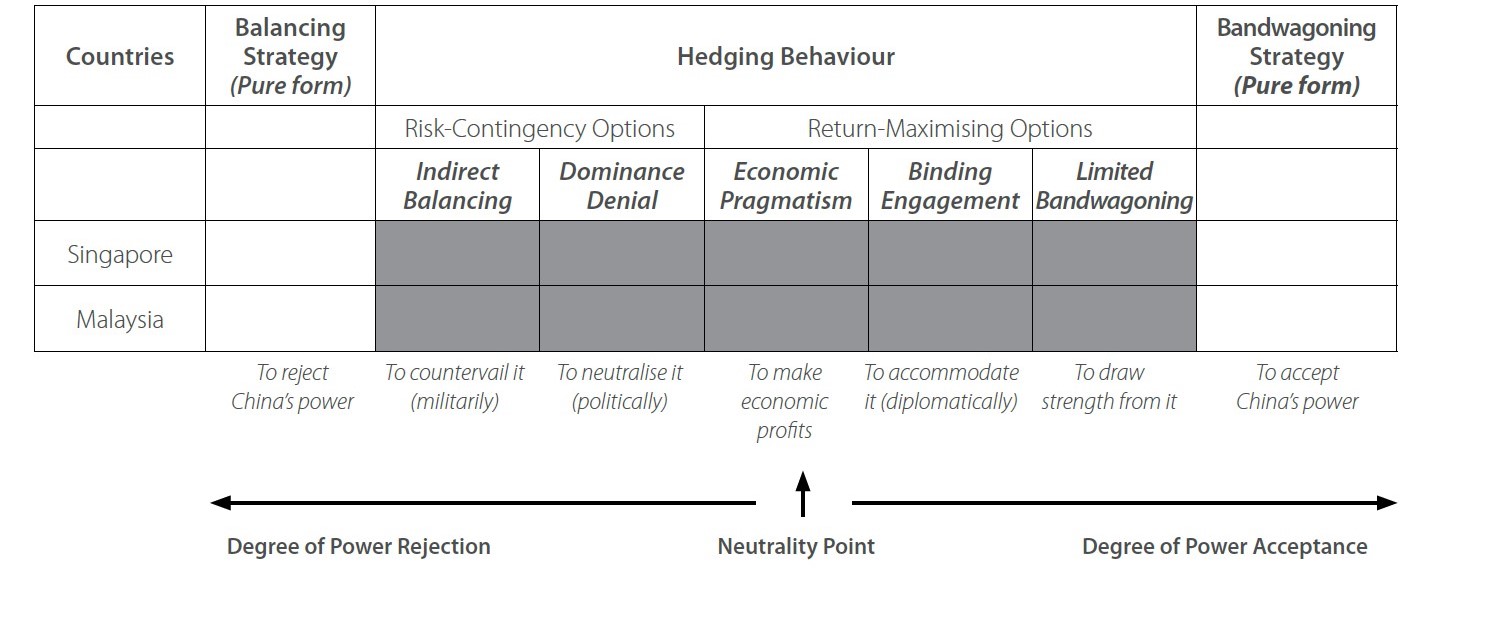
TABLE 1: ASEAN STATES’ RESPONSES TO THE RE-EMERGING CHINA
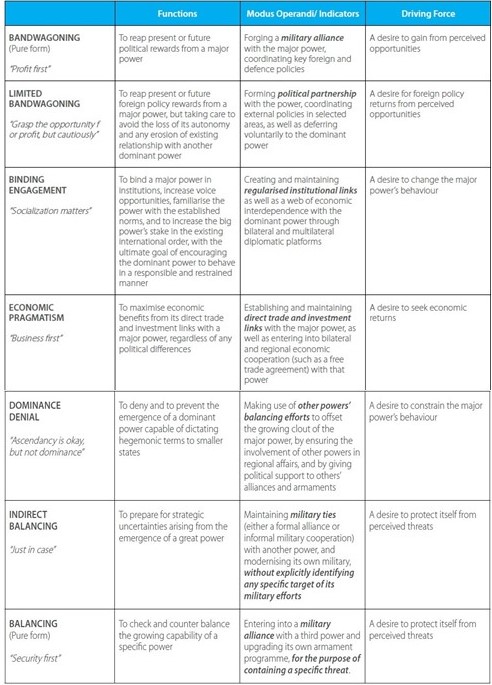
TABLE 2: SMALLER STATES’ POLICY OPTIONS IN RESPONSE TO POWER ASYMMETRY
Empirical Cases
This section compares the China policies of Malaysia and Singapore by operationalising the component parts of hedging as elucidated earlier.
Malaysia’s China Policy
The evolution of Malaysia’s China policy illustrates how a previously hostile and distrusting relationship has transformed into a cordial political partnership over a short period of time.34 Up until the late 1980s, Malaysia still perceived China as a long-term threat, largely because of the Chinese Communist Party (CCP)’s continued support for the outlawed Communist Party of Malaya (CPM), and also because of Beijing’s Overseas Chinese policy and its territorial claims in the South China Sea.35 Given these problems Malaysia’s China policy then was understandably highly vigilant, cautiously designed to “manage and control” what was considered to be the “most sensitive foreign relationship”.36
After the end of the Cold War, however, Malaysia adopted a much more sanguine outlook towards China. The dissolution of the CPM in 1989 effectively removed a long-standing political barrier. At the same time, the growing salience of economic performance as a source of authority for the United Malays National Organisation (UMNO)-led coalition government, along with Prime Minister Mahathir Mohamad’s foreign policy aspirations in the post-Cold War era, all contributed to the shift in Malaysia’s perception of China from the largest security threat to that of a key economic and foreign policy partner.37 Such a perceptual change has led to an adjustment in actual policy. In addition to strengthening its long-held economic pragmatism, Malaysia gradually adopted policies that can be considered binding engagement and limited bandwagoning, which became apparent towards the second half of the 1990s.
Malaysia’s economic pragmatism is best illustrated by its leaders’ high-level visits to China, which have always been accompanied by large business delegations. These visits resulted in the signing of memoranda of understanding for many joint-venture projects. Mahathir made seven such visits during his tenure, while his successor Prime Minister Abdullah Badawi’s visit to China in May 2004 was his first bilateral visit to a non-ASEAN country after assuming his premiership. China is now Malaysia’s fourth-largest trading partner. Bilateral trade has increased more than eight-fold over the past decade, from US$2.4 billion in 1995 to US$19.3 billion in 2004.38
Binding engagement is apparent in Malaysia’s various diplomatic efforts to increase dialogue opportunities with China. Having become the first ASEAN state to forge diplomatic ties with Beijing during the Cold War, Malaysia was also among the first regional states to establish a bilateral consultative mechanism between the two countries’ foreign ministry officials as early as April 1991, in the immediate post-Cold War era.39 Beyond the bilateral level, Kuala Lumpur also tried to bind China at the regional level. Beijing’s appearance at the 24th ASEAN Ministerial Meeting in July 1991 as a guest of the Malaysian government was China’s first multilateral encounter with the regional organisation. This laid the foundation for China’s subsequent participation in the burgeoning multilateral processes in the region.40 China joined the ARF in 1994, agreed to embark on the ASEAN-China SOM Consultation in 1995, and attended the ASEAN Post-Ministerial Conference as a dialogue partner in 1996. In addition to allowing Malaysia (and other ASEAN states) to engage the rising power at a time of strategic uncertainty, these institutions have also provided invaluable platforms for the management of the South China Sea dispute.41
Malaysia asserted its claim to part of the Spratlys archipelago in 1979. The country’s defence planners had been apprehensive of China’s intentions in the area, especially after China’s promulgation of a law on the territorial sea in 1992, and after the Philippine-China standoff over the Mischief Reef in 1995. Despite these concerns, however, the Malaysian leadership under Mahathir did not want the dispute to impede its goal of developing closer political and economic ties with China. This became apparent in the mid-1990s. In October 1995, Malaysia and China reached a consensus to reject “any form of outside interference or mediation” in the dispute42, and they signed a joint statement in May 1999 “to promote the settlement of disputes through bilateral friendly consultations and negotiations”.43 In July that same year, Malaysia opposed Filipino requests to discuss the dispute at the ARF. In August, while Manila vehemently protested Kuala Lumpur’s construction of structures on Terumbu Siput and Terumbu Peninjau, China’s response was mild. Considering the fact that the Malaysian foreign minister was in Beijing just before the construction took place, “it is a matter of conjecture,” a well-informed Malaysian analyst writes, whether the minister was “actually dispatched to Beijing in order to ‘explain’ the latest development over Malaysia’s position”.44
Malaysia’s moves, of course, were not so much about accommodating China’s position, but were calculated to promote its own interests on the Spratlys, defending territory and acquiring economic value from maritime resources. According to Joseph Liow, the fact that Malaysia’s claimed territory in the South China Sea was situated furthest from China, had kept both countries “from actual conflict over their respective claims and in turn … facilitated easier bilateral cooperation.” This was further aided by the fact that the two countries preferred “preserving the status quo” in the dispute.45
Malaysia’s limited bandwagoning behaviour is particularly apparent in the area of East Asian cooperation. Partly due to the shared worldview between the leaders of the two countries, and partly because of Beijing’s international influence, Malaysia considers China a valuable partner in pushing for its goal of fostering closer and institutionalised cooperation among the East Asian economies. This goal can be traced back to Mahathir’s East Asian Economic Grouping (EAEG) proposal in December 1990, which advocated the protection of regional countries’ collective interests in the face of trade protectionism in Europe and North America. The proposal involved ASEAN members, Indochinese states and Northeast Asian countries, but excluded the U.S. and its Australasian allies. The EAEG concept was met with strong objection by the U.S. and lukewarm response from Japan, South Korea and other ASEAN members, even when it was later renamed East Asian Economic Caucus (EAEC). Malaysia was disappointed with Japan’s response as it initially hoped Japan would play the leading role in the proposed group.46 In due course, China stood out as the only major actor which lent explicit support to EAEC despite its initial hesitation.47
In 1997, China, along with Japan and South Korea, accepted ASEAN’s invitation to attend an informal meeting during the ASEAN Summit in Kuala Lumpur, against the backdrop of the Asian financial crisis.48 The Summit was subsequently institutionalised as an annual cooperative mechanism among the East Asian economies, which marked the advent of the ASEAN Plus Three (APT) process. In 2002, Malaysia’s attempt to set up an APT Secretariat in Kuala Lumpur was opposed by ASEAN members, but supported by China.49
Malaysian and Chinese leaders clearly saw eye-to-eye on the need to accelerate East Asian cooperation and community building. In 2004, when Abdullah proposed to convene the first East Asia Summit (EAS) the following year, he was strongly backed by Chinese Premier Wen Jiabao. During the run-up to the inaugural meeting in 2005, Kuala Lumpur and Beijing initially wanted to limit the EAS membership to the 13 APT countries. Later, when it became clear that India, Australia and New Zealand would be included in the new forum, both Malaysia and China proposed that the APT would be the “main vehicle” for East Asia community building, and the EAS as “a forum for dialogue” among the regional countries.
The growing bilateral and multilateral interactions since the early 1990s have also offered opportunities for Malaysia and China to discover that they share important commonalities over many international issues. These range from human rights, the cause of the developing world, opposition to the U.S.-dominated international order, and so on. The congruence of interests in these areas has led them to support each other’s position at various international forums.50
The convergence of interests over these foreign policy issues, combined with tangible benefits accruing from closer bilateral economic ties, somewhat assuaged the Malaysian leaders earlier apprehensions about the potential security ramifications of their powerful neighbour. At an event celebrating the 30th anniversary of bilateral relations, Abdullah remarked:
Malaysia’s China policy has been a triumph of good diplomacy and good sense …
I believe that we blazed a trail for others to follow. Our China policy showed that
if you can look beyond your fears and inadequacies, and can think and act from
principled positions, rewards will follow.51
Taking this stance, leaders from Mahathir to Abdullah have made efforts to reiterate and internalise Malaysia’s benign view of Beijing at various gatherings, often citing the example of Chinese navigator Zheng He’s peaceful voyages to the Sultanate of Malacca in the 15th century to underscore the benevolent nature of Chinese power. Thus far, the leaders’ open rhetoric had largely been matched by the country’s policy. Notwithstanding the lingering concerns over China’s long-term intentions within the Royal Malaysian Armed Forces (MAF) circle, there had been no clear indication of Malaysia pursuing internal or external balancing acts against China. Liow suggests that Malaysia’s defence modernisation programme does not reflect a strategic priority that is targeted at China.52
To be sure, Malaysia has long maintained close defence ties with the U.S., and has been a participant in the Five Power Defence Arrangement (FPDA) that involves the U.K., Australia, New Zealand and Singapore. In May 2005, Malaysia and the U.S. renewed the Acquisition and Cross-Servicing Agreement, first signed in 1994. These arrangements, however, should be seen a manifestation of “indirect” rather than pure balancing, given that their raison d’être had more to do with the need to prepare for contingency than to target a specific threat. As Malaysian scholar Zakaria Haji Ahmad observed, the view in Malaysia’s political leadership is that “China will not enact policies harmful to Malaysia and that it will be benign.” He adds that in Malaysian conceptions of the future, “there is no notion of the U.S. being a strategic partner to ‘balance’, counter or neutralise China’s ‘big power’ mentality and actions, should Beijing choose to actualise it”.53
To Malaysian leaders, the idea of a China threat could prove a self-fulfilling prophecy. As Mahathir once remarked: “Why should we fear China? If you identify a country as your future enemy, it becomes your present enemy — because then they will identify you as an enemy and there will be tension”.54 In this regard, the defence cooperation memorandum of understanding (MoU) signed by Malaysia and China in September 2005 was significant not only because it institutionalised the bilateral defence ties, but also because it signified that Malaysia was now more willing to see China as a security partner than a security threat.
That limited bandwagoning has become part of Malaysia’s China policy does not imply that Malaysia favours a Beijing-dominated regional order. In fact, dominance denial continues to be an unwavering goal for Malaysia, as indicated by the country’s efforts to maintain close relations with all powers. In 2006, Deputy Prime Minister Najib Razak remarked that the reality of China’s rise was “by no means a reflection of [Malaysia’s acceptance of ] fatalism”, nor did it indicate that Malaysia was “adopting a subservient position towards China”.55 Given Malaysia’s sensitivity about sovereignty and equality, along with the complexities of its domestic ethnic structure — one-fourth of its population is ethnic Chinese) — it seems reasonable to expect that Malaysia’s bandwagoning behaviour will remain limited in the foreseeable future.
Singapore’s China Policy
The peculiarity of Singapore’s China policy is that, it is by design a highly ambivalent one — warm in economic and diplomatic ties but distanced in political and strategic spheres.56 Specifically while it concurs with Malaysia about the value of economic pragmatism and binding engagement in dealing with China, it has firmly rejected limited-bandwagoning as an option. Economic gain has always been a key driving force behind Singapore’s China policy under the rule of the People’s Action Party (PAP). As far back as the 1960s and through the 1980s, Singapore already pursued an economically opportunistic policy, notwithstanding political differences. The island-state actively promoted bilateral economic relations, especially after the signing of the bilateral trade agreement in December 1979 as well as the exchange of trade representatives in July 1981. The launch of China’s open-door policy in 1978, together with Singapore’s economic recession in the mid-1980s and the PAP government’s plan to develop a “second wing” of the Singaporean economy, provided additional incentives for Singapore to exploit growing economic opportunities in China.57 Largely because of the complementary nature of the two economies, Singapore has long been China’s largest trading partner in ASEAN.
Singapore’s economic pragmatism persisted through the post Cold War era. Its initial objective of economic gain, however, was now meshed with the goal of engagement. Together with other ASEAN partners, Singapore’s engagement policy was implemented both through economic incentives and regional institutions such as the ARF.58 By binding Beijing in a cooperative framework, Singapore hoped to give China a stake in regional peace and stability.59 As Evelyn Goh notes: “Singapore wants to see China enmeshed in regional norms, acting responsibly and upholding the regional status quo”.60
Why does Singapore care so much about the regional status quo, and how is China factored into the equation? To begin with, Singapore is a tiny state with an acute sense of vulnerability. This could be attributed to this miniscule size, limited natural resources, demographic structure and geopolitical circumstances. As Michael Leifer observed, Singapore has, since 1965, addressed its vulnerability with a three-fold approach: the promotion of economic interdependence, pursuit of armament and alliance, and the cultivation of a balance of power at the regional level.61 Each of these approaches is in turn subject to the following pillars of “regional status quo-ness”: regional peace and stability, freedom and safety of sea-lanes, a cohesive ASEAN and a stable distribution of power. For instance, if there was no safe and free navigation of commercial vessels, Singapore’s economic viability would be severely affected; if ASEAN was weak and fractured, Singapore would not be able to play a disproportionate role in external affairs; and if there was no stable balance of power, Singapore’s autonomy would be compromised by the emergence of a dominant power that was likely to limit the strategic manoeuvrability of smaller states.
This explains Singapore’s concern over the Taiwan Strait, the Spratlys, and Beijing’s escalating power. Given its high dependence on maritime trade and sea- lanes of communication, Singapore becomes apprehensive whenever there is any rising tension in the Taiwan Strait. During the 1996 crisis, Singaporean officials feared that any armed conflict in the region would “totally destabilise foreign trade and investment”.62 Similarly, although Singapore is not a claimant to the Spratlys, it is concerned that the dispute will have a direct bearing on the safety of navigation in the South China Sea.63 Moreover, the Spratlys illustrates the extent to which China is willing to abide by regional norms and international law.
To Singapore, there is little doubt that China will be powerful enough to alter the strategic landscape of Asia. The question, however, is less about capability than intention — i.e. how a robust China will exercise its newfound power in the region.
In view of the uncertainty over Beijing’s intentions, Singapore has cautiously adopted indirect balancing as a “fallback position” should the engagement policy fail.64 Such a position is very much a reflection of a “classic anticipatory state” as described by Yuen-Foong Khong, thus: “the time frame for Singapore’s ruminations about China is not now, or even five years down the line; it is twenty to thirty years hence.” PAP leaders therefore tend to “think in terms of possible scenarios for the future and how they might affect Singapore”.65 Given Singapore’s relative geographical distance from China as well as the absence of territorial disputes, China does not pose any direct threat to the city-state. Singapore’s musings about China thus are mostly cast over the mid- and long-term, and revolve around whether Beijing’s behaviour will disrupt regional stability and prosperity, constrain Singapore’s policy choices or drive a wedge between Southeast Asian states that would undermine ASEAN cohesion.66
Singapore’s quintessence as an anticipatory state is clearly demonstrated - by a decision made by then Prime Minister Lee Kuan Yew in the immediate post-Cold War era. In August 1989, when it appeared that the U.S. might have to close the Clark and Subic bases in the Philippines, Singapore announced that it would grant the Americans access to its bases. Lee’s move was driven by his fear that the U.S. withdrawal would create a power vacuum in Asia Pacific, which would lead to competition and conflict among regional powers seeking to fill the vacuum. If that happened, the ensuing instability would threaten Singapore’s survival. To forestall this, Lee decided to “stick with what [had] worked so far,” i.e. the American military presence that he saw as “essential for the continuation of international law and order in East Asia”.67 While Lee’s decision addressed strategic uncertainty in general rather than China in particular, Beijing’s subsequent action over the Mischief Reef a few years later gave rise to the strategic uncertainty he was worried about. In 1998, Singapore further strengthened bilateral security ties with the U.S. by constructing a new pier at its Changi Naval Base designed specially to accommodate U.S. aircraft carriers.
While Singapore’s indirect balancing has relied primarily on its military cooperation with the U.S., it would be wrong to link Singapore–U.S. ties entirely to the China. In fact, Singapore’s recent efforts to solidify its collaboration with the U.S. have less to do with China than its new concerns over terrorism. According to Evelyn Goh, Singapore’s concept of security changed significantly after the September 11 terrorist attacks in the U.S., as well as the arrest of members of the Al Qaeda-linked Jemaah Islamiah (JI) group in Singapore in 2002. Terrorism has now been identified as the key security threat. Consequently, the new counterterrorism agenda now acted “as stronger glue for the Singapore-U.S. strategic partnership than the China challenge”.68
Such developments, however, do not mean that the China has been relegated to the sidelines of Singapore’s strategic concerns. In fact, despite Beijing’s charm diplomacy in recent years, Singapore still cautiously guards against any potential repercussions of an increasingly China. The tumultuous Sino-Singaporean diplomatic feud that erupted right after then Deputy Premier Lee Hsien Loong’s visit to Taipei in 2004 might have heightened Singapore’s trepidation about the ramifications of a too powerful China.
Finally, Singapore’s policy is also marked by its rejection of limited bandwagoning. This is owing to its demographic profile and geopolitical complexity. Ever since Singapore gained independence after its unpleasant separation from the Federation of Malaysia in 1965, the island, with an ethnic Chinese population of 76 percent, has been reluctant to be seen as the “third China,” especially by its larger neighbours, Malaysia and Indonesia, which populations are predominantly of Malay ethnicity. During the Cold War, Singapore’s open declaration that it would be the last ASEAN state to establish diplomatic ties with Beijing was intended to dispel the image that it would be the “front post of China”.69 Even after the end of the Cold War, Singapore still took care to downplay ethnic affinity in its bilateral relations with China, and to avoid leaving any impression that it was promoting China’s interests in the region.70 For this reason, Singapore set “a self-imposed limit” on the extent to which it could forge political ties with Beijing.71 Hence, bandwagoning behaviour, even in limited form, does not appear to be a likely option for Singapore.
Conclusion
Offsetting Risks for Domestic Authority Consolidation
The preceding discussion suggests that the responses of Malaysia and Singapore to a rising China cannot be adequately explained by neo-realism. In the first place, neo-realism does not sufficiently capture the range of state options and functions in the face of power asymmetries. Neo-realists maintain that when faced with a rising power, states are likely to opt for internal and external balancing acts, to reduce threat. This discussion, however, suggests that state options are not confined to balancing (and its antithesis, bandwagoning), but may include mixed strategies such as hedging, which involves a combination of both military and non-military options, with particular reliance on multilateral institutions. This discussion also reveals that state functions are not limited to threat-reduction, but may involve the concurrent goals of risk-contingency and return-maximising. This is not to say that neo-realism is not relevant in explaining small-state responses to a rising power. It merely suggests that the paradigm is more useful in accounting for a situation in which states are confronted by an immediate security threat. In circumstances where the security of the states is not directly at stake — like the two cases at hand — neo-realism seems to lose much of its explanatory strength.
Moreover, neo-realism also cannot explain the variation in state responses. As discussed, the growth of China’s relative power since the 1990s induced Malaysia to move closer to Beijing by embracing limited bandwagoning, the very same structural force did not inspire Singapore to the same actions. It thus follows that the structural factor per se has no inherent consequences on state behaviour. There are other unit-level factors that may have affected the state’s differing responses. The importance of domestic factors is further highlighted by the intriguing fact that Malaysia was more inclined than Singapore was to accommodate China. Considering Malaysia’s past problems and the pending Spratlys dispute with China, one would expect Malaysia to be more wary of China than Singapore would be as Singapore did not have any overlapping territorial claims with Beijing and was geographically farther away. Empirical records as discussed reveal just the opposite.
This is where the regime legitimation proposition comes in. It explains the variation in the responses of Malaysia and Singapore to the rise of China to be largely a function of the differing pathways of domestic authority consolidation, i.e. the differing sources through which the respective ruling elites seek to enhance their authority and rule at home.
In the case of Malaysia, the substance of its China policy mirrors the key sources of the UMNO-led coalition government’s political foundation. These include the promotion of Malay ethnic dominance, economic growth, electoral performance, national sovereignty and international standing.72 Pure bandwagoning (an across-the-board alignment and an acceptance of hierarchical relations) is a non-starter for the Malaydominated regime, as the option would likely result in an imbalance in domestic political configuration and an erosion of external sovereignty. The limited form of bandwagoning, however, is desirable and vital, for the Barisan Nasional (BN) coalition government. Given Malaysia’s multi-racial structure, any politically significant economic performance requires the ruling BN to concurrently attain two goals: the improvement of the Malays’ economic welfare and the enlargement of the overall economic pie for the non-Malay groups.73 For the ruling elites, this is indeed a key to consolidating their electoral base. In this regard, a closer relationship with Beijing is crucial for Malaysia not only because it boosts the bilateral trade and investment flows, but also because China’s support will strengthen Malaysia’s ability to promote a new economic order for East Asia, with the ultimate goal of reducing the effects of the volatile global economy on its national economic performance. This ambition, if realised, is expected to elevate Malaysia’s regional and international standing, which along with other legitimation pathways, would help consolidate its electoral base. Hence, a pure form of balancing against Beijing is not only unjustifiable, but would prove harmful to the BN regime’s interests because such an option would call for a full-fledged alliance with the U.S., which would in turn reduce the credibility of the BN’s claim of pursuing an “independent” external policy for Malaysia.
In the case of Singapore’s China policy, the rejection of limited bandwagoning despite the enthusiasm for binding engagement and economic pragmatism is best explained by the very foundation of the PAP elites’ political power, i.e. the imperative to cope with the island-state’s inherited vulnerability.74 Singapore’s close economic and diplomatic relations with the China would serve to attain this goal (by contributing to Singapore’s sustainable economic vitality and its regional stability), but a strict sense of political and strategic partnership would not. In fact, any bandwagoning posture towards China would only increase Singapore’s vulnerability by causing its two larger neighbours to be suspicious. For a “little red dot” that has been viewed as a Chinese island in a Malay sea, such a scenario is likely to destabilise Singapore’s immediate external environment and divert the attention of PAP elite away more crucial domestic economic tasks.
This study is significant for policy analysis. Theoretically, placing regime legitimation in the lexicon of foreign policy studies could help bridge the analytically misleading “divide” between IR and comparative politics as branches of knowledge. Specifically, in highlighting sources of regime legitimacy — rather than security or utility — as the key source of foreign policy choice, this study hopes to sharpen the focus of national interest analysis. As discussed above, whether and when a state chooses to pursue a security-maximising or utility-maximising behaviour depends on the ruling regime, which decides what the “national” interests are and how best to pursue them.
Given the fact that few states are adopting pure forms of balancing or bandwagoning vis-à-vis China, conceptualising the hedging strategy as a spectrum of policy options is a more realistic way to observe the change or continuity in a particular state’s policy choices of states over time. It allows policy analysts to ponder the possibility, direction and conditions of a horizontal shift along the building blocks of the spectrum — for instance, from indirect balancing leftward to pure balancing, or from limited bandwagoning rightward to pure bandwagoning. Considering that states are more likely to adjust their strategic posture gradually, such a “transitional” outlook will be useful in monitoring the vicissitudes of states’ alignment choices amid the emerging structural changes in the 21st century.
Endnotes
1 The conceptual framework and discussion in this paper is derived from Kuik Cheng-Chwee, “Regime Legitimation and Foreign Policy Choices: A Comparative Study of Southeast Asian States’ Hedging Strategies toward a Rising China, 1990–2005,” dissertation prospectus submitted to Paul H. Nitze School of Advanced International Studies (SAIS), Johns Hopkins University, Washington, D.C., September 2006.
2 See, for instance, Kenneth N. Waltz, Theory of International Politics (Reading: Addison-Wesley, 1979); Stephen M. Walt, “Alliance Formation and the Balance of World Power,” International Security 9, no. 4 (Spring 1985): 3–43 (From JSTOR via NLB’s eResources (opens in new tab) website); Robert Kaufman, “To Balance or to Bandwagon?” Security Studies 1, no. 3 (1992): 417–47; Randall L. Schweller, “Bandwagoning for Profit: Bringing the Revisionist State Back in,” International Security 19, no. 1 (1994): 72–107. (From JSTOR via NLB’s eResources (opens in new tab) website)
3 For a lively debate on whether Asian states have pursued balancing or bandwagoning in response to China, see David Kang, “Getting Asia Wrong: The Need for New Analytical Frameworks,” International Security 27, no. 4 (Spring 2003): 57–85 (From JSTOR via NLB’s eResources (opens in new tab) website); Amitav Acharya, “Will Asia’s Past Be Its Future?” International Security 28, no. 3 (Winter 2003–2004): 149–64; David Shambaugh, “China Engages Asia: Reshaping the Regional Order,” International Security 29, no. 3 (Winter 2004–2005): 64–99; Nicholas Khoo and Michael Smith, David Shambaugh, “Correspondence: China Engages Asia? Caveat Lector,” International Security 30, no. 1 (Summer 2005): 196–213. (From JSTOR via NLB’s eResources (opens in new tab) website)
4 On the use of hedging as a state strategy, see James Shinn, ed., Weaving the Net: Conditional Engagement with China (opens in new tab) (New York: Council on Foreign Relations, 1996) (From National Library Singapore, call no. RUR 327.73051 SHI); Alastair Iain Johnston and Robert Ross, eds., Engaging China: The Management of an Emerging Power (opens in new tab) (New York: Routledge, 1999), 273–95 (From National Library Singapore, call no. RSING 327.09509045 ENG); Robert J. Art, “Europe Hedges Its Security Bets.” In Balance of Power: Theory and Practice in the 21st Century (opens in new tab), ed. T.V. Paul, James J. Wirtz and Michel Fortmann (Stanford: Stanford University Press, 2004), 179–213. (From National Library Singapore, call no. R 327.101 BAL); Chung, Chien-Png. “Southeast Asia-China Relations: Dialectics of ‘Hedging’ and ‘Counter-Hedging’.” Southeast Asian Affairs (2004): 35–53. (From JSTOR via NLB’s eResources (opens in new tab) website); Evelyn Goh, Meeting the China Challenge: The U.S. in Southeast Asian Regional Security Strategies (opens in new tab), Policy Studies, no. 16 (Washington, DC: East West Center Washington 2005, 14–25. (From National Library Singapore, call no. RSEA 327.59051 GOH); Francis Fukuyama and G. John Ikenberry, Report of the Working Group on Grand Strategic Choices (New Jersey: The Princeton Project on National Security, 2005), 14–25.
5 For instance, Evan S. Medeiros, “Strategic Hedging and the Future of Asia-Pacific Stability,” Washington Quarterly (Winter 2005–06): 145–67; Thomas J. Christensen, “Fostering Stability or Creating a Monster? The Rise of China and U.S. Policy Toward East Asia.” International Security 31, no. 1 (Summer 2006): 81–126; Rosemary Foot, “Chinese Strategies in a US-Hegemonic Global Order: Accommodating and Hedging.” International Affairs 82, no. 1 (January 2006): 77–94. (From JSTOR via NLB’s eResources (opens in new tab) website)
6 On inner justification of the “right to govern,” see Max Weber, “Legitimacy, Politics and the State,” in Legitimacy and the State, ed. William E. Connolly (New York: New York University Press, 1984), 32–62; David Beetham, The Legitimation of Power (New Jersey: Humanities Press, 1991); Muthiah Alagappa, ed., Political Legitimacy in Southeast Asia: The Quest for Moral Authority (opens in new tab) (Stanford: Stanford University Press, 1995). (From National Library Singapore, call no. RSING 320.0110959 ALA)
7 On neorealism, see Waltz, Theory of International Politics; Robert Keohane, ed., Neorealism and Its Critics (New York: Columbia University Press, 1986)
8 Waltz, Theory of International Politics; Walt, “Alliance Formation and the Balance of World Power.”
9 Walt, “Alliance Formation and the Balance of World Power.”
10 Waltz, Theory of International Politics, 168.
11 Schweller, “Bandwagoning for Profit”; On Bandwagoning, see also Kevin Sweeney and Paul Fritz, “Jumping on the Bandwagon: An Interest Based Explanation for Great Power Alliances.” Journal of Politics 66, no. 2 (May 2004): 428–49. (From JSTOR via NLB’s eResources (opens in new tab) website)
12 Amitav Acharya, “Containment, Engagement, or Counter-Dominance? Malaysia’s Response to the Rise of China,” in Johnston and Ross, Engaging China: The Management of an Emerging Power (opens in new tab), 140; Herbert Yee and Ian Storey, eds., The China Threat: Perceptions, Myths, and Reality (opens in new tab) (New York: Routledge Curzon, 2002). (From National Library Singapore, call no. RUR 327.51 CHI)
13 Wang Gungwu, “China and Southeast Asia: The Context of a New Beginning,” in Power Shift: China and Asia’s New Dynamics (opens in new tab), ed. David Shambaugh (Berkeley, CA: University of California Press, 2005), 187–204. (From National Library Singapore, call no. R 327.505109051 POW-[LKY])
14 Kuik Cheng-Chwee, “Multilateralism in China’s ASEAN Policy: Evolution, Characteristics, and Aspirations.” Contemporary Southeast Asia 27, no. 1 (April 2005): 102–22 (From JSTOR via NLB’s eResources (opens in new tab) website); “China’s Evolving Multilateralism in Asia: The Aussenpolitik and Innenpolitik Explanations,” in East Asian Multilateralism, ed. Kent E. Calder and Francis Fukuyama (Baltimore: Johns Hopkins University Press, 2008), 109–42.
15 Michael Vatikiotis, “Catching the Dragon’s Tail: China and Southeast Asia in the 21st Century,” Contemporary Southeast Asia 25, no. 1 (April 2003): 65–78. (From JSTOR via NLB’s eResources (opens in new tab) website)
16 Amitav Acharya has rightly cautioned that engagement cannot be viewed as bandwagoning “because it does not involve abandoning the military option vis-à-vis China”, and that economic self-interest should not be confused with bandwagoning because economic ties “do not amount to deference.” See Acharya, “Will Asia’s Past Be Its Future?” 151–52.
17 This section is drawn from Kuik Cheng-Chwee, “Theorizing Smaller States’ Aligning Choices: Balancing, Bandwagoning, and Hedging,” unpublished paper.
18 This definition is adapted from Glenn G. Munn, et al., Encyclopedia of Banking and Finance, 9th ed. (New York: McGraw-Hill, 1991), 485; Patrick Cusatis and Martin Thomas, Hedging Instruments and Risk Management (New York: McGraw-Hill, 2005); Jonathan Pollack, “Designing a New American Security Strategy for Asia,” in Shinn, Weaving the Net (opens in new tab), 99–132;
Goh, Meeting the China Challenge (opens in new tab), 2–4.
19 Glenn H. Snyder, “The Security Dilemma in Alliance Politics,” World Politics 36, no. 4 (July 1984), 461–95. (From JSTOR via NLB’s eResources (opens in new tab) website)
20 On the idea of “strategic uncertainty,” see Yuen Foong Khong, Yuen, Foong Khong, “Coping With Strategic Uncertainty,” in Rethinking Security in East Asia: Identity, Power, and Efficiency (opens in new tab), ed. J.J. Suh, Peter J. Katzenstein and Allen Carlson. Stanford: Stanford University, 172–208. (From National Library Singapore, call no. RUR 355.03305 RET)
21 Michael Leifer, The ASEAN Regional Forum: Extending ASEAN’s Model of Regional Security (opens in new tab) (Adelphi Paper no. 3020 (Oxford: Oxford University Press for the International Institute for Strategic Studies, 1996). (From National Library Singapore, call no. RSING 327.59 LEI)
22 Alastair Ian Johnston, “Is China a Status Quo Power?” International Security 27, no. 4 (Spring 2003): 5–56 (From JSTOR via NLB’s eResources (opens in new tab) website); David M. Lampton, “China’s Rise in Asia Need Not Be at America’s Expense,” in Shambaugh, Power Shift (opens in new tab), 306–26.
23 Sheng Lijun, China’s Influence in Southeast Asia (opens in new tab) (Trends in Southeast Asia Series No. 4) (Singapore: Institute of Southeast Asian Studies, 2006). (From National Library Singapore, call no. RSING q337.51059 SHE)
24 The need to go beyond the dichotomous terms was emphasised earlier by Amitav Acharya and Ja Ian Chong. See Acharya, “Containment, Engagement, or Counter-Dominance? (opens in new tab)” and Chong Ja lan. Revisiting Responses To Power Preponderance (Working Paper no. 54) (Singapore: Institute of Defence and Strategic Studies, 2003). (From PublicationSG)
25 For instance, Malaysia in the 1980s pursued such a policy despite its persistent political distrust of China. See Stephen Leong, “Malaysia and the People’s Republic of China in the 1980s: Political Vigilance and Economic Pragmatism.” Asian Survey 27, no. 10 (October 1987): 1109–126. (From JSTOR via NLB’s eResources (opens in new tab) website)
26 Chia Siow-Yue, “China’s Economic Relations with ASEAN Countries,” and Chin Kin Wah, “A New Phase in Singapore’s Relations with China,” both in Joyce Kallgren et al, eds., ASEAN and China: An Evolving Relationship (opens in new tab) (Berkeley: University of California, 1988), 189–214, 274–91. (From National Library Singapore, call no. RSING 327.51059 ASE)
27 Joyce, ASEAN and China: An Evolving Relationship (opens in new tab), 189–214, 274–91; John Wong, The Political Economy of China’s Changing Relations with Southeast Asia (opens in new tab) (London: Macmillan, 1984). (From National Library Singapore, call no. RSING 338.9151059 WON)
28 Schweller, “Managing the Rise of Great Powers (opens in new tab),” 13–15.
29 Schweller, “Managing the Rise of Great Powers (opens in new tab),” 13–15; Khong, “Singapore (opens in new tab),” 110–13; Jusof Wanandi, “ASEAN’s China Strategy: Towards Deeper Engagement,” Survival 38, no. 3 (1996): 117–28.
30 Acharya, “Will Asia’s Past Be Its Future?” 151.
31 This term is adapted from Amitav Acharya’s concept of “counter-dominance.” See his “Containment, Engagement, or Counter-Dominance? Malaysia’s Response to the Rise of China (opens in new tab),” 129–51.
32 G. John Ikenberry, “Institutions, Strategic Restraint, and the Persistence of American Postwar Order,” International Security 23, no. 3 (Winter 1998–1999): 43–78. (From JSTOR via NLB’s eResources (opens in new tab) website)
33 “Soft balancing” is used as a contrast to “hard balancing,” which refers to formal and definite military alliance. See Khong, “Coping with Strategic Uncertainty (opens in new tab)”; Paul et al., Balance of Power (opens in new tab), 13.
34 Abdul Razak Baginda, “Malaysian Perceptions of China: From Hostility to Cordiality,” in Yee and Storey, The China Threat (opens in new tab), 227–47; Shafruddin Hashim, “Malaysian Domestic Politics and Foreign Policy: The Impact of Ethnicity,” in ASEAN in Regional and Global Context (opens in new tab), ed. Karl D. Jackson, Sukhumbhand Paribatra and J. Soedjati Djiwandono (Berkeley: University of California, 1986), 155–62. (From National Library Singapore, call no. RSING 382.0959 ASE)
35 Leong, “Malaysia and The People’s Republic of China in the 1980s.”
36 Chai Ching Hau, “Dasar Luar Malaysia Terhadap China: Era Dr Mahathir Mohamad [“Malaysia’s Foreign Policy towards China: The Mahathir Mohamad’s Era”] (M.A. thesis, National University of Malaysia, 2000); James Clad, “An Affair of the Head,” Far Eastern Economic Review (4 July 1985): 12–14.
37 Joseph Liow Chinyong, “Malaysia-China Relations in the 1990s: The Maturing of a Partnership,” Asian Survey 40, no. 4 (2000): 672–91 (From JSTOR via NLB’s eResources (opens in new tab) website); K.S. Nathan, “Malaysia: Reinventing the Nation,” in Asian Security Practice: Material and Ideational Influences (opens in new tab), ed. Muthiah Alagappa (Stanford: Stanford University Press, 1998), pp. 513–48. (From National Library Singapore, call no. RSEA 355.03305 ASI)
38 “Trade and Investments Statistics,” Malaysia Trade and Industry Portal, accessed 6 July 2006.
39 “30 Years of Diplomatic Relations, UMNO,” [United Malays National Organisation] Online, accessed 5 June 2004.
40 Kuik, “Multilateralism in China’s ASEAN Policy,” 102–22; and “China’s Evolving Multilateralism in Asia: The Aussenpolitik and Innenpolitik Explanations,” 109–42.
41 Lee Lai To, China and the South China Sea Dialogues (Westport, CT: Praeger, 1999)
42 Liow, “Malaysia-China Relations in the 1990s,” 687.
43 Ministry of Foreigns Affairs, Malaysia, “Joint Statement between the Government of Malaysia and the Government of the People’s Republic of China on Framework for Future Bilateral Cooperation,” press release, 31 May 1999.
44 Abdul Razak Baginda, “Malaysian Perceptions of China,” 244.
45 Liow, “Malaysia-China Relations in the 1990s,” 688–89.
46 Interviews with Malaysian diplomats and academia, January 2006 and February 2007.
47 Stephen Leong, “The East Asian Economic Caucus (EAEC): ‘Formalized’ Regionalism Being Denied,” in Bjorn Hettne, et al, National Perspectives on the New Regionalism in the South, vol. 3. (London: MacMillan, 2000)
48 Richard Stubbs, “ASEAN Plus Three: Emerging East Asian Regionalism?” Asian Survey 42, no. 3. (May–June 2002): 443.
49 Interviews with Malaysian diplomats, January 2006 and March 2007.
50 Interviews with Malaysian diplomats, January 2006 and March 2007.
51 YAB Dato’ Seri Abdullah Haji Ahmad Badawi, “The China-Malaysia Economic Conference,” speech, Bandar Sunway, 24 February 2004.
52 Liow, “Malaysia-China Relations in the 1990s,” 682–83.
53 Zakaria Haji Ahmad, “Malaysia,” in Betwixt and Between: Southeast Asian Strategic Relations with the U.S. and China (opens in new tab), ed. Evelyn Goh, IDSS Monograph no. 7 (Singapore: Institute of Defence and Strategic Studies, Nanyang Technological University, 2005), 58–59. (From National Library Singapore, call no. RSING 327.59051 BET)
54 “I am Still Here: Asiaweek’s Complete Interview with Mahathir Mohamad,” Asiaweek, 9 May 1997.
55 Dato’ Sri Mohd Najib Tun Abd Razak, “Strategic Outlook for East Asia: A Malaysian Perspective,” Keynote Address to the Malaysia and East Asia International Conference, Kuala Lumpur, 9 March 2006.
56 Part of this section is drawn from Cheng-Chwee Kuik, “Shooting Rapids in a Canoe: Singapore and Great Powers,” in Impressions of the Goh Chok Tong Years in Singapore (opens in new tab), ed. Bridget Welsh, et al (Singapore: NUS Press, 2010). (From National Library Singapore, call no. RSING 959.5705 IMP-[HIS])
57 Chia, “China’s Economic Relations with ASEAN Countries (opens in new tab)”; Lee, Lai To, “The Lion and the Dragon: A View on Singapore-China Relations,” Journal of Contemporary China 10, no. 28 (2001): 415–25.
58 Khong, “Singapore (opens in new tab).”
59 Whiting, “ASEAN Eyes China.”
60 Evelyn Goh, “Singapore’s Reaction to a Rising China: Deep Engagement and Strategic Adjustment,” in China and Southeast Asia: Global Changes and Regional Challenges (opens in new tab), ed. Ho Khai Leong and Samuel C.Y. Ku (Singapore: Institute of Southeast Asian Studies, 2005), 313. (From National Library Singapore, call no. RSING 327.51059 CHI)
61 Michael Leifer, Singapore’s Foreign Policy: Coping with Vulnerability (opens in new tab) (New York: Routledge, 2000). (From National Library Singapore, call no. RSING 327.5957 LEI)
62 Allen S. Whiting, “ASEAN Eyes China: The Security Dimension,” Asian Survey 37, no. 4 (April 1997): 308. (From JSTOR via NLB’s eResources (opens in new tab) website Whiting,
63 Ian Storey, “Singapore and the Rise of China,” in The China Threat: Perceptions, Myths, and Reality (opens in new tab), ed. Herbert Yee and Ian Storey (New York: Routledge Curzon, 2002), 213. (From National Library Singapore, call no. RUR 327.51 CHI)
64 Storey, “Singapore and the Rise of China (opens in new tab),” 213; Wayne Bert, The United States, China and Southeast Asian Security: A Changing of the Guard (opens in new tab) (New York: Palgrave MacMillan, 2003), 180. (From National Library Singapore, call no. RUR 355.033059 BER)
65 Khong, “Singapore (opens in new tab),” 113.
66 Goh, Meeting the China Challenge (opens in new tab), 13.
67 Khong, “Coping with Strategic Uncertainties (opens in new tab),” 181–82.
68 Goh, Meeting the China Challenge (opens in new tab), 13–15.
69 Leo Suryadinata, China and the ASEAN States: The Ethnic Chinese Dimension (opens in new tab) (Singapore: Singapore University Press, 1985), 81. (From National Library Singapore, call no. RSING 327.59051 SUR)
70 Khong, “Singapore (opens in new tab),” 119; Goh, “Singapore’s Reaction to a Rising China (opens in new tab),” 316.
71 Khong, “Singapore (opens in new tab),” 119.
72 On political legitimation in Malaysia, see William Case, “Malaysia: Aspects and Audiences of Legitimacy,” in Political Legitimacy in Southeast Asia: The Quest for Moral Authority (opens in new tab), ed. Muthiah Alagappa (Stanford: Stanford University Press, 1995), 69–107. (From National Library Singapore, call no. RSING 320.0110959 ALA)
73 Liow, “Malaysia-China Relations in the 1990s,” 676.
74 Leifer, Singapore’s Foreign Policy (opens in new tab); Cho-Oon Khong, “Singapore: Political Legitimacy through Managing Comformity,” in Political Legitimacy in Southeast Asia: The Quest for Moral Authority (opens in new tab), ed. Muthiah Alagappa (Stanford: Stanford University Press, 1995), 108–35. (From National Library Singapore, call no. RSING 320.0110959 ALA)
Bibliography
On IR Theories
Acharya, Amitav. “Will Asia’s Past Be Its Future?” International Security 28, no. 3 (Winter 2003–2004): 149–64. (From JSTOR via NLB’s eResources (opens in new tab) website)
Beeson, Mark. “The Declining Theoretical and Practical Utility of ‘Bandwagoning’: American Hegemony in the Age of Terror.” British Journal of Politics and International Relations 9, no. 4 (August 2007): 618–36.
Brooks, G. Stephen and William C. Wohlforth. “Hard Times for Soft Balancing.” International Security 30, no. 1 (Summer 2005): 72–108. (From JSTOR via NLB’s eResources (opens in new tab) website)
Caporaso, James A. “Across the Great Divide: Integrating Comparative and International Politics.” International Studies Quarterly 41, no. 4 (December 1997): 563–92. (From JSTOR via NLB’s eResources (opens in new tab) website)
Carlsnaes, Walter, Thomas Risse and Beth A. Simmons, eds. Handbook of International Relations (opens in new tab). London: SAGE, 2002. (From National Library Singapore, call no. RUR q327 HAN)
Chong, Ja lan. Revisiting Responses To Power Preponderance. Working Paper no. 54. Singapore: Institute of Defence and Strategic Studies, 2003. (From PublicationSG)
Claude, Inis. “The Balance of Power Revisited.” Review of International Studies 15, no. 2 (April 1989): 77–85. (From JSTOR via NLB’s eResources (opens in new tab) website)
David, Steven R. “Explaining Third World Alignment.” World Politics 43, no. 2 (1991): 233–56. (From JSTOR via NLB’s eResources (opens in new tab) website)
—. Choosing Sides: Alignment and Realignment in the Third World. Baltimore: The Johns Hopkins University Press, 1991.
Fearon, James. “Domestic Politics, Foreign Policy, and Theories of International Relations.” Annual Review of Political Science 1 (1998): 289–313.
Finnemore, Martha. National Interests in International Society. Ithaca, London: Cornell University Press, 1996.
George, Alexander L. and Andrew Bennett. Case Studies and Theory Development in the Social Sciences. Cambridge, MA: The Belfer Center for Science and International Affairs, 2005.
Haas, Ernst. “The Balance of Power: Prescription, Concepts, or Propaganda?” World Politics 5, no, 4 (July 1953): 442–477. (From JSTOR via NLB’s eResources (opens in new tab) website)
Kang, David C. “Getting Asia Wrong: The Need for New Analytical Frameworks.” International Security 27, no. 4 (Spring 2003): 57–85. (From JSTOR via NLB’s eResources (opens in new tab) website)
Katzenstein, Peter J. ed. The Culture of National Security: Norms and Identity in World Politics. New York: Columbia University Press, 1996.
Kaufman, Robert G. “To Balance or to Bandwagon? Alignment Decisions in 1930s Europe.” Security Studies 1, no. 3 (1992): 417–47.
Levy, Jack S and Michael N. Barnett. “Domestic Sources of Alliances and Alignments: The Case of Egypt, 1962–1973.” International Organization 45, no. 3 (Summer 1991): 369–95. (From JSTOR via NLB’s eResources (opens in new tab) website)
Lieber, Keir A and Gerard Alexander. “Waiting for Balancing: Why the World Is Not Pushing Back.” International Security 30, no. 1 (Summer 2005): 109–39. (From JSTOR via NLB’s eResources (opens in new tab) website)
Morgenthau, Hans. Politics Among Nations. New York: Alfred A. Knopf, 1948.
Putnam, Robert D. “Diplomacy and Domestic Politics: The Logic of Two-Level Games.” International Organization 42, no. 3 (Summer 1988): 427–60. (From JSTOR via NLB’s eResources (opens in new tab) website)
Rose, Gideon. “Neoclassical Realism and Theories of Foreign Policy.” World Politics 51, no. 1 (October 1998): 144–72. (From JSTOR via NLB’s eResources (opens in new tab) website)
Schweller. Randall L. “Bandwagoning for Profit: Bringing the Revisionist State Back In.” International Security 19, no. 1 (Summer 1994): 72–107. (From JSTOR via NLB’s eResources (opens in new tab) website)
—. “Unanswered Threats: A Neoclassical Realist Theory of Underbalancing.” International Security 29, no. 2 (Fall 2004): 159–201. (From JSTOR via NLB’s eResources (opens in new tab) website)
Sweeney, Kevin and Paul Fritz. “Jumping on the Bandwagon: An Interest Based Explanation for Great Power Alliances.” Journal of Politics 66, no. 2 (May 2004): 428–49. (From JSTOR via NLB’s eResources (opens in new tab) website)
Walt, Stephen M. “Alliance Formation and the Balance of World Power.” International Security 9, no. 4 (Spring 1985): 3–43. (From JSTOR via NLB’s eResources (opens in new tab) website)
Waltz, Kenneth Neal. Theory of International Politics. Reading, MA: Addison-Wesley. 1979.
Wendt, Alexander. Social Theory of International Politics. Cambridge: Cambridge University Press, 1999.
Fareed Zakaria. “Realism and Domestic Politics.” International Security 17, no. 1 (Summer 1992): 177–98. (From JSTOR via NLB’s eResources (opens in new tab) website)
On Hedging
Art, Robert J. “Europe Hedges Its Security Bets.” In Balance of Power: Theory and Practice in the 21st Century (opens in new tab), edited by T.V. Paul, James J. Wirtz and Michel Fortmann. Stanford: Stanford University Press, 2004, 179–213. (From National Library Singapore, call no. R 327.101 BAL)
Brooke, P. “Hedging Bets To Keep China in Check.” China Post, 6 September 2007.
Christensen, Thomas J. “Fostering Stability or Creating a Monster? The Rise of China and U.S. Policy Toward East Asia.” International Security 31, no. 1 (Summer 2006): 81–126. (From JSTOR via NLB’s eResources (opens in new tab) website)
Chung, Chien-Png. “Southeast Asia-China Relations: Dialectics of ‘Hedging’ and ‘Counter-Hedging’.” Southeast Asian Affairs (2004): 35–53. (From JSTOR via NLB’s eResources (opens in new tab) website)
Downes, John and Jordan Elliot Goodman. Dictionary of Finance and Investment. 5th ed. New York: Barron’s, 1998.
Foot, Rosemary. “Chinese Strategies in a US-Hegemonic Global Order: Accommodating and Hedging.” International Affairs 82, no. 1 (January 2006): 77–94. (From JSTOR via NLB’s eResources (opens in new tab) website)
Fukuyama, F. and G. J. Ikenberry. Report of the Working Group on Grand Strategic Choices. New Jersey: The Princeton Project on National Security, 2005.
Goh, Evelyn. Meeting the China Challenge: The U.S. in Southeast Asian Regional Security Strategies (opens in new tab). Policy Studies, no. 16. Washington, DC: East West Center Washington 2005. (From National Library Singapore, call no. RSEA 327.59051 GOH)
Johnston, Alastair Iain and Robert S. Ross, eds. Engaging China: The Management of an Emerging Power (opens in new tab). New York: Routledge, 1999. (From National Library Singapore, call no. RSING 327.09509045 ENG)
Munn, Glenn Gaywaine, Ferdinand Lawrence Garcia and Charles J. Woelfel. Encyclopedia of Banking and Finance. 9th ed. New York: McGraw Hill, 1991.
Pollack, J. “Designing a New American Security Strategy for Asia.” In Weaving the Net: Conditional Engagement with China (opens in new tab), edited by James Shinn. New York: Council on Foreign Relations, 1996. (From National Library Singapore, call no. RUR 327.73051 SHI)
Shambaugh, David and Karl F. Inderfurth, “China and the U.S.: To Hedge or Engage.” YaleGlobal Online, accessed 24 September 2009, https://archive-yaleglobal.yale.edu/content/china-and-us-hedge-or-engage (opens in new tab).
On Regime Legitimation
Alagappa, Muthiah, ed. Political Legitimacy in Southeast Asia: The Quest for Moral Authority (opens in new tab). Stanford: Stanford University Press, 1995. (From National Library Singapore, call no. RSING 320.0110959 ALA)
Ayob, Mohammed. “The Security Problematic of the Third World.” World Politics 43, no. 2 (1991): 257–83. (From JSTOR via NLB’s eResources (opens in new tab) website)
Beetham, David. The Legitimation of Power. New Jersey: Humanities Press, 1991.
Coicaud, Jean-Marc. Legitimacy and Politics: A Contribution to the Study of Political Right and Political Responsibility. Translated by D.A. Curtis. Cambridge: Cambridge University Press, 2002.
Habermas, Juergen. Legitimation Crisis. Translated by Thomas McCarthy. Boston: Beacon Press, 1973.
Lassman, Peter and Ronald Spiers, eds. Weber: Political Writings. Cambridge: Cambridge University Press, 1994.
Weber, Max. Economy and Society: An Outline of Interpretive Sociology. Edited by Guenther Roth and Claus Wittich. Berkeley: University of California Press, 1978.
Shapiro, Ian. The Moral Foundations of Politics (opens in new tab). New Haven: Yale University Press, 2003. (From National Library Singapore, call no. R 172 SHA)
Simmons, A. John. Justification and Legitimacy: Essays on Rights and Obligations. Cambridge: Cambridge University Press, 2001.
Weber, Max. “Legitimacy, Politics and the State.” In Legitimacy and the State, edited by William E. Connolly. New York: New York University Press, 1984, 32–62.
On Singapore, Malaysia, ASEAN and Southeast Asia
Acharya, Amitav. Constructing a Security Community in Southeast Asia: ASEAN and the Problem of Regional Order (opens in new tab). London: Routledge, 2001. (From National Library Singapore, call no. RSING 327.170959 ACH)
Ahmad, Zakaria Haji. “Malaysia’s Foreign Policy: Looking Back and Looking Ahead, or Looking Outwards and Moving Inwards?” In Malaysian Foreign Policy: Issues and Perspectives (opens in new tab), edited by Mohammed Azhari Karim, Llewellyn D. Howell and Grace Okuda. Kuala Lumpur: National Institute of Public Administration, Malaysia. (From National Library Singapore, call no. RSEA 327.109595 MAL)
Buszynski, Leszek. “Singapore: A Foreign Policy of Survival.” Asian Thought and Society 10, no. 29 (1985): 128–36.
Case, William. Politics in Southeast Asia: Democracy or Less (opens in new tab). Richmond, Surrey: Curzon, 2002. (From National Library Singapore, call no. RSING 320.959 CAS)
Chan, Heng Chee. The Dynamics of One Party Dominance (opens in new tab). Singapore: Singapore University Press, 1976. (From National Library Singapore, call no. RSING 329.95957 CHA)
—. “Singapore: Coping With Vulnerability.” In Driven by Growth: Political Change in the Asia-Pacific Region, edited by James William Morley. New York: M.E. Sharpe, 1993, 219–43.
Chin, Kin Wah. The Defence of Malaysia and Singapore: The Transformation of a Security System, 1957–1971 (opens in new tab). Cambridge: Cambridge University Press, 1983. (From National Library Singapore, call no. RSING 341.720265 CHI)
Chua, Beng Huat. Communitarian Ideology and Democracy in Singapore (opens in new tab). New York: Routledge. (From National Library Singapore, call no. RSING 959.5705 CHU-[HIS])
Ganesen, N. Realism and Interdependence in Singapore’s Foreign Policy (opens in new tab). London: Routledge Curzon, 2005. (From National Library Singapore, call no. RSING 327.5957 GAN)
Huxley, Tim. Defending the Lion City: The Armed Forces of Singapore (opens in new tab). St. Leonards, NSW: Allen & Unwin, 2000. (From National Library Singapore, call no. RSING 355.3095957 HUX)
Jackson, Karl D., Sukhumbhand Paribatra and J. Soedjati Djiwandono. ASEAN in Regional and Global Context (opens in new tab). Berkeley, CA: Institute of East Asian Studies, University of California, 1986. (From National Library Singapore, call no. RSING 382.0959 ASE)
Koh, Tommy and Chang Li Lin eds. The Little Red Dot: Reflections by Singapore’s Diplomats (opens in new tab). Singapore: World Scientific, 2005. (From National Library Singapore, call no. RSING 327.5957 LIT)
Kwa, Chong Guan, ed. S Rajaratnam on Singapore: From Ideas to Reality (opens in new tab). Singapore: World Scientific: Institute of Defence and Strategic Studies, 2006. (From National Library Singapore, call no. RSING 327.5957 S)
Leifer, Michael. Indonesia’s Foreign Policy (opens in new tab). London: George Allen & Unwin, 1983. (From National Library Singapore, call no. RUR 327.598 LEI)
—. The ASEAN Regional Forum: Extending ASEAN’s Model of Regional Security (opens in new tab). Adelphi Paper no. 302. Oxford: Oxford University Press for the International Institute for Strategic Studies, 1996. (From National Library Singapore, call no. RSING 327.59 LEI)
—. Singapore’s Foreign Policy: Coping With Vulnerability (opens in new tab). New York: Routledge, 2000. (From National Library Singapore, call no. RSING 327.5957 LEI)
Liow, Joseph Chinyong and Ralf Emmers, ed. Order and Security in Southeast Asia: Essays in Memory of Michael Leifer (opens in new tab). New York: Routledge, 2006. (From National Library Singapore, call no. RSING 327.59009045 ORD)
Mauzy, Diane K. and R.S. Milne. Singapore Politics: Under the People’s Action Party (opens in new tab). London: Routledge, 2002. (From National Library Singapore, call no. RSING 320.95957 MAU)
Saravanamuttu, J. Two Decades of Malaysia’s Foreign Policy, 1957–1977 (opens in new tab). Penang: Universiti Sains Malaysia for School of Social Sciences, 1983. (From National Library Singapore, call no. RSING 327.595 SAR)
Saravanamuttu, Johan. “Malaysian Foreign Policy in the Mahathir Period, 1981–1995: An Iconoclast Come To Rule.” Asian Journal of Political Science 4, no. 1 (1996): 1–16.
Siddique Sharon and Sree Kumar, eds. The 2nd ASEAN Reader (opens in new tab). Singapore: Institute of Southeast Asian Studies, 2003. (From National Library Singapore, call no. RSING q341.2473 SEC)
Simon, Sheldon W., ed. The Many Faces of Asian Security (opens in new tab). Lantham: Rowman and Littlefield Publishers, 2001. (From National Library Singapore, call no. RSING 327.095 MAN)
Singh, Bilveer. “A Small State’s Quest for Security.” In Imagining Singapore (opens in new tab), edited by Ban Kah Choon, Anne Pakir and Tong Chee Kiong. Singapore: Times Academic Press, 1992, 97–131. (From National Library Singapore, call no. RSING 959.57 IMA-[HIS])
Suryadinata, Leo, ed. Ethnic Relations and Nation-Building in Southeast Asia: The Case of the Ethnic Chinese (opens in new tab). Singapore: Institute of Southeast Asian Studies, 2004. (From National Library Singapore, call no. RSING 959.004951 ETH)
Welsh, Bridget, ed. Reflections: The Mahathir Years. Washington, D.C.: Southeast Asia Studies Program, The Paul H. Nitze School of Advanced International Studies (SAIS), Johns Hopkins University, 2003. (From National Library Singapore, call no. RSING 337.59 POL)
Wurfel, David and Bruce Burton, eds. The Political Economy of Foreign Policy in Southeast Asia (opens in new tab). Basingstoke, Hants: Macmillan, 1990. (From National Library Singapore, call no. RSING 337.59 POL)
Yuen, Foong Khong, “Coping With Strategic Uncertainty.” In Rethinking Security in East Asia: Identity, Power, and Efficiency (opens in new tab), edited by J.J. Suh, Peter J. Katzenstein and Allen Carlson. Stanford: Stanford University, 172–208. (From National Library Singapore, call no. RUR 355.03305 RET)
On Southeast Asia-China Relations
Anwar, Dewi Fortuna. “Indonesia’s Relations With China and Japan: Images, Perception and Realities.” Contemporary Southeast Asia 12, no, 3 (December 1990): 225–46. (From JSTOR via NLB’s eResources (opens in new tab) website)
Ba, Alice, D. “China and ASEAN: Renavigating Relations for a 21st-century Asia.” Asian Survey 43, no. 4 (July–August 2003): 622–47. (From JSTOR via NLB’s eResources (opens in new tab) website)
Kuik, Cheng-Chwee. “Multilateralism in China’s ASEAN Policy: Evolution, Characteristics, and Aspirations.” Contemporary Southeast Asia 27, no. 1 (April 2005): 102–22. (From JSTOR via NLB’s eResources (opens in new tab) website)
Lee, Lai To. “The Lion and the Dragon: A View on Singapore-China Relations.” Journal of Contemporary China 10, no. 28 (2001): 415–25.
Leong, Stephen. “Malaysia and the People’s Republic of China in the 1980s: Political Vigilance and Economic Pragmatism.” Asian Survey 27, no. 10 (October 1987): 1109–126. (From JSTOR via NLB’s eResources (opens in new tab) website)
Liow, Joseph Chin Yong. “Malaysia-China Relations in the 1990s: The Maturing of a Partnership.” Asian Survey 40, no. 4 (July–August 2000): 672–91. (From JSTOR via NLB’s eResources (opens in new tab) website)
Stuart-Fox, Martin. A Short History of China and Southeast Asia: Tribute, Trade and Influence (opens in new tab). Crows Nest, Australia: Allen & Unwin, 2003. (From National Library Singapore, call no. RBUS 382.951059 STU)
Suryadinata, Leo. China and the ASEAN States: The Ethnic Chinese Dimension (opens in new tab). Singapore: Singapore University Press, 1985. (From National Library Singapore, call no. RSING 327.59051 SUR)
Suryadinata, Leo. China and the ASEAN States: The Ethnic Chinese Dimension (opens in new tab). Singapore: Marshall Cavendish, 2005. (From National Library Singapore, call no. RSING 327.59051 SUR)
Vatikiotis, R.J. Michael. “Catching the Dragon’s Tail: China and Southeast Asia in the 21st Century.” Contemporary Southeast Asia 25, no. 1 (April 2003): 65–78. (From JSTOR via NLB’s eResources (opens in new tab) website)
Wanandi, Jusuf. “ASEAN’s China Strategy: Towards Deeper Engagement.” Survival 38, no. 3 (1996): 117–29.
Wang, Gungwu. China and Southeast Asia: Myths, Threats and Culture (opens in new tab). EAI Occasional Paper no. 13. Singapore: World Scientific, 1999. (From National Library Singapore, call no. RSING 327.59051 WAN)
—. “China and Southeast Asia: The Context of a New Beginning.” In Power Shift: China and Asia’s New Dynamics (opens in new tab), edited by David Shambaugh. Berkeley, CA: University of California Press, 2005, 187–204. (From National Library Singapore, call no. R 327.505109051 POW-[LKY])
Whiting, Allen S. “ASEAN Eyes China: The Security Dimension.” Asian Survey 37, no. 4 (April 1997): 299–22. (From JSTOR via NLB’s eResources (opens in new tab) website)
Wong, John and Sara Chan. “China-ASEAN Free Trade Agreement: Shaping Future Economic Relations.” Asian Survey 43, no. 3 (May–June 2003): 507–26. (From JSTOR via NLB’s eResources (opens in new tab) website)
Yee, Herbert Yee and Ian Storey, eds. The China Threat: Perceptions, Myths, and Reality (opens in new tab). New York: Routledge Curzon, 2002. (From National Library Singapore, call no. RUR 327.51 CHI)