
Article
Gambling Farms, Horse-drawn Omnibuses and Stately Homes
24 July 2026
Topics
History
People
Weekend gambling trips to Johor by horse-drawn omnibus were once commonplace. Blogger Jerome Lim uncovers surprising details that challenge what we know about Singapore’s past.
By Ruth Wee
Jerome Lim did not set out to be Singapore’s unofficial heritage and history blogger. A naval architect by training, Jerome’s journey into chronicling the nation’s past began unexpectedly during a 2007 overseas job stint in Penang. The trip triggered memories of his childhood growing up in the late 1960s.
“It felt like I had gone through a time warp into Singapore 30 years back. There were so many similarities between the architecture there and what we had in Singapore when I was a child,” he said.1
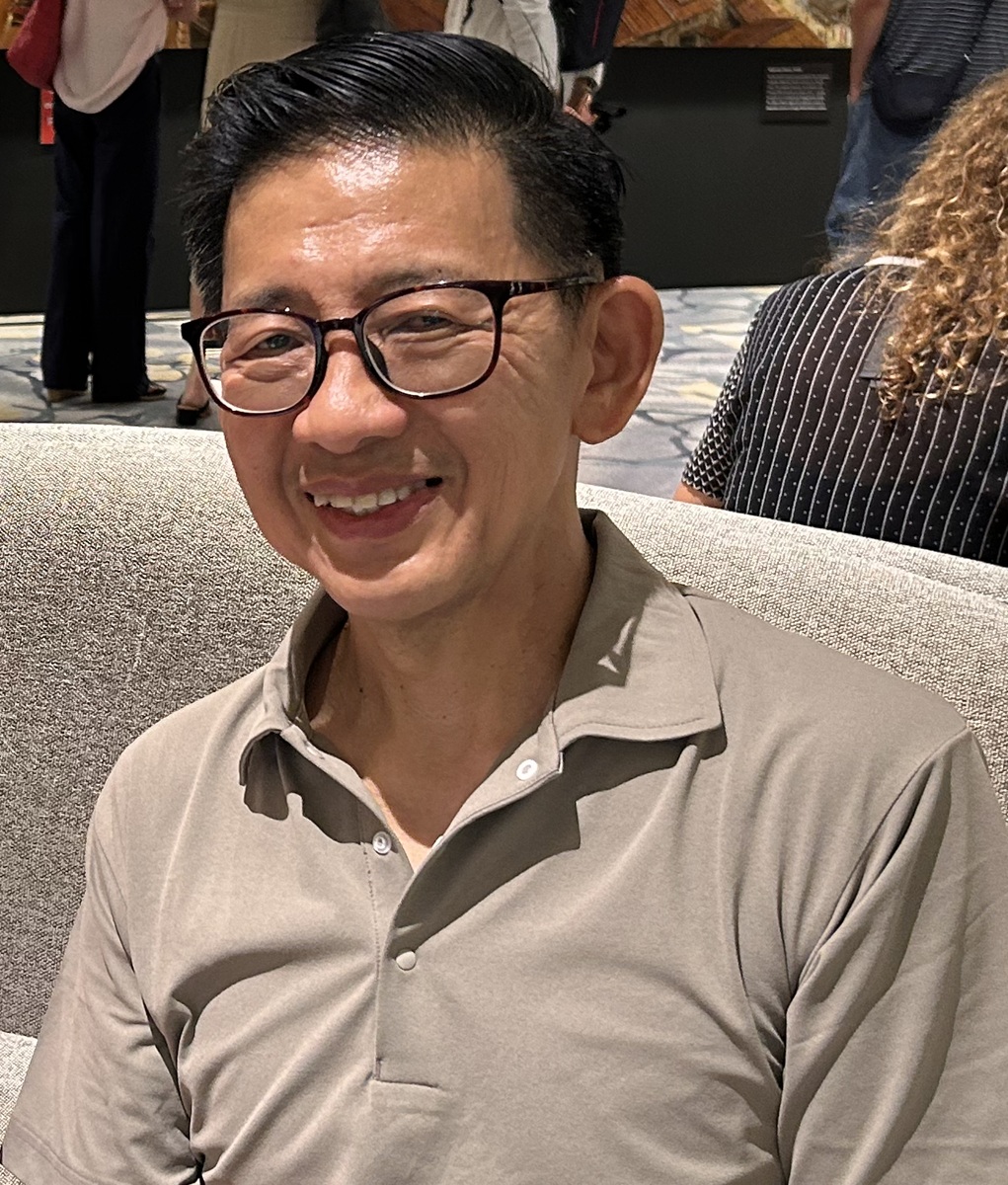
Courtesy of Jerome Lim.
After returning from Penang, Jerome poured his spare time into research and exploring old sites in Singapore, driven by the desire to connect the past with the present. This eventually led to the creation of his blog, The Long and Winding Road (opens in new tab).
Becoming a public blogger was not part of his plan though, as he had originally intended for his blog to be “a repository of memories”. Yet, his personal quest to document the details of his life through a historical lens gained public traction, and “as it started to grow, I just went along with it”, he said. The blog was later joined by a Facebook (opens in new tab) page, which had amassed 79,000 followers by July 2026.
Grounded in historical research, Jerome blogs about the many facets of Singapore’s lesser-known history, with a special interest in stories personal, forgotten or overlooked. As he delved deeper into the backstories of places, learning more about their past and the individuals who have passed through them, he developed a richer appreciation for and deeper connection to these places. Today, Jerome finds meaning in sharing these snapshots of Singapore’s history for others to discover and appreciate.
Systematic Approach to Historical Discovery
Behind each detailed blog post lies a methodological approach that finds its roots in the collections of the National Library and National Archives of Singapore (NAS). Jerome’s research typically unfolds in layers, each revealing different aspects of Singapore’s past. He begins with strategic online searches across NAS’ Archives Online (opens in new tab), the National Library’s NewspaperSG (opens in new tab) and the National Library Board’s OneSearch (opens in new tab) platform to determine what materials are available for his topic of interest.
Jerome’s approach thereafter varies depending on the project’s scope and time period. Aerial photographs, maps and building plans from the archives provide visual-spatial insights when piecing together a location’s development. NewspaperSG’s archive of Singapore and Malaya newspapers dating back to 1827 serves as a crucial resource for verifying dates, past events and historical figures, while the National Library’s extensive collection of books, periodicals and journals offers depth on the subject matter.
He is also a frequent user of oral history interviews and audiovisual materials from the archives, resources that help him understand lived experiences and perceptions of historical events before writing about them in rich detail.
Horse-drawn Omnibuses
Jerome’s work brings to life a Singapore long gone. In one article on his blog, he traces the route travellers took between Singapore and Johor before the Causeway was built.2 A trip to Johor Bahru took about three hours, beginning with a horse-drawn omnibus (opens in new tab) ride from North Bridge Road to Kranji, followed by a ride across the strait to Johor via sampan (and later, the steam ferry).
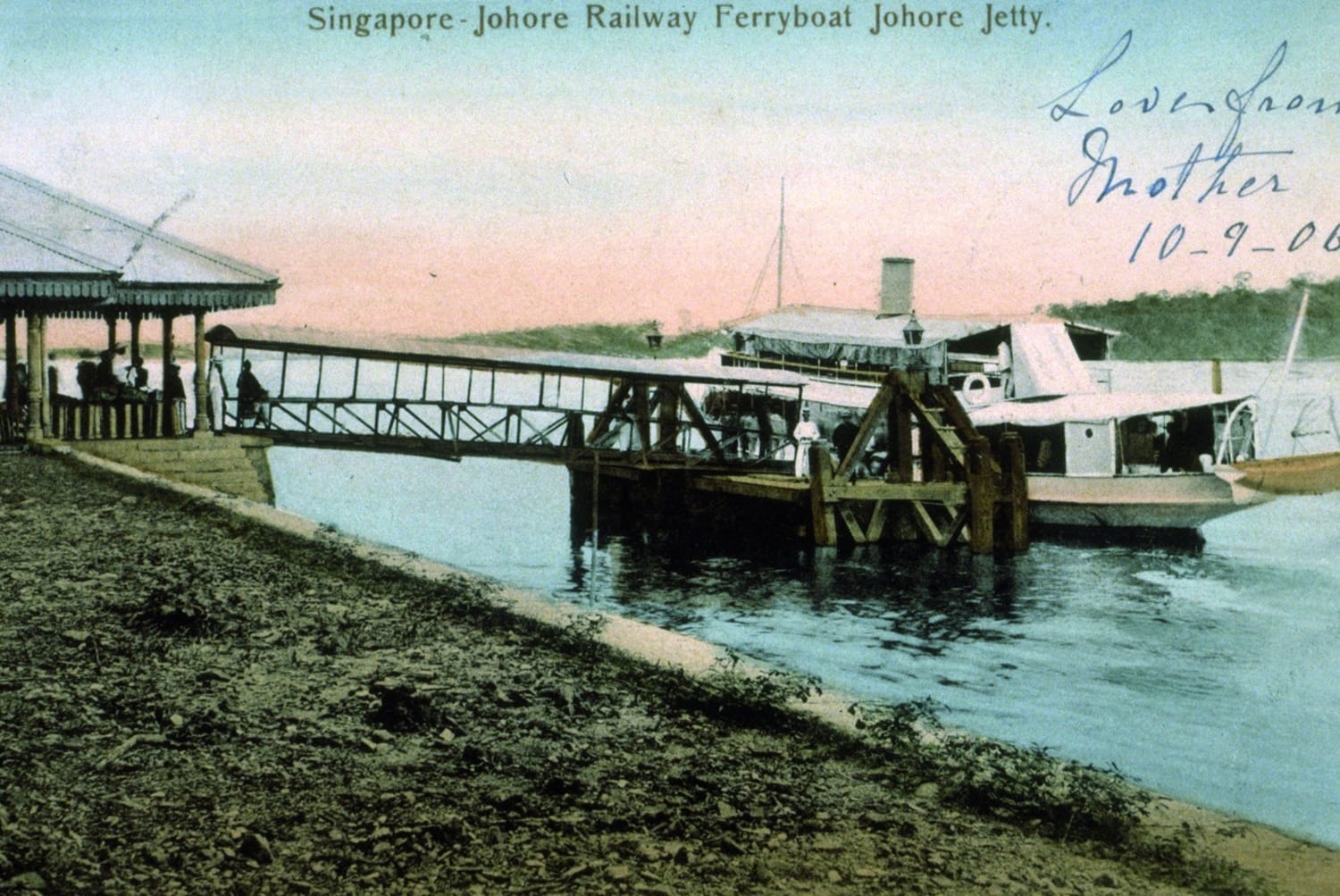
Ferryboat docked at the jetty in Johor Bahru, 1906. Such boats were used to transport people and goods across the straits between Singapore and Johor before the Causeway was built. Arshak C. Galstaun Collection, courtesy of National Archives of Singapore (Media - Image No. 19980007376 - 0052).
Jerome’s research for this article was sparked by the 1890 edition of The Strangers’ Guide to Singapore with Maps (opens in new tab) in the National Library’s collection.3 In the guide, he discovered a timetable for regular horse omnibus services between Singapore and Johor. At the time, many Singapore residents – mostly men and some women – travelled several hours not for food or shopping, but to satisfy their gambling urges. Johor’s gambling farms were known as its “Monte Carlo” and were once a magnet for young men seeking to place their bets, often to the “sorrow of their wives and families”.4
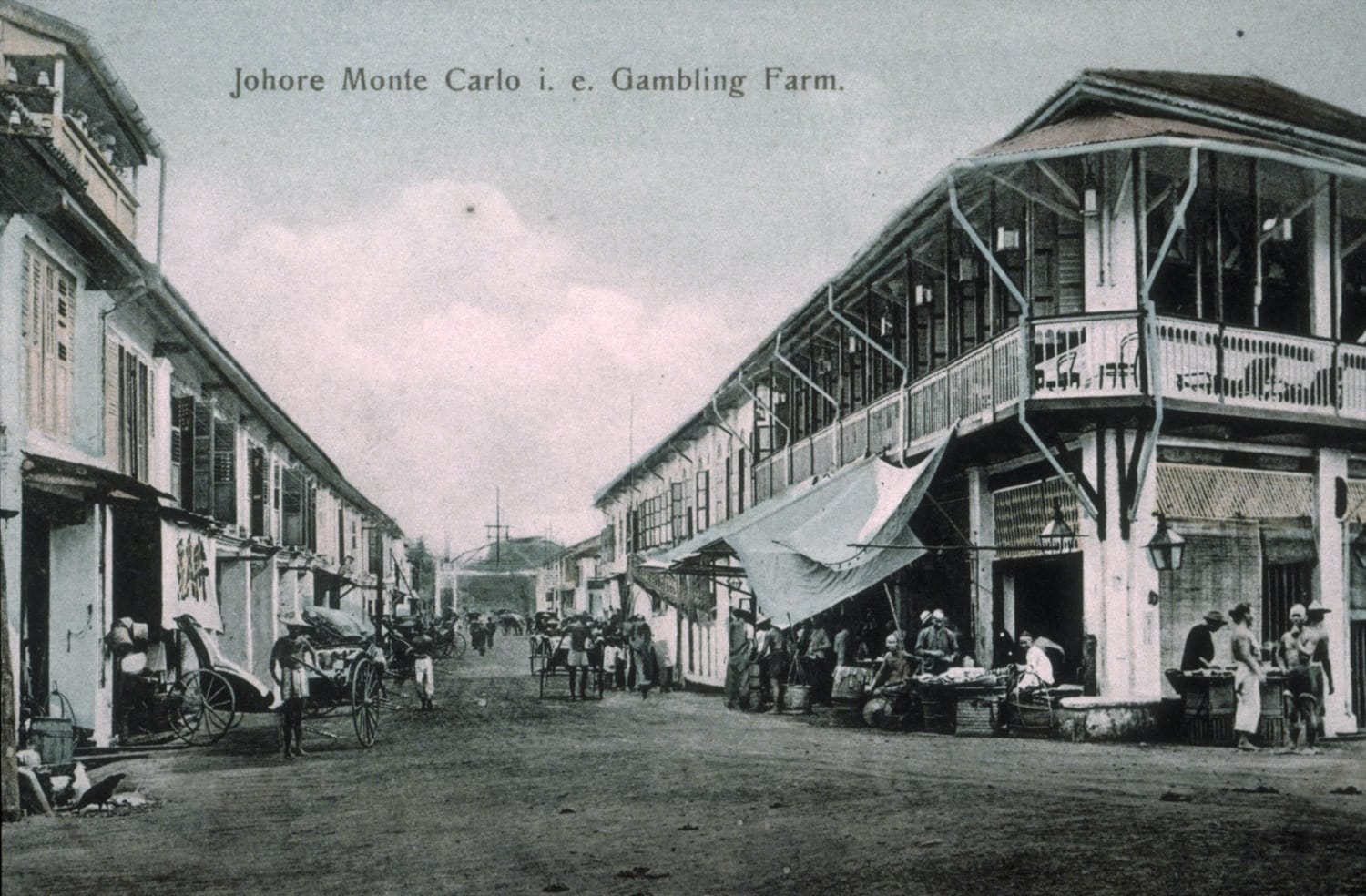
A gambling farm in Johor, 1900s. Gwee Thian Hock Collection, courtesy of National Archives of Singapore (Media - Image No. 19980005113 - 0013).
Researching one topic often led to another. His work on horse-drawn omnibuses inspired him to investigate Orchard Road’s emergence as a motoring hub (opens in new tab),5 a development rooted in the horse and carriage trade.
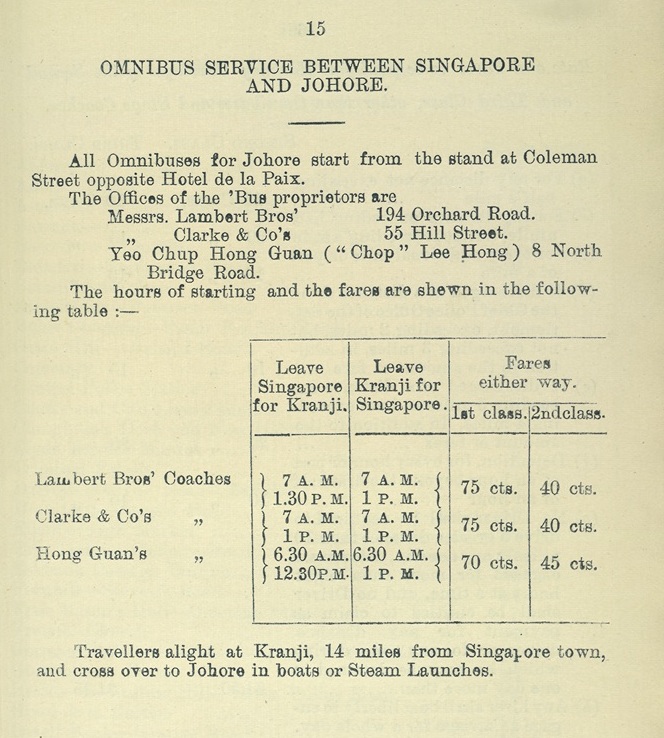
The omnibus timetable between Singapore and Johor. Image reproduced from B.E. D’ Aranjo, “The Stranger’s Guide to Singapore with Maps” (Singapore: Printed at the Singapore Press, 1890). 15. (From National Library Online).
True Origins
Jerome’s knack for discovering interesting bits of history has challenged what many think they know about Singapore. Along with other history enthusiasts, he refuted the commonly held belief that Smith Street was named after Cecil Clementi Smith, governor of the Straits Settlements between 1887 and 1893.6 Instead, the road was named after John Colson Smith, the headmaster of Singapore Institution (now Raffles Institution) from 1843 to 1852.
In a letter dated 25 July 1853 and published in the Straits Times,7 John Colson Smith wrote to the chairman of the Municipal Committee, offering to contribute $200 to “defray the expenses of putting one of the roads (the centre one called Smith Street) into efficient order in the estate of Rev J.T. Dickinson”. Since this letter predates Clementi’s arrival in Singapore by more than two decades, and the fact that Smith Street was already referred to by that name, it is highly likely that the road was named after John Colson Smith rather than Cecil Clementi Smith.
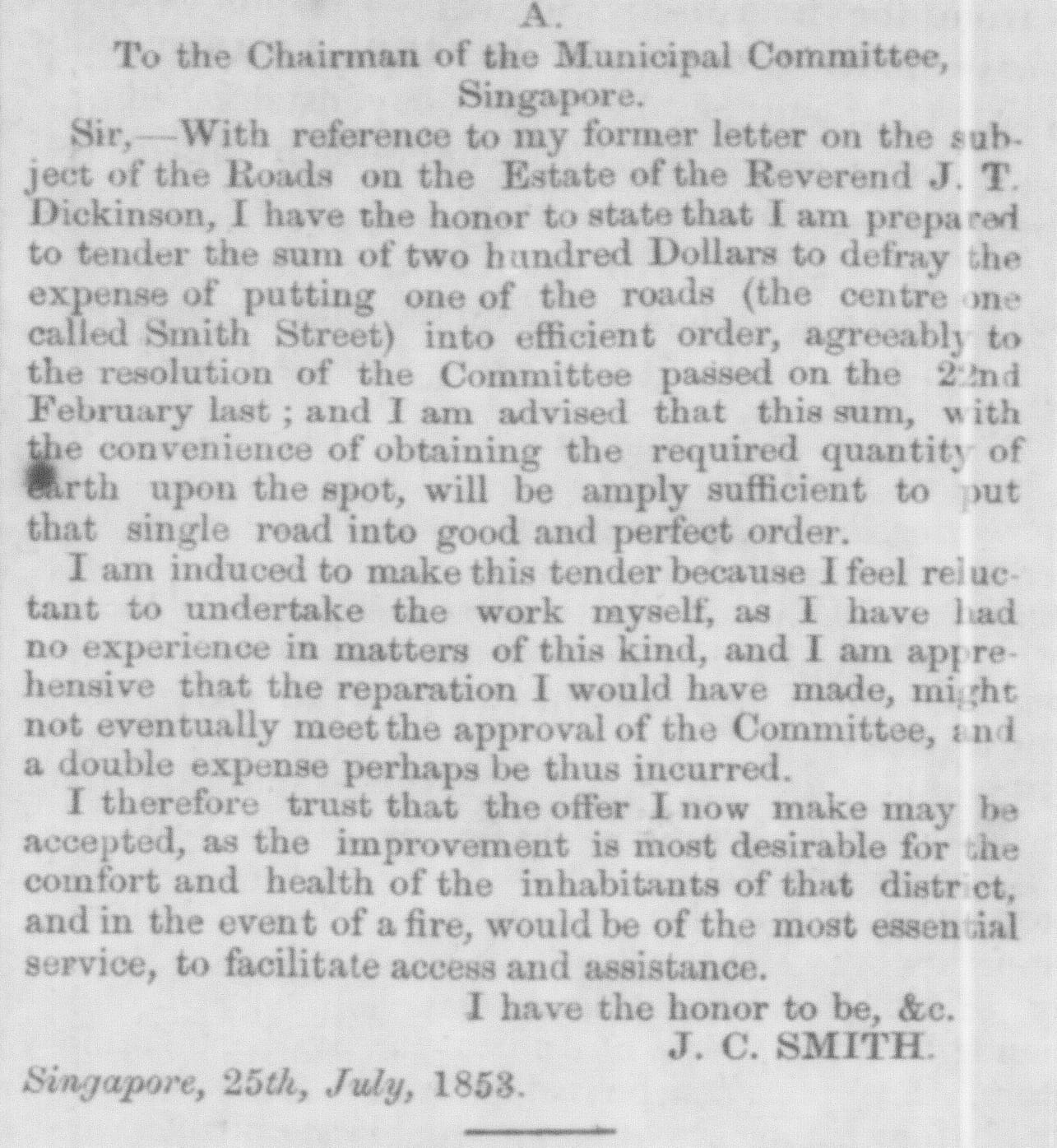
The letter dated 25 July 1853 from John Colson Smith to the chairman of the Municipal Committee. Image reproduced from the Straits Times, 27 September 1853, 5. (From NewspaperSG).
Jerome’s research also deconstructed the backstory of the five-storey heritage building, The Quadrant, at 19 Cecil Street. In collaboration with the Singapore Land Authority, he produced the book Uncommon Ground: The Places You Know, The Stories You Don’t (opens in new tab),8 detailing how the building has housed multiple occupants, including banking tenants, before its most recent incarnation as The Quadrant.
Jerome discovered that the Art Deco building at the junction of Cecil Street and Market Street was originally built in 1929 as the temporary headquarters of the Oversea Chinese Bank (OCB) (opens in new tab), rather than Kwangtung Provincial Bank as commonly believed. He traced his research back to the OCB’s 1928 annual general meeting, where detailed plans for the temporary premises were discussed and reported in the Straits Budget on 18 October 1928.9
“To obviate the inconvenience of having to suddenly find a new office the Directors have already made adequate arrangements for a suitable and up-to-date building to be erected at the corner of Cecil Street and Market Street. The site of the new building now in course of construction, while not quite central, is nevertheless in the heart of a growing city like ours,” said the chairman of OCB.10
Further corroborating evidence was found in an advertisement column of the 31 October 1929 issue of the Singapore Free Press and Mercantile Advertiser, which reported that the OCB would be “removed to its new premises at the corner of Market Street and Cecil Street on Friday, the 1st November, 1929”.11
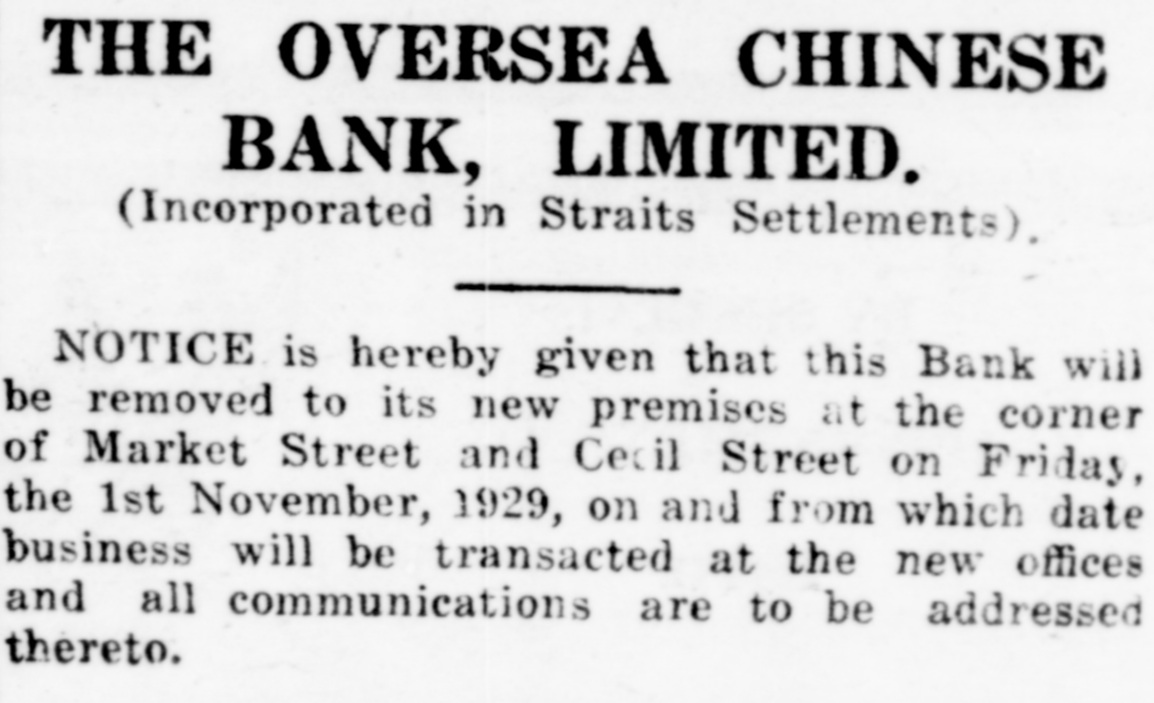
Announcing the move of the Oversea Chinese Bank to its new premises. Image reproduced from the Singapore Free Press and Mercantile Advertiser, 31 October 1929, 7. (From NewspaperSG).
Jerome’s research also unearthed details about the early history of Command House (opens in new tab) (formerly Flagstaff House) on Kheam Hock Road. Drawing on NewspaperSG records, he pieced together evidence showing that the building was already in existence by 1938 and served as the official residence of W.G.S. Dobbie, the British General Officer Commanding (GOC) Malaya.12
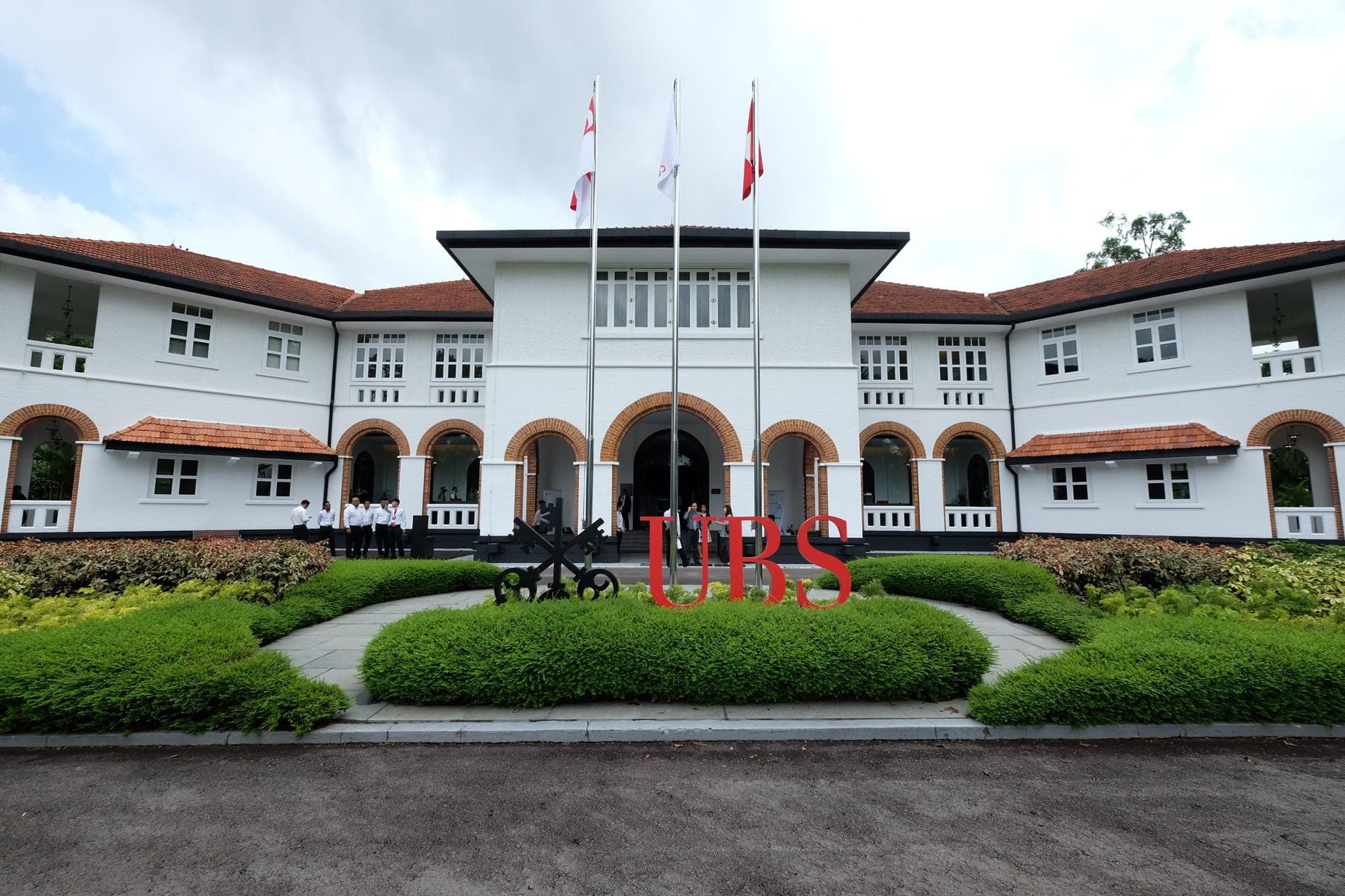
Command House on Kheam Hock Road, 2016. Between 2007 and 2020, it served as the Asia-Pacific campus of UBS Business University. Ministry of Communications and Information Collection, courtesy of National Archives of Singapore (Media - Image No. 20160202001 - 0015).
A Singapore Free Press and Mercantile Advertiser article from 8 September 1938 described the wedding reception of Dobbie’s son at Flagstaff House, establishing the building’s prewar existence.13 “It was where General Arthur Percival and Air Vice-Marshal Conway Pulford were accommodated when the war broke out,” Jerome said. (Percival was then the GOC, and he and Pulford jointly commanded the British forces during the Malayan Campaign.14)
These discoveries, from weekend gambling escapades to street names and stately mansions, reflect just a sliver of what piecing together material from the library and archives can reveal about a nation’s past. Through painstaking research into these collections, Jerome uncovers the rich and layered nuances behind Singapore's history and shares them with other Singaporeans and readers around the world.
About the Author
Ruth Wee is a former intern with the publishing department at the National Library Singapore. She has a Bachelor of Arts (Honours) in English Language and Linguistics (Distinction) from the National University of Singapore.
Endnotes
1 “Jerome Lim: The Silver Blogger Who Captures Singapore’s Forgotten Heritage,” SilverStreak, 21 October 2024, https://silverstreak.sg/jerome-lim-captures-singapore-forgotten-heritage/ (opens in new tab).
2 Jerome Lim, “Horse-drawn Buses and That 1870s Weekend Hop to JB,” The Long and Winding Road, 16 April 2024, https://thelongnwindingroad.wordpress.com/2024/04/16/horse-drawn-buses-and-that-1870s-weekend-hop-to-jb/ (opens in new tab); “From Sea to Road: Building the Causeway (opens in new tab),” BiblioAsia 16, no. 2 (July–September 2020): 34–39.
3 B.E. D’ Aranjo, The Stranger’s Guide to Singapore with Maps (opens in new tab) (Singapore: Printed at the Singapore Press, 1890). (From National Library Online)
4 Lim, “Horse-drawn Buses and That 1870s Weekend Hop to JB.”
5 Jerome Lim, “An Enlightened Space,” The Long and Winding Road, 4 April 2022, https://thelongnwindingroad.wordpress.com/2022/04/04/an-enlightened-space/ (opens in new tab).
6 Vernon Corneluis, “Cecil Clementi Smith (opens in new tab),” Singapore Infopedia. National Library Singapore. Article published July 2024.
7 “Untitled (opens in new tab),” Straits Times, 27 September 1853, 5. (From NewspaperSG)
8 Singapore Land Authority, Uncommon Ground: The Places You Know, the Stories You Don't (opens in new tab). (Singapore: Singapore Land Authority, 2020), 26–30. (From National Library Singapore, call no. RSING 959.57 UNC)
9 “Oversea Chinese Bank (opens in new tab),” Straits Budget, 18 October 1928, 13. (From NewspaperSG); Jerome Lim, “The Quadrant, Built as a Temporary Oversea Chinese Bank HQ,” The Long and Winding Road, 2 December 2018, https://thelongnwindingroad.wordpress.com/2018/12/02/the-quadrant-built-as-a-temporary-oversea-chinese-bank-hq/ (opens in new tab).
10 “Oversea Chinese Bank (opens in new tab).”
11 “Page 7 Advertisements Column 4 (opens in new tab),” Singapore Free Press and Mercantile Advertiser, 31 October 1929, 7. (From NewspaperSG)
12 “$100,000 House for Malaya’s G.O.C. (opens in new tab),” Straits Times, 14 March 1937, 15; “General’s A.D.C. Son Married at Tanglin Garrison Church (opens in new tab),” Singapore Free Press and Mercantile Advertiser, 8 September 1938, 9. (From NewspaperSG); Jerome Lim, “The Very Grand House That Brewer Built,” The Long and Winding Road, 2 April 2015, https://thelongnwindingroad.wordpress.com/2015/04/02/the-very-grand-house-that-brewer-built/ (opens in new tab).
13 “General’s A.D.C. Son Married at Tanglin Garrison Church (opens in new tab).”
14 Stephanie Ho, “Malayan Campaign (opens in new tab),” Singapore Infopedia. National Library Singapore. Article published 19 July 2013.